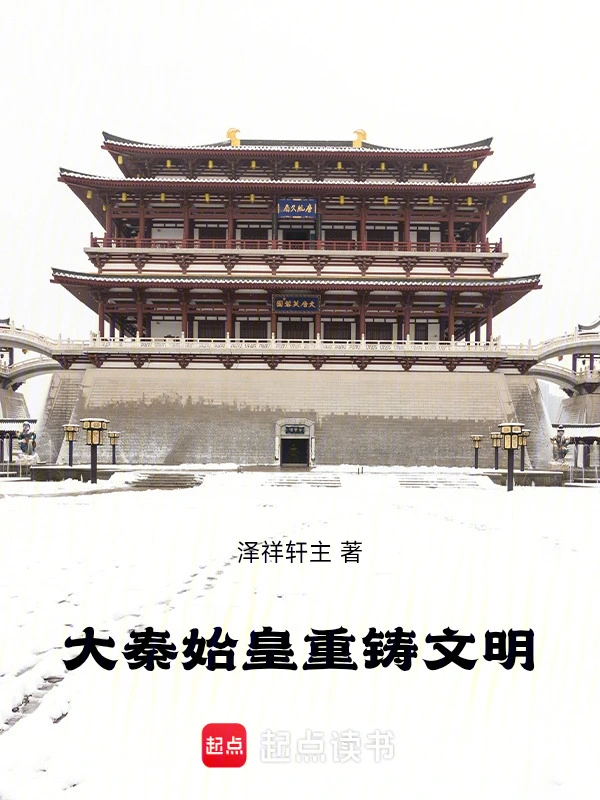
Introduction to "Great Qin: The First Emperor Reshaped Civilization"
A professor of history who is deeply involved in the history of the Qin and Han Dynasties, and also restores cultural relics, and has an insight into the rise and fall of Chinese civilization for more than two thousand years. His soul is integrated with the young King of Qin Yingzheng. Without a system, without a golden finger, relying only on historical reflection spanning thousands of years, advanced knowledge of civilization, and sincere original intentions, Ying Zheng embarked on the unparalleled road of rewriting the fate of the Qin Dynasty and reshaping Chinese civilization.
This is a pre-Qin fictional historical text based on textual research and realism. It focuses on civilized strategies and governance. It takes historical reflection as the core and kingly governance as the context to create a long historical drama with 1200-1500 chapters. There are currently 220 chapters saved, with stable updates and worry-free serialization.
The work is rigorously researched and closely follows the plot, which is different from the hard-core research style of "Qin Officials". It strictly adheres to the historical facts of the Qin and Han Dynasties, Qin laws and etiquette, and the style of the times, without violating or time-traveling elements. The writing is simple and thick, the narrative is calm, and it abandons exaggeration. It focuses on the top-level institutional innovation and the reconstruction of the civilized system, and restores the true political power of the pre-Qin Dynasty.
The whole book closely follows the core of historical reflection: the Qin Dynasty was strong and destroyed because of the law, and the Han Dynasty restricted civilization with foreign Confucianism and internal law for more than two thousand years, laying the foundation for the hidden dangers of humiliation in modern times. With the original intention of making up for the shortcomings of history, the work deduce that the Great Qin Dynasty broke the shackles of Confucianism and Legalism, reorganized the context of civilization, and explored new possibilities for China's long-term stability, openness and prosperity.
The outline of the work is complete and meticulous, the details are perfectly polished, the Qin laws, official system, etiquette, and character research are all implemented, and the plot is logically self-consistent. It is committed to creating a high-quality historical drama with both historical depth and narrative charm.
Reader comments
I hope you don't use AI, the current AI is so bad 😂
 Fu Ming 1627
 After Lying in Bed for Three Years, He Was Forced to Help the Han Dynasty
 Red Mansion: Start Escaping and Farming from the Equipment Bar
 Northern Qi, Sage Khan
 Criminal Investigation Notes 2: Buried Corpse in Songhu
 Five Generations of Elegance
 How Can You Become an Immortal If You Don't Have Money?
 Leader
 The Black Witch's Journey to Another World
 Green Hills
 Alien Hotel
 Become a God from Water Monkey
I hope you don't use AI, the current AI is so bad 😂