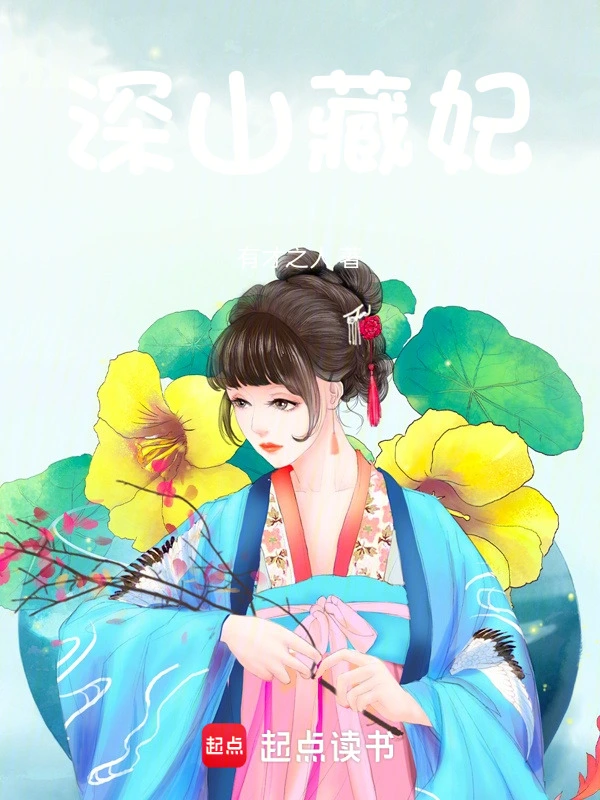
Hidden Concubine in the Mountains
深山藏妃
- Status
- Ongoing
- Length
- 20k Words
- Genre
- Historical
- Audience
- Male
- Subgenre
- Folk Legends
- Updated
- 4mo ago
- Source
- Qidian
Stats
0Monthly votes
2Recommends
0Fans
4Chapters
Synopsis
Reader comments
Readers also read
 Northern Qi, Sage Khan
 After Lying in Bed for Three Years, He Was Forced to Help the Han Dynasty
 Red Mansion: Start Escaping and Farming from the Equipment Bar
 Fu Ming 1627
 Criminal Investigation Notes 2: Buried Corpse in Songhu
 Night Without Borders
 How Can You Become an Immortal If You Don't Have Money?
 Leader
 The Black Witch's Journey to Another World
 Corpse Hunter
 Green Hills
 Xuanjian Immortal Clan
 Jiufeng Xianxia 2 Hunan Army Iron Bones
 Nine Peaks Xianxia 4 the Righteous Way in the World
 Jiu Feng Xian Xia 3 Innocent Heart
Mountain rocks make paper, loyalty becomes ink - a review of the film and literary script "Hidden Concubine in the Mountains" Under the old locust tree in Jiangjun Village, Jiepai Town, Hengyang, the white-haired old man shook his cattail fan and told the children a story about "The General fell off the cliff". The child asked: "Is this true?" The old man pointed to the mountains in the distance: "That village is called Jiangjun Village, that reservoir is called Jiangjun Reservoir, and that stone is called Wangfu Terrace. If the story is false, how did these names come about?" This dialogue appears at the end of "The Concubine Hidden in the Mountains". It just reveals the core pursuit of this work: to make the legend true. 1. Between Truth and Falsehood: The Power of Pseudo-Documentary The biggest feature of "The Hidden Concubine in the Mountains" is that it actively chooses a "pseudo-documentary" narrative posture. The opening subtitles explain the historical background of the Jingkang Incident, and the voice-over uses an old man with a southern Hunan accent to narrate "My grandpa said". The end of the film shows the actual scenes of the Wangfu Terrace, dressing stone, horseshoe print rock and other relics, and is marked "Located in Jiangjun Village, Jiepai Town, Hengyang County, Hunan Province today." These techniques together create an effect: after watching the movie, the audience can't help but search for "Jiangjun Village, Jiepai Town, Hengyang" and want to see the "horseshoe print rock" in person. The script deliberately maintains a "possibly true" ambiguity - which concubine of Huizong is Empress Li? No explanation. Which prince is the prince? No explanation. There is no official history record, but it has been passed down from generation to generation among the people. This kind of blank space is not an omission, but a clever narrative strategy: the more you don't talk about death, the more people feel that "maybe it is true." 2. Two-line narrative: the symphony of living in the mountains and searching for the master The script adopts a two-line parallel structure: one is about Empress Li taking the prince to live in seclusion in the mountains, and her transformation from a charming guest in the palace to a commoner peasant woman; the other is about Wang Huyang setting out from Lin'an, searching for his master for thousands of miles, and finally being blood-stained in Huanglong'ao. The rhythm of these two lines is controlled just right. The first two acts focus on the mountain dwelling line, with a slow rhythm, the changing of seasons, and the deep love between mother and child. The third act focuses on the main plot, with the pace accelerating and suspense building up one after another until the ambush and bloody battle. Every moment of silence and movement, one moment and one relaxation, it has the warmth of human fireworks and the intensity of rivers, lakes and temples. The scene where Li Niangniang learns to make fire is particularly touching: the prince picks up two stones and knocks them against each other, causing sparks to fly out - of course they are not lit. Li Niangniang looked at her son's actions, smiled, and then cried. Between laughter and crying, there is a woman's letting go and rebirth. 3. Character group portraits: There are no absolute good guys or bad guys The most skillful aspect of the script is its handling of the internal strife in the palace. Han Zhenshan, the main militant, is not a pure loyalist. He also has political calculations - "The prince is here, there is hope to fight against the Jin Dynasty", which is both loyalty and power. Zheng Wengong, the leader of the peace faction, was not a treacherous official. He believed that he was "removing trouble for the country" and believed that getting rid of the prince was for the stability of the Southern Song Dynasty. Gaozong Zhaogou was not a foolish king, he only put self-preservation first. The words "I don't want to see civil strife" were ambiguous, and he acquiesced to Zheng Wengong's actions. The three parties have their own positions, motives, and methods. Wang Huyang was caught in the middle, and he didn't know that he was being used as a pawn until his death. This sense of tragedy gives the story depth. The addition of Xiao Yin, the spy of the Kingdom of Jin, is the finishing touch - "the mantis stalks the cicada, but the oriole follows", making this game more complicated. He is not the protagonist, but every time he appears, the audience is aware that outsiders are waiting to take advantage of this internal fight. 4. Mountain rocks as paper: ruins are the best evidence The use of real place names and ruins in the script can be called textbook level. Hengshan, Houlu, Jiepai Town, Thirty-six Bends, Huanglong Au, Jiangjunchong, Jiangjun Village, Jiangjun Reservoir, Wangfu Terrace, Dressing Stone, Horseshoe Imprint Rock - every place name can be checked on the map. The script weaves these place names into the story, giving each node of the legend "physical evidence". The best thing is the treatment of horseshoe print rock. Legend has it that Wang Huyang's war horse left a hoof mark on the bluestone when its owner fell off a cliff. "No matter how hard it rains, there will never be water in that hoof mark." The script does not explain this phenomenon, it only presents it and tells it. This lack of explanation is precisely the charm of folklore - some things do not require scientific truth, but only need to be believed. 5. Points to be discussed The script is not without room for improvement. The death of Qing Luo can be made clearer, the follow-up of the token and the dagger can be explained, and the ending of Xiao Yin can be settled. But these are all "icing on the cake" and do not affect the overall integrity and touchingness. What is more worthy of discussion is: How is the script's description of "loyalty" accepted in the contemporary context? Is Wang Huyang's loyalty foolish loyalty or righteousness? The answer given by the script is: He did not know that he was a pawn until his death, but his choice itself - exchanging his own life for the lives of the prince and empress - transcended political calculation and returned to the simplest human nature. This treatment is smart, and it makes an ancient story of "loyalty" still touching people in contemporary times. Conclusion "The Hidden Concubine in the Mountains" has completed a difficult job: it turned a folk legend that has been passed down for thousands of years into a script that is watchable, believable and perceptible. Its power does not lie in the grand battle scenes or complex palace battles, but in the specific and minute details - the stove that Lady Li cannot light, the curled knife of Wang Huyan, the branch hairpin stuck on the stone to watch the husband, the curling up of cigarettes in the general's temple. These details constitute a real and perceptible world that makes people want to believe: eight hundred years ago in the depths of Hengshan Mountain, there really was an imperial concubine and a young prince living incognito in the deep mountains and old forests; there really was a general who lost his life in Huanglong Au in order to take them home. The mountain is still there, the village is still there, the reservoir is still there, and the watchtower is still there. The story is false, but the heart is true. Legends never cease.