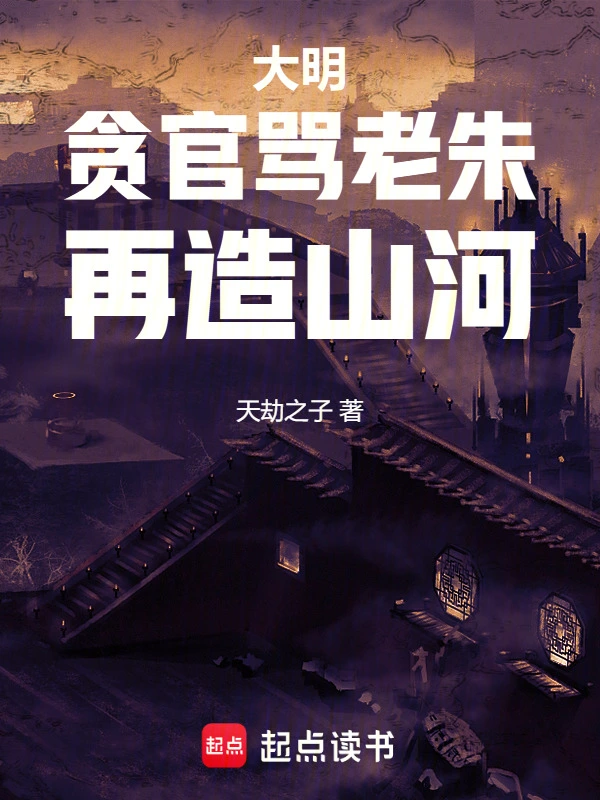
During the Ming Dynasty, Corrupt Officials Scolded Lao Zhu and Rebuilt the Country
大明,贪官骂老朱,再造山河
- Status
- Ongoing
- Length
- 642k Words
- Genre
- Historical
- Audience
- Male
- Subgenre
- Song-Yuan-Ming Dynasties
- Updated
- 28d ago
- Source
- Qidian
Stats
0Monthly votes
1.6kRecommends
131Fans
265Chapters
Tags
Synopsis
Reader comments
Readers also read
 Northern Qi, Sage Khan
 Fu Ming 1627
 Red Mansion: Start Escaping and Farming from the Equipment Bar
 After Lying in Bed for Three Years, He Was Forced to Help the Han Dynasty
 The Grandson of Zhenguan of the Tang Dynasty: Please Call Your Majesty the Crown Prince!
 Wild Emperor of the Ming Dynasty
 Ming Dynasty: in the Beginning, He Complained That Zhu Di Was Not the Right One to Succeed to the Throne.
 Zhenguan Warrior: Starting from Teaching the Prince to Counterattack
 Northern Song Dynasty: Spoiler of the Future, Zhao Kuangyin Collapsed
 Datang: Starting from Preventing the Prince from Committing Suicide
 I Am Li Chengqian, the Emperor of the Tang Dynasty
 The First Sword of Ming Dynasty
 The End of the World Is Coming, from Village Chief to Rebuilding China
The more you understand the history of the Ming Dynasty, especially the Hongwu Dynasty, the less you would think about being an official in that dynasty. Rebellion is safer than being an official. Being able to recruit people to go to Southeast Asia is safer than being an official for Zhu Yuanzhang. When a person becomes emperor, only blood relatives are his own. Others are slaves or long-term workers of his old Zhu family. Whether they are counted as human beings is another matter. The ritual of kneeling began to flourish in the Ming Dynasty and reached its peak in the Qing Dynasty.
Knowing that you can't do anything, most people in modern times don't have such great ambitions to become an official to change the outcome of the Ming Dynasty and change Zhu Yuanzhang. This is a death without a life. Zhu Yuanzhang's bullshit character, even if he thinks you are right, for the sake of imperial power and face, he still refuses to change. If he offends him, he will kill first to respect it.
Regarding Lao Zhu's character, if you say he is not good, the Nine Clans will definitely thank you.
I understand that you want the protagonist to be like a dog, 😅 but it's too much of a dog for you to treat such a big man like His Majesty. In the introduction, you scolded Zhu Yuanzhang, he is really a slave with no blood at all 😰
Zhu Yuanzhang is a scumbag.
Apart from the Five Dynasties and Ten Kingdoms, the darkest ones were the Ming Dynasty and the Qing Dynasty.
Nonsense, either Lao Zhu is someone who likes to directly solve the problems he created, or it's because he has done too much in Qing history. Lao Zhu kills people and is a damned person who violates the rules. If the founding emperor had a coy personality like a female, he would still have a far-fetched country. What's more, Lao Zhu's starting point is too low, and he can't start a family without a strong personality. How can he do half the work and leave you alone?
Let's change the title of the book. I suggest it be, "I Became Zhu Yuanzhang's Good Dog in Traveling Through the Ming Dynasty."
The ninth year of Hongwu? The prince broke his bones and sucked out a million taels of marrow? Idiot, right? Do you have any common sense that Prince Hongwu had one million taels in nine years? Zhu Biao doesn't even have that many
Boring!
When I read the introduction, I thought the author was very dissatisfied with Zhu Yuanzhang. After reading a few chapters, I discovered that the author was licking Zhu Hongwu! In the first few chapters, we saw that the protagonist was a good county magistrate, but then he rose to the official position and became a intriguer! At the beginning, I thought I was a helpless person, but later, Lord Marquis Lan Yu became my supporter!
This is also called scolding, this is called licking, and the title of this book is not worthy of its name.
Licking the dog! Ming has tortured me thousands of times, but I love Ming like my first love? The writing is smooth and the reading is smooth, but it doesn't feel right.
It feels like something is wrong. Earlier, it was written that Zhu Ba deliberately wanted him to die, but later it was clarified that he had offended civil and military forces and ended up in this situation. Wasn't the root cause caused by Zhu Ba repeatedly wanting him to die? What do you mean by saying that Zhu Ba deceived him and used narration to lead the reason to civil and military matters?
If I were still an official in Hongwu years, I would find someone infected with smallpox and make myself a smallpox infected person. Then I went to the palace to find the eunuchs and maids. Anyway, the Nanjing palace is only so big. If Zhu Yuanzhang wants me to die, I will kill the entire Zhu family first. If you are a commoner, go to a Taoist temple or temple to become a monk.
Your plot is pretty good. You can even make up Chen Youliang's grandson to kill people. Lao Zhu, you can play with him if you have the ability, but by treating him like a treasure, do you want to use your neck to sharpen his knife?
The author is really writing randomly, if Zhu Yuanzhang would listen to you.
I can't stand Zhu Yuanzhang's stubborn temper the most! What's the problem with the Ming Dynasty? It's all on him. Some people say that those systems were not formulated by Zhu Yuanzhang but by the ministers. But you see, the ministers who opposed Zhu Yuanzhang had several good results. Let him find a reason to kill. To put it bluntly, he is the kind of person who gets rich overnight. His principle in doing things is not to let his own family suffer, and other people will love him to death. Apart from the fact that he is the most upright person in the country, he really has nothing to praise.
I couldn't stand the three chapters. The beginning was about the participants in the Kongyin case instead of the implicated ones. He felt wronged when he was killed. It was ridiculously stupid. Then he felt he had been wronged, beat the drum to confront the emperor, and then claimed to be the guilty minister. The core character design was inconsistent.
God cannot tolerate your immortality.
Lao Zhu can have a little tolerance for his own son. No one is to be killed. Who are you? Can you survive? If you were his father, you would die. What a bullshit. No matter how famous Hai Rui is. Then he didn't even meet Lao Zhu. For Lao Zhu, anyone can die. As long as you are alive, you are disrespecting Lao Zhu.
I thought it was to wash away Zhu Yuanzhang, but it turned out to be pure and pure Zhu Yuanzhang, the only one who started with a bowl, the worst start, had the last laugh, was written like a fool, a simple conspirator, the founder of the country, expelled the Tartars, restored China, you can write that he is ruthless, but not only conspiratorial, without the emperor's domineering and personal charisma, otherwise, how could so many people follow him with such a low start?
If you look at the introduction, you will know that he is a whitewashing official and discrediting Zhu Yuanzhang.
Shouldn't corrupt civil servants die? If you ask me, there are still fewer kills.
Is the success rate of traveling to the Ming Dynasty to assassinate Zhu Yuanzhang high? It feels like Zhu Yuanzhang can solve many problems if he is stupid.
Lao Zhu is not like this when he comes. Everyone has a process, but Lao Zhu cannot become an official easily. If you are rich, you might as well go to Southeast Asia.
Even if you try to wash Zhu Yuanzhang, you can't wash him. He has raised the Zhu family for more than two hundred years.
It's really frustrating to watch, it's a feudal dynasty like shit
When I saw everyone scolding Chongba, I knew I had found an organization.
Song, Yuan, Ming and Qing Dynasties: Slavery·Popular political rights·Clothing and etiquette (condensed text corrected by historical facts) Song Dynasty Slavery Slaves were only special cases, and most of them were family members who committed serious crimes such as rebellion and mutiny and were expropriated as slaves. Civil servants, human servants, and female servants are all in an employment relationship. They sign a contract and receive wages. They can leave freely at the end of the period. The law prohibits the killing of slaves without authorization, and their personal protection is protected. Lin Chong belonged to the imperial army and was not a private slave. Civil political rights The channels for citizens to sue officials are the loosest, allowing people to file lawsuits at higher levels, and there is a Dengwenguyuan to accept direct complaints. People who are oppressed by officials or employers can file complaints according to law, and the law clearly protects civilians who complain. Clothing and Etiquette The ministers of the court stood to discuss matters and bowed without kneeling. Monarchs and ministers, officials and citizens, as well as civilians, all bow their hands, bow, and bend down as a courtesy. They only perform sacrifices and kneel to their parents and elders. They abide by the "gold under a man's knees" and kneel to foreign envoys only in diplomatic situations. Yuan Dynasty Slavery Slavery has a very strong color. "Kou" is a slave, which can be bought, sold, transferred, and inherited. It is regarded as private property. It has a low legal status and the master's punishment for killing the slave is very light. Although the imperial court did not openly flaunt slavery, slavery was an institutional norm, and people who went bankrupt could easily become slaves. Civil Political Rights The ethnic hierarchy is strict, with Han people and Southerners having the lowest status. The channels for people to file complaints against officials are basically blocked. People who are oppressed by powerful officials and officials have difficulty redressing their grievances through normal justice, and there is a lack of institutional guarantees. Clothing etiquette Completely abolish the bowing ceremony in the Song Dynasty, and make kneeling obligatory and institutionalized. Courtiers must kneel down when performing duties, Han official etiquette is more stringent, and civilians must kneel when they see an official, forming a social rule of "the emperor sits and his ministers kneel, and the people kneel when they are in office". Ming Dynasty Slavery The Yuan Dynasty's expulsion system was abolished, and private private slavery was not recognized by law. Only the royal family and nobles can have service personnel, most of whom are hired workers and tenants. The law strictly prohibits killing slaves without authorization, and violation of this is a serious crime. Servants were mostly hired servants, not slaves. Civil Political Rights The Hongwu Dynasty used the "Da Gao" to encourage people to sue officials, and even tied corrupt officials to Beijing, and legally recognized civilian supervision rights. After Yongle, the policy was tightened, and in the middle and later stages, people's complaints against officials could still be carried out, but the resistance was great and the cost of rights protection was high. Clothing etiquette Kneeling and worshiping are still used and incorporated into the Confucian etiquette system, not for the submission of masters and slaves. When performing five obeisances and three kowtows in the court hall, ministers must kneel when performing their duties; in the court hall, people kneel down but do not kowtow; when meeting the emperor on the street, there is no need to kneel down; it would be disrespectful to kneel indiscriminately. Qing Dynasty Slavery Economically it was a feudal agricultural society, and politically it was a very master-slave society. The internal slaves of the Eight Banners and their subordinates were highly dependent on themselves, and most of the private slaves were hired laborers and tenants. "Better to be friends than domestic slaves" was an individual statement in the late Qing Dynasty, not the overall national policy of the Qing Dynasty. Civil Political Rights There is a Beijing-controlled system that allows for level-by-level appeals and even appeals to Beijing. The procedures are standardized, but the threshold is high and it is difficult to win a lawsuit. There will be heavy penalties for skipping a level or making false accusations, and the risk of rights protection is extremely high. Clothing Etiquette Integrating Manchu and Ming customs, the etiquette of kneeling and worshiping is the most cumbersome and humiliating. In the court hall, the ritual of kneeling three times and kowtowing nine times, taking off the hat and flicking the sleeves is performed. People also kneel and kowtow when meeting officials, emperors, and between teachers and students. Slavish etiquette permeates the whole society. Summary Degrees of slavery and personal dependence: Qing>Yuan>Ming>Song PS: The traditional dependence system of northern ethnic groups has existed for a long time and was not completely eradicated until the modern liberation war. I see many people criticizing Ming Dynasty for the sake of criticizing, and being black for the sake of being black.
In fact, traveling through ancient times to make changes and point out others is a matter of near death, let alone a feudal emperor. No matter whether you succeed or not, the protagonist will definitely not end well. If you tamper with someone else's cake, it's still in the interests of the group.