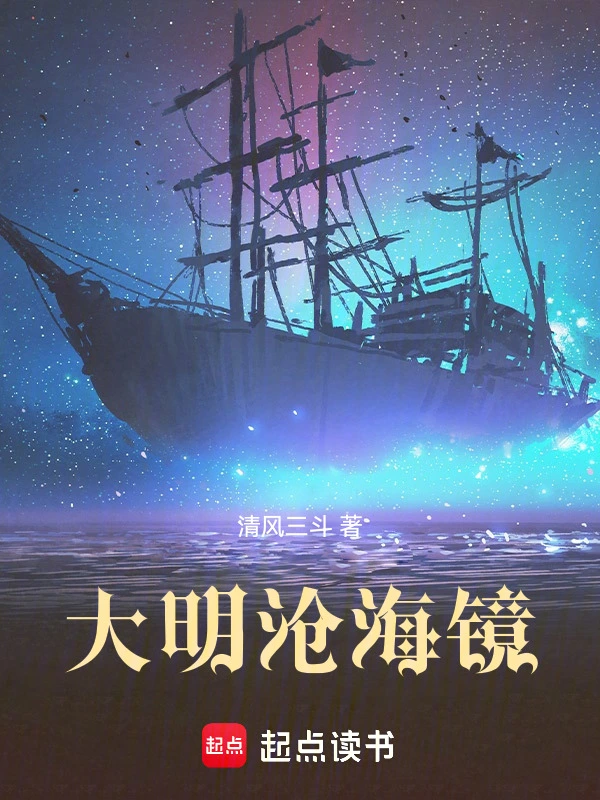
Daming Canghai Mirror
大明沧海镜
- Status
- Ongoing
- Length
- 478k Words
- Genre
- Historical
- Audience
- Male
- Subgenre
- Song-Yuan-Ming Dynasties
- Updated
- 1d ago
- Source
- Qidian
Stats
0Monthly votes
95Recommends
0Fans
150Chapters
Synopsis
Reader comments
Readers also read
 Northern Qi, Sage Khan
 Fu Ming 1627
 Red Mansion: Start Escaping and Farming from the Equipment Bar
 After Lying in Bed for Three Years, He Was Forced to Help the Han Dynasty
 Countryman's Ambition
 Gold Mining Career Since 1984
 Boiling Era
 Beast-Controlling Fairy Clan: I Control All Spirits and Prove Immortality
 The Black-Bellied Green Plum Can't Hide Her Love for Me at All
 The Northwest Hero of Northern Myanmar
 Medieval Times: I Build a Manor in the Mountains
 Practicing Business and Practicing Medicine
 Beacon Fire Cold Owl
Use the pen as a boat to cross the sea, and the heart as a mirror to illuminate the world
"Mirror of the Ming Dynasty" unfolds an epic scroll intertwined with the career pursuits of the poor scholar Lin Yan and the secrets of the Ming Dynasty's voyages. It breaks away from the machinations of traditional historical literature and integrates personal growth, the undercurrent of the court, maritime elegies and ideological inheritance. It shows both the richness of history and the character of the literati. It can be called a Ming Dynasty ukiyo-e with both narrative tension and ideological depth. The most moving core of the work is Lin Yan's complete and true character arc. From a passionate and humble scholar in the Jiangnan Gongyuan with worldly ideals, to a forbearing scholar in the Hanlin Academy who first glimpsed the power of politics, to a lonely pathfinder who went deep into the sea and faced the darkness, and finally transformed into a thinker who writes history with his pen and passes it on by fire. Step by step, there is no sudden reversal of the character, only sincerity that has been polished in the torrent of the times but has never been broken. He insists on being upright but learns to be tolerant, has ideals in his heart but faces cruelty. This persistence of "knowing the world but not being worldly" makes the protagonist break out of the cool literary template and become a flesh-and-blood model of a scholar-bureaucrat. The narrative structure is interlocking and has continuous foreshadowing, from the opening hook of the imperial examination to breaking the rules and becoming an official, to the hidden mystery of Zheng He's sea map talisman, to the ultimate reveal of the secret files of Jinling, and finally ending with the spread of letters overseas and the immortality of ideas. The clues are tightly closed and the rhythm is relaxed. From the cold days in the south of the Yangtze River to the intrigues in the capital, from the practice in the study to the adventures in the world, from the storm in the court to the writings in seclusion, the scene changes naturally but progressively, closely binding the personal destiny with the national destiny of the Ming Dynasty. The climax of each volume accurately pokes the narrative pain point, and each ending hook leads the readers to trace the source, so that the exploration of the secrets of navigation and the growth of the protagonist run in parallel and support each other. The pattern of the work is far beyond that of ordinary historical novels. It is titled "Mirror of the Sea", which not only illuminates the rise and fall of the Ming Dynasty's navigation, but also illuminates the dilemma of the world's people and systems. It does not deify the great achievements of Zheng He's voyages to the West, but confronts the dark side of history of deficient accounts, powerful people seeking personal gains, and national policies being hijacked. It is not limited to the grudges and grudges in the court, but is sublimated into a macro reflection on the security of maritime borders, the rise of the West, and the suffering of people's livelihood. It also ends with Lin Yan writing a book and passing on his fortune overseas, breaking away from the narrow perspective of "one-time success or failure" and giving the story an ideological weight that transcends time and space. The setting of the collision of Chinese and Western cultures is also the finishing touch. The appearance of Sophia is not only a plot promoter, but also breaks the cognitive barriers of traditional scholar-bureaucrats, allowing Lin Yan's thoughts to transcend the limitations of the times and making the exploration of navigation secrets more international. The trust and bond between the two transcend cultures, adding delicate warmth to the heavy historical narrative, and adding a human touch to the hard-core machinations and explorations. From entering the officialdom from a humble family to the Spring and Autumn Period, from the undercurrent of navigation to the inheritance of ideas, "Mirror of the Ming Dynasty" fully describes the perseverance and helplessness of the Ming Dynasty scholars, the glory and tragedy of the great cause of navigation, and uses the "mirror" as a metaphor to illuminate the truth of history and the glory of human nature. This is not only a wonderful historical suspense novel, but also a long song dedicated to idealists. In the ups and downs of the plot, readers can understand the symbiosis between individuals and the times, and see the eternal power of thoughts through the years.