


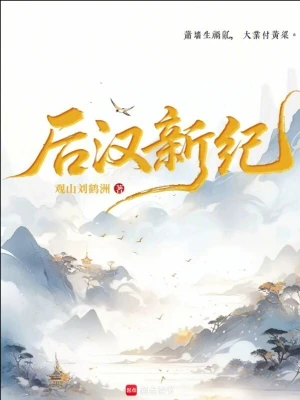
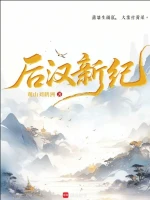
A New Chronicle of the Later Han
后汉新纪
- Status
- Ongoing
- Length
- 1.1M Words
- Genre
- Historical
- Subgenre
- Five Dynasties Ten Kingdoms
- Updated
- 1d ago
- Source
- Qidian
Stats
400Chapters
196Votes
9.5kRecs
33.8kFans
Tags
Honours
Synopsis
In booklists 4
Promising Masterpieces
I’m digging up books with the potential to become big hits. My reviews reflect my genuine impressions while reading, and I hope fellow readers who feel the same will join me in searching for hidden treasures.
100Books692Follows6dUpdated

For Favorites Only
Saved for Later
35Books0Follows12dUpdated
Recommended by a Veteran Reader of Fifteen Years
You can’t go wrong with these recommendations.
72Books111Follows1moUpdated
Book Drought Treatment Center 🔥🔥🔥🔥🔥🔥
This list is so popular 🔥🔥🔥🔥🔥🔥🔥🔥🔥🔥🔥🔥🔥🔥🔥🔥🔥🔥🔥🔥🔥🔥🔥🔥🔥🔥🔥🔥🔥🔥🔥🔥🔥🔥🔥🔥🔥🔥🔥🔥🔥🔥🔥🔥🔥🔥🔥🔥🔥🔥🔥🔥🔥🔥🔥🔥🔥🔥🔥🔥🔥🔥🔥🔥🔥🔥🔥🔥🔥🔥🔥🔥🔥🔥🔥🔥🔥🔥🔥🔥🔥🔥🔥🔥🔥🔥🔥🔥🔥🔥🔥🔥🔥🔥🔥🔥🔥🔥🔥🔥🔥🔥🔥🔥🔥🔥🔥🔥🔥🔥🔥🔥🔥🔥🔥🔥🔥🔥
49Books319Follows1moUpdated
Readers also read
 Seizing the Direct Descendant in the Red Mansion
 Germany: 1914
 Great Ming: His Father Is Useless, So He Must Summon the Founding Emperor
 A Literary Master in Ancient Greece
 Simultaneous Transmigration: Is Everyone Starting Out in Prison?
 Late Tang: The Last Scion of the Imperial Clan
 Sun and Moon: Yongli 1656
 A Great Industrial Nation, Starting with a Fake Student Abroad
 A Dual Status Panel Descends into the Abyss, and the Assassin's Potion Is Right at the Entrance
 The Liu Song Dynasty Isn’t Here to Stir Up Trouble
 Late Tang: A Guide to Winning Over Your Father-in-Law
 I Am Song Taizu
Reader comments 39
Google Translate
When I read Chapter 25, I always had an unpleasant feeling. It wasn't until I read the comments below that I felt the same way that I felt. After thinking about it, I realized the whole story. Why everyone is saying that the protagonist is mediocre and the plot is boring. It's because the protagonist dares not do anything. He is hesitant in everything he does. He is afraid of wolves and tigers. The only thing he dares to do in more than 20 chapters is to arrange for the people under him to pretend to be gods and mischief. Historically, Liu Chengyou deceived Yang Bin and other powerful officials into the palace to kill him, and then forced him to rebel against Guo Wei. In fact, there is no difference between Kangxi's killing of Obai and forcing him to rebel against San Francisco. The only difference is that Kangxi won and Liu Chengyou lost. If Kangxi was besieged by Wu Sangui's soldiers in Beijing and was eventually killed in the suburbs of Beijing, he would be in a coma. But compared to the protagonist, who dared not do anything and only wanted to outlast the powerful ministers, he was still much stronger. When Li Yuan was besieged by Wei Daoer outside the city of Taiyuan as a remnant of Taiyuan, Li Shimin broke out of the siege with light cavalry and changed the protagonist. He must have looked forward and backward and finally reported to the Sui court. When Yang Guang fell, his character determined his fate. There was no trace of heroism in the protagonist.
I know what the problem with this book is. The protagonist does not have the military ability to fight a tough battle at all. He has not been able to find trusted generals like Yang Hu and Murong Ke to fight on his behalf. It would be okay for An Wen to be the governor of Bianliang, and Pingtianxia has sent it.
The plot may be reasonable, but I feel that the protagonist needs to be polished up, otherwise he will appear bland and lack charisma. We are not really living through the past, we are reading novels that have passed through the past.
In fact, to put it simply, the audience wants to see you take action. No matter what action you take, it will not affect the overall situation or collapse the overall situation. You will develop little by little and place your cronies, and you will regain your power little by little inside and outside the court. What I'm afraid of is that you are always looking ahead and looking behind you, being suspicious of this and that, and trying to boil those ministers to death. Then what do you think the audience will see if this is the case? Do they really see an ordinary person drifting with the crowd? Isn't it the audience themselves? Don't you all? Most of us are ordinary people, why should we read novels and also read about our own lives? So bland. Although people often comment on novels, the protagonist has no system and no ability. He can only do this if he goes through it. If you go through it, you may not be as good as them. But basic good novels are not really written like this. They are written entirely according to the rhythm of ordinary people. The protagonist in historical novels may be a hero, a traitor, a reckless man, or a murderer who fears nothing and no one. For example, Sima Yi in history did not really win the world by outlasting people to death, and most of them were party members. The author writes this from the perspective of an ordinary person. The protagonist knows history, so he knows the personality trends of some people, so he often suspects this and that. If you read these dozens of chapters, he is completely a jealous king. Ordinary people know that it is really possible to pass through history. I think so, but the author portrays it too much, and the protagonist often compromises and deals with policies. Although it is the current method, the whole character is portrayed in the novel as having no personality charm, making people feel that the protagonist will be like a puppet, and the plot will be dull, even if he is really a puppet. Therefore, I think the rhythm is right, but some aspects need to be polished, and the suspicious activities in the protagonist's heart should be reduced a bit. There is too much written.
The Later Han should not be called Sanzao Dahan! ? The latter Han Dynasty has nothing to do with the first two Han Dynasties! When Wuhu was messing with China, he ruined the reputation of the Han Dynasty! There are all kinds of people! It was all built by barbarians!
This book is really messed up in the description of the war. In order to allow the infantry to retreat smoothly, the cavalry was cut off. As a result, the author wrote that the entire cavalry army was wiped out. There were still more than 5,000 people defending the city and more than 20,000 people attacked the city. The city was captured in three days and less than 3,000 people died. It is really poisonous.
Vote for a monthly ticket to complain. The protagonist has been extremely stupid recently. Although he already knew that the internal officials named Su were spying on the palace and scheming important ministers, he actually didn't have any suspicion about the intelligence network that didn't give him any information. Now a serious emperor would have started to liquidate the entire department. It was obvious that either Li and Liu were useless, or they had been bribed and had no effect at the critical moment. Besides, Shi's murder was a serious political failure, almost as much as Adou's being forced to kill Zhang Fei and Guan Yu when he came to power.
See Chapter 150
It's good in terms of writing techniques, and the plot of the story set in the Five Dynasties and Ten Kingdoms is attractive enough. However, this book is a historical novel, so it must have strict logic, otherwise the sense of substitution will not be strong. Even if you write about the urban life of the Five Dynasties, as long as it conforms to the historical background, it is still a qualified work, so this is also the conclusion of many historical novels. The reason for this is that the author can no longer deduce it. You can write nonsense but the readers will not buy it. My biggest feeling when I saw the part about the plague is that it was taken too much for granted. The author used famous Chinese medicine to treat the people, but they were not full at the time. Where did he get enough Chinese medicine and alcohol? After spending many chapters describing it, the logic collapsed. Shi Shouxin, a famous general in the Northern Song Dynasty, fought in the south and the north, but ended up working as a spy. I hope the author can do a good study of historical figures and events next time and try to comply with historical logic.
As of Chapter 65, there are good points and areas for improvement. Generally speaking, the quality is still on the upper side. It is not a purely enjoyable article. It can be seen that the author has ideas. Most of the people who criticize it feel that it is not enjoyable enough. Naturally, they are not the target users of this book. It is not recommended for those who cannot settle down. If it is a perfect score of 10, I would give this book 7.5 Points. The standard is still online. The wording is more sophisticated. The protagonist repeatedly hesitates and thinks. This is very realistic and well written. It is absolutely impossible to end the Five Generations just by brutal methods. Heroes like Zhao Kuangyin and Chai Rong It took more than ten years to calm down. Even with the blessing of God's perspective in later generations, it can't change too much. You can only take it slowly from the subtle points. The most important thing is not to rush. If you rush, you will make mistakes. If you make mistakes, you will be ruined. Again, it is not recommended for people who cannot settle down or have no basic understanding of the Five Dynasties and Ten Kingdoms.
When the plot reaches Dafu, the sex becomes repressed. It's almost unwatchable. The coquettish men and women are still coming back. The fifth generation is more direct when it comes to women. I mainly want to see blood flowing like a river. The change of social customs and systems will take one generation to complete. This aspect is subtle and can't be rushed. The protagonist should focus on the military 🙂
Which of the founding emperors did not conquer the world personally? Liu Bang of the Han Dynasty conquered the world personally, and Li Yuan of the Tang Dynasty did not conquer the world personally. All emperors who could only serve as supreme emperors and could not conquer the world themselves had no real power. It is easy to hand over military power, but difficult to take it back.