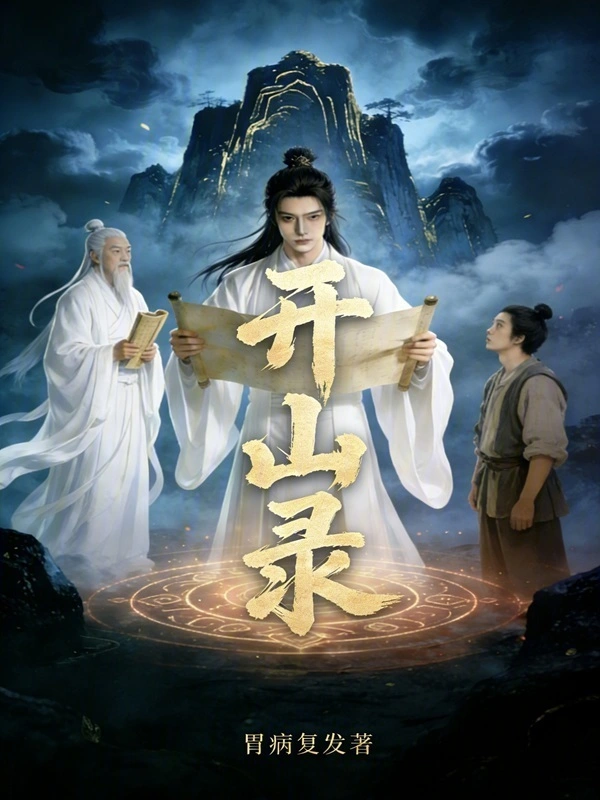
Kaishanlu
开山录
- Status
- Ongoing
- Length
- 252k Words
- Genre
- Eastern Fantasy
- Audience
- Male
- Subgenre
- Eastern Xuanhuan
- Updated
- 7mo ago
- Source
- Qidian
Stats
0Monthly votes
7Recommends
0Fans
48Chapters
Synopsis
Reader comments
Readers also read
 I Just Collected a Corpse, Why Did I Become a Demon?
 Immortal Martial Arts Began with the Great Sui War God
 I Just Traveled Through Time and Became a Superman. Do You Think This Is the World of Immortality?
 Heaven Devouring Holy Demon
 Criminal Investigation Notes 2: Buried Corpse in Songhu
 Night Without Borders
 How Can You Become an Immortal If You Don't Have Money?
 Leader
 The Black Witch's Journey to Another World
 Green Hills
 Xuanjian Immortal Clan
 Become a God from Water Monkey
 Protagonist Insurance Company
The wrath of mortals, against the monks
At a time when the subject of cultivating immortals is crowded together, "Kaishanlu" uses the core setting of "mortals rebel against fate" to reveal the cruelest truth of Lingxi Continent: monks seize the heaven and earth and regard mortals as stupid dogs, but ants can gather in the sand and form a tower, and they can also set off a storm that overturns the world. The most moving thing about this work is that it portrays the humbleness and tenacity of ordinary people so deeply that every reader can feel the anger and courage of resistance of the oppressed between the lines. The story begins in the bloody dusk of Nashan Jianhe Village. Orion Luo Sanwang (later known as Luo Wanggui) witnesses the tragic death of his relatives and friends. The identity of the village chief Lin Xiaohan as a monk is exposed. The sense of powerlessness of mortals in the face of absolute power instantly draws people into the situation. From the annihilation of Jianhe Village, to the purgatory struggle of the Black Stone Mine, to the tragic fall of Long County, the author does not deliberately glorify the path of resistance, but nakedly shows the blood and tears of mortal struggle: women who were used as furnaces, children who were refined into elixirs, and miners who were used as coolies. Countless tragic experiences outline the dark picture under the monks' rule, and also lay the most solid emotional foreshadowing for the resistance of Tawang ghosts. The growth line of Tawang Ghost is the essence of the book. He started from an ordinary hunter who just wanted to protect his daughter. In the desperate situation of losing his home and his daughter being kidnapped, he relied on the opportunity of Jing Xuanzhi to step by step become the leader of mortal resistance. He was not born strong, and would be afraid and hesitant. However, supported by the belief that "mortals are immortal," he gathered the resentment of 600,000 compatriots and turned it into a strange force that suppressed the monks. This setting of "taking a mortal body to resist the heaven of cultivating immortals" breaks the shackles of "the strong will always be strong" in traditional immortal writings, allowing readers to see the true power of faith and unity. The most resonant thing about the work is its profound interpretation of "oppression and resistance". The class gap between monks and mortals is very similar to those insurmountable dilemmas in reality. When you see the Tao Wang ghost leading the miners to fight against the puppet army with their flesh and blood, when you see the people of Long County who would rather die than surrender, when you see Liu Zongwei and other mortal officers giving up compromise and choosing to fight, the tragic and solemn feeling of doing something knowing that you can't do it is enough to poke the softest place in every reader's heart. The mysterious guardianship of Mo Rushen and the strange power of Jing Xuan Paper are more like glimmers of light in the darkness, implying that justice and hope are never absent. There is no absolute good or evil in the book, but there is a clear stance. Ye Minghua's calculations, Qin Yue's betrayal, and the greed of the monks of the sect highlight the purity and difficulty of mortal resistance. But it is this difficulty that makes every small victory seem precious and makes the cry of "Mortals are not ants" ring true. "Kaishanlu" is not only a novel about cultivating immortals, but also a hymn for mortals. It tells us that even if we are at the bottom and have little power, as long as we stick to the bottom line and unite as one, we can split the light in the darkness. When the Tao Wang ghost retreats to the black stone veins with 30,000 survivors, and when Long County turns into a strange city and bites the monks, what we see is not only the climax of the story, but also the spiritual comfort for all the oppressed - the wrath of mortals, although late but arriving, can eventually shake the world.
Novel scene AI generation
Reading books can't be brought in. Try this scene
Novel character setting AI generation
The characters are ready