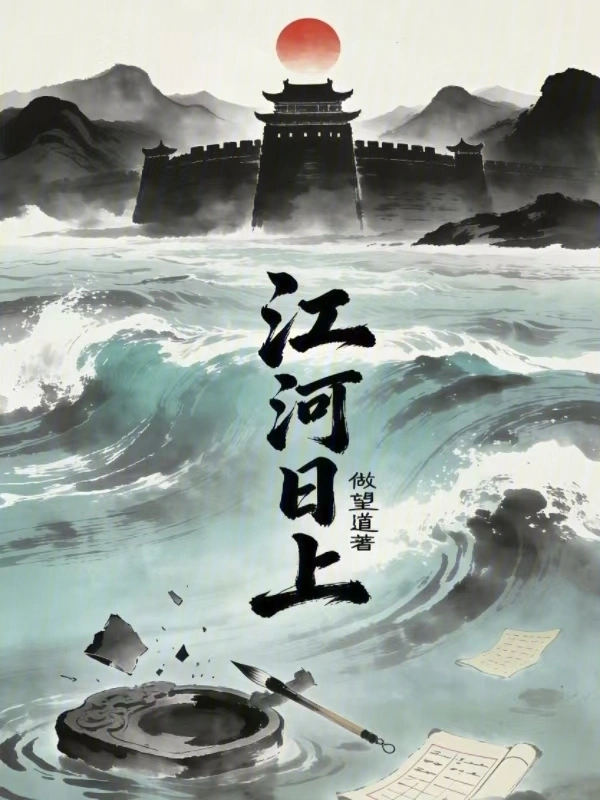
Rivers Are Rising
江河日上
- Status
- Ongoing
- Length
- 119k Words
- Genre
- Historical
- Audience
- Male
- Subgenre
- Alternate History
- Updated
- 6mo ago
- Source
- Qidian
Stats
0Monthly votes
42Recommends
0Fans
40Chapters
Synopsis
Reader comments
Readers also read
 Northern Qi, Sage Khan
 Red Mansion: Start Escaping and Farming from the Equipment Bar
 Fu Ming 1627
 After Lying in Bed for Three Years, He Was Forced to Help the Han Dynasty
 Things About the Two Song Dynasties
 I'm Not a Court Eagle Dog
 Common Man in the World
 Treasures of Troubled Times
 Twenty Years of the Republic of China
 Rebel
Rebel
 I Want to Revive the Tang Dynasty!
 Sir, This Is a Moral Dispute!
 Wang Tang: Make Datang Great Again!
The writing style is good and has a sense of martial arts. Currently, the writing is updated daily. Comrades who like this style are worth a try. Although he is a new writer, his literary background seems to be quite high. If you can water it for the first time, don't nurture the seedlings to death.
Thousand words long review: This chapter has written through the soul and bones of the ancient story After reading this chapter, I couldn't come back to my senses for a long time. My fingertips ran across the text on the screen, as if I could still touch the ancient charm of ink in the lines, as well as the hot emotions and meticulous ideas hidden under the eaves of the blue tiles. If the entire ancient novel is like a pavilion with carved beams and painted beams, then this chapter is like the beams and columns supporting the eaves and corners. It not only has a shocking external tension, but also hides an internal texture that can withstand repeated scrutiny. People can't help but chew it word for word, and the more you read it, the more amazing it becomes. The rhythm control of this chapter can be called a textbook-level example of ancient narrative. The author does not blindly pursue fast-paced machinations, nor does he fall into the rhetoric of slow narrative. Instead, he is relaxed and relaxed, like a musician who is proficient in music, firmly grasping the readers' emotions in the palm of his hand. The chapter opens with a delicate description of the scene. The patter of rain hits the glazed tiles of the vermilion palace wall. The moist wind carries the guise of the wine shop at the end of the long street swaying. The copper bells on the corners jingle. In just a few strokes, a pyrotechnic ancient world is outlined, allowing readers to be instantly immersed in it. This soothing opening is not a meaningless introduction, but it accumulates power for the subsequent plot explosion. When the protagonist stumbles and pushes open the mottled carved wooden door, and when the dusty secret letters are unfolded one by one, all the previous calmness turns into a charged bow and arrow, hitting the heart with one blow. The reversal of the plot and the conclusion of the foreshadowing are even more amazing. A seemingly insignificant detail in the previous article - the jade pendant with a dark pattern engraved on half of the protagonist's sleeve, a bronze tiger talisman carelessly touched by the supporting character, and the sword mark covered by moss in the corner - all become key clues in this chapter to connect the truth. The author did not deliberately create suspense, nor did he reverse it for the sake of reversal. All the foreshadowing was like spring rain falling into the soil, quietly but deeply rooted in people's hearts. When the truth emerges, the reader suddenly realizes that the author had already laid the groundwork dozens of pages ago. This kind of writing style, which is as simple as a gray line and has thousands of miles of threads, not only makes the logic of the power struggle tightly coherent, but also gives readers a "treasure hunt"-like reading pleasure. They can't help but look back at the previous text to correspond to the ignored details one by one. The characterization is the highlight of this chapter. If the plot is the skeleton of an ancient story, then the characters are the soul of the story, and this chapter just makes each character stand vividly on the paper. The protagonist is no longer a frail "knight from a famous family" or a "rich man in the palace", but has his own struggles and weaknesses. When he faced the choice between the righteousness of his family and country and the love of his children, his clenched fists, the red threads under his eyes, and the suppressed sobs in his throat were all deeply portrayed by the author. He was not born a strong man, he just gritted his teeth and shouldered the responsibilities in the troubled times. This kind of real vulnerability is far more touching than the perfect heroic image. The portrayal of the supporting characters is also brilliant. The seemingly indifferent and powerful official in the court said a whisper before his death, which instantly overturned the previous stereotype and gave people a glimpse of the feelings for his family and country that he had endured for half his life. The maid in green who has been silently guarding the protagonist said "Young Master, please leave, I will guard here" without fancy words, but it hides a heavy sense of loyalty and courage. Each character has his or her own arc, there is no absolute good or bad, only complex human nature, and this is the most touching part of ancient stories. The texture of the text is the icing on the cake for this chapter. The author's writing style is delicate and restrained, without piling up gorgeous rhetoric, but it has the power to directly touch people's hearts. When describing parting, there was no hoarse cry, only "He turned around and jumped on the horse, his clothes fluttering like butterflies, but he still did not swing his whip, just letting the wind blow the hair on his forehead"; when describing the reunion, there was no exaggerated embrace, only "She stood in the corridor, seeing him coming on the moon, her eyes were hot, and the tea cup in her hand almost slipped." This minimalist expression is more charming than the thick and colorful description. The emotions hidden between the lines are like a cup of aged sweet-scented osmanthus wine. It is dull when you first read it, but it leaves a fragrant aftertaste. What is even more rare is that this chapter not only has a wonderful plot and vivid characters, but also has a profound core. It does not stay on the surface of power struggles and the love between children, but explores propositions about family and country, loyalty, and choices. The transformation completed by the protagonist in this chapter is not only a change of identity, but also a maturity of mind; those seemingly unsolvable dilemmas are precisely a test of the human heart. As readers follow the protagonist through all this, they can't help but start to think: What choices would they make if they were in that turbulent era? This kind of immersive thinking makes this chapter far more valuable than an ordinary story chapter. It is more like a mirror, reflecting the chivalrous tenderness hidden in everyone's heart. When the scroll was closed, the wind outside the window still seemed to carry the fragrance of the ink from the ancient scroll, and the people in the story were still performing their legends in that world. This kind of chapter is worth reading again and again, and it is worth letting more people see it.