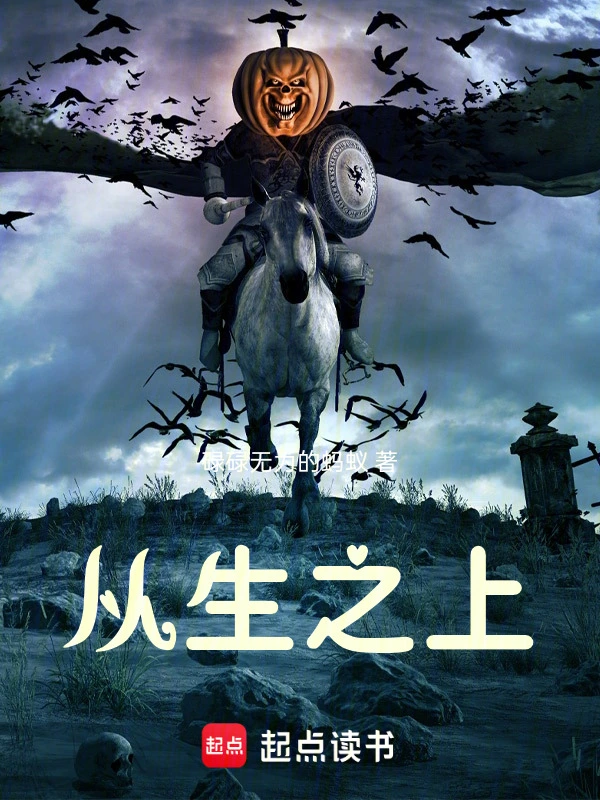
Above Life
从生之上
- Status
- Ongoing
- Length
- 329k Words
- Genre
- Sci-Fi
- Audience
- Male
- Subgenre
- Interstellar Civilization
- Updated
- 8mo ago
- Source
- Qidian
Stats
0Monthly votes
1Recommends
0Fans
51Chapters
Synopsis
Reader comments
Readers also read
 Psychic Worlds: the Paladin Forges His Body into a Numerical Monster
 Doomsday Convoy: I Can Extract Unlimited Entries
 Oh Yeah! I've Seen Fake People
 My Low-Dimensional Universe Model
 Criminal Investigation Notes 2: Buried Corpse in Songhu
 Night Without Borders
 How Can You Become an Immortal If You Don't Have Money?
 Leader
 The Black Witch's Journey to Another World
 Green Hills
 Xuanjian Immortal Clan
 Become a God from Water Monkey
"Above All Living Things": When cultivators step into the Cthulhu-style fantasy battlefield - a work with stunning setting but questionable narrative rhythm 1. Core setting: a creative fusion of Eastern and Western fantasy elements The most impressive thing about "Above All Living Beings" is its bold fusion of the Eastern cultivation system and Western fantasy/Cthulhu elements. The protagonist Lin Fan carries the "Hunyuan Daode" and travels to a dark world where multiple races coexist. The setting itself is like a fascinating thought experiment: · Cultivation aura vs. Evil miasma pollution: Lin Fan's purification power has become a key weapon against the Cthulhu-style "indescribable pollution". This opposition of "order and chaos" brings a unique chemical reaction to the battle scene. When the light cyan aura collides with the dark purple evil miasma, readers can feel the aesthetic collision of two different power systems. · A fantasy world from a cultivator's perspective: Lin Fan uses a cultivator's thinking to interpret elven runes, dwarf forging and ocean sacrifices, bringing a fresh perspective to traditional fantasy settings. His exploration of the "Dark Blue Heritage" is essentially a cultivator's "deciphering of ancient secrets" from another world. · Cultivation-based solution to racial conflicts: At the crossroads between the oppressive rule of the orcs, the arrogance and isolation of the elves, and the stubborn xenophobia of the dwarves, Lin Fan's cultivation ability has become a special bridge across racial barriers - his power of purification is valuable to everyone. 2. Character creation: the arc of humanity shining in a dark world The novel shows considerable delicacy in character creation, especially several core characters: · Lin Fan: Avoiding the common "Long Aotian" template. His growth is gradual and full of costs - every breakthrough is accompanied by the struggle of lack of resources, the anxiety of limited abilities, and the suffering of moral dilemmas. In Chapter 27, he did not hesitate to destroy the spiritual crystal fragments to save Yueru, which shows his empathy that goes beyond utilitarian calculations. · Yueru: From the mysterious battle partner to the gradual revelation of her life experience, the clever interweaving of her revenge line and the main line (Eye of the Abyss) makes the personal narrative and the grand narrative organically resonate. The setting of the soul link is not only a plot device, but also a catalyst for emotional deepening. · Supporting characters: the combination of the dwarf Bronzebeard's roughness and craftsmanship, the elf Alice's transformation from arrogance to cooperation, the crazy but crucial "Crow" Jimmy, the Tide Priest who is both an enemy and a friend... Each supporting character has a clear motivation and growth trajectory. What is particularly worth mentioning is the creation of the villain: the mad scientist temperament of the Corpse Stitcher, the Cthulhu-style terror of the Faceless Men of the Eye of the Abyss, and the brutal but reasonable tribal logic of the Blood Claw tribe, which together form a multi-layered villain spectrum that avoids a simple "dichotomy of good and evil." 3. World view construction: grand, dark and logically consistent The author has constructed a convincing dark fantasy world: · The ecology of Sanchakou: As the main stage, this border town with four mixed ethnic groups perfectly presents the social ecology under the "law of the jungle". From black market transactions to tribal taxation, from underground conspiracies to open conflicts, every detail enhances the cruel texture of the world. · The mystery of the Deep Blue Legacy: Through the gradual revelation of clues (metal pieces → elf notes → tidal inscriptions → messenger memories), an ancient secret that spans three thousand years is peeled back layer by layer. What is particularly outstanding is the reversal of the truth revealed in Chapter 27 - "What is sealed is not evil but hope", which elevates the simple "treasure scramble" to the level of a philosophical dilemma. · Integration of power systems: cultivation, elf magic, dwarf technology, the magic of tide priests, undead magic... These different power systems are organically connected by the two core settings of "evil miasma pollution" and "dark blue legacy", avoiding the power confusion problem that is common in multi-system works. 4. Narrative skills and rhythm control: Highlights and challenges coexist Highlights: 1. Control of multi-line narrative: Starting from Chapter 18, Lin Fan line, Yue Ru line, and Su Li line advance simultaneously, and finally converge in the mine to reveal the truth, demonstrating the author's ability to control complex narrative structures. 2. The gradual release of suspense: core concepts such as "key", "carrier", "messenger" and "original tide" gradually become complete like a puzzle, maintaining the reader's desire to explore. 3. The level of combat description: from Lin Fan's early exploration of aura, to the teamwork in the mid-term, to the desperate battle against the ancient guards in the later stage, the combat scenes escalate with the growth of the character. Points worth discussing: 1. The rhythm fluctuates greatly: the information density and plot advancement speed of some chapters (such as some transitional chapters) slow down significantly, while key chapters (such as Chapters 27-29) are almost all high-intensity advancement, which may lead to an uneven reading experience. 2. Set the density of explanation: In some chapters, the explanatory dialogue on the worldview is slightly concentrated, occasionally interrupting the narrative flow. For example, the explanation part about "three-phase fuze" in Chapter 26 can be considered to be more naturally integrated into the action. 3. The challenge of tying up the branch lines: As the story unfolds, multiple branch lines such as the Blood Claw tribe line, the corpse stitcher line, the pirate line, and the Tide Priest line coexist. How to perfectly tie them up with the main line (Eye of the Abyss/Shipwreck) without seeming rushed will be a big test in the later stage. 5. Core Theme: Multiple Possibilities of Finding Light in the Dark Under the surface of fantasy adventure, the novel explores several profound themes: · The meaning of sacrifice: From the crew of the Herring Gull volunteering to become carriers, to Yueru's teacher dying for her, to the adventures of Lin Fan's team, the novel constantly asks: What is the price worth it? Whose sacrifice is more valuable? · The relationship between knowledge and danger: Deep Blue Heritage is essentially "dangerous knowledge" - it may save the world or destroy it. This exploration of the duality of knowledge gives the treasure-hunting adventure an intellectual depth. · Possibility of racial coexistence: In a world oppressed by orcs, closed by elves, and exclusive by dwarves, the very existence of Lin Fan's team as an inter-racial team is an interpretation of the title of "Above All Living Things" - true transcendence of race is based on mutual understanding under a common survival crisis. 6. Improvement Suggestions and Development Potential Short-term improvements: 1. Balance the rhythm: Insert appropriate "breathing moments" between high-intensity chapters for character interaction and emotional development. For example, the psychological adaptation process after Lin Fan and Yue Ru's souls are linked can be slightly expanded. 2. Visual enhancement: Some complex settings (such as three-phase fuses, barrier nodes) can be presented through more vivid metaphors or limited understanding from the character's perspective to reduce cognitive load. 3. Naturalization of dialogue: Part of the explanatory dialogue can be transformed into an inner monologue, a diary fragment, or a "show rather than tell" action description. Long-term development: 1. Deep exploration of the power system: How can Lin Fan's cultivation system be further integrated and innovated with the local power system? Can a unique "three-phase cultivation technique" be developed? 2. The deepening of the moral dilemma: Faced with an existence like "Original Tide", is there a third way besides sealing/release? 3. Horizontal expansion of the worldview: Currently mainly concentrated in Sanchakou and its surroundings, broader worlds such as the Emerald Forest, the Dwarf Kingdom, and the Endless Sea can be gradually revealed. 7. Overall evaluation: A high-quality fantasy masterpiece worth looking forward to "Above All Creatures" is a fantasy novel with stunning settings, vivid characters, and a solid world view. Its bold attempt to combine Eastern cultivation with Cthulhu-style horror brings fresh air to the increasingly homogeneous fantasy market. The author strives to find a balance between grand narrative and delicate emotions, and shows good structural ability in multi-line advancement. Although there is still room for optimization in terms of narrative rhythm and setting explanation, these are more technical challenges than fundamental flaws. As the story progresses and the author's writing matures, these problems will hopefully improve. For readers who love dark fantasy, multi-ethnic conflicts, exploration of ancient secrets, and themes of "order versus chaos", "Above All" provides rich reading enjoyment. It is not satisfied with simply defeating monsters and upgrading, but attempts to explore deeper propositions such as sacrifice, knowledge, and coexistence within the framework of swords and magic. Final score: 8.2/10 · Setting innovation: 9.5/10 · Character creation: 8.5/10 · World view construction: 9.0/10 · Narrative rhythm: 7.5/10 · Depth of Thought: 8.0/10 This is a work that is still growing, but the imagination and narrative ambition it has already shown give people every reason to expect it to shine even more dazzlingly in subsequent chapters. When Lin Fan finally stands in front of the skeleton door, the choice he needs to make may determine whether this dark world will usher in dawn or fall into a deeper abyss - and readers can't wait to witness that moment.