


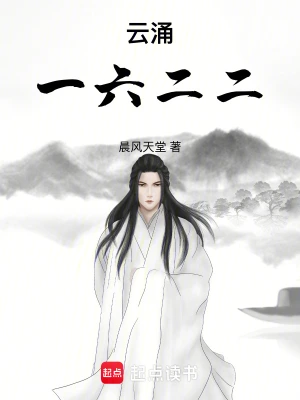
Clouds over 1622
云涌一六二二
- Status
- Completed
- Length
- 828k Words
- Genre
- Historical
- Subgenre
- Song-Yuan-Ming Dynasties
- Updated
- 4mo ago
- Source
- Qidian
Stats
409Chapters
0Votes
5.3kRecs
13kFans
Tags
Synopsis
More by this author
 Man from Ten Thousand Years Ago
 The Ming Dynasty's Tycoon
 The Crimson Song Dynasty
 The Prince Consort's Self-Cultivation
 The Great Era Begins in 1983
 The Great Era Begins in 1980
 The Song Dynasty's Top Scholar
 A Good Uncle in the Tang Dynasty
 Lu Ge Comes from Earth
 My Wife Hasn’t Hit Me in Three Days
 The Rise of a Military Strategist in the Warring States
 Twenty Years of Turmoil
Readers also read
 An Important Town in the Residual Tang Dynasty
 The Corpse Plague of 1916
 In the Ming Dynasty, the Days When the Cows and Horses Turned Over
 Chronicles of the Red Mansion
 Hurry, Hurry, as the Law Commands
 Reviving the Great Song by Impersonating the Emperor
 Becoming the Godfather of Industry, Starting in Beiyang
 The Bat Prince Wanders the Heavens
 Simultaneous Transmigration: Two Zodiac Charms for Everyone
 Late Ming: Dashun Never Retreats
 How Grand Is the Adviser!
 Great Ming: The Top Scholar from a Humble Family!
 The Last Conscience of the Northern Song Dynasty
 The Tang Dynasty’s First Manor
Twenty Years of Turmoil
The Tang Dynasty’s First Manor
Twenty Years of Turmoil
 Reborn as a Great Cop in Osaka
The Rise of a Military Strategist in the Warring States
My Wife Hasn’t Hit Me in Three Days
Lu Ge Comes from Earth
A Good Uncle in the Tang Dynasty
Reborn as a Great Cop in Osaka
The Rise of a Military Strategist in the Warring States
My Wife Hasn’t Hit Me in Three Days
Lu Ge Comes from Earth
A Good Uncle in the Tang Dynasty
Reader comments 30
Google Translate
At the end of Wanli's reign, the Ming Dynasty could not be saved.
The self-correction function is lost.
I almost thought the protagonist looked like Tao Baibai.
What mistakes are easy to make in historical novels❓
Before the Ming Dynasty, the emperor was not called "Emperor". In the Song Dynasty, he was mostly called "Guanjia", and in other dynasties, he was called "Your Majesty". In the Ming Dynasty, the emperor was occasionally called "Emperor", and in most cases he was called "Your Majesty". After Kangxi of the Qing Dynasty, people began to be generally called "Emperor". Princes and princes call themselves: Princes in the pre-Qin and Han Dynasties can be called "Gu", and a few can be called "Ignores". After the Wei, Jin, Southern and Northern Dynasties, the title of "Ignores" gradually became exclusive to the emperor, and princes, princes and princes can only be called "Gu" or "I". Song, Yuan and Ming called themselves "I" or "I". Before the Qing Dynasty, princes and princes rarely called themselves "this king". Starting from the Kangxi year of the Qing Dynasty, princes generally called themselves "this king". In ancient times, women called themselves: "nujia" was a modest name for women after the Song Dynasty. Women in the Han and Tang Dynasties more often called themselves "concubine", and noble women could call themselves "I" and "I". Before the mid-Ming Dynasty, most dynasties used copper coins for daily transactions, with very little gold and silver. It was only in the mid-to-late Ming Dynasty that silver became the mainstream currency. In the late Ming Dynasty, "meeting votes/deposit checks" appeared among the people. There were no unified rules. Most of them were deposits and withdrawals/exchange receipts from acquaintances or local circulation, and were not legal currency. In the early years of Daoguang in the Qing Dynasty (1823): Rishengchang Bank was established, and private banks began to issue standardized banknotes, focusing on cross-regional exchange. They were only circulated in Shanxi merchant trade circles and major commercial ports, and were not yet popular. In the third year of Xianfeng in the Qing Dynasty (1853): the official issued the Ministry of Revenue official banknotes (official banknotes), which were forced to circulate nationwide. At the same time, the network of private banknotes expanded to the whole country, and official and private banknotes ran parallel. The use of banknotes entered an explosive period and became the "starting point of popularization." High-leg tables and chairs only completely replaced the low tables for sitting on the floor in the Song Dynasty. During the Han and Tang dynasties, people knelt and sat on the tables to eat and discuss matters. The furniture was mainly low tables and couches. The memorial system was only established during the Kangxi period of the Qing Dynasty. Officials in the Tang and Song Dynasties used "memorials", "tables" and "statements" when submitting memorials, while in the Ming Dynasty they used "memorials" and "memorials". There is no such thing as "memo" or "zhezi". In ancient formal occasions, the hand-over gesture was performed with the left hand outside and the right hand inside. The right hand outside was a special "unlucky gift" for funerals. "Better greetings" is a unique etiquette of the Qing Dynasty. It was mostly used by subordinates to superiors and juniors to elders. During the Tang and Song dynasties, people often performed cross-hand salutes and bows to greet greetings when they met, and there was no such thing as "sending greetings". {"NickName":"Supervision and Restriction","UserId":406440657} Before the Yuan Dynasty, subordinate officials rarely called superior officials "adult". In some dynasties, subordinates called eunuchs "adult", and in some dynasties, they called their parents and elders "adult". Beginning in the Yuan Dynasty, lower-level officials would occasionally call officials of second-rank and above "sir". From the middle and late Ming Dynasty, only officials of third-rank and above would be called "sir" by their subordinates. Officials with lower ranks could not be called "sir". However, in the late Ming Dynasty, there began to appear a few cases where officials above the fourth rank were called "adult". Before the mid-Qing Dynasty, following the rules of the Ming Dynasty, only officials of third rank or above would be called "adult". Starting from the mid-Qing Dynasty, calling officials "adult" gradually became common for lower-level officials. Attention! ! ! What is mentioned above is that lower-level officials refer to higher-level officials. No matter which dynasty, it is absolutely impossible for higher-level officials to call lower-level officials "sir". Some novels even write about emperors or nobles calling other officials "sir". This is simply contrary to Tiangang! ! ! Finally, let's talk about the problem of civilians calling officials Before the middle and late Qing Dynasty, civilians in various dynasties and generations called officials differently, and most of them called them "officials" and "masters". From the middle to late Qing Dynasty, civilians also called officials "adult".
When the five people who resisted taxes in the Ming Dynasty were openly called "heroes" and could still erect monuments (heroes who are unwilling to pay even thirty taxes, I would have killed your whole family sooner rather than later), the Ming Dynasty was actually considered to have perished. Basically he breathed his last after "the school grounds were paid".
Is it awesome? Dare you not add more updates? !
So angry
In the past few days, I have watched too much of Bai Yuan. Yuan is a boastful, selfish, self-respecting person who wants to raise the bandits to learn from his predecessors, the Li family. Push the Ming Dynasty into the abyss, and the descendants of the Qing Dynasty can still give it to high-ranking officials. If there are really many officials in the Qing Dynasty, they are worthless, and they can be given by humans or ghosts. It's scary to think about it. Credit goes to others and they remember the kindness.
Finally a new book is out, it's a surprise.
Why does the protagonist always say that if Apocalypse dies and Chongzhen ascends the throne, he will die? Will the protagonist not let Apocalypse survive?
I hope the author can keep writing. I always like your articles.
The title of the book automatically filters out people from a province