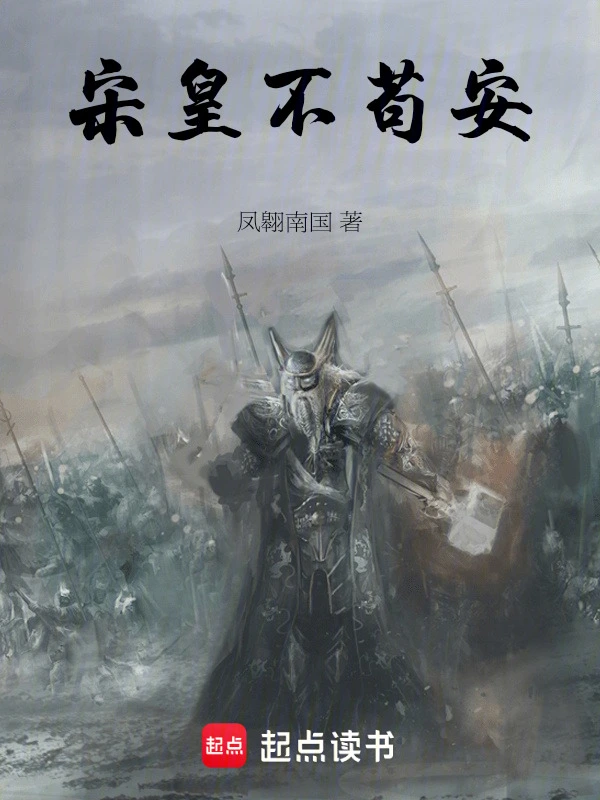
The Emperor of Song Dynasty Was Not Peaceful
宋皇不苟安
- Status
- Completed
- Length
- 690k Words
- Genre
- Historical
- Audience
- Male
- Subgenre
- Song-Yuan-Ming Dynasties
- Updated
- 4mo ago
- Source
- Qidian
Stats
0Monthly votes
903Recommends
2kFans
205Chapters
Tags
Synopsis
Reader comments
Readers also read
 In the Red Mansion: Escort Daiyu to Beijing at the Beginning
 Please Call Me Your Majesty the Tsar
 Talker in the Song Dynasty
 1914 Begins with the Rejection of the Schlieffen Plan
 Never Walk Alone!
 I Want to Revive the Tang Dynasty!
 Late Tang Dynasty: Last Descendant of the Clan
 I Am Drawing a Hot-Blooded Episode in the Zhiyu Episode!
 American Comic: a Soldier Who Travels Through Time and Starts Raising the People of His Motherland
 Ji Hantianxia
 New Era of Later Han Dynasty
 Liu Song Is Not Doing Well
 Douluo's Current Heroes
 Douluo Peerless: Founding the Federation and Becoming the Father of the Nation
The mid-Tang Dynasty was the first time in Chinese history that all aspects of development were suitable for the steam revolution. The foundation of the industrial revolution has been laid in all aspects, 1. Coal is used on a large scale. 2. The blast furnace iron smelting technology leads the world. 3. Mature hydraulic machinery (steam engine front-end technologies such as air blasts, water drainage, waterwheels, etc.) 4. Developed urban commerce. 5. The large workshop system is close to the original factory. 6. The craftsman class is huge in number. 7. International trade flourishes (Persia, Arabia, Southeast Asia). As long as the time travelers control the land of China, they can start the steam industrial revolution within 20–30 years.
What mistakes are easy to make in historical novels❓
Before the Ming Dynasty, the emperor was not called "Emperor". In the Song Dynasty, he was mostly called "Guanjia", and in other dynasties, he was often called "Your Majesty". In the Ming Dynasty, the emperor was occasionally called "Emperor", and in most cases he was called "Your Majesty". After Kangxi of the Qing Dynasty, people began to be generally called "Emperor". Princes and princes call themselves: Princes in the pre-Qin and Han Dynasties can be called "Gu", and a few can be called "Ignores". After the Wei, Jin, Southern and Northern Dynasties, the title of "Ignores" gradually became exclusive to the emperor, and princes, princes and princes can only be called "Gu" or "I". Song, Yuan and Ming called themselves "I" or "I". Before the Qing Dynasty, princes and princes rarely called themselves "this king". Starting from the Kangxi year of the Qing Dynasty, princes generally called themselves "this king". In ancient times, women called themselves: "nujia" was a modest name for women after the Song Dynasty. Women in the Han and Tang Dynasties more often called themselves "concubine", and noble women could call themselves "I" and "I". Before the mid-Ming Dynasty, most dynasties used copper coins for daily transactions, with very little gold and silver. It was only in the mid-to-late Ming Dynasty that silver became the mainstream currency. -In the late Ming Dynasty, "meeting votes/deposit checks" appeared among the people. There were no unified rules. Most of them were deposits and withdrawals/exchange receipts from acquaintances or local circulation, and were not legal currency. In the early years of Daoguang in the Qing Dynasty (1823): Rishengchang Bank was established, and private banks began to issue standardized banknotes, focusing on cross-regional exchange. They were only circulated in Shanxi merchant trade circles and major commercial ports, and were not yet popular. In the third year of Xianfeng in the Qing Dynasty (1853): the official issued the Ministry of Revenue official banknotes (official banknotes), which were forced to circulate nationwide. At the same time, the network of private banknotes expanded to the whole country, and official and private banknotes ran parallel. The use of banknotes entered an explosive period and became the "starting point of popularization." High-leg tables and chairs only completely replaced the low tables for sitting on the floor in the Song Dynasty. During the Han and Tang dynasties, people knelt and sat on the tables to eat and discuss matters. The furniture was mainly low tables and couches. The memorial system was only established during the Kangxi period of the Qing Dynasty. Officials in the Tang and Song Dynasties used "memorials", "tables" and "statements" when submitting memorials, while in the Ming Dynasty they used "memorials" and "memorials". There is no such thing as "memo" or "zhezi". In ancient formal occasions, the hand-over gesture was performed with the left hand outside and the right hand inside. The right hand outside was a special "unlucky gift" for funerals. "Better greetings" is a unique etiquette of the Qing Dynasty. It was mostly used by subordinates to superiors and juniors to elders. During the Tang and Song dynasties, people often performed cross-hand salutes and bows to greet greetings when they met, and there was no such thing as "sending greetings". Before the Yuan Dynasty, subordinate officials rarely called superior officials "adult". In some dynasties, subordinates called eunuchs "adult", and in some dynasties, they called their parents and elders "adult". Beginning in the Yuan Dynasty, lower-level officials would occasionally call officials of second-rank and above "sir". From the middle and late Ming Dynasty, only officials of third-rank and above would be called "sir" by their subordinates. Officials with lower ranks could not be called "sir". However, in the late Ming Dynasty, there began to appear a few cases where officials above the fourth rank were called "adult". Before the mid-Qing Dynasty, following the rules of the Ming Dynasty, only officials of third rank or above would be called "adult". Starting from the mid-Qing Dynasty, calling officials "adult" gradually became common for lower-level officials. Attention! ! ! What is mentioned above is that lower-level officials refer to higher-level officials. No matter which dynasty, it is absolutely impossible for higher-level officials to call lower-level officials "sir". Some novels even write about emperors or nobles calling other officials "sir". This is simply contrary to Tiangang! ! ! Finally, let's talk about the problem of civilians calling officials Before the middle and late Qing Dynasty, civilians in various dynasties and generations called officials differently, and most of them called them "officials" and "masters". From the middle to late Qing Dynasty, civilians also called officials "adult". {"NickName":"Supervision and Restriction","UserId":406440657}
In fact, a second set of simplified Chinese characters should be implemented. The first set of simplified characters we are using now was actually developed by the same person as the second set of simplified characters that was abolished. The second set of simplified characters has actually been used for several years, and some people still use it. Due to some unexplainable reasons, the second set of simplified characters was abolished. Otherwise, we would all be using the second set of simplified characters now. The second set of simplified characters was easier to read in ancient times.
After reading the previous one, let's savor this one
Come on, author, the clouds will clear up soon.
Overall, the writing so far is pretty good. The author will get better and better if he persists.
Dear writer, your new book is very good. I have joined the new book investment group. Please update~
The writing is really interesting, but unfortunately there are not many people. The author, please keep updating 😭
The third golden chapter, psychological description, has too many God's perspectives, and I have no desire to read further. 😔
Check in
Well written, support, support, support!
Well written, worth reading, keep up the good work
I hope the author will continue to work hard
Author
(Song Dynasty) novels should choose Water Margin novels, which can easily attract interest in reading novels.
I am bored. The plot is as light as water.
The writing is very good, and I give you recommendation votes every day.
The writing is good. Writing about the mid-Southern Song Dynasty is a very niche subject. Not many people have written about it. If it can be completed, it should become a benchmark for works in the mid-Southern Song Dynasty. Come on
Author
Do all the novels you open have multiple female protagonists?
I bought a vernacular version of "Historical Records". The feeling of reading this book is almost the same as reading that book 😆
Author
Can you answer the previous question?
Author
What I mean is that the (Song) novel should choose the review of the novel Water Margin. It can easily attract the interest of reading the novel. Can you answer it?