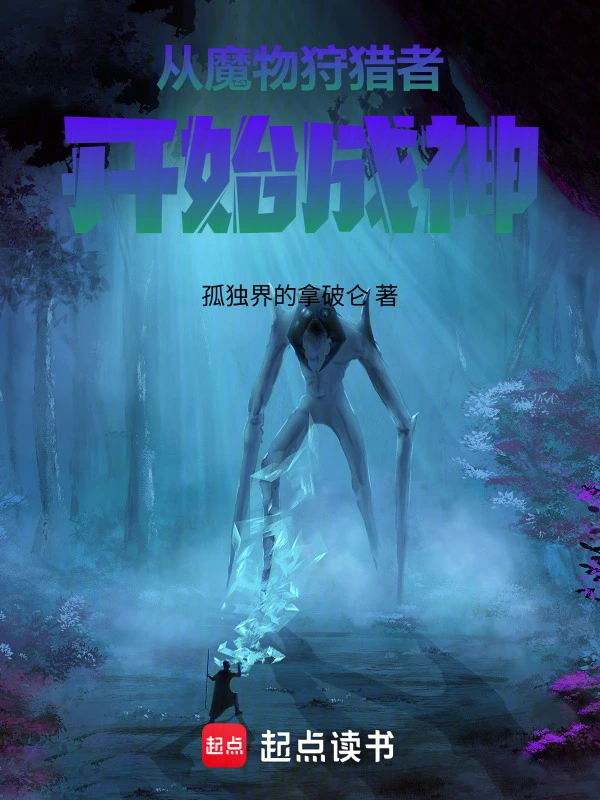
Become a God from a Monster Hunter
从魔物狩猎者开始成神
- Status
- Ongoing
- Length
- 184k Words
- Genre
- Gaming
- Audience
- Male
- Subgenre
- Game Otherworld
- Updated
- 8mo ago
- Source
- Qidian
Stats
0Monthly votes
6Recommends
0Fans
71Chapters
Synopsis
Reader comments
Readers also read
 CS: Start by Creating a Genius Character
 CS: I'm a Fan, What the Hell Is the Shrimp Fishing System?
 I Developed the Three-Body Problem, and Players Recharged While Scolding Me!
 Let Me Explain the Guarantee
 Criminal Investigation Notes 2: Buried Corpse in Songhu
 Night Without Borders
 How Can You Become an Immortal If You Don't Have Money?
 Leader
 The Black Witch's Journey to Another World
 Corpse Hunter
 Green Hills
 Xuanjian Immortal Clan
Go to Taobao and spend one thousand to buy tens of thousands of subscriptions
A multi-dimensional examination and framework thinking on the article "Becoming a God from a Monster Hunter" - a non-professional reading attempt
Abstract: This article aims to make a preliminary and descriptive reading attempt on the online novel "Becoming a God from a Monster Hunter". The author must admit frankly that I am by no means an expert in the vast and complex field of contemporary online literature, especially fantasy narratives. Therefore, the purpose of this article is not to make some kind of judgment on literary value or in-depth typological analysis, but to try to start from the perspective of an ordinary reader and develop a series of framework and conjectural thinking around some surface narrative features and deep cultural logic that the text may contain. This article will give a rough outline of this long narrative work mainly from the macro dimension of world construction, the meso dimension of the growth curve, the micro dimension of the discourse system, and the overall dimension of text function. All discussions are based on personal limited and one-sided reading experience, and are full of inevitable subjective assumptions. They are purely for reference. Readers and the original author are kindly requested to understand. Keywords: Internet fantasy novel; narrative paradigm; growth curve; world construction; non-professional interpretation Introduction: Boundaries, limitations and the possibility of speech Before starting any form of discussion on the work "From Monster Hunter to God", delineating the boundaries of speech and being honest about one's own limitations is a crucial first step. I must state again, even with an almost stubborn attitude: I lack a systematic and academic understanding of Internet literature, especially "fantasy", a genre full of oriental fantasy and characteristics of modern consumerism, its development history, genre conventions, classic texts and critical discourse. My knowledge reserve is fragmented, and my observation perspective is purely emotional. Therefore, from the beginning of its creation, this text has voluntarily given up any attempt to be regarded as "authoritative criticism". It is more like a wandering reading note. Its value may not lie in reaching any conclusive conclusions, but in recording the fluid, uncertain, and possibly even contradictory personal feelings of this ordinary individual when facing a complex narrative text. The choice to start from the four dimensions of world construction, growth curve, discourse system and text function is also due to the convenience of a narrative strategy, rather than based on some rigorous literary theoretical model. These four dimensions are like four rough keys. They may be able to be inserted into the keyhole, but it is absolutely impossible to open all the doors of the labyrinth of text. What they provide is only a few limited observation points with a strong personal perspective. I know very well that the richness of an online novel, which often contains millions of words, and its complex interaction with the current social and cultural psychology are far beyond the scope of a few simple analysis categories. The simplification and modeling of this analysis method is a reflection of my non-professionalism, and I would like to ask for your understanding. Before getting to the point, I need to defend the lengthy nature of this article (i. E. This review). The expansion of its length does not stem from the density of information. On the contrary, it stems from the anxiety that "words cannot make sense" when faced with a complex object and the futile efforts to use more words to get to the core (but never reach it). I hope that this seemingly complicated and roundabout way of speaking can, to a certain extent, truly restore the entanglement of thoughts and the difficulty of expression when a non-professional reader tries to understand a pop culture text. Macro dimension - the "possibility space" and rule tension of world construction The cornerstone of the charm of any successful fantasy narrative often lies in the "second world" it constructs that is different from daily experience. The title "Becoming a God from a Monster Hunter" itself has revealed to readers a very attractive "possibility space": a heterogeneous world where "monsters" and "hunting" behaviors exist, and an extraordinary path from a low-level "hunter" to the ultimate "god" status. This forms the starting point for our interpretation of its macrostructure. From a macro level of world building, the first thing this work needs to solve is the balance between the "self-consistency" and "novelty" of its basic rules. The so-called "self-consistency" refers to the power system, power hierarchy, social structure and even physical laws within this fantasy world, which need to maintain a basic logical coherence to prevent readers from abandoning the book because they feel "out of touch". The "novelty" is related to the degree of the author's imagination, that is, whether he can provide sufficiently unique worldview elements (for example, a unique monster ecology, an innovative source of power, a unique social organization form, etc.) Among the vast sea of similar works. According to the author's very cursory browsing, this work seems to be making some noteworthy attempt on this balance beam. It may have established a power system with a certain level of hierarchy (the hint from "hunter" to "god" can be seen). This world may contain rules for the flow and competition of certain resources (perhaps "magic power", "vital energy" or other titles). The setting of these rules is not only the engine that drives the plot, but on a deeper level, it is a metaphor for a certain universal logic about competition, accumulation and promotion in the real world. Furthermore, the depth of this world construction may also be reflected in the design of its "monster" system. "Monsters" are not just experience packs or sources of equipment for the protagonist to upgrade. Can they themselves constitute a self-sufficient "other" world with their own ecology and behavioral logic? Is their relationship with humans (or human-like intelligent races) simply hostile, or is there the possibility of more complex symbiosis, utilization or even cultural integration? What are the ethical boundaries of the "hunting" behavior in the title? Will it be given a more complex cultural or philosophical meaning beyond survival and becoming stronger? How these issues are handled will largely determine whether this fantasy world is a flat background board or a stage with a sense of depth that can arouse readers' desire to continue exploring. Of course, for a cool novel with the ultimate orientation of "becoming a god", the priority of in-depth exploration of the world may give way to the pursuit of the protagonist's growth rate. This itself is a common trade-off under the joint action of genre conventions and readers' expectations. Meso-level dimension - the rhythm control of the growth curve and the density of "cool points" The core charm of online fantasy novels lies largely in the clearly visible and continuously upward "growth curve" of the protagonist. The title "Becoming a God from Monster Hunter" is like a "contract", clearly promising readers the starting point (Monster Hunter) and the end point (God) of this curve. Therefore, the key to the mesonarrative structure of the work lies in how to artistically handle the trajectory between the two points. This first involves the exquisite control of "rhythm". The protagonist's path to upgrade should not be a straight line movement at a uniform speed, but a dynamic process full of twists and turns, stagnation, explosions and even jumps. At which stages do we need to chew slowly and lay a solid foundation through hard battles and insights? Which levels can be overwhelming and bring you a sense of pleasure in reading? How is the intensity of the crisis set gradually? How can the frequency and manner of opportunities (commonly known as "golden fingers") maintain readers' expectations without appearing too cheap or mechanical? These all belong to the category of rhythm control. A work that can attract readers for a long time is often good at creating regular fluctuations between "suppression" and "release", like the ups and downs of a symphony, thus continuously mobilizing readers' emotions. Secondly, closely related to rhythm is the distribution and innovation of "cool points". "Enjoyment" is the lifeline of online novels. It may come from the promotion of strength, the crushing of opponents, the acquisition of precious treasures, the admiration of characters, or the demonstration of certain values. Under the framework of "Start as a Monster Hunter and Become a God", the act of "hunting" itself and the transformation of hunting results (such as the acquisition of monster materials and special abilities) are undoubtedly important links in building cool points. Whether the author can adhere to genre conventions (such as "leapfrog challenge", "pretend to be a pig and eat a tiger") while constantly innovating and innovating presentation methods to avoid readers' aesthetic fatigue will be a huge test of the middle-view narrative ability. For example, the value of a successful "hunt" may not only lie in the actual benefits obtained, but also in the wisdom, courage or collaborative spirit displayed in the process, thus giving "cool" a richer connotation. Of course, this growth curve is not without its inherent tension. Upgrades that are too smooth and without hindrances can easily lead to boredom; while frustrations that are too frequent and too intense may dampen readers' enthusiasm for reading. How to find a suitable balance between the exhilaration of "invincible flow" and the reality of "struggle to survive" is a narrative strategy that the author needs to continue to consider. Micro dimension - the stylization of the discourse system and the creation of a sense of substitution The macro world and the meso structure ultimately need to be realized through micro language. For a popular novel that aims to provide an immersive experience, the choice of its discourse system is crucial, as it is directly related to the strength of the reader's sense of substitution. "Becoming a God from a Monster Hunter" may face several challenges and choices at the language level. The first is to determine the narrative tone. Is it a relatively serious writing style that strives to create an epic feel, or is it more relaxed and humorous, even with a bit of a tongue-in-cheek style? Or do you flexibly switch between the two according to the needs of the plot? Different intonations will attract different groups of readers and create completely different reading atmospheres. Secondly, it is the design of character dialogue. Characters, especially the protagonist's way of speaking, are an important part of their character development. For a protagonist who starts out as a "hunter", his early language may be closer to reality and even a little rough; as his strength improves and his horizons broaden, will his conversation change accordingly, gradually reflecting the magnanimity of a strong man and the profundity of a wise man? This kind of linguistic growth, if done right, can itself be a powerful testament to a character's arc. At the same time, whether the supporting characters' language is recognizable and whether their character traits can be outlined in a few words is also a test of the author's writing skills. Furthermore, it is the description of battle scenes and upgrade scenes. This is the highlight of fantasy novels and the part that best reflects the author's language skills. Regarding the battle of "hunting" monsters, is the description more realistic, detailing every action and the use and game of every ability? Or do you prefer freehand brushwork, focusing on the collision of exaggerated atmosphere and expressive power? For every breakthrough on the road to "becoming a god", should it focus on the grand depiction of external visions, or should it focus on the perception and transformation of the inner world? These different descriptive emphases together constitute the unique textual texture of the work. Finally, I have to mention the use of "stalks" and "slots" unique to online novels. Appropriately integrating current popular Internet culture elements or self-complaining about genre routines can bring you closer to young readers and make reading more interesting. But this use needs to be just right. Over-reliance may appear slick and destroy the atmosphere of the narrative. This work must have some trade-offs between being "down-to-earth" and "maintaining the style of a fantasy world". Overall dimension - the functional value and type meaning of the text After roughly scanning the world, structure and language respectively, we may try to jump out of the text and think about the possible overall value and function of works such as "From Monster Hunter to God" from a more general perspective. First, and most directly, is its entertainment and comfort functions. In the fast-paced and high-stress modern life, this kind of novel provides readers with a convenient "refuge" and "dream machine". By taking on the protagonist's struggle from humble beginnings to peak, readers can gain an alternative sense of accomplishment and emotional release, which in itself is an important psychological massage and value. Secondly, it is the reproduction function of its cultural symbols. Fantasy novels are deeply rooted in traditional resources such as Eastern mythology, Taoist cultivation, and martial arts culture. At the same time, they also absorb a large number of global pop culture nutrients such as Western DND settings and Japanese RPG elements. Works like "From Monster Hunter to God" are a vivid example of this kind of cultural hybridization and re-creation. How it screens, integrates, and transforms these cultural symbols to produce new narrative products that are in line with the aesthetic tastes of today's teenagers is a process worth observing. Furthermore, it is its function as a social psychological metaphor. The protagonist's path to upgrade often inadvertently reflects certain collective subconsciousness in real society, such as the belief in personal struggle, the desire for class crossing, and the pursuit of absolute power (ability). Analyzing how this work deals with the relationship between "hunting" (competition/predation) and "becoming a god" (success/ultimate freedom) may provide us with a sideways, popular culture window for understanding some of the value orientations and anxious mentality of contemporary young people. Of course, we must also recognize its limitations and stylized characteristics as a genre novel. The high reliance on update speed and reader feedback (such as subscriptions and voting) makes online serialized novels inevitably prone to common problems such as plot watering, character templates, and the collapse of the power system in the later period. For "From Monster Hunter to God", one of the biggest challenges it faces will be whether it can maintain the original narrative vitality during a long serialization cycle and avoid falling into a repetitive cycle of routines. The artistic quality of its final presentation depends to a large extent on how the author carries out limited personalized exploration and expression within the framework of genre rules. Conclusion To sum up, in this non-professional reading attempt of "Becoming a God from a Monster Hunter", the author can only come up with some extremely general and almost common sense framework understanding. This work is like a huge textual universe, and what I have touched is only the outermost stardust. Its real charm and flaws lie in the millions of words of specific narrative details that I have neither the power nor the time to analyze in depth - in the thrill of every hunt, the joy and hardship of every upgrade, and the joy, sorrow, and joy of every character.
Have you given up like this? Is it over here? Are you really willing? Keep writing. Ahhhhhhhhhhhhhhhhhhhhhhhhhhhhhhhhhhhhhhhhhhhhhhhhhhhh