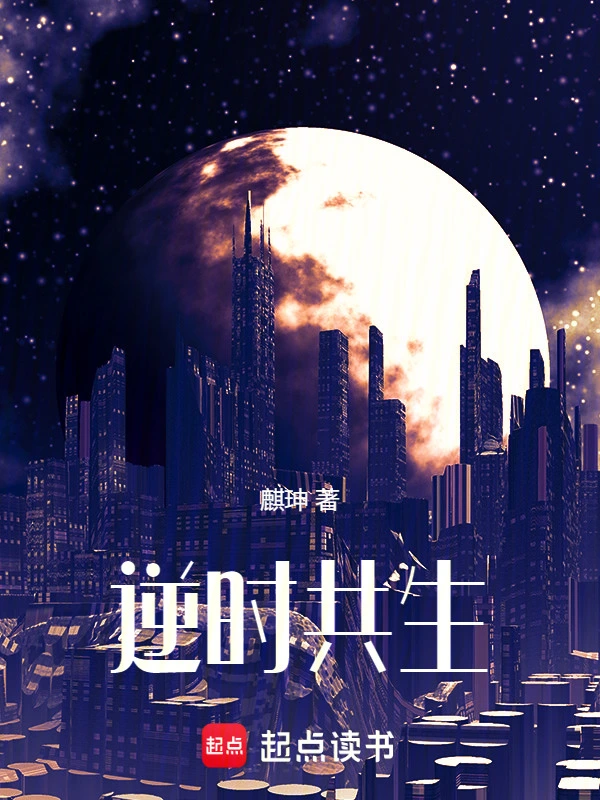
Symbiosis Against Time
逆时共生
- Status
- Ongoing
- Length
- 44k Words
- Genre
- Sci-Fi
- Audience
- Male
- Subgenre
- Interstellar Civilization
- Updated
- 9mo ago
- Source
- Qidian
Stats
0Monthly votes
1Recommends
0Fans
17Chapters
Synopsis
Reader comments
Readers also read
 Psychic Worlds: the Paladin Forges His Body into a Numerical Monster
 Doomsday Convoy: I Can Extract Unlimited Entries
 Oh Yeah! I've Seen Fake People
 My Low-Dimensional Universe Model
 Siheyuan: Start by Picking up Attributes
 Night Without Borders
 How Can You Become an Immortal If You Don't Have Money?
 Beastmaster: I Can See the Evolutionary Path
 Immortal Who Seizes the Body
 Green Hills
 Xuanjian Immortal Clan
 Become a God from Water Monkey
 Shocking Holy Pen
Inquiries about civilization in the folds of time and space - Comment on the science fiction narrative and value core of "Symbiosis Against Time" In the sci-fi online article track on the theme of interstellar civilization, Qishen's "Symbiosis Against Time" cuts in from the unique perspective of a "space-time observer", placing Qin Shihuang in 221 BC and the nuclear fusion battery in 3024 in the same narrative dimension, using 45,000 words to tear apart a corner of the paradox of time and space. This work breaks out of the inherent framework of traditional interstellar science fiction "interstellar war" and "civilized colonization", and takes "preventing the leakage of future technology" as the core conflict. In the narrative tension of intertwined time and space, it explores the ultimate propositions of science and technology ethics, the fate of civilization and human survival, providing new possibilities for the localized expression of online science fiction. 1. Anti-routine narrative entry point: from "grand interstellar" to "microscopic time and space" Traditional interstellar civilization science fiction works often focus on the battle of interstellar fleets, the collision of alien civilizations, or the competition for resources across galaxies, and are accustomed to using "grand narrative" to build the skeleton of the science fiction world. However, "Symbiosis Against Time" goes in the opposite direction, shrinking the narrative perspective to the individual "the last space-time observer on Earth" and dismantling the grand proposition of interstellar civilization into the specific task of "preventing future technology from flowing into the past". This entry point of "seeing the big from the small" allows the science fiction setting to get rid of empty imagination and form a strong connection with the real historical nodes. When the protagonist succeeds his father and becomes a space-time observer, his core job is not to explore the unknown territory of the universe, but to protect the "order" of time and space - to prevent future technology leaks from rewriting history. This setting itself is full of irony: the development of human science and technology was originally intended to break through the limitations of time and space, but in the end it was necessary to set up "space-time observers" to curb the disorderly proliferation of technology. The tipping point of the story pushes this irony to the extreme: Qin Shihuang picked up the nuclear fusion battery in 3024, causing a fatal intersection of time and space between the feudal dynasty of more than two thousand years ago and the interstellar technology of the future. This plot not only has the "exhilaration" and "sense of suspense" required for online writing, but also hides a warning against "abuse of technology" - when advanced technology falls into a historical node where there is a lack of awareness, it does not bring about the progress of civilization, but the collapse of the order of time and space and the alienation of civilization. Compared with the admiring descriptions of "black technology" in other science fiction web articles, "Symbiosis Against Time" has a more calm attitude towards technology. As a symbol of future technology, nuclear fusion batteries are not the "golden finger" of the protagonist's counterattack, but the "Sword of Damocles" hanging over the head of human civilization. Through this setting, the author changes the core of science fiction narrative from "the power brought by technology" to "the responsibility behind technology", giving the story's science fiction core a deeper ethical background. 2. The collision of history and the future: Narrative attempts at localized science fiction The localization of online science fiction has always been a core issue discussed in the industry. Many works either copy the "interstellar colonization" paradigm of Western science fiction, or simply graft Eastern elements onto the science fiction framework, which appears to be rigid and fragmented. The valuable thing about "Symbiosis Against Time" is that it deeply integrates iconic symbols of Eastern history with science fiction settings. Qin Shihuang, as the "one emperor through the ages" in Chinese history, is a symbol of centralization and unity. His obsession with "immortality" and "power" formed a natural dramatic conflict with the "infinite energy" represented by nuclear fusion batteries. When this emperor who desires to "be passed on to all generations" comes into contact with future technologies that can subvert productivity and war models, he will inevitably try to take this power for himself, and then rewrite the historical direction of the Qin Dynasty. This conflict is not a simple confrontation between "ancient times and the future", but a collision between "the centralized thinking of agricultural civilization" and "the scientific and technological logic of interstellar civilization". The author does not portray Qin Shihuang as a stereotyped "villain", but uses a potential portrayal of his psychology (although the space is limited, but the foreshadowing is already present), showing the greed and ambition of historical figures in the face of unknown technology, so that the integration of history and science fiction is no longer a superficial pile of symbols, but an internal logical interweaving. In addition, the identity setting of the "space-time observer" also has the color of Eastern narrative. The protagonist is not a lonely "hero", but a "guardian" who inherits his father's legacy. The core of this "inheritance" is consistent with the concept of family and responsibility of "passing on the fire from generation to generation" in Eastern culture. The protagonist's job is not to conquer time and space, but to "guard" the balance of time and space. This value orientation of "defending" rather than "offending" is different from the role settings of "explorers" and "conquerors" in Western science fiction, making the spiritual core of science fiction stories more oriental. 3. The regret of unfinished work: limitations of length and narrative As a work with only 17 chapters and 45,000 words, the potential of "Symbiosis Against Time" has not yet been fully unleashed. At the same time, it also exposes common problems with short science fiction online stories. The first is the insufficient spread of the worldview. The system of "space-time observers", the future development status of human civilization, and the root cause of space-time leakage, these core settings are only superficially introduced, lacking detailed support. Readers neither know the technical means of space-time observers nor understand the interstellar pattern of human civilization in 3024. This makes the conflict of "preventing technology leakage" lack sufficient background tension. The protagonist's motivation for action is clear but slightly thin. The second is the flattening of character creation. As the "last observer of time and space", the protagonist's character and past experiences are only briefly mentioned through "replacing his father" and lacks concrete characterization; although Qin Shihuang appears as a key clue figure, he only stays in the plot of "picking up the battery". His reaction and decision-making after contact with technology have not yet been developed, and the supporting role is more functional than image. This simplistic characterization makes the emotional resonance of the story slightly weaker, making it difficult for readers to establish a deep connection with the characters. Finally, there is an imbalance in the narrative rhythm. The first half of the work focuses on setting up the setting and mission of the "space-time observer", and the pace is slow; and after the core conflict of "Qin Shihuang picked up the nuclear fusion battery" appeared, it ended abruptly due to space limitations, and the follow-up development of the conflict was not launched in time, making it difficult for readers to realize their expectations. If the setting introduction can be appropriately compressed in the early stage to speed up the advancement of the core conflict, or more details can be added after the conflict occurs, the rhythm of the narrative will be smoother. 4. New possibilities for science fiction web articles: big propositions in small cuts Despite its many shortcomings, "Symbiosis Against Time" still provides ideas worth learning for the creation of science fiction web articles. It proves that science fiction online articles do not have to blindly pursue the grand scenes of "interstellar war", but can also explore more profound civilization and ethical issues through the small incision of "space-time paradox"; it also verifies that the integration of Eastern history and science fiction settings is not a simple superposition of elements, but can form a unique narrative charm through logical interweaving. The author Qishen's previous work "The Shocking Pen" broke the inherent framework of the immortality novel with the narrative of "anti-routine cultivation of immortality", while "Coexistence Against Time" continues his "anti-routine" creative thinking and made a new attempt in the field of science fiction. From the world of immortality where talent is respected to the science fiction universe of "time and space observation", the author is always looking for new expressions of localized online writing. This exploration itself deserves recognition. I hope that in subsequent updates, the author can fill in the gaps in the world view, enrich the arcs of the characters, and further deepen the conflict between "Qin Shihuang and the nuclear fusion battery". If more thoughts on the ethics of science and technology and the development of civilization can be incorporated into the process of solving the paradox of time and space, "Symbiosis Against Time" may become an interesting and thoughtful work in online science fiction. After all, good science fiction is never about showing off technology, but about using the mirror of technology to reflect on human beings' own choices and destiny.