


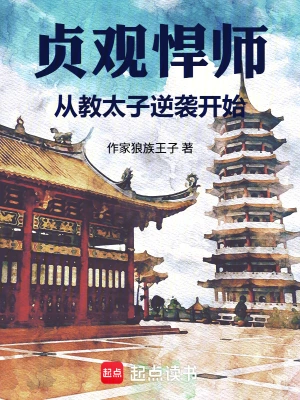
The Fearless Teacher of Zhenguan: Teaching the Crown Prince to Turn the Tables
贞观悍师:从教太子逆袭开始
- Status
- Ongoing
- Length
- 2.8M Words
- Genre
- Historical
- Subgenre
- Jin-Sui-Tang Dynasties
- Updated
- 1mo ago
- Source
- Qidian
Stats
Tags
Synopsis
More by this author
In booklists 4
My 2024 Reading List
I've subscribed to all the books on this list, and they seem pretty good.

Books I've Read Over the Years
A record of my 20 years reading web novels. I read plenty of pirated copies, and some I never finished, while others I reread several times. I was poor back then. I've forgotten the titles of many books I read and can't find them anymore. I'm writing down some personal thoughts as a way to remember, and to thank all the web novel authors I've read. Their work filled my youth and even helped improve my Chinese grades.

Say Hello to 2026: They're Updating 10,000 Words a Day in the New Year
Let stories take over your New Year's holiday. This list of 20 books, each with over 10,000 chapters and rapid updates, is here to cure your holiday reading slump. Plenty to read, with updates coming fast, so you can enjoy stories all break long!
You Roast Me, I Roast You
Colorful
Readers also read
 Germany: 1914
 Seizing the Direct Descendant in the Red Mansion
 Great Ming: His Father Is Useless, So He Must Summon the Founding Emperor
 A Literary Master in Ancient Greece
 Simultaneous Transmigration: Is Everyone Starting Out in Prison?
 Ming Dynasty Veterinarian: From the Start, I Save Zhu Biao's Life
 Great Tang: From the Start, I Offer Li Er a Guide to Avoiding Pitfalls
 A Great Industrial Nation, Starting with a Fake Student Abroad
 A Dual Status Panel Descends into the Abyss, and the Assassin's Potion Is Right at the Entrance
 The Ming Dynasty's First Brother-in-Law
 Great Tang: How to Become the Mastermind Behind the Xuanwu Gate Coup
 Great Ming: I, Yan Maoqing, Really Am Blessed
 Da Qin: My Father-In-Law Is the First Emperor? !
Reader comments 43
Google Translate
If I were Li Chengqian, the first person I would kill as emperor would be the protagonist.
The writing of Prince Li is simply ridiculous. He must do everything as the ministers say. Although he is stupid, he is not too stupid. The author is still like a literati. The Holy Emperor rules from the top of the arch, and the public is full of justice. Disgusting, bah, you might as well write that the prince was taken away from his body. A little person jumps like this. Is it really difficult to think of an emperor who doesn't lift a sword and transfers people with an imperial edict? He can't find someone to replace them all and kill them all. You regard an emperor like Li Shimin as a good person, and you mock him like a monkey. People take advice because they are ministers, not to ridicule him or fight against him.
😌In fact, this book can also be placed on a female channel. As long as the protagonist changes her personality, this book will directly make the female channel a god
There are three accompanying students and two are gone. Who else can teach, and who is still the mastermind behind Tiantian?
Full subscription, more than two million words, let's talk about your thoughts after reading it.
It took more than two months to read the latest chapters one after another. What makes this book more outstanding is that it uses many advanced systems and theories of later generations combined with the words of saints to teach the prince, influence the country, and change the understanding of the ancients. The smell behind the scenes. As the protagonist emerges, everyone knows that the protagonist is helping the prince behind the scenes, and the protagonist is the master, but. A group of court ministers and Li Shimin also tried various methods to test their wits. Moreover, the writing format tends to be more and more routine. The most classic one is that the protagonist proposed an advanced method and system to the prince Li Chengqian. After seeing it, he praised his talent and then told Li Shimin. After seeing it, Li Shimin was amazed, silent, jealous, and worried about the prince's power and balance. Then he asked his eldest grandson Fang Xuanling to discuss it. They read it one after another and expressed various opinions and discussions. After returning home late at night, they began to meditate behind closed doors again, and then worried about the relationship between father and son. The king of Wei and Du Chuke discussed various strategies and plotted. The more I read, the more tired I became, and the more I read, the less interesting it became. In the end, I didn't even need to read it. I already knew what was going to be written next. The only things I was interested in were the theories, systems, and ways of thinking. Finally, I would like to say to the author that no one's money comes from the strong wind, and the audience is not stupid either. If you skimp on your word count today, and tomorrow and the day after tomorrow, your word count will only get lower and lower. This book has come to an end.
How should I put it, the last few chapters have been bloody. The most important thing is that the author doesn't understand the emperor's bottom line at all? What is the bottom line for officials? The emperor's bottom line is only one, that is, rebellion is not allowed. There is only one bottom line for officials and aristocratic families, that is, they are not allowed to influence their fortunes. Aristocratic families were killing people, setting fires, eating human flesh, and exploiting the people. Even if they massacred the city, the emperor would probably tolerate it. Similarly, even if Wei Zheng spits at Li Shimin and Li Shimin smiles, he can endure it. But there is one thing that cannot be tolerated, and that involves rebellion. Once rebellion is involved, it will be destroyed without mercy. As for purging a certain aristocratic family, it will cause local turmoil and bring the court to a standstill. I'm sorry, but it's really unimportant. Compared to dealing with the rebellion, other things are small matters. Similar political struggles will basically not push the other party to a desperate situation. The family may send a killer to assassinate the prince, this is possible. The family may have poisoned Li Shimin to death. This is also possible. It is even possible to go to the extreme and incite local rebellion. But you can do everything, but you will not openly hold a group in the court to force the emperor to depose the prince. Because it is easy for people to think that Cao Cao forced Emperor Xian of Han to kill Queen Fu. This has basically pushed an emperor into a desperate situation. You have violated the emperor's bottom line, and it is an act of rebellion. The emperor can no longer mix mud and boil frogs in warm water. Even if the emperor wants to take a step back, it is impossible. Because if we take another step back, the imperial power will be shaken and the foundation of the Tang Dynasty will be unstable. Political cleansing by thunderous means, or even political massacre, is necessary.
Take out some evidence and hammer it down
It is obvious that AI is used. I have been reading novels for so long and I have never seen any author be so rhetorical. Only AI has the problem of excessive rhetoric. There is also a historical text in this book. The narrator likes to use extremely modern vocabulary, such as judgments, buttons, etc., And the long string of classical Chinese text at the end is even more outrageous. Which author nowadays can casually talk about a long paragraph of classical Chinese? If I use AI, why should I pay? How good is your AI?
The introduction smells like a female channel. Brother, are you on the wrong channel?
What I most admire about Li Chengqian in the book is that he always questions the method proposed by the protagonist, even though the protagonist has proven time and time again that as long as the method he proposes must be able to be completed, Li Chengqian still questions and denies... Really, is it so difficult to listen to the protagonist's words?
I want to know how this book got on the list?