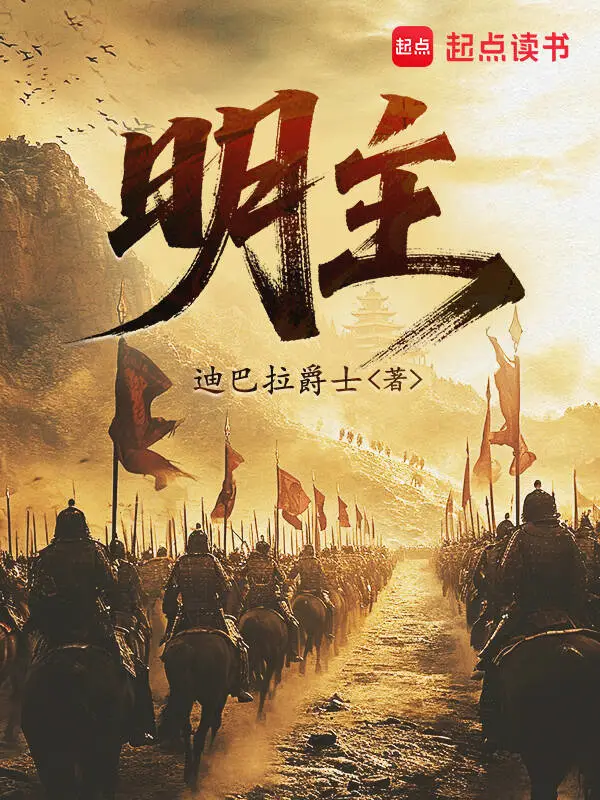
Lord of the Ming Dynasty
明主
- Status
- Completed
- Length
- 2.2M Words
- Genre
- Historical
- Audience
- Male
- Subgenre
- Alternate History
- Updated
- 3mo ago
- Source
- Qidian
Stats
54Monthly votes
34.5kRecommends
85.3kFans
711Chapters
Tags
Synopsis
Reader comments
In booklists 1


Readers also read
 Red Mansion: Starting from Joining Jinyiwei
 Red Mansion: Start Escaping and Farming from the Equipment Bar
 I, Feng Yong: I Knocked Out My Dad at the Beginning and Quit Fengtian!
 Gou Served as Sima Under Dong Zhuo
 Siheyuan: Start by Picking up Attributes
 Taiping Heavenly Kingdom 1854
 Entrepreneurship in the Late Tang Dynasty
 Immortal Who Seizes the Body
 Devouring the Starry Sky: Infinite Opportunities to Hoard Treasures at the Beginning
 Far East Common Man
 You Have Really Hurt Me.
 He Was Born in the Northern Song Dynasty and Broke the Backbone of Xixia at the Beginning!
 Good Morning Daming
 Take the Warehouse to Daming
 Disobey
 Northern Song Dynasty Man
 The Broom Star of the Tang Dynasty
Fifth
The book is quite good, but I haven't read much!
I'm still leaning toward conspiracy theories. Wuxun Tumu Fort was defeated miserably. Those civil servants in the Ming Dynasty were pissed. Even the emperor dared to prevent fire. There's nothing he doesn't dare to do
Are you planning to rebel in the early Ming Dynasty? You are thinking nonsense. You are afraid that you don't know how to drive out the Tartars and regain China's influence.
What a bunch of conspiracy theories
Why is it that a bunch of people have even purged Zhu Qizhen, and asked the civil servants about the conspiracy theory. The entire Ming Dynasty was in a state of treating it as an armed parade from the beginning to the end of the Tumu Fort battle. Zhu Qizhen, as the emperor, did everything. Several problems are obvious First, Half a month before the expedition, Zhu Qizhen was still picking up his noble sons and replacing them in the middle and lower-level command system of the Beijing camp. There was no adjustment or adaptation. Most people in the court were still immersed in the glory of the past. They had always treated the grasslands as tribes and ignored the impact of Oara on the Mongolian tribes. After the integration of the country, a large number of nobles regarded this war as an armed parade to take credit. Even the ministers and emperors believed this. This is a very scary thing. Secondly, the generals of the Ming army have lacked the ability to take charge of their own affairs since the Zhu Di period. Generals who can command large armies in battle, but Zhu Qizhen placed his hopes on Chengguo Duke Zhu Yong and British Duke Zhang Fu. This is outrageous. If you look at the resumes of these two people, you will know that Zhu Yong's performance during the Jingnan Campaign seemed to be okay, but Zhu Di asked him to lead the Northern Expedition. The results have proven that he is not good, which does not necessarily mean that he is a waste. At least he is not suitable for fighting in large regiments on the grassland. This is a fact. The second British Duke, Zhang Fu, has been a royal guard all his life. His only independent battle was to fight against Annan, a soft persimmon. During the Northern Expedition, he has been He followed Zhu Di as an executor to fight. What is certain is that he has not proven himself, and Zhu Qizhen put his hope in these two people Third, the quality of the Ming army has declined seriously. The combat effectiveness of the battalion began to decline at the speed of light during the Zhu Zhanji period. What is even more frightening is that half a month before the departure mentioned in the first point, the middle and lower-level command systems of the three major battalions were replaced on a large scale. Instead of trying to effectively command and hold on, a large number of people fled to the Zhuqi Town tent for refuge. As a result, the three major battalions collapsed directly, and only a small number of capable core nobles offered sporadic resistance. As a result, the Beijing camp, as the main force, collapsed faster than the peripheral guardsmen. To sum up, the Battle of Tumu Fort was the result of the Ming Dynasty's overall arrogance and underestimation of the enemy, coupled with Zhu Qizhen's personal arrogance. It is not a disastrous consequence that any one person or group can cause. You must know that when the Wala people attacked Tumubao, they only intended to test it and not to fight decisively. He himself did not expect that the Ming army collapsed so completely.
The main reason is that the location of Tumu Fort is too false (if you are interested, you can check it out). The emperor personally marched on the grain road, to the capital, and to the border. There must be scouts at least once a day. Not to mention the radius of 100 miles, there must be scouts in the radius of 50 miles. The history books of Tumu Fort are very confusing, but one thing is certain, the army must have been ambushed. He entered the Pass for the first time and captured only 20,000 emperor, and then withdrew from the Pass. The next year, he was fully prepared, and only more than 30,000 people entered the Pass again, and besieged the capital. Anyone who knows something about military affairs knows that if the two armies unexpectedly met, and they won a big victory and captured the Emperor, then his next step would be to raid the capital. The troops were very fast, and there was a 90% chance of occupying the capital. However, he left the Pass and waited until the Ming Dynasty was ready before entering the Pass the following year. No one in their right mind would do this. It also needs to be combined with the political atmosphere at the time. The emperor was old and in power and wanted to reform. It is estimated that the nobles supported it, so the emperor wanted to go on a personal expedition to increase his prestige. Civil servants contacted the generals of the border army to give the emperor a hard blow. Everyone knew the result. Based on who has the most power and who is the murderer behind the scenes, I speculate that the emperor wants to reform when he takes power, so he joins forces with nobles and nobles to go on a personal expedition to show their prestige. Unwilling to lose their power, the harem united with the civil servants, and the civil servants threatened the border generals with merchants (in the early Ming Dynasty, merchants transported most of the border food, and the border generals confirmed it, and the merchants took the orders back in exchange for salt. Needless to say, there was a trick in this), and they formed such a situation. The harem cut off the emperor's eyes and ears (you can check who were the senior officials of Jinyiwei at that time), the civil servants cut off logistics, and the generals had two possibilities. If they really invaded first, the generals would secretly let him into the customs and then clean up and finish. If, as some people guessed, they only brought a thousand people as a tribute team and accidentally saved the emperor, then the generals would do it on their own (in the early Ming Dynasty, the proportion of Mongolians in the frontier army was quite large, and there were many Mongolian tribes outside the customs). The above is just a personal inference, but it is a long history of the Qing Dynasty, so you should be careful when reading it. For example, when Emperor Wu Zong fought with hundreds of thousands of people in Mongolia, civil servants recorded that only a dozen people died. People who have not read books in ancient times may believe it, but those of us who have been bombarded with information will believe it. Hundreds of thousands of people died every day in small-scale battles on horseback. It can only be that the IQ of the ancient scholar-officials may be higher than ours, but their vision is not good. In their eyes, the feudal dynasty will last forever. Only scholar-officials can read these history books. The history is unreasonable and no one betrays their own class. They can also deceive the emperor who grew up in the palace. We mud-legged people will never be able to read in another ten thousand years. They did the same thing. Scholars, farmers, industry and commerce, who is the lowest? The third-ranked workers and civil servants don't know who made and improved the weapons, armor, and farm tools. They read history, and of course they know the process from the Shang and Zhou Dynasties to the Qin and Han Dynasties, when bronze was transformed into ironware, and bamboo slips were transformed into paper. , So what they are most hostile to is workers, but whenever warlords fight or foreign enemies enter the customs, the first people to capture are the craftsmen, and then the population and wealth. History books also record everywhere the words about how much gold and silver were captured in a certain year and month by the victory of the craftsmen. They know it better than anyone else. If anyone travels through the late Ming Dynasty, the first priority is to ensure his own safety, live outside the palace like Zhengde and Jiajing, surrounded by his own people, and secondly, control the military power. Zhengde did it all, but he was not ruthless enough. I am Zhengde. His mother and uncle were already in trouble within two years of taking the throne. His teacher who did not agree with his wishes had his whole family executed, and he had at least three waves of spies from the east and west factories of Jinyiwei around him. I mentioned in many novels that Yang Tinghe was the most treacherous minister in the ages. The things he did were only done at the end of the dynasty. He did it in the middle of the Ming Dynasty. Who gave him the courage? The emperor is better than the hands of the women in the palace, and the teachers are all civil servants. After he did it, the emperor of the Ming Dynasty was easily soluble in water. Zhengde is not ruthless enough. Look at the Sima family. Not to mention Sima Yi and Sima Shi are geniuses. Sima Zhao is a middle-aged person and Sima Yan is a middle-class person. They changed dynasties. Why? There are soldiers who are ruthless. The aristocratic families in the Wei and Jin Dynasties are comparable. The civil servants in the Ming Dynasty were more powerful, but the Sima clan was ruthless and said that if you destroy the three clans, they will be destroyed. Who dares to be disobedient? Look at the emperor of the Ming Dynasty. He bickered with the civil servants all day long. When you are safe and have soldiers, you can clean up the harem, seize the property, seize talents, rectify the Jinyi Weidong Factory, and form a new imperial court. If you regard yourself as the emperor, you cannot save Ming Dynasty. There are two situations: you feel that the world no longer listens to you. For example, in the middle and late period of Chongzhen, you regard yourself as a warlord. If you feel that the world can barely obey orders, you will regard yourself as Cao Cao, who holds the emperor hostage to order the princes. At this time you will feel that the field is wider. First recruit troops in Hebei, and then raid Jiangnan. At the end of the Ming Dynasty, the government recorded that there were 60 million people. According to the salt consumption, it was at least 120 million. You can kill half of them in Jiangnan, gather land wealth, and then let the people of Shaanxi and Hebei go south. As for some people who say that the world is in shock, civil servants are cheap. In the early Ming Dynasty, Zhu Yuanzhang asked the county magistrates to wear yoke to serve as officials. No one was willing to resign. In the end, it was not ruthless enough. If you kill a cabinet today, the world will be shaken, but tomorrow you will kill a minister. As far as the late Ming Dynasty was concerned, the emperor would take power next year and local civil servants would actually make the decision. It would be better to cut through the mess quickly and deal with them. Finally, pay attention to the harem. The harem does not seem to have a high sense of existence. However, some emperors fell into the water in the palace, and there was no internal response from the palace. Do you believe it? I don't believe it.
The Ming Dynasty, the most hacked dynasty in history
As the last Han dynasty, the Qing Dynasty tampered with the history of the Ming Dynasty and did everything possible, including revising local chronicles, smoothing out the tombstones of previous dynasties, and countless others...
Can you become a great master at this level? 🤔
Funny, I don't even know the history of Wala, I just know Yun. After returning to the grassland, it was destroyed like garbage. How many short videos have you watched? ? ? After passing through the barrier first, the target is the capital of the Ming Dynasty. The Yingzong of the Ming Dynasty personally conquers, and the goal is Ye first. The vanguard of the Ming army was defeated, but because of Wang Zhen, Ming Yingzong did not return to the capital immediately, but turned around and returned to the capital. The Wara tribe themselves are cavalry, and their advance speed is much faster than that of the Ming army. If they can't hit it, they will be blind first! Fool! The tactics developed by the Ming army during the Zhu Di period were to follow the army with artillery. When enemy troops were discovered on the grassland, they would camp on the spot and bombard them with artillery. After the cavalry had finished harvesting, the infantry continued to bombard. This tactic made it almost impossible for the Ming army to lose to the grassland tribes head-on. However, it also led to the problem of slow marching and over-reliance on supply lines. This problem was exposed throughout the entire process of Tumu Fort. After the defense of the capital, the military command system of the Ming Dynasty was restored and began to organize resistance. Only then did Ye Xian defeat Ye Xian repeatedly. However, the fundamental reason why Ye Xian retreated to the grassland was that he could not continue the fight, not to admit defeat! Otherwise, where would the Jingtai peace negotiation come from? Wala is not an empire like the Yuan Dynasty at all, but a multi-tribal alliance. Its execution ability itself is insufficient. Moreover, Wala has always had a serious problem. At that time, all the tribes in the grasslands only recognized the Golden Family as Khans! To put it bluntly, we can share the joys and sorrows of a war in Wala, but we cannot share the hardships. Once too many people die, they will fall apart. After returning to the grassland first, the end of Wala has nothing to do with the Ming Dynasty! Ye Xian proclaimed himself Khan, breaking the tradition of the grasslands. Non-golden families cannot be called Khans, which angered various tribes in the grassland. Ye Xian also caused civil strife in order to stabilize the Khan's position, and then it ended quickly.
The shame of Jingkang and the Anshi Rebellion were all caused by the Tumubao Incident. What's the meaning of changing characters?
Why change? ? Instead of the shame of Tumu Fort and the chaos of Tumu Fort? ? ?
What mistakes are easy to make in historical novels❓ Before the Ming Dynasty, the emperor was not called "Emperor", the Song Dynasty mostly called him "Guan Jia", and other dynasties often called him "Your Majesty". The Ming Dynasty began to occasionally call the emperor "Your Majesty", and in most cases he called the emperor "Your Majesty". After Kangxi of the Qing Dynasty, people began to be generally called "Emperor". Princes and princes call themselves: Princes in the pre-Qin and Han Dynasties can be called "Gu", and a few can be called "Ignores". After the Wei, Jin, Southern and Northern Dynasties, the title of "Ignores" gradually became exclusive to the emperor, and princes, princes and princes can only be called "Gu" or "I". Song, Yuan and Ming called themselves "I" or "I". Before the Qing Dynasty, princes and princes rarely called themselves "this king". Starting from the Kangxi year of the Qing Dynasty, princes generally called themselves "this king". In ancient times, women called themselves: "nujia" was a modest name for women after the Song Dynasty. Women in the Han and Tang Dynasties more often called themselves "concubine", and noble women could call themselves "I" and "I". Before the mid-Ming Dynasty, most dynasties used copper coins for daily transactions, with very little gold and silver. It was only in the mid-to-late Ming Dynasty that silver became the mainstream currency. -In the late Ming Dynasty, "meeting votes/deposit checks" appeared among the people. There were no unified rules. Most of them were deposits and withdrawals/exchange receipts from acquaintances or local circulation, and were not legal currency. In the early years of Daoguang in the Qing Dynasty (1823): Rishengchang Bank was established, and private banks began to issue standardized banknotes, focusing on cross-regional exchange. They were only circulated in Shanxi merchant trade circles and major commercial ports, and were not yet popular. In the third year of Xianfeng in the Qing Dynasty (1853): the official issued the Ministry of Revenue official banknotes (official banknotes), which were forced to circulate nationwide. At the same time, the network of private banknotes expanded to the whole country, and official and private banknotes ran parallel. The use of banknotes entered an explosive period and became the "starting point of popularization." High-leg tables and chairs only completely replaced the low tables for sitting on the floor in the Song Dynasty. During the Han and Tang dynasties, people knelt and sat on the tables to eat and discuss matters. The furniture was mainly low tables and couches. The memorial system was only established during the Kangxi period of the Qing Dynasty. Officials in the Tang and Song Dynasties used "memorials", "tables" and "statements" when submitting memorials, while in the Ming Dynasty they used "memorials" and "memorials". There is no such thing as "memo" or "zhezi". In ancient formal occasions, the hand-over gesture was performed with the left hand outside and the right hand inside. The right hand outside was a special "unlucky gift" for funerals. "Better greetings" is a unique etiquette of the Qing Dynasty. It was mostly used by subordinates to superiors and juniors to elders. During the Tang and Song dynasties, people often performed cross-hand salutes and bows to greet greetings when they met, and there was no such thing as "sending greetings". Before the Yuan Dynasty, lower-level officials rarely called superior officials "adult". In some dynasties, subordinates called eunuchs "adult", and in some dynasties, they called their parents and elders "adult". Beginning in the Yuan Dynasty, lower-level officials would occasionally call officials of second-rank and above "sir". From the middle and late Ming Dynasty, only officials of third-rank and above would be called "sir" by their subordinates. Officials with lower ranks could not be called "sir". However, in the late Ming Dynasty, there began to appear a few cases where officials above the fourth rank were called "adult". Before the mid-Qing Dynasty, following the rules of the Ming Dynasty, only officials of third rank or above would be called "adult". Starting from the mid-Qing Dynasty, calling officials "adult" gradually became common for lower-level officials. Attention! ! ! What is mentioned above is that lower-level officials refer to higher-level officials. No matter which dynasty, it is absolutely impossible for higher-level officials to call lower-level officials "sir". Some novels even write about emperors or nobles calling other officials "sir". This is simply contrary to Tiangang! ! ! Finally, let's talk about the problem of civilians calling officials Before the middle and late Qing Dynasty, civilians in various dynasties and generations called officials differently, and most of them called them "officials" and "masters". From the middle to late Qing Dynasty, civilians also called officials "adult". {"NickName":"Restriction and Supervision","UserId":417773267}
The author gives you some advice, don't lead your book friends astray, and respect history. At that time, the honorable nobles were in decline, and there was no need for civil servants to make calculations, because as time went by, there would be more and more civil servants, but the descendants of the honorable nobles would become more and more rubbish. I believe it would be a hindrance, and it is unrealistic to premeditate the emperor.
You actually want to usurp the throne in the early Ming Dynasty
The author has sold out, so everyone should leave. This is not something written by an author, at the level of a junior high school student.
Turn off the anti-theft, I'll see the impact.
I accidentally saw this author's book again, and I really threw it to the ground. The author's writing style is too out-of-the-box and illogical. To put it bluntly, it's just DB flow. I can't think carefully about it and read it with my brain. This book made me laugh just by reading the introduction.
There is no one who says that Tumu Fort is a conspiracy theory and blames the civil servants. Kneeling and licking is not the way to lick. First, Ye Xian's Oara tribe is not a tribe, but a union of dozens of tribes, large and small. They can attack important border towns and unite as one, but once they attack, they will eat fat sheep all over the place. No matter how they suppress them first, this group of people will give priority to grabbing things, so they will definitely become a mess, otherwise, they will not be unable to capture the capital of the Ming Dynasty. Second, the important issue at that time, or the fundamental issue, was that we knew nothing about the grassland. Zhu Yuanzhang sent Lan Yu to attack the Yuan Dynasty, but he was lucky enough to hit him and completely destroy the Yuan Dynasty. In the follow-up, Zhu Di's Northern Expedition, except for the first two times, Tatar didn't think about it. He persisted and was beaten to a bloody head. In the subsequent times, he failed to make an inch of progress. There was even an appearance where the army came out, drew his sword and looked around in confusion. Finally, he turned around and came back. This problem directly led to the massing of heavy troops to go south first. The border pass was ignorant and was quickly breached. The border crossing was broken too quickly, which led to information gaps among the Ming army. In addition, Wala's rapid advance and dispersed troops further led to information confusion. At this time, the core of the Ming army's command was following the emperor on the expedition. In this case, it was impossible to understand the situation. As a result, the vanguard of the Ming army was defeated again and again, and the information became even more confusing. In the end, Tumubao was defeated. Third, When Tumubao was defeated, the civil servants of the Ming Dynasty were close to lying down, and the entire power center was in the hands of Wang Zhen. This was the first peak of the eunuchs in the Ming Dynasty. The civil servants of the Ming Dynasty did not begin to regain their combat effectiveness until Wang Zhen died and Yu Qian broke out of the siege and took charge of the defense of the capital.
Let me just say one thing, if it was premeditated by civil officials, as long as they don't take him back or poison him in the palace, all problems will be solved. Regardless of whether Zhu Qiyu has a son or not, if he can't make Zhu Jianshen the emperor, will Yu Qian die?
Don't believe the Ming history compiled by the Manchu and Qing Dynasties
You should look at the Records of the Ming Dynasty and the Records of the Yingzong and the Records of the Daily Life of the Yingzong that can be compared. Don't read the History of the Ming Dynasty compiled by the Qing Dynasty. That is fake history. It was first supported by the Yingzong to fight against other Mongolian tribes. The Tumubao Incident was launched by the civil servant group headed by Yu Qian in collusion with the family of Yu Qian who was the general soldier in Datong in order to destroy the Xungui group. However, they did not dare to bear the reputation of killing the emperor. At that time Yingzong brought about 10,000 people, some of whom were Yu Qian's internal collaborators. When Yingzong was expelled from Guan, he escorted Yingzong back to Beijing when he brought more than 2,000 people to pay tribute to the Ming Dynasty. Yu Qian occupied the city and refused to let him return, and established Yingzong's brother as the puppet emperor. The soldiers and civilians in the capital were encouraged to say that it was an invasion by the Oara tribe. Later, Yingzong finally returned to the Ming Dynasty under the protection of Wala and was placed under house arrest. Finally, he regained power through the Seizing the Gate Movement. After several attempts under great pressure, Yu Qian was finally eliminated. But the civilian-controlled military has been unable to change. From then on, the military force of the Ming Dynasty gradually disappeared. Corruption grew day by day, paving the way for the demise of the Ming Dynasty. The crime of the civil servant group headed by Yu Qian is unforgivable. There is also Yuan Chonghuan of the Chongzhen Dynasty. The situation was originally under control. When he took office, he first killed Mao Wenlong, a hero who was fighting guerrillas in the rear of the Qing Dynasty. He secretly negotiated with the Qing Dynasty. Millions of taels of silver and a large amount of supplies and food were sent to him every year. He did not want to defend the enemy, but he took these assets and only asked the Qing Dynasty not to attack him.
People who know how to evaluate conspiracy theories are as good as female authors
Whatever happened to Wen Chen, it was their son first! Do you want to fight as soon as you say, and retreat as soon as you say? Such a complicated strategy would require hundreds of radio stations to be given to civil servants to command hundreds of thousands of troops on both sides in real time. It's also a conspiracy, it's so easy to laugh to death. It's better to ask the brain-controlled emperor to send it off
Laughing to death. The royal family of the Manchu Qing Dynasty is of Han origin.
Hong Chengchou's son Kangxi and Qianlong were adopted by the Chen family. Guangxu DNA detects Y chromosome Han Chinese O line. So unofficial history is real. There is no such thing as the emperor's name in history. Tumu Fort was framed by civil servants.
Figure
It's pure nonsense and has no sense of substitution.
I can't stand it anymore. The protagonist is a descendant of a noble family.
You can be bullied and looked down upon wherever you go. Most of the loser protagonists will be bullied and then go back to make fun. The protagonist of this book is beaten wherever he goes, and he has to pay the person who beat him to make amends.
Damn it, just a few chapters of foreshadowing and then the ending, it makes people speechless.
How has the Jazz been doing these past few years?
The difference from the warehouse to now is too big. The protagonist has nothing to do and has no desire to watch.
I subscribed to part of it, but it's bland! What the hell did you write!
Please refine
Four double monthly votes have been cast.
Jazz hasn't published a new book yet? !
It's been so long since Mingzhu finished this book, you've had enough rest, right?
Wocao is actually over? How many words are there?
The emperor is about to go north for free. I'm the only one daydreaming.
This is why the master is blinded by his single core.