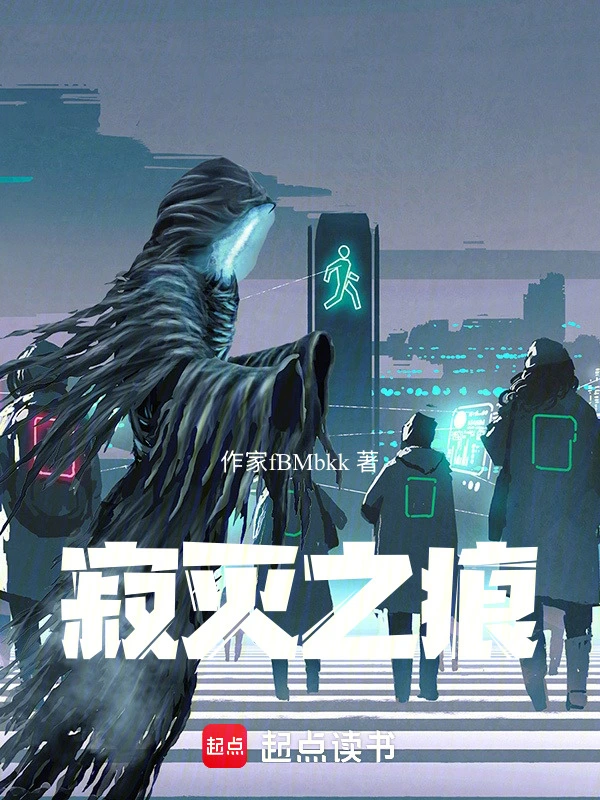
Traces of Annihilation
寂灭之痕
- Status
- Ongoing
- Length
- 27k Words
- Genre
- Short Story
- Audience
- Female
- Subgenre
- Screenplays
- Updated
- 1y ago
- Source
- Qidian
Stats
0Monthly votes
0Recommends
0Fans
7Chapters
Synopsis
Reader comments
Readers also read
 On the Fourth Day After My Death, My Whole Family Went Crazy
 After Running Away with My Father-In-Law, My Mother-In-Law and My Wife Went Crazy.
 After I Escaped and Left, the Empress Went Crazy
 After My Brother and I Failed to Redeem Ourselves, the Movie Queen and the Female CEO Regretted Going Crazy.
 Ascended Blazar
 Night Without Borders
 How Can You Become an Immortal If You Don't Have Money?
 LOL: Close Your Eyes and Ask God, What Does It Mean to Be Dead?
 There Is Absolutely No Problem with My Beast Control System!
 Green Hills
 Xuanjian Immortal Clan
 Become a God from Water Monkey
[In-Depth Discussion] "Trace of Annihilation": When the end of the world becomes a mirror for demons, what are we afraid of?
The story of "Trace of Destruction" has come to an end, but the shock left in the readers' hearts is far from subsided. From the zombie-infested ruins to the butterfly statues in the black forest, from Chen Fan's "survival" to Chen Xi's "breaking out of the cocoon", this work uses the cruelty of the apocalypse as the background to paint a complex picture of human nature, technology and hope. Today, we might as well put aside the plot itself and talk about the more real human propositions hidden behind "zombie" and "parasite". Q1: Is the most terrifying "monster" in the end of the world zombies or human beings? In the story, zombies are superficial - they are "symbionts" controlled by parasites, losing their minds but retaining their instincts; but what is truly frightening are the humans who hide in the laboratory and hide behind the masks of "scavengers". Researchers at Ansheng Biotechnology, the parents of Xiao Shuanzi who were "sent to the research institute" in Li Bo's words, and even the "mother" itself, they use "science" to package greed and "experiments" to rationalize cruelty. When Chen Fan saw the "Proof of Survival of B-07 Host Consciousness" in the institute's archives, we suddenly realized: What is more terrifying than zombies is the instrumentalization of "people" by "people". In the apocalypse, the survival instinct will be amplified, but "human nature" is the mirror that looks into the demon. Some people betray their companions for resources (such as Lao Zhao), some sacrifice innocent people for the sake of "evolution" (such as the leaders of the "Butterfly Project"), and some use the last trace of goodwill to ignite hope (such as Zhang Qian and Zhou Kai). Do you think, in the real apocalypse, is "maintaining humanity" a luxury or a necessity for survival? Q2: Is Xu Xiao's sacrifice "great" or "tragic"? Xu Xiao's death is one of the most poignant points in the story. As a "perfect host", she could have been completely swallowed by the parasite, but she used her willpower to resist until the last moment; she blocked a fatal attack to save Chen Fan, but her consciousness remained in the form of a light blue light spot. Some people say that her sacrifice is the "instinct of maternal love", some say that it is the "fate of experimental subjects", but others question: If she "collapses" earlier, can more people survive? But the answer to the story may be hidden in Chen Xi's awakening - Xu Xiao's consciousness has not disappeared, it has become Chen Xi's "light". When Chen Xi said "I will protect you", we suddenly understood: the real "sacrifice" is never the end, but another form of "continuation". What do you think of the choice of "exchanging individual lives for collective hope"? If it were you, would you make the same sacrifice for "love" or "responsibility" in the last days? Q3: Is Chen Xi's "breaking out of the cocoon" "hope" or "new shackles"? Chen Xi's awakening is the highlight of the story. She destroys the control of the "mother body" and becomes the key to "breaking the parasitic cycle", but her power also comes from the remnants of the "parasite" - she can control energy and destroy mutants, but she is always faced with the risk of being "back-bitten by the parasite". When she stood in the morning light and said, "Let's go home," readers cheered for her, but couldn't help but worry: Can she really escape the fate of being an "experimental subject"? Even more intriguing is the metaphor of "butterfly". Butterflies are fragile, but the "butterfly" in the story has become a symbol of "breaking the cocoon" - from Xu Xiao's "incomplete transformation", to Chen Xi's "awakening", to Chen Fan's transformation from a "survivor" to a "rebel", the "butterfly" always implies: the real "freedom" is not to eliminate viruses or parasites, but to "break the defined destiny". Do you think Chen Xi's "power" is "salvation" or "another kind of control"? Should the "hope" of the end of the world be placed in "destroying the old order" or "creating new rules"? Finally: If the end of the world comes, what do you most want to "take away"? At the end of the story, Chen Fan stood in the sun holding Chen Xi, and the butterfly statue glowed with golden light. This scene is heartwarming because it answers the ultimate question: What is the most precious thing among the ruins of the apocalypse? It's not weapons, food or vaccines, but "love" - it's Chen Fan's obsession with Xu Xiao, Xu Xiao's concern for Chen Xi, and Chen Xi's desire to "go home". If the end of the world really comes, what would you most want to "take away"? Is it an unfinished memory, an important person, or... The belief in "tomorrow"? (Welcome to share your views in the comment area~)