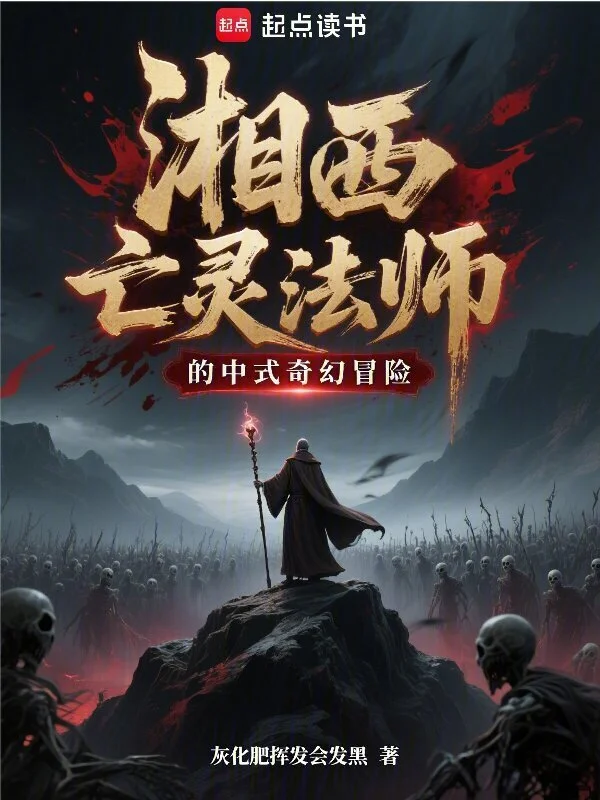
The Chinese Fantasy Adventure of Xiangxi Necromancer
湘西亡灵法师的中式奇幻冒险
- Status
- Completed
- Length
- 108k Words
- Genre
- Western Fantasy
- Audience
- Male
- Subgenre
- Sword & Sorcery
- Updated
- 12mo ago
- Source
- Qidian
Stats
0Monthly votes
1.9kRecommends
22Fans
53Chapters
Tags
Synopsis
Reader comments
Readers also read
 Wizard: Starting from Immortality
 This Adventurer Just Wants to Plant Trees
 I Unlocked the Extraordinary Craftsman Panel
 Panlong: the World First Opens, the Souls of the Four Series Mutate
 Don't Make Me Draw Gwent
 I'm Really Not a Dragon
 Orang Skull Valley
 Kobold Wizard's Journal
 New God of North America
 Sword and Sorcery and the Financial Crisis
 The Forest Does Not Support Goblins
 Storm Ranger's Demon Hunting Diary
The small team and dialect are enough to screen readers 🙂
I have seen something similar on station b before, but I didn't expect that someone would actually write a novel on this subject.
Usually this kind of thing is done once and then left.
Make a bold prediction, come back and read if you are wrong 😏
Let me, a native Tushi family member in western Hunan, have a taste of the saltiness
See you again, fellow countryman
Following the Tianjin investigators from the world of Cthulhu, here comes another necromancer from western Hunan
Time travel investigator
Investigation report: "No." -338 Investigation target: "The Chinese Fantasy Adventure of the Necromancer of Western Hunan" - Male Protagonist - [Lin Zhengyi] Investigation Result: [Soul Penetration Seizes the Body] Judgment Basis: Abnormal Characteristics: Travel Investigator , as the name suggests, is a profession that investigates and records the travel situations of travellers. It aims to let observers (that is, readers) in all worlds know the travel situations of travelers in this world in advance, and volunteers to provide observers with fast travel information inquiry services If there are any fallacies, I hope to correct them ——All Souls Feast Zhenjun Stay on August 17, 2025
The full text is transliterated into dialects, and I was dissuaded after reading two pages 😒
Chasing updates in the quagmire, already collected, don't let it down
As for the priests of the giant tribe in Shadong, becoming a priest means going ashore
What are the races and occupations in the Thirteenth City of Jiangsu? I'm really looking forward to it.
Eastern Hundred Crusade, d Archbishop Condor of the Inquisition
In the PF worldview, there really is a profession of cultivator, which seems to be a variation of monks and druids.
Practitioners pursue immortality, and they practice mysterious methods to refine their strength. Gathering and purifying vast amounts of Qi, thereby enriching oneself with the vast energies of the physical universe and the furnace of creation. Those who practice this path pursue immortality, or "cultivate" immortality, reaching a state beyond life and death. Many cultivators try to become immortal immortals with unpredictable power created by the palm of their hands. They may even ascend to divinity and ascend to heaven as attendants of the gods of Tianxia. And there are also many practitioners who have gone into side sects and merged Qi with the dark energy of the Great Void or the Shadow Realm. Although cultivators are most common as humanoid creatures, it is not unheard of for animals, plants, rocks, and even furniture to cultivate their Qi and become powerful monsters. The mountains of Shakuang, Shenmen and Ziha are well-known resorts for practitioners, as are the bamboo forests of pines and cypresses and the green center of the Varashmai jungle. Practitioners of all types are closely watched by Tian Xia Emperor Dragon, as they strive to transcend their own existence and destiny, contrary to the will of heaven. Practitioners want to stand side by side with the most powerful beings in the world and heaven, so it is difficult for the timid to enter the elegant hall. Because of this, their personalities are often extreme, possessing otherworldly kindness, hellish fury, or unshakable composure. The huge effort and strict discipline required to reach the peak of cultivation eliminated most of the candidates before it actually started, and the suffering suffered by many cultivators screened out the remaining ones. Although misfortune drives many people to choose to practice, legend has it that the gods and dragons punish those who practice it with more suffering and mourning. For every cultivator who achieves immortality, thousands of candidates meet their cruel fate. Practitioners are quite rare, even in Tianxia. Feats: Adept's Initiation Rare Variants Initiation Prerequisites Mystical Training Through esoteric, and often rigorous, meditation, diet, and exercise, you transform your inner body into a furnace of planar and soul energy. These penances allow you to refine the life energy in your body into Qi, the cornerstone of all cultivation. Your proficiency in arcana becomes expert. In addition, you gain the adaptive domain spell as a focused spell. Casting a focus spell costs 1 focus point, and you will get a focus pool that starts with 1 focus point. You refill your charge pool during your daily preparation period, and can recover 1 charge point by refining your essence into chi for 10 minutes and performing a recharge action. Your cultivator's focus spell is a psychic spell. You train on spell attack modifiers and spell DCs. Your key ability for casting these spells is Wisdom. Practitioner Focus spells are treated as Chi spells to satisfy prerequisites and count toward your Chi spell proficiency and various effects, such as the zombie's ability to absorb Yang energy. Immortal Body Fit Variation Prerequisites Introduction to Practitioners You breathe out for a moment, and the Qi pours out of the golden elixir and into the meridians of the lower body, bursting out at an extremely fast speed that can surpass flying arrows. You gain the physical burst domain spell as a focused spell. Lotus emerges from the mud Variation Prerequisite Immortal Body Fit Your Qi is constantly flickering during cultivation, avoiding the filth of the world. When you cast an Adaptive or Physical Burst spell, you ignore difficult terrain until the start of your next turn. Sanqing Tuna Variation Prerequisites: Beginner of the cultivator, constitution +2 Through the concentration of your laws and the circulation of your true energy, you can have a glimpse of the fruits at the end of your cultivation, and your life will be enriched from it. You gain the Breath, Tenacity, and Quick Recovery feats. You must meet the prerequisites for these feats as normal. For each feat you already have, you can choose a different feat from the following list instead: Situation, Sprint, and Strength. Spring grows from dead branches Variation Healing Life Prerequisites Practitioner Introduction Trigger You cast a focused spell Frequency Once an hour Your Qi veins are deeply knotted, sweeping away illnesses, just like new flowers blooming, and new branches throwing away the remaining winter snow. You regain hit points equal to your level plus the maximum number of focus points in the pool. Spiritual Sense Variant Powers Prerequisites Practitioner Introduction Attending to all directions of chi, you gain life perception as a 30-foot blurred sense. You can also feel the precious materials within the same range that practitioners call spiritual spiritual materials. When you participate in a ritual, you can replace all or part of the cost of the ritual with precious materials of equal value. This only applies to the consumption of precious materials such as diamonds, and does not include specific items required for the ritual to function. Any unclear points will be adjudicated by the GM. Ghost Path Realization Variation Prerequisites Beginning as a practitioner, you are not holy You have strayed from the right path and embarked on an unknown path of depravity scattered with flowers of death. This heretical choice will earn you the hatred and fear of other traditional practitioners. You are blessed with unholy traits. At the same time, you learn spirit-calling rituals and theosophy rituals, which you can use only to communicate with the undead or beings from the Great Void and the Shadow Realm. When you perform a ritual, you can reduce the number of secondary casters required by one because you channel the decayed soul fragments of your own near death to assist in the ritual. When you do this, you must satisfy all the needs of a secondary caster and you attempt the secondary check as if you were a secondary caster. You cannot substitute for a secondary spellcaster (such as an atonement spell) who is the target of a ritual. Three Kisses of Immortal Dew Variation Prerequisite: Beginner of cultivator, you are not evil At this stage of cultivation, you have reached the fusion of soul and body. Although still tethered to the physical realm, your form no longer requires food and drink, and the natural healing process rivals surgical suturing. You are blessed with holy traits. When you take a Survival Downtime action, you can use Mystery to make the check (instead of the normal skill determined by the situation). If you do this, the action acquires the vitality characteristic, and you are sustained by the chi lingering in the moist air of your environment, and you use the chi to insulate yourself from other things. Additionally, when you recharge, you can heal injuries at the same time. If you do so, you use Mysticism to make rolls to heal wounds and ignore the need for a medical kit. This action gains the life feature, and you heal by circulating chi through your body or by channeling chi to your allies. The BITTER SCHOLAR'S PROMOTION Feat 16 Variations Prerequisites Ghost Path Enlightenment The bright cities of Tianxia cover up the empire's long shadow of death, thousands of years of darkness and injustice. You seek immortality not by pandering to the Celestial Dragons or their royal blood, but your power will break their rotten wheels. You can now open the ghost door and free the dead to avenge the deceitful fate they were deceived in life. You stop aging, and regardless of your actual form, you are now considered undead by effects that detect undead (such as life sense or spirit sense). In addition, you learn the undead rituals of hungry hulks, zombies, and kelpies. When you succeed in these rituals, you achieve the effect of great success. The Peak Flying Immortal Variation Prerequisites Three Kisses of Immortal Dew Your cultivation will bear abundant fruits and you will get a glimpse of the will of heaven. Returning from looking up at the holy mountain, you have become an immortal with mysterious power, towering over the mountains and seas of the world. You stop aging, and regardless of your physical form, you are now considered alive by effects that can detect living things (such as life sense or spirit sense). In addition, you learn rituals to manipulate weather and rituals to grow plants. When you succeed in these rituals, you achieve the effect of great success. ———————————————————————— Refocus energy Focus on exploration Requirements You have a focus pool. It took you 10 minutes of work to reply to your magic link. This will restore 1 charge point to your charge pool. The work required is listed in the class or ability that grants you the focus spell. These tasks can often be combined with other tasks related to the source of your focused spells. For example, a cleric who receives a focus spell from a holy deity will usually be able to recharge it while healing an ally. Spellcasters with Focused Power If you are a spellcaster, the root of your Focused spells is the same as the spell root of the class that gives you Focused Spells. The bard is psychic, the priest is divine, the druid is primal, the wizard is arcane, and the witch is determined by her patron. —————————————————————— Physical Burst Rare Priest Focus Action Last for 1 round Your body is filled with strength and skill. You gain a +10-foot status bonus on Speed and a +2 status bonus on Athletics checks. As part of casting this spell, you can use the walk, jump, climb, or swim action. This spell's bonus applies only to this action. Turtle Breath General You can breathe even in hazardous or thin air. You can hold your breath for up to 25 minutes before suffocating. You gain a +1 circumstance bonus on saving throws against inhaled threats, such as inhaled poisons, and a success on such a saving throw results in a critical success instead. Holy Characteristics The effects of having the holy trait are associated with powerful spells of mercy and virtue. They usually have a stronger effect on foul creatures. Creatures with this trait are intensely devoted to holy causes and often have a weakness for evil. When a creature with a holy weakness uses a holy item or effect, it takes damage from its weakness. Calling Spirits Ritual Uncommon Spirit Casting 1 hour; Cost Rare candle and incense, total value 50 gp; Minor caster 1 Major check Arcana (expert) or Religion (expert); You must call the spirit's name, and you must prepare items related to the spirit, such as its belongings, clothing, or remains from its corpse. A spirit unwilling to respond to your call can attempt a Will save to refuse; on a successful save, another imposter spirit responds by pretending to be the spirit you called. If the spirit has not seen you in life, the DC for its Will save to resist the call is lowered by 2 points. Regardless, the spirit appears before you, its ethereal appearance resembling the creature you wish to call. Each minute for the duration, you can ask the spirit one question. It will answer any way it likes, or even refuse to answer. If the spirit is not in the afterlife (for example, it is now undead), any outcome other than a major failure will use the effects of ritual failure. Big Success: The spirit will cooperate with you and take a -2 circumstance penalty on the deception check even if it has a good reason to deceive you. Success: You are able to call upon the spirit. Failure: You failed to summon the spirit. Big Failure: One or more evil spirits appear and attack you. Theosophy Ritual Uncommon Prediction Cast 1 day; Cost Rare incense, total value 150gp; Minor caster 1 Primary check Nature (Master), Mystic (Master), or Religion (Master); Minor check Nature, Mystic, or Religion (whichever skill the primary check uses) Duration: Up to 10 minutes You call upon an unknown powerful being to answer the question, the nature of this being determined by the skill you used in the main roll. Nature: The original spirit of nature, it understands the animals, monsters, fey, fungi, plants, terrain and natural resources within a 3-mile radius. Occult: Otherworldly beings or other mysterious entities such as elementals, forgotten spirits, and observers who know forgotten knowledge, planes, little-known secrets, or other mysteries. Religion: Celestials and demons are existences related to gods. They understand the gods they serve and their respective powers. If you believe in gods, they will usually be the servants of the gods you believe in. You can ask up to 7 questions that can be answered with "yes" or "no". The being will answer questions with one-word responses such as "yes", "no", "maybe" and "don't know". These beings will always answer based on their own position and may lie. Great Success You have called upon a more powerful being, one closely connected to something you are interested in, perhaps even a deity you believe in. The being will not deceive you, but it is still possible that it does not know the answer to the question. When providing a clear answer is important, the being will answer you with a short sentence of up to five words, such as "If you go now," or "That's true." Success: You are able to ask questions and get answers normally. Failure: You were unable to contact the appropriate being. Big failure: Your consciousness is exposed to the vast universe and falls into a sluggish state within 1 week (cannot be eliminated by any means). Evil Characteristics The effects of the Unholy trait are related to cruelty and the powerful magic of original sin. They usually have a stronger effect on holy creatures. Creatures with this trait are devoted to evil causes and usually have a weakness for sanctity. Creatures with the Unholy Weakness take Weakness damage when using Unholy items or effects Plant Growth Ritual Uncommon Plant Life Wood Casting 1 day; Cost -; Secondary Caster 1 Major Check Nature (Expert); Minor Check Agriculture Lore or Survival You make the plants in the area healthier and more productive. In addition to making the plants healthier, this will also increase crop yields in your fields, depending on how successful you are. If you cast this ritual in an area already affected by blight, the growth will counteract the blight spell, replacing its normal effects. Great success: Double the crop yield in the area, or increase the ritual's area of influence to a circular area with a radius of 1 mile. Success: Yield of remaining inner crops increased by one-third. Failed: The ritual produced no effect. Big Failure: The plants in the area change in an unexpected way, the way of change is determined by the GM, but it is usually contrary to your true wishes (for example, when you want the crops to grow more lushly, you will let them wither). Manipulate Weather Ritual Uncommon Casting 1 day; Cost -; Minor Caster 1 Major Check Nature (Master); Minor Check Survival Area A 2-mile-radius circle centered on you; Duration 4d12 hours You change the weather, making it calmer and more in keeping with the current season, or choose between two effects based on the season. Spring drizzle, high temperature, hurricane, graupel, thunderstorm, tornado Summer drizzle, heavy rain, extreme heat, hail, high temperature Autumn cool, fog, heat, graupel Winter blizzard, cold, extreme cold, melting snow You cannot specifically control the performance of these weather conditions, such as the exact path of a tornado or where the lightning falls.
Zhejiang
Do the water snakes of Hangzhou look down on the goblins of Wenzhou and the mechanical gnomes of Yiwu?
Centaur? Minotaur? Or a harpy?
What race will Qinghai Plateau be? Qinghai Tauren? Tibetan Centaur?
Are there any magic bond masters (evil masters, undead masters, old masters) from the plateau? {"TopicId":"972634557290184704","TopicName":"DND"}{"TopicId":"972634671757066240","TopicName":"Dungeons and Dragons"}
Enlightenment animals, monsters?
From the pioneer world view. Enlightenment Animal Ethnic You once enjoyed the simple and endless fun of nature with your innocent mind. You live moment by moment, never doubting what will happen next moment, and never thinking about the impact of what happened before. You are one with nature. What happened next changed everything. You drink from a glowing lake, someone pulls a magical prank, and a druid attempts to evolve your mind. You are pulled out of the wild life and into the realm of thinking. For the first time, you realize that you have a past. For the first time, you start thinking about your future. Now you experience the world in a whole new way. You begin to realize dangers you never thought possible, but there is also joy and wonder in this new world. This is a good thing, after all there is no going back. Enlightened animals are normal animals that have experienced mental enlightenment, which gives them complete intelligence and the ability to perceive the world through thinking. There are many mystical paths to animal initiation, but the most well-known is through animal initiation rituals. The enlightenment process of each animal is different. For some animals, the opening of their minds is as electric as a flash of lightning, allowing them to perceive and think about the world like never before. Other animals are overwhelmed by emotions and thoughts that they are not asking for and that they are not prepared to handle. Most people who want to initiate animals assume that the initiated animal will be filled with wonder and gratitude, but they are not prepared for the wide range of reactions: shock, sadness, excitement, curiosity, and anger are all common (not just one reaction). No matter how the enlightened animals react, they still have to find their way in the world. Some enlightened animals try to return to their lives, but almost always find themselves disconnected from their uninitiated counterparts. Other enlightened animals fully embrace the civilized world and do their best to navigate a world built for humanoids. Over time, enlightened animals will find themselves wandering between the civilized world and the wild world, as each world contains only a portion of what they need to live. If you want to play a character who is extremely unconventional and walks between the civilized world and the natural world, you should play an enlightened animal. You might... Coordinate between humanoid society and the creatures of the wild. Wandering between thinking and relying on wild action. Others may... Think of you as an easily angered beast. Want to study you as a weirdo, regardless of your autonomy and comfort. Physical Description Initiated animals are very similar in appearance to the animals they once were. Humanoids have difficulty physically distinguishing initiated animals from their own kind. Upon closer inspection, most humanoids will notice differences in the eyes and movements of initiated animals. An initiated animal will act in a self-aware manner, and the difference will be felt by those who are unaware that the animal is initiated. Initiated animals often wear clothing and other accessories, and use tools, which make their enlightened nature apparent. The animal will immediately recognize the initiated animal and initially react with horror. If accepted, the animal eventually settles down and approaches enlightenment. It takes a long time for an animal to truly adjust to its post-initiation companions, but this happens over time. Traumatic initiations sometimes cause startling visual differences in initiated animals. Legend has it that there is an Initiate Bear with fiery red fur and an Initiate Bird with ghostly feathers. Society Enlightened animals are so rare and scattered that few can travel together, let alone form societies of their own. Initiated animals often blend into nearby communities, either masquerading as "regular" animals or openly becoming craftsmen and workers. While initiated animals may decide that humanoid society is not for them, those that remain have no difficulty adapting to society. In most parts of Golarion, people quickly get over their initial shock at the sight of a talking house cat or songbird. Enlightened animals that ignore "civilized" life often establish animal societies, and they are the natural rulers and leaders of the community. They use their intelligence to create order and institutions that no other animal of their kind can do. There is a story in Ustalav: a large wolf pack composed of several wolf packs was led by an enlightened wolf. Wolves roam the countryside, protecting villages from undead incursions. In Isgard, merchants tell of bears attacking caravans, but doing only enough damage to steal the goods before leaving. There are also rumors that there is a city full of enlightened animals in Eobaria called Wandering City. Most enlightened animals have heard of this city. Some people think it is just an illusory dream, but many people try to find it. Wandering City is said to be the true home of all enlightened animals, where both their wisdom and wildness are embraced. Animals use their senses rather than names to identify others, so their naming often reflects this. They give their friends nicknames that correspond to vivid feelings and sensory information. They will often name themselves this way as well, and will only deviate from such conventions when naming pets or companions or when they are trying to follow the social conventions around them. Sometimes they combine their instincts with more traditional names to create something exaggerated and proud. Example name Red fur, sharp eyes, half-horned king, black nose, jeweled mouth, scaly queen, yellow beak, big claws, grin, angry face Faith Enlightenment animals tend to see the world from the perspective of the natural order. Those animals that feel uncomfortable with or harmed by humans often live in natural environments, while those driven by curiosity or social structure seek to find a place in more orderly and rule-bound humanoid societies. There is no unified belief in enlightened animals, but gods with realms of nature, such as Gozrai, are very popular. There are a small number of initiated animals who worship deities of destruction, such as Lamashtu or Rovagug. Animals that are enlightened by their companions may also accept their companion's ideas and beliefs. Common taboos: Explore your newly acquired sensory abilities and enjoy the comfortable life of a human-like civilization; usually also follow the paradigms related to your animal side, for example, canines will "keep the group together" and raccoons will "clean food often" Common taboos: Return to pure animal behavior Enlightenment animal inheritance Animals have a variety of body shapes, each with its own characteristics. At 1st level, choose one of the following initiated animal heritages. If you are an initiated animal with a versatile heritage, you can still choose an initiated animal heritage to inform your character's story and physical form, but you will not gain any of its mechanical effects, except that you have a 20-foot land speed unless you choose to become an aquatic animal, in which case you have a 20-foot swim speed. You can gain the remaining effects of your heritage by taking acquired initiation feats and satisfy those feats that require a specific initiated animal heritage. Climbing Animal You are an animal with limbs that are good at grasping, climbing, and swinging from branch to branch. You might be as dexterous and tool-ready as a chimpanzee or otter, or you might just be a fast climber like a bear, raccoon, or sloth. You have a land speed of 20 feet, a climb speed of 20 feet, and an animal attack of your choice (usually claws, fists, or jaws; see sidebar). Flying Animals You are an animal capable of long or sustained flight, such as an eagle, bat, bee or flying squirrel. The process of enlightenment disrupts your ability to fly as freely as before. The brain capacity that was previously used to operate the flight automatically must now be used for thinking until it can operate automatically again. You can still slow your fall so you don't take fall damage no matter how far you fall. Most flight-initiated animals can take the Takeoff feat at 1st level to regain limited flight capabilities. You have a land speed of 20 feet, and an animal attack of your choice (usually a beak, claws, jaws, feet, or wings; see sidebar). Running Animal You are an animal suitable for running at high speed on land. Usually you run on all fours like a dog, but you can also run on two legs like a kangaroo, emus or penguin. You have a land speed of 30 feet, and an animal attack of your choice (usually claws, jaws, or tail). Swimming Animals You are an aquatic animal that is most adapted to life in the water. You may spend most of your time in the water, like a crocodile, seal, whale or dolphin, or you may need to breathe in the water, like a fish or some crustaceans. You have an animal attack of your choice (usually claws, jaws, or tail). Choose whether you are a water dweller or a water dweller. Aquatic: You gain the aquatic trait, and you have a swim speed of 30 feet. The aquatic trait means you breathe water rather than air, and you don't take a –2 penalty on bludgeoning and slashing unarmed strikes while in water. Water Living: You can hold your breath in the water for 10 minutes before needing to breathe. You have a swim speed of 20 feet, and if you are moving on land, you have a base speed of 20 feet. Enlightened Animal Folk Rarity: Rare Hit Points: Your tribe's hit points are determined by your chosen size (see below): 6 HP if you are Small or Small, 8 HP if you are Medium, and 10 HP if you are Large. Size: Choose the size appropriate to your animal type: Tiny Small Medium or Large Speed: Determined by your race Ability Boosts: Constitution, Wisdom, of your choice Ability Drawbacks: Intelligence Languages: Common, plus a number of additional languages equal to your Intelligence modifier (if positive), from the Common Languages list, and other languages for which you have permission (such as those common in your region). Features: Enlightenment Animals Warcraft Enlightenment Form Enlightenment changes your form, allowing you to speak with language and stand on two legs. You can wear, hold, hold, and use items. How and how many limbs you use to manipulate objects is up to you and your GM, but you follow the same rules as a humanoid with two hands. Enlightenment of the Mind Enlightenment changes your mind. You are no longer an animal, but you can still ask questions and get answers from your conspecifics, and you can use the Diplomacy skill with your conspecifics. By recalling your instincts, you can allow yourself to be affected by spells and other effects that affect animals as if you were still an animal. Animal Attacks Your race grants you special unarmed attacks, instead of the unarmed strikes that humanoids normally get. These attacks belong to the combat weapon group. Consult with your GM to decide which one you have, using your animal type and the suggestions in your heritage as guides. For example, you can choose a beak, paws, or wings for an eagle, a fist or tail for a monkey, and a tongue or jaws for a toad. Unarmed Attack Damage Characteristics Beak 1d6 P Skilled, unarmed Claws 1d4 S Dexterous, skillful, unarmed Fangs 1d6 P Skilled, unarmed Fists 1d4 B Dexterous, skillful, nonlethal, unarmed Horns 1d6 P Skilled, unarmed Jaws 1d6 P Skilled, unarmed Tail 1d6 B Skillful, tripping, unarmed Feet 1d4 P Skillful, skillful, unarmed Tongue 1d6 B Skillful, unarmed Wings 1d4 B Dexterous, skilled, unarmed{"TopicId":"972634557290184704","TopicName":"DND"}{"TopicId":"972634671757066240","TopicName":"Dungeons and Dragons"}
No, why did the book I raised die? 🥵
Monsters of the Pioneer Worldview
Yokai often begin as mere animals, plants, or objects, and then manage to gain intelligence, transforming into strange, shape-shifting creatures in the process. Monsters usually inject environmental energy into their original form and acquire inner magic through training. In order not to reveal their true appearance and nature, yokai of the same species or species sometimes form their own territories, where they devote their lives to honing their abilities or hedonistic pursuits - although the two are not mutually exclusive. Meanwhile, yokai who lack a solid community are forced to cultivate themselves until they transcend their origins, which may allow them to integrate into society and experience a new kind of freedom. Occasionally, otherworldly beings or humanoids become monsters through ritual, arcane accident, or pure coincidence. For some, this transformation is a desire of their heart, while others see their transformation as God's punishment for mistakes they have made. For those who wish to return to their original form, a long journey of atonement or discovery lies ahead, while those who accept a new form will find ways to consolidate their control over these innate gifts and accumulate power. If you want to play a character who seeks to fundamentally change himself through strength, experience, or transcendence, you should play a monster. You too… Be on the lookout for ways to gain, release, or train the power to transcend yourself. If others have the ability to harm you, especially other monsters, don't trust their intentions. You feel insulted when your abilities are questioned. Others may... Exhibit interest or awe in the power you hold or are dominated by. Be shocked and dismayed to learn that your true form does not match your appearance. Suppose you are vicious by nature and jealous of the entire society. Physical Description The original form of a monster can be almost anything. We can more quickly conclude that if something exists, it has the potential to become a monster if it stays in perfect circumstances long enough (usually thousands of years). Yokai inherit a variety of characteristics depending on their pre-awakening form; a yokai born from an animal may have fur or pointed ears; a yokai born from an object may have stone or metallic skin. Because of their wild appearance, many adventuring monsters travel at night, which arouses suspicion. Therefore, shape-shifting into human form is one of the many arts that yokai carefully practice, even if all they can achieve is a form that retains many yokai characteristics. Some monsters prefer this form. Maybe they're convinced they have nothing to hide, or they like having the Yokai's powers more easily accessible in this incomplete form. Others work to perfect their human form until they become indistinguishable from other humanoids. Many monsters are born as adults, but their human form can be of any age. Generally speaking, the average lifespan of a yokai tends to reflect their power. The most powerful monsters can easily challenge the lifespan of a dragon and can live for thousands of years, if not immortality. Therefore, there are many rumors that monsters may have once ruled most of Tianxia. Society Generally speaking, there are three types of monsters: those who associate with monsters of the same kind, those who go into non-youkai society, and those who disguise themselves as other people. A solitary monster may maintain a solitary relationship with a small number of companions who live in distant places. Youkai of the same species may share a residence and consider themselves members of a family, with the eldest member acting as a parent or older brother. Some groups have more of a teacher-student or master-servant relationship, especially when the leading monster is significantly more powerful. Monsters who dabble in other cultures are often liars, often causing mischief in the communities they haunt. Since annoying malicious activities attract attention, most youkai groups wisely keep their pranks helpful or tasteful enough to ensure their longevity. In this case, the prank might include completing a mission or beating up a local tyrant. Unfortunately, there are always powerful entities willing to sponsor yokai with nefarious intentions, and the yokai take this as permission to rob and attack settlements. These infamous stories are the reason why youkai bounty hunters thrive in Tianxia, and why the youkai living in non-youkai communities strive to keep a low profile. These monsters usually live alone, in groups of two or three at most, because they worry that large numbers of people will reveal their whereabouts. Spontaneously formed monsters often give themselves a name, which may be a direct reference to their natural form. Other yokai get their names from what others call them, usually a nickname derived from a special ability, physical characteristic, or a specific event or behavior. However, this naming method can be a trap for many yokai, as it emphasizes their yokai essence rather than their experiences or personalities. Being given a name that has nothing to do with a yokai identity, or a unique name that highlights their uniqueness, is a great honor for many, even more valuable than a title or wealth. For some, the restoration of a lost or disgraced name is the value they seek. Example name: "Light" lamp, spider, dandelion, green leaf willow (green snake), begonia, stone Beliefs People often mistakenly believe that monsters are inherently evil, regardless of their intentions or actions. This is completely untrue, especially for yokai who live in human communities or seek to transcend their existence. Most monsters can be as heroic as any other wandering adventurer in the world. If the yokai come from an established yokai community, they may tend to be pragmatic, but there are also some reckless charlatans. Yokai usually grow up alone or in the company of a very small number of their fellow humans, and unless they follow a training school or philosophy that requires the opposite, they tend to be impulsive and irritable. Some yokai are particularly susceptible to the influence of their environment and peers, meaning they change their opinions more easily and quickly than other races. Many monster settlements worship Shizuru and Tsukiye, because people believe that the awakening of most monsters benefits from the power of the sun and the moon. Qi Zhong is often cited as the master of Sun Wukong, the first monster to ascend to immortality, and is worshiped. Although Sun Wukong ascended to immortality through morally dubious means, nearly all monsters know his story and exploits, even if Sun Wukong is not a particularly popular object of worship. Common examples: Get a name, make a good impression wherever you go, find ways to develop your powers and transcend your nature Common taboos: Accept restrictions imposed on you, flout the laws of your region, give up opportunities to grow Yokai inheritance Yokai come in many forms. The entity you were before awakening as a youkai determines your origin. At 1st level, choose one of the following monster heritages. You can only gain the benefits of a certain form while in that form. If you are a monster with a multi-purpose inheritance, you can still choose a monster inheritance to tell your character's story, but you will not gain any mechanical effects. You gain these effects through the Awaken Yokai Heritage feat and satisfy feat requirements that require a specific heritage. Animal Origin You are just an animal until the sun or moon enlightens you. Humanoid Form: Animals can sense your powers. You gain a +1 circumstance bonus on Intimidate checks made against animals and monsters, and you take no penalty for trying to intimidate animals or monsters you don't speak the language of. Monster form: Can run like an animal. If you have two free hands, your speed increases to 30 feet when you run on four legs. Fairy Origin You were once a powerful immortal, but after escaping or suffering severe punishment, you were trapped in a mortal body with only vague memories and limited strength. Because of your residual divine power, any spells or magical abilities you gain from your monster heritage or ethnic feats are of divine origin, rather than their usual origin (usually a psionic power). Humanoid Form: Fragments of divine memory still linger in your mind. You gain a +1 circumstance bonus on Religion checks. Monster Form: The power of the fairy world flows within you. Choose a cantrip from the list of divine spells. You can cast this spell at will as a divine inner cantrip. Cantrips advance to half your level, rounded up. Elemental Origin You were part of nature—rain, wind, light—until the essence of the wilderness gave you a soul. Because of your connection to nature, any spells or magical abilities you gain from your monster heritage or racial feats are primal in origin, rather than their usual origins (usually psionic powers). Humanoid Form: You can remain in harmony with nature. You gain a +1 circumstance bonus on Survival checks made to determine direction, and you take no penalty without a compass. Monster Form: The power of nature flows within you, ready to go. Choose from arc strike, frostbite, fire, sharp flying needle ROE, falling wood ROE, rock pile PC2, wind chop ROE, and water spray PC2. You can cast this spell at will as a primal inner cantrip. Cantrips advance to half your level, rounded up. Object Origin You were an object until the moon gave you life. Choose a Lore skill related to your tool type; for example, a kitchen knife for Cooking, a rake for Agriculture. You are trained in this skill. Humanoid Form: Tasks performed while it was an item remain in your memory. You gain a +1 circumstance bonus on skills gained through inheritance. Monster Form: As a mindless object, you are difficult to influence mentally. If you roll a success on a psychic effect, you get a major success instead. Plant Origin You were a plant or fungus until the rain gave you a mind. You choose to gain the plant or fungus trait. Humanoid form: You can help those in need with the help of fresh vegetation. You gain a +1 circumstance bonus on Medical checks made to administer first aid. Monster Form: When someone uses medical skills to treat your injuries, the health you recover from the treatment will be increased by your level. In addition, if you have the plant trait and are in bright light, or if you have the fungus trait and are in darkness, a creature attempting this check gains a +1 circumstance bonus. Monster Race Rarity: Rare Hit Points: 8 Size: Medium Speed: 25 feet Attribute Improvements: Constitution, Charisma, Choice Attribute Flaw: Intelligence Languages: Common; additional languages equal to your Intelligence modifier (if positive). Choose from Elvish, Draconic, Elvish, Fey, Kitsune, Naga, Undertonal, Tengu, Ratfolk, and other languages for which you have permission (such as those common in your region). Characteristics: Humanoid Monster Transformation Focus, Power, Shapeshifting, Monster You can change from monster form to human form, or from human form to monster form. Your human form is a common medium-sized humanoid race (usually human) in your birthplace. This form is the same age and size as the Yokai form, and has similar physical features, such as hair color. Using shapeshifting is equivalent to using deception to disguise yourself. You can remain in humanoid form indefinitely, but you revert to yokai form after 1 hour of unconsciousness or 1 minute of death. {"TopicId":"972634557290184704","TopicName":"DND"}{"TopicId":"972634671757066240","TopicName":"Dungeons and Dragons"}
It's hard to write this book until it's on the shelves
Looks like the author of some Tianjin novel
Acne enthusiast
This region name was quite popular on Douyin before, so Douyin is the number one productivity in entertainment.
Qingqiu fox demon
The fox demon in the pioneer world view has a more Japanese style in the original setting Whether it is hiding its identity or wagging its tail through the busy city, the fox demon always pays attention to the society around it. Fox demons have two forms, one is a fox-headed human body, and the other depends on the growth environment. If raised in a densely populated area, they will often develop what is called a "tailless form", which looks like a more common humanoid without the characteristics of a fox, such as an elf or a human. If they grow up in forests or rural areas, they are more likely to develop the appearance of a fox. Although there are some settlements composed entirely of fox demons, most fox demons live together with other ethnic groups, observing social rules or dynamics that others only follow subconsciously. Conforming to and subverting people's expectations is equally fun for the fox demon. Their love of jokes, stories, wordplay, and especially riddles that surprise the listener has given them a reputation for being scheming. Since the two forms are respectively connected to the material and spiritual worlds, the fox demon's self-concept and identity are also different. Some fox demons even feel that the two forms are completely different individuals and can be used to explore different aspects of their own personalities. If the character you want to play has magical talents and has countless faces, each with its own clever smile and look, then choose the fox demon. You may... Observe the habits of the people around you carefully and secretly note how to imitate them. Love jokes, word games, pranks, or unnecessarily complicated plans. Show different but sincere sides on different occasions. Others may... be attracted to your mysterious charm. I am amazed by your colorful supernatural abilities. Curious what else you haven't told them. Appearance Description The fox demon has sharp fox ears, a pointed snout, and its hands and feet have claws that can be extended and bent. Their fur is dense and shiny, often red, brown, black or white. Kitsune also have fluffy tails; as they hone their innate magical abilities, their tails grow in length, up to nine. Society Fox demons rarely become the majority ethnic group in the community where they live, and many fox demons will never meet a fox demon other than their family members throughout their lives. Even if there is a society of fox monsters, the main axis is the common points discovered when communicating with other ethnic groups. This social outlook makes it easy for them to imitate others, and it also makes it easy for them to notice someone who needs help or kindness. Therefore, kitsune usually have close interpersonal relationships and put their own social life first. When the fox demons meet each other, they may start a series of verbal battles, each trying their best to win over the other. Although it is a huge offense to reveal the transformation abilities of other fox demons, fox demons also like to secretly push their own kind to "character collapse" and disrupt their transformation with precise accusations. Alignment and Religion Due to the habit of balancing two natures, most fox demons are neutral in their alignment. However, the nature of causing trouble makes many fox demons a bit biased towards chaos. Some kitsune are good at controlling others or going against their will, but even among them, only the most evil will use these techniques rashly and selfishly. The patron saint of the fox demon is the goddess of agriculture and crafts, the Great Fox Lady (Inari God). Although not every fox demon believes in the Great Fox Girl, most of them still respect her as the source of mana for the fox demon clan. The fox demons of Tianxia also often believe in Shizuru (the prototype seems to be Amaterasu) and Tsukiye (the prototype seems to be Tsukuyomi), comparing their changing appearance to the reflection between the sun and the moon. A small number of fox demons in Avistan worship the goddess of illusion, Sifna, who is between reality and appearance. They believe that the veil hiding the goddess's true form is not only seven layers, but nine like the fox demons. Name Although fox demons also have some traditional names, they prefer to use names that are common in the society they live in so as not to attract help from others. Some fox demons have different names for different forms: the fox demon form uses a traditional name, the tailless form uses a popular local name, and the kitsune form may have no name at all. Example names Hamako, Naohiko, Fox Light, Kon, Guanla, Tararu Fox Demon The charming and clever fox demon is closely connected with the spirit world and obtains many magical powers from it, the most important of which is the ability to change the body. Rarity: Uncommon Hit Points: 8 Size: Medium Speed: 25 feet Attribute Improvements: Charisma, choice Languages: Common, a number of additional languages equal to the Intelligence modifier (if positive). From Elvish, Gnome, Goblin, Halfling, Dwarf, Wooden, or any language you may be exposed to (such as the dominant language in the area where you live). Characteristics Humanoid: Kitsune Low-Light Vision: You can see in dim light as well as in bright light, and you ignore the concealment status caused by dim light. Transformation As a fox demon, you gain the ability to transform. Transformation Focus Divine Magic Fox Demon Transformation Change System You transform into another form determined by inheritance. If your heritage does not list a form, your alternating form is the tailless form, taking the form of a medium-sized humanoid race (usually human) common to your upbringing. The age and build of this form are the same as your real form, and physical characteristics such as coat color are also roughly similar. Using Shapeshift counts as using the Disguise action of the Deception skill to create a disguise. While in this form, you lose the unarmed strikes gained from your kitsune heritage or ethnic feats. There is no limit to how long you can maintain your altered form, and you can return to your true fox form as long as you use this ability again. Fox Demon Heritage Each fox demon changes into a different form, and some legends believe that the form they transform into reflects their connection with magic and spiritual power. At level 1, choose one of the following fox demon heritages. Each kitsune takes a different form, and some legends believe that the form they take reflects their connection to magic and spiritual power. At level 1, choose one of the following fox demon heritages. Tianhu I don't know whether it is because of the kindness of the big fox girl or the piety of your ancestors that you have a close relationship with the gods and are blessed by them. You receive the Heavenly Official's Blessing as a reaction action. Your alter form is that of a common race of medium-sized humanoids (usually humans) in your background, called the tailless form. Blessing from Heavenly Officials Fox Demon Trigger You prepare to roll a saving throw against a divine effect, but have not yet rolled. You transcend the effects of the triggered ability and refuse to be harmed by it. Until the beginning of your next turn, you gain a +1 circumstance bonus on saving throws against this ability and any divine effects you attempt to resist. Dihu Your appearance is hair-raising, and you can demoralize others with clever use. When you do this, demoralize loses the auditory trait and gains the visual trait; you don't suffer the penalty if the creature you're trying to demoralize doesn't understand your language. You also get the reaction action Joy, Joy and Fear. Your change form is a fox, using the values of 1st-level pest form. Happiness and joy Fox Demon Frequency Once an hour. Trigger A creature within 60 feet suffers the frightened condition. A mischievous scare or a chill of fear will keep you in high spirits. You gain a number of temporary hit points equal to 3 or your character's level, whichever is higher. You lose temporary hit points after 1 minute. Wild Fox Born and raised in the material world, you are closer to the wilderness than the city. You gain bite unarmed attack, dealing 1d6 piercing damage. Your bite belongs to the combat weapon group and has the skillful and unarmed traits. Your change form is that of a fox, using the values of 1st-level pest form. Kong Fox Your soul can accept the secrets of the other side, allowing you to gain more powerful fox magic. You gain the ethnic specialty Fox Demon Spell Talent. Your alter form is that of a common race of medium-sized humanoids (usually humans) in your background, called the tailless form. Snow Fox Your ancestors traveled through the crown of the world, or lived on the peaks of snow and ice all year round. You gain cold resistance equal to half your level (minimum 1). The effects of cold conditions on you are reduced by one level (extreme cold is treated as arctic, arctic is treated as severe cold, and so on). Your alternate form is a tailless form, taking the appearance of one of the dominant medium-sized humanoid races in your region (usually humans). The Thief of Kingdoms Fox Demon You have inherited the excellent eloquence from your ancestors. They stepped into the palace early in the morning and became the real manipulator behind the scenes of the royal power by nightfall. You gain the Whisper Induction action. Your alter-form is that of a common race of medium-sized humanoids (usually humans) common in the background, called the tailless form. Whisper Induction Curse Divine Spells Emotions Psychic You incorporate the magical echoes of your ancestors into your words. If your next action is to plead, you gain the benefits of the Bold Request feat; if your next action is to lie, you gain the benefits of the Thrilling feat. If you fail both of these checks, the target and anyone who witnesses your failure becomes immune to your whisper spell for one day, but does not necessarily realize that you attempted to charm them. {"TopicId":"972634557290184704","TopicName":"DND"}{"TopicId":"972634671757066240","TopicName":"Dungeons and Dragons"}