


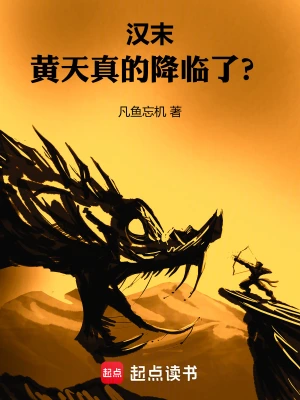
Late Han Dynasty: Has the Yellow Sky Really Descended?
汉末:黄天真的降临了?
- Status
- Ongoing
- Length
- 577k Words
- Genre
- Historical
- Subgenre
- Qin-Han & Three Kingdoms
- Updated
- 27d ago
- Source
- Qidian
Stats
275Chapters
0Votes
501Recs
251Fans
Tags
Synopsis
More by this author
Readers also read
 A Literary Master in Ancient Greece
 Great Ming: His Father Is Useless, So He Must Summon the Founding Emperor
 Seizing the Direct Descendant in the Red Mansion
 Germany: 1914
 Simultaneous Transmigration: Is Everyone Starting Out in Prison?
 At the End of the Ming Dynasty, Chongzhen, Whom I Controlled, Became a Holy King
 Raise the Han: Ascend the Throne in One Day, the Fastest Anti-Qing Legend
 A Great Industrial Nation, Starting with a Fake Student Abroad
 A Dual Status Panel Descends into the Abyss, and the Assassin's Potion Is Right at the Entrance
 Apocalypse: My Teacher Is the Machine Herald
 Three Kingdoms: I Rebuked the Treatise on Hating the Kingdom and Called Jiang Wei an Amateur
 The Biography of Lu Bu: Chaos Quotations from the Late Han Dynasty
 The Legend of Qin: Starting with the Mohists to Topple the Qin Dynasty
 The Legend of Qin: The Numbers Monster Who Rose from the Mohists
Reader comments 18
Google Translate
Huang Chao could succeed only if the aristocratic families could not defeat them. Have you ever counted how many aristocratic families the Han Dynasty could defeat?
To be honest, the pace may be too slow, which affects your performance.
If you cooperate with aristocratic families, this book is of no use. How can you build a good country with that group of insects? You must rebel hard and plant aristocratic families into the soil.
Common people is what we call common people in modern times; in ancient times, it was called "Guizhou head". In the late Eastern Han Dynasty, "common people" were the collective term for wealthy families (annotated by Zheng Xuan)
Whether the aristocratic family disappears or not, it means little in the long run. In the final analysis, it is still a problem of the system. If the system is not good, the aristocratic landlords will still appear again. Therefore, public ownership of land is fundamental. As long as all means of production are under public ownership, then land will not be annexed. The state then takes the initiative, and policies can be flexibly adjusted. Whether it is to assign output to each household, redistribute land in one or two years, or to establish cooperatives and large farms, it can all be adapted to local conditions. Including future enterprises, all mining, metallurgy, finance, and industries involving people's livelihood must be state-owned enterprises. Light industry is supplemented by private enterprise.
In the late Han Dynasty, if the Yellow Turbans wanted to succeed, they had to cooperate and compromise with the aristocratic families.
The Aristocratic Family has mastered a large number of production tools and resources. If the Yellow Turban Army does not compromise and cooperate, they will be jointly surrounded and suppressed by the Aristocratic Family. Only by compromising and cooperating can they use the power of the Aristocratic Family to develop themselves.
Just look at the introduction and you'll know it's rubbish
In an era when papermaking had just emerged and there was no printing. All knowledge is in the hands of the nobles. Ordinary people also rallied around the nobles. The Chinese people do not hate the gentry, nor the landlords, nor the government. Even in the Ming Dynasty, none of those officials were doing harm to the officials and benefiting their hometowns. Killing the nobles means standing against the people, at least before the mid-Tang Dynasty.
It feels pretty good, but the pace is too slow. In addition, the path the protagonist takes is destined to be against the aristocratic family. Then talents can only be cultivated by themselves. But the protagonist only cultivates a few people around him. Even if a few talents are trained, it will be of no avail. When will schools be opened to enlighten the people? If the common people are not taught to read, count, and reason, then the protagonist is destined to not go far. After all, the protagonist can't place illiterate people as management.
There is a problem with the introduction, what is another uprising?
To be honest, some people in the aristocratic families at that time were rich. In addition, the people around the aristocratic family were all members of the same family five times apart, and they all had the same surname.