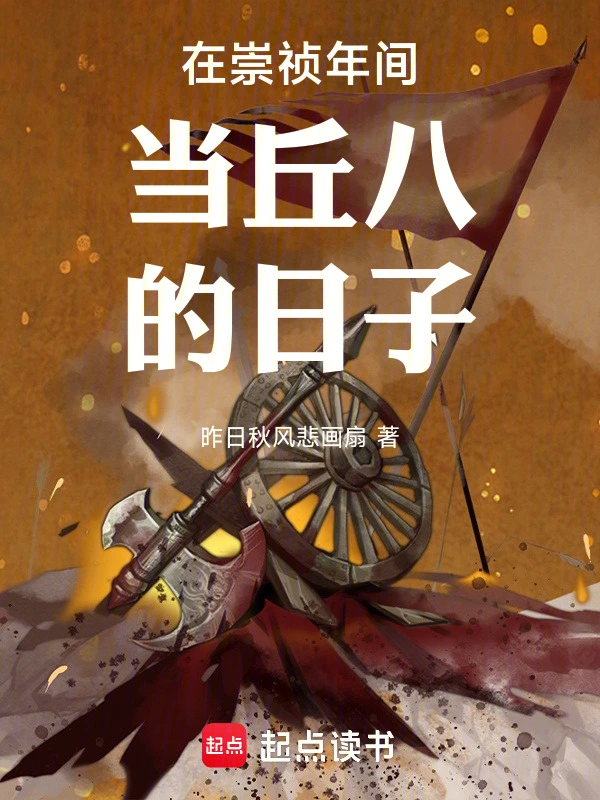
The Days When I Was Qiu Ba During the Chongzhen Period
在崇祯年间当丘八的日子
- Status
- Ongoing
- Length
- 422k Words
- Genre
- Historical
- Audience
- Male
- Subgenre
- Song-Yuan-Ming Dynasties
- Updated
- 11mo ago
- Source
- Qidian
Stats
0Monthly votes
2.8kRecommends
4.5kFans
82Chapters
Tags
Synopsis
Reader comments
Readers also read
 Red Mansion: Start Escaping and Farming from the Equipment Bar
 Northern Qi, Sage Khan
 Fu Ming 1627
 After Lying in Bed for Three Years, He Was Forced to Help the Han Dynasty
 Ming Dynasty Heroes
 Overlord
 Late Jin Dynasty: from Two-Legged Sheep to Human Emperor
 Wei Bo Is an Envoy, Even Dogs Are Not Suitable
 1848 Qing Dynasty Charcoal Burner
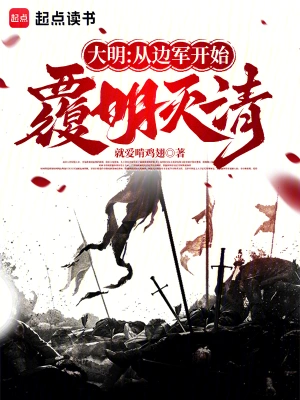 Reveal the Truth!
 Emperor Ning Has the Guts
 Become an Official
Emperor Chongzhen gave this little money and fired two shots at each other 😁😁😁😁😜😜😜😜
The male protagonist is an ordinary person. He has no strength or intelligence. He is also a small official. He works in brothels on free money. It feels very real.
Which one, the servant system or the camp system, is more suitable for the Ming Dynasty?
The Jiajing system began to rise in the Jiajing Dynasty, because all the guardsmen became serfs and had no fighting capacity. However, the Ming Dynasty faced constant problems from foreigners on the border, from Mongolia, Oara to Houjin. The generals at the border could not sit still and wait for death, so they began to recruit servants. This is a private armed force, there is no corruption, and there is no problem of withholding food and wages. Emperor Jiajing wanted to save money and get results. The money in the treasury is used to build palaces and Taoist temples. Isn't it beautiful that they themselves spend money to raise soldiers? The rise of the Jia Ding system is also a sign of the beginning of the rise of generals in Liaodong. The most famous one is that Li Chengliang's servants directly recruited Mongolians or miners, and the training was extremely harsh. Qi's army was trained every three days. Li Chengliang's servants were even more ruthless than this, but there is no record found in official history. I only found that in addition to doing exercises every three days, Qi Jiajun also had to bear 30 kilograms of weight and run 10 miles every day. Li Chengliang's servants had to bear 50 kilograms of weight and run 20 miles every day. The level of eliteness is evident. When the old slave Nurhachi became Li Chengliang's servant, he probably learned it. The subsequent Manchu Eight Banners soldiers and Li Chengliang's servant system were similar. They are all the best among the best. When Li Chengliang's son Li Rusong sent troops to Korea, his servants were at the forefront and fought bravely. Wu Sangui's Guan Ning cavalry is also a pure servant. But this has a disadvantage, that is, the servants cannot be replenished after serious injuries. The servants are quite elite, and the training and expenditure are quite huge. This is also the case later. When the Ming army and Hou Jin fought, beheading a true slave was a considerable military achievement. After excluding the weakness of the Ming army, dozens of true slaves could usually be beheaded in a battle and reported to the emperor. Because it's really hard to make up for it after you've killed it. Jiannu even captured people from the wild Jurchens to supplement the Eight Banners soldiers. Anyone who has played horse-and-blade games knows that it would be uncomfortable for any of the Valdia banner knights who have worked so hard to train them to be stabbed to death. But the battalion soldiers are different. Although they are relatively elite, they are not difficult to replenish. Ordinary people will join the army for a few months and fight a few battles, and they will be qualified battalion soldiers. There are many reasons why the Ming Dynasty lost. If they were not soldiers, they would be at a disadvantage. The soldiers of the Ming Dynasty were not even the camp soldiers. Most of the 800,000 people in Zuo Liangyu's trendy bar were peasant soldiers, and they were worse than Li Zicheng's, so they could only bully the common people. Lu Xiangsheng's Tianxiong Army proved that the soldiers were not weak, but the Dukes of the Ming Dynasty were weak.
Zhu Youjian was a man of great talent and great strategy.
Do you have any misunderstandings about Xiongcai Geniusi?
Of course, the main character is a corrupt official and does not count. Although I despise corrupt officials and admire Zhu Yuanzhang, if the corrupt official were me, I would be very cruel. Why didn't Zhu Yuanzhang just be greedy for money? 😁😁😁
In fact, Zhu Yuanzhang's guard system was very successful.
The titles of Xu Da's Duke of Wei and Mu Sheng's Duke of Qian were passed down until the end of the Ming Dynasty. There were also a large number of middle and lower-level officers who were awarded hereditary positions such as Hundred Households and Thousand Households. Sun Chuanting's family was from a hereditary family, and this position was passed down from Hongwu to the late Ming Dynasty. Qi Jiguang hereditarily commanded the Qianshi of the Dengzhou Guard. His ancestor Weixiang accompanied Ming Taizu in the southern and northern wars, and the Dengzhou Guard commanded the Qianshi. This position was hereditary until the end of the Ming Dynasty. There are also Li Chengliang, Qin Liangyu, Mao Wenlong and others, whose hereditary positions are more iron-clad than their iron rice bowls. Did Zhu Yuanzhang achieve sharing wealth? In the Ming Dynasty, not only the imperial examinations for military households, but also active-duty soldiers and officers participated in the imperial examinations. There were also official health schools to teach the children of active-duty military households, and they also took the imperial examinations for immigrants. The "Jinshi" rate among military households is 1/4. One out of every four Jinshi is from a military household, and 50% from civilian households Zhang Juzheng's reform was the biggest mistake. After his reform, the price of grain, which had not changed in the Ming Dynasty for 200 years, began to rise one after another The price of rice has never exceeded 0.5 Taels per hour, in 200 years Whether it is Jiubian or the north and the south, the price is 0.5 Taels without military disasters or natural disasters (explanation of the relationship between the monthly grain discount and grain prices in the thirteen towns of Jiubian in the Ming Dynasty_Hu Tieqiu (the average price of grain in Jiubian is 0.5 Taels and one stone without natural or man-made disasters)) The surge in prices after giving up the right to mint also started with the war between Wanli and Houjin and the influx of silver caused by the Thirty Years War. The Wanli period also tried to stabilize prices and created something similar to "food stamps" of 0.8 Taels and one stone (Xie Guozhen: "Recording the Affordable Rice Tickets in the Forty-eighth Years of Wanli in the Ming Dynasty") At that time, in order to stabilize the price of rice, the local government set the price of affordable rice at 90 Wen per bucket, equivalent to 8 cents of grain silver, or 0.8 Per stone. Two silver coins. ) Moreover, we discussed the implementation of the whipping method in Jiajing. Hai Rui said that the north was not suitable for implementation. Zhang Juzheng, the problem is that he did not come from the bottom, so he did not know the situation below. There has always been a scarcity of precious metals in the country, and there was always a tax in kind before the Ming Dynasty. In the 14th year of the Jiajing reign of the Ming Dynasty, Jin Xueyan, the left-hand official of the Ministry of Civil Affairs, suggested banning the use of silver by the private sector and strengthening the circulation of copper coins. "I have heard that wealthy families in the south of the Yangtze River have accumulated hundreds of thousands of silver. Now the emperor's treasure in heaven is only more than one million taels. If the bank is left alone and the money is wasted, it will be comparable to the accumulation of dozens of miles of rich families." Silver was hoarded by the gentry, and northern farmers had to exchange grain for silver to pay taxes. After paying taxes and having no food, you have to use money to buy food. The pricing power is in the hands of the rich. Hai Rui has already said that there will be such a result. Silver can be used to develop the economy in the south. The silver standard in the north will cause a shortage of money for northern farmers. The shortage of money will cause grain to be cheap and silver to be expensive, which will be harvested by the gentry and plutocrats, and a large number of free people will go bankrupt. The most speechless thing is that those civil servants were so clever that they abolished Zhu Yuanzhang's method of opening the middle. Did the border army lack money? What people are short of is food. A large amount of silver has gathered at the border, but the food at the border has not increased. Then it must be that the price of food at the border has skyrocketed. The result is that the money is paid out and not paid out. Remember that in the early years of Chongzhen, a dou of grain was worth eight taels of silver. Since the abolition of Xiaozong, the annual revenue of each side during the Hongzhi and Zhengde years was only about 480,000 taels, and it soared to 4.8 Million by the Wanli period. One more point: In 250, other dynasties began to decentralize power, and the Ming Dynasty still wanted to organize large corps The Ming Dynasty's worry was whether it could still fight and win with large corps at this time, but other dynasties had little to consider. Their biggest problem was whether they still had large corps. The Battle of Saar Mansion took place in 1619, and the Ming Dynasty established and occupied the Yuan Dynasty in 1368. In other words, the Battle of Saar Mansion was already 251 years after the founding of the Ming Dynasty. For example, the 251st year of the founding of the Tang Dynasty was 269 AD, the tenth year of Emperor Yizong of the Tang Dynasty. Can the Central Army of the Tang Dynasty still get out of Xi'an at this time? The 251st year of the founding of the Qing Dynasty was in 1895. The Treaty of Ma-dong was signed in this year. The Central Army of the Qing Dynasty was suppressed and was beaten to the north by the British. In the Tianping Heavenly Kingdom, it was beaten by Hong Tianwang and was unable to find the north. From then on, it was all supported by regiment training, local armed forces and foreign colonists. Looking at the history of more than 3,000 years, among the big dynasties, only the Ming Dynasty was able to organize large-scale battles with the central army in 251 years after the founding of the People's Republic of China In the 250th year of the Ming Dynasty, Toyonari Hideyoshi, who had only 200,000 people in his small life, invaded Southeast Asia from the southwest, defeated the Toungoo Dynasty, one of the strongest dynasties in Southeast Asian history, and restored some of the Three Proclamations and Six Comforts. The Han Dynasty was usurped by Wang Mang in the 200th year of the Han Dynasty The Anshi Rebellion in the 150th year of the Tang Dynasty was followed by a history of humiliation Half of the country was left in the Song Dynasty in 150 years In the 250th year of the Qing Dynasty, half of the century-old history of humiliation was gone
Four strong soldiers wear armor, and the protagonist doesn't know whether they wear armor, so he kills seven people who sell private salt without armor. The protagonist goes up alone in 1v7 and kills four, while his subordinates watch from the side 66666
In the late Ming and early Qing dynasties, the worse you were, the less humane you were, and the less bottom line you had, the better you lived.
It is said that if the most hellish Chongzhen had not stopped paying three times, he might not have been betrayed by the entire army. In the last few years, Li Zicheng expanded rapidly. Because history has proven that it can go on and on and become even more serious, because the Qing Dynasty has never stopped and met its demise. The Ming and Qing dynasties were really more perverted and less humane than the bad ones, but the more nourishing their lives were. The Qing dynasty was the only unified dynasty that did not have land equalization and exemption from taxes, but it still collected three salaries and perished. In the Ming Dynasty, there was a rule of never starting a subject, and it stipulated that it could not be exceeded. It's tax-free directly. Do you know what the Qing Dynasty's policy of never adding taxes was? During the Shunzhi year, the Qing army officers and soldiers began to make ends meet. Lin Qilong, the Minister of Household Affairs, said in his memorial: "Today, each of the city guards has three dou of rice per month and one tael of silver; each infantry soldier has three dou of rice per month and one tael and five cents of silver. Each horse soldier has three dou of rice and two taels of silver. In addition to buckles, they also need daily vegetables in January, winter and summer clothes, and repair equipment, saddles and bridles. It is necessary for a person to survive only by his virtue. If he has parents and a wife, it will be very difficult. " In the Ming Dynasty, there was no one (head) tax (it was already divided at the founding of the country, which is why the Ming Dynasty did not count the population and only cleared land and land after several reforms). A whip law has integrated all taxes. The result is that we need to recalculate it again and make people pay taxes again. Also, the work done by the peasants is actually the work of the peasants into the mu, which means that the voluntary labor is converted into taxes, but the local corvee still has to be done by someone. Guess who will do it? All local money was also taken back to the court, and 80% of the money spent on fire was collected. The officials and gentry all paid for the food. The result was to collect the money twice. Why? Because the officials and gentry neither farmed nor worked, guess who will be paid in the end? The lack of local disaster relief capabilities due to the wastage of prostitutes The salary of the Qing Dynasty clan was 60 times that of the Ming Dynasty The treatment of the clan in the Qing Dynasty was much better than that in the Ming Dynasty. Not only did the clan's salary have "no quota", but it also implemented the policy of "one more mouth equals more grain". The more the population, the more salary and grain. The Ming Dynasty made the clan's salary and grain standards public and implemented a "permanent quota". Regardless of the increase or decrease in the population, the salary and grain would not be adjusted. The two formed a sharp contrast. Feng Guifen, a Qing official and Westernization movement who was ranked second in the 20th year of Daoguang's reign (1840), pointed out bluntly: "After the establishment of the Zhou Dynasty, various histories recorded that it was very clear that the clan's sleeping quarters were thin. The friendship between relatives in this dynasty is far ahead of the ancient times." Compared with the Ming Dynasty, the Qing Dynasty treated the clan much better. According to the record of "Xiaobinlu Protest": "There are regular national funds, but there is no fixed amount for the clan's salary. The generals and generals' salaries are not recorded in the Huidian books. Recently, the annual income is more than three million, ten times that of the beginning of the country. This should be restricted." ([Qing Dynasty] Feng Guifen: "Xiaobinlu Protest" Volume 2, "Continuing to Revise the Siku" "Complete Book", Shanghai: Shanghai Ancient Books Publishing House, 1995 photocopy, volume 952, upper column of page 524) Wei Yuan's "Shengwu Ji" records: "At the beginning of Shunzhi, more than 2,000 clan members entered the pass from the dragon, and recently there are nearly 30,000, with an annual salary of millions." [Qing Dynasty] Wei Yuan: "Shengwu Ji" Volume 11 , Taipei: Zhonghua Book Company, 2016, p. 8) Wei Yuan also recorded in "Fu He Zhuxiang's Accounting Book in the Same Year": "The population of Zonglu is increasing day by day. It increases by one year every year. It is not the ratio of livelihood of the Eight Banners. There is a quota for flag soldiers and vests. But there is no quota for Zonglu. One more mouth means one more grain. Counting from Qianlong to the present Sixty years. It is unknown how many times it has multiplied. This is also a key factor for the state... Zonglu asked the official of the clan, Liu Yizhai, and the officials of the Han Dynasty did not know the number." This is in contrast to the measure of making the amount of the royal family's salary public and "fixed" in the late Ming Dynasty. ([Qing Dynasty] Wei Yuan: "Gu Wei Tang Wai Ji", "Wei Yuan Complete Works", Yuelu Publishing House, 2011, Volume 13, Pages 422, 423)
The writing is really awkward, it's very unpleasant and there's no exciting plot.
I saw a gangster protagonist who was a level lower than Wei Xiaobao.
Among the unified dynasties, prices in the Ming Dynasty and Han Dynasty were the most stable. The Ming Dynasty was the longest with an average price of 0.5 Taels per shi for more than 200 years.
It is rare that the price of Ming Dynasty goods is written correctly The price of goods in Ming Dynasty before the war averaged 0.5 Taels per shi (one stone 150 kilograms of grain), with the lowest at 0.2 Taels per shi, and 1.5 To 4 liters per kilogram. (Measuring Jin) Han: 1.6~8 Wen Tang: 0.5~15 Wen Northern Song: 4~12 Wen Southern Song: 12~24 Wen Yuan: 1500 Wen Ming: 1.5~4 Wen Before Qing Dynasty : 4~8 Wen After the middle Qing Dynasty: 24~40 Wen The salary of part-time workers in the Ming Dynasty was 900 Wen a month. The TV series "Wulin Gaiden" included room and board for 2 yuan (200 Wen) a month. The screenwriter obviously has done more rigorous research than most TV series. If ordinary workers buy their entire salary into rice Han Dynasty: 1,250 jins in the early period~250 jins in the later period Tang Dynasty: 1,800 jins~125 jins Northern Song Dynasty: 945 jins~100 jins Southern Song Dynasty: 315 jins~50 jins Yuan Dynasty:? -133 Jins Ming Dynasty: 600 jins~225 jins Qing Dynasty: 375~188 jins in the early period 88~38 jins~63 jins in the middle and late periods The price of grain in the Qing Dynasty never dropped below four digits since Qianlong's reign
The servants are the well-paid Ming army. The servant system uses small-scale warfare to defeat migrant workers' rebels, copycat bandits, and Mongolian tribesmen. The performance is not bad, but when it comes to large-scale battles, the difference in numbers is too big. . It's simply not good enough!
I just don't understand why time-travelers like to have dicks
It ruins the popularity of passers-by. Is it so difficult to become a normal person? It's too disrespectful for diaosi to be able to develop after traveling to the past What's the point of noobs pecking each other?
The protagonist works under Chongzhen. As long as you stand out, you will be killed or killed sooner or later.
The Chongzhen issue also relies heavily on killing people and replacing others to govern the country Chongzhen changed a total of 11 cabinet ministers and 50 cabinet ministers. In the more than 200 years of the Ming Dynasty, there were only 160 ministers in total! Throughout the years of the Ming Dynasty, there were only four cabinet bachelors killed. Chongzhen killed two of them alone. Fourteen ministers of the Ministry of War killed five. Four of them were dismissed, served, imprisoned, etc., And more than twenty officials of the second rank or above were killed. After the Jisi incident, more than forty ministers were killed in one go. Forcing seven governors to death, they kept killing each other, causing Chongzhen and the ministers to become alienated Supervisor Yuan Chonghuan was arrested during the Jisi Incident in the second year of Chongzhen, Ling Chi. Governor Hong Chengchou was defeated in the Songjin War and surrendered to Hou Jin. Governor Lu Xiangsheng fought against Houjin. He ran out of ammunition and food, and had no logistical reinforcements. He died in battle. After his death, his official position was reduced and his whole family was confiscated. Governor Xiong Wencan, beheaded. Governor Zheng Chongjian was beheaded. Governor Sun Chuanting spent several years in prison and died in battle. Chen Xinjia, Minister of War, was beheaded. Yang Sichang, a cabinet scholar, committed suicide out of fear of crime. General Soldier Cao Wenzhao died in battle. The general soldier Zu Kuan was beheaded. How to save the Ming Dynasty? If Yu Qian is resurrected and works under Chongzhen, he will be beheaded before he spends the night!
Looking at the introduction, the pig's trotters don't look like officials, they don't look like emperors, they don't look like thieves, they look more like poor mercenaries.
The protagonist's group is the children of military attachés
Even if his hereditary succession fails, he can still be a lord. The military attache's children are divided into command lords, thousand-household lords, hundred-household lords, general flag responders, small flag responders, etc. This type of servant usually enjoys the privilege of being exempted from taxes and servitude, and can enter the health school, but has no real power and salary, and needs to complete the tasks assigned by the military attache (such as escorting prisoners, serving as errands, etc.). Some Sheren who did not take up their posts may have participated in military activities. For example, during the Hongwu period, Yang Ming, the younger brother of Yang Guan, a leopard guard with a thousand households, served as a Sheren in battle and was promoted to a hundred households after meritorious service. Referring to the ordinary sergeants in the guard, their official title should be "sergeant" or "Yu Ding", while "sheren" is more used to describe the group of military attachés' children.
If you want others to know, you have to do nothing. Now you don't even fart. You are a son of a bitch and a son of a bitch.
The beginning should be written directly according to the protagonist of Chapter 10. Better. The first nine chapters will easily turn off many readers. Then you changed the protagonist's personality in Chapter 10 and persuaded him to quit. After all, the protagonist in the first nine chapters is a bit of a loser.
It is well written, has no obvious flaws, and is worth reading. It surpasses 90% of historical texts on the market.
I regret to inform you that the author's parents, wife and son passed away within half a month of each other. He could not bear the mental shock and went crazy. He is no longer able to write normally. He has no choice but to stop updating. I want to say sorry to everyone.
Bao, it's great to be alive. I thought your whole family was in trouble😭
It's hard to find a book to read these days. It's not just a eunuch. Where did the author suddenly disappear?