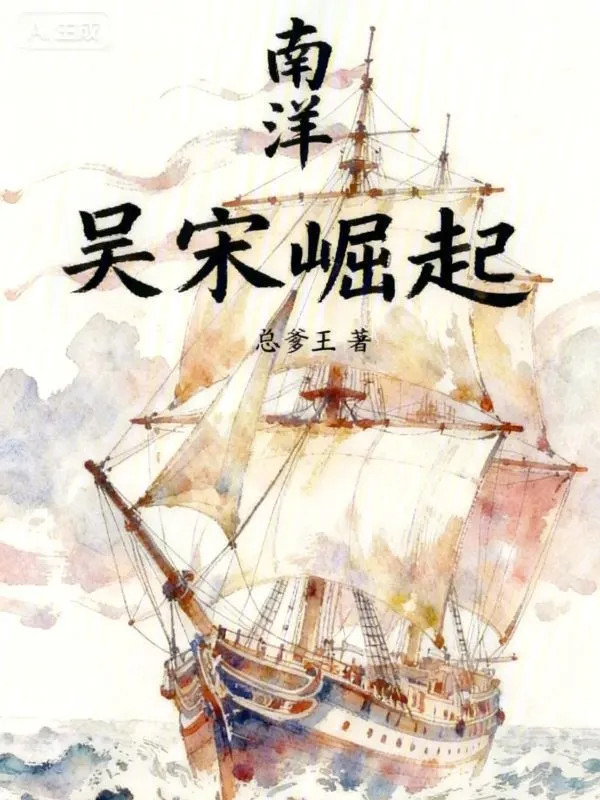
Nanyang: the Rise of Wu and Song Dynasties
南洋:吴宋崛起
- Status
- Ongoing
- Length
- 1.7M Words
- Genre
- Historical
- Audience
- Male
- Subgenre
- Foreign History
- Updated
- 1d ago
- Source
- Qidian
Stats
Tags
Synopsis
Reader comments
In booklists 2



Book Waste Relief Station
[Top] The review I wrote was too general or focused on the early stages of the book! And the writing is not brilliant! If you need to modify your comment, please leave a comment (it will be replaced and modified under real circumstances, I won't take pictures of rainbow farts!)! I've been writing online for 16 years, and I'm really frustrated with the lack of articles. I don't need to recommend books with good results. Basically, I only recommend niche books. I hope niche books won't be buried!



My Starting Point Private Collection
There are no trending searches here, just treasures that I have read word by word and truly loved. Each book is carefully selected and prepared for you who also love stories. May we meet here and share a wonderful journey. This book list is a serialized book, and the completed book@complete book list
Readers also read
 Fu Ming 1627
 After Lying in Bed for Three Years, He Was Forced to Help the Han Dynasty
 Red Mansion: Start Escaping and Farming from the Equipment Bar
 Northern Qi, Sage Khan
 Only I Can See Romance Game Announcements
 I Am a Great Power
 The Wind Rises 1898: Becoming a Warlord from Nanyang
 Starting from the Second Generation of Immortals
 After Being Made Angry by the Anti-Fans and Crying, Tianxian Found Out That the Real Murderer Was at the Bedside
 1848 Qing Dynasty Charcoal Burner
 I'm an Emperor in Africa
 Anti-Qing: Start with a Piece of Stone!
The protagonist doesn't understand politics and doesn't give soldiers the right to distribute spoils of war or investors the right to pay taxes. Why should they work for you and maintain your rule? Just rely on the protagonist Long Aotian, and he will bow down if he loses his domineering power? Not to mention the right to distribute the spoils and the right to tax, in order to stabilize the ruling group and to tie the heroes and investors to the protagonist's family, the Eight Banners system is the optimal solution. Why? Because when Westerners come, we can really give them the right to tax, and they will make a choice when the time comes. The protagonist's appearance is too ugly, and it is difficult to win over any class that is loyal to him. Nanyang is not the Qing Dynasty, and there are not a large number of Confucian Zeng Guofan who will maintain your rule. Liu Bang told Zhang Liang in Anhui that I no longer want the territory east of Hangu Pass and will use it all to reward heroes. After Liu Bang defeated Xiang Yu, he promoted the more than 600,000 soldiers who participated in the war to five levels, and they were all doctors. More than 300 million acres of land were allocated, and 40% of the empire's wealth was distributed to these meritorious personnel. Except for the king of the opposite sex, Liu Bang's promise has basically been fulfilled. That's why we were able to stabilize the situation and not collapse directly like the Qin Dynasty.
Don't write about being beaten back to your country. Don't say anything if you can't be beaten. What you write becomes a bat, neither a bird nor an animal. I don't like those who want to watch it from overseas and those in China.
The subject matter is novel and the writing is good
The Chinese population in Malaysia once exceeded that of the indigenous people, but the only regret is that the Chinese, who were the largest ethnic group in Malaysia, did not become the ruling class in Malaysia. The Chinese in Malaysia are economic giants and political dwarfs. I hope this novel can comfort the dreams in your heart! The author's descriptions of military layout and other details are relatively realistic, and there is no imbecile exaggeration such as fantasy! Come on, author, be sure to finish writing and order all of them when they are released.
Soldiers follow you to the death, not to listen to you draw a pie or shout slogans, nor for your eternal hegemony, but for trophies, military honors, and a future for their families; investors are willing to spend money and resources for tax rights, management rights, and hereditary privileges, which are real long-term benefits. However, most of the protagonists hold on to all the interests and refuse to let go. They neither give the lower-level soldiers the right to share the spoils nor give the upper-level supporters the privilege of binding interests. They are reluctant to part with land or wealth. They just want people to trust them with their lives. How naive. Loyalty that history has never come out of thin air, all loyalties, are essentially the deep binding of a community of interests. Liu Bang was able to defeat Xiang Yu and secure the Han Dynasty, not because of the so-called destiny, but because of his wisdom of "giving up": before the war, he promised to reward all the heroes in the land of Guandong. After the war, he fulfilled his promise and gave all the more than 600,000 soldiers who participated in the war a five-level title. Level, split more than 300 million acres of land, distributed 40% of the country's wealth to meritorious ministers, and let the soldiers at the bottom, civil servants and generals all receive real cakes. Everyone shares weal and woe with the Han Dynasty, and naturally no one is willing to overturn the country. The Eight Banners System allowed the Manchu Qing Dynasty to conquer a large country with a small clan. The core was never to crush the country by force, but to build an ultimate system of interest bundling: bannermen shared war dividends, hereditary privileges and administrative power. Family honor and disgrace were deeply bound to imperial power. Each was prosperous and the other suffered losses, forming an unbreakable foundation for rule. On the other hand, the protagonists in online articles are often extremely ugly and cannot win the hearts of the soldiers at the bottom, nor can they tie up the interests of heroes and capital. Especially in a barbaric place like Nanyang, where there are no Confucian scholar-bureaucrats to protect you, and no clan ethics and ethics, there is no huge vested interest class to support you. Once a foreign enemy offers more favorable conditions, it will only take a blink of an eye for your subordinates to defect. The essence of rule is never to rely on personal domineering to make people bow down, but to know how to share the cake and build a foundation. Those who monopolize profits will end up alone; only those who know how to give up profits can gather people's hearts and achieve hegemony.
After that, most immigrants were recruited from the Qing Dynasty, Chaoshan people, Hokkien people, Hakka people and Hoklo people. After all, the population exploded in the Qing Dynasty.
In history, too many kings of a country have been detained or killed when they went out. If a gentleman does not stand behind a dangerous wall, why should he block the odds? People's hearts can change. Maybe they never thought about detaining before meeting the protagonist. Maybe after meeting or having a few conversations, they think detaining is better than not detaining. The protagonist is given the title of king in the capital, and the protagonist's father is given the title of king. If the protagonist does not return home, and he is an only son, the heir will naturally become the protagonist's cousins. So will the protagonist's uncle and cousins still have the motivation to rescue the protagonist? The butt determines the head, and the Wu family is afraid that there will be civil strife.
The Nanyang region is more than 10,000 miles long from east to west and more than 5,000 miles wide from north to south. This area, which is larger than China, is dotted with hundreds of countries, thousands of tribes and thousands of islands. It is indeed possible to occupy land and build a country in it, and some people have actually done it in history, such as Lan Fang Kingdom, Dai Yan Kingdom, Ha Xian Kingdom, etc. It is indeed impossible to unify Nanyang. Historically, the Portuguese, Spanish, Dutch and British had been in Southeast Asia for hundreds of years, and there were still uncontrolled sultanates and native tribes in their respective territories. Therefore, I hope that the protagonist's map will not be too big. It will be enough to unify the Malay Peninsula or both sides of Malacca. The Malay Peninsula plus Sumatra is enough to support hundreds of millions of people. How many people can the Manchus take away? A few million is enough to fill the sky. If you can't even fill the two sides of Malacca with a few million, what's the use of further expansion?
The biggest poisonous point after seeing more than 300 pictures is that the protagonist actually agreed to the Hongmen Banquet. As a usurper, he still holds the Han throne. He must be afraid of the Han people and definitely does not lack the courage to take action. In politics, it is always better to lose both sides than to win alone for the opponent. Moreover, the protagonist also created the best external conditions for the King of Thailand. Vietnam was mobilized by the protagonist into a three-party civil war, and Burma was beaten to a semi-crimp by the protagonist. I am the King of Thailand and I will definitely imprison you. The worst outcome is nothing more than forcing the Wu family to rebel. But without the protagonist, what else is there to fear about the Wu family?
A little opinion
The subject matter is good, but the progress is too slow and the methods are not iron-blooded enough. The 18th and 19th centuries were a time of great strife. The real era of great powers. Only by imitating the ruthlessness of the United States towards Indians can we survive in Southeast Asia. We need to distinguish who is the enemy and who is the friend. People who are not of my race must have different minds!
Many people just saw the corruption in the Qing Dynasty and actually thought that corruption equaled lax governance. The Qing Dynasty was corrupt but its rule was high-pressure. The Luyin Baojia system almost tied farmers to the land, making immigration very difficult. The only way I can think of is to hook up with coastal officials and form a new black interest industry chain of smuggling and transferring property. It is impossible for Dai Qing to watch you collude with both internal and external parties. This is the core interest of Dai Qing, and there will definitely be a fight. The problem is that if we can really defeat Dai Qing, we will directly overthrow Dai Qing. If we cannot defeat Dai Qing, everything will be in vain.
My contribution to the Qing Dynasty is unprecedented and unprecedented.
In the 72 years from the Opium War in 1840 to the fall of the Qing Dynasty in 1912, the Qing government signed a total of 1,175 unequal treaties, contracts, agreements and contracts with foreign governments, foreign businessmen or international organizations. Among them, unequal treaties accounted for more than 90%. It can be said that there is no one before or since! ! !
As long as the author can unify Indochina, that would be great
Some people are so funny. In the Qing Dynasty, Qianlong was in power. In peacetime, more trouble is worse than less trouble. But when you attract his attention and make him decide to attack you, he doesn't have to waste any effort. It will weaken your efficiency in obtaining the mainland's coastal resources. For this reason, he will not blink an eye at the tens of millions of people living along the coast. When dealing with the Zheng family, he moved people from coastal areas to the inland and did not allow them to go to the sea. He can do the same to you. Thailand is nominally a vassal state of the Qing Dynasty. Can you let Thailand suppress you? Can you unite with the West to attack you? If you want Long Aotian, you shouldn't be limited to the earth. After unifying the earth, you must focus on the universe. Otherwise, as the unique traveler of the earth and the master who knows everything, just to dominate the earth? Isn't this funny? If you are illogical, Long Aotian must broaden your horizons and work hard to enter the universe for the people of earth. If you are logical, being able to know the direction of the general trend is already a big advantage. If you want to know everything, it is too false. In modern times, any normal person can do something if he knows the general trend within 20 years. If he has a prominent status, his achievements will be even greater.
Occupying all of the Indochina Peninsula and Nanyang Islands, with the strength of science, technology, industry and population, we can directly fight back and completely capture the Qing Dynasty. As the Han Dynasty rages, the two books of Nanyang and Lanfang still fight back and destroy the Qing Dynasty. Nothing happens, so why not fight back?
If you really want to settle down in Nanyang, it is necessary to conquer the Qing Dynasty.
This kind of novel about the founding of a country overseas, especially in Nanyang, is completely unreasonable without conquering the Qing Dynasty. Only by conquering the Qing Dynasty, even if it only takes over the south of the Yangtze River, can we truly settle down. Otherwise, the population will restrict you tightly. Religion and race, if you put them there, there is no way for long-term peace and stability. Only the Qing Dynasty can resolve all conflicts. Otherwise, even if you rely on various means to barely maintain it, it will be easy for the British, Dutch, and French to beat you, but your size is still too small. Just like in history, it will slowly grind you to death and there is nothing you can do about it. Only by recovering the Central Plains will you be a great power on an equal footing with Europe
Send a rough map
Weigh plants at work
Suddenly, I discovered that the protagonist has established such a large territory, and many members of the family in it are actually called according to their relatives, making it look like a small manor. The formalization was done very well in the past, but here it is completely irregular.
I carefully studied the history of Indochina. In the first half of the 19th century, the annual malaria infection rate in rural areas of Indochina was generally between 50% and 80%. During the epidemic season after the rainy season (October to February of the following year), the infection rate among people in the plains of the lower reaches of the Chao Phraya River, Mekong River, and Irrawaddy River could reach more than 90%. Almost all residents had a history of malaria infection, making it a highly endemic area. Among them, falciparum malaria (the most lethal malaria parasite) accounts for more than 60% and is the main cause of death; vivax malaria and malaria malaria cause long-term chronic anemia and labor loss, further exacerbating the vulnerability of the population. - The official report of the Far Eastern Society of Tropical Medicine in 1930 showed that at that time, 50,000 people died of malaria every year in Thailand. During the same period, Thailand's total population was only about 12 million, and the annual mortality rate was about 0.4%. This data is the result of the initial improvements in public health in the 20th century. In the absence of effective treatments in the first half of the 19th century, the annual malaria mortality rate for the entire population in Indochina was generally 1.5%-3%, And it could reach more than 5% in some high-malaria areas. On average, a woman in Indochina could give birth to 6 children in her lifetime. Most of them died from malaria in all the wars in Indochina in the 19th century. Malaria was a more deadly threat than the enemy: in the first Anglo-Burmese War, a total of 15,000 British soldiers died, of which nearly 70% died from malaria and other tropical diseases. The non-combat attrition of the Burmese army also exceeded 50%, which directly led to the collapse of its combat effectiveness. This is the core factor limiting the population of Indochina. It is not productivity and technology. You can check Angkor Wat. Water conservancy technology was already very developed at that time. It is because of the development of water conservancy that the water conservancy system became a paradise for mosquitoes and malaria, which led to the decline of the Khmer Empire in the later period. People died of the disease. Historically, the country with the largest number of Chinese immigrants before going to Southeast Asia was Thailand. Now Jin Xieshun and Chen Chengfa operate the business on behalf of Siam with the merchants and people of Fujian and Guangzhou, which is illegal. The good people of China strictly abide by the laws and regulations and never dare to overstep the rules for profit. Those who engage in private affairs in foreign lands are mixed with good and bad... A special edict was sent to inform the king and declare the rules and prohibitions. Afterwards, if the king has his own cargo ship, he must use his own people to control and drive it, and send special officials to lead the ship, and he must not hand it over to Chinese people for operation. If, after this edict, there are still personal contacts with mainland merchants and people who come and go under false pretenses, and if Guanjin officials find out, in addition to not being allowed to import goods, the unscrupulous businessman will still be punished, and the king will not be able to absolve himself of the blame. From the 25th year of Jiaqing to the 10th year of Daoguang (1820-1830), as many as 6,000-8,000 people from Fujian and Guangdong immigrated to Siam every year. At that time, the total number of merchant ships traveling to and from China every year was only about 15,000, and the proportion of those who stayed was close to half. The Qing government was very concerned about this situation. His wrath was all-encompassing: in addition to issuing multiple edicts to warn the Siamese king, Jiaqing also repeatedly ordered the governors of Guangdong, Guangxi, Fujian and Zhejiang to strictly investigate merchant ships going to sea, and to convict people living privately in Nanyang as "tongfan treason". Even Chinese boatmen and interpreters who provided services to Siamese merchant ships were severely investigated and punished. Including Taksin's failure, the reason is that in Siam's 400 years of traditional political history, all monarchs who tried to break the privileges of hereditary nobility and strengthen the arbitrary power of the king, regardless of whether they were of orthodox origin or not, failed without exception. This is not a question of the monarch's origin, but Siam's Mandala system and Sakdina system, which fundamentally reject the Chinese-style centralized model. This model has no social, religious, or institutional supporting soil in Siam. It will inevitably be unsuitable for the country and will inevitably lead to the complete collapse of the ruling system. 1. Chronicles clearly record that in 2323 AD (1780 AD), Taksin officially issued an edict to abolish the judicial privileges of the nobility, allowing all classes in Siam, including civilians and slaves, to bypass all bureaucracies and report directly to the king about the "disobedience" of royal family members, hereditary nobles, and military officials; those who reported truthfully would receive half of the family property and title of the person being reported, and those who reported falsehoods would not be held accountable for any crimes. 2. During the same period, the French missionary Le Blanc (who preached in Siam for 12 years and witnessed the fall of the Thonburi dynasty) added: "After the king's edict was issued, the entire court and local lords fell into the unprecedented situation. Unprecedented fear. In the past, even nobles who failed in their rebellion could save their lives by becoming a monk. But now, even if a drunken complaint is reported by a slave, he will be directly arrested, whipped, or even killed with a sandalwood stick, without any chance of defense. The "monastic immunity" of those who have lost power is an absolute bottom line for personal safety: in the political rules of Siam's Theravada Buddhism, as long as you become a monk, you will be completely separated from secular politics. No matter how big the crime you have committed before, even if it is rebellion, the king can no longer hold you accountable. In the more than 400-year history of the Ayutthaya Dynasty, almost all losers in the struggle for the throne and noble rebellions saved their lives by becoming monks, and there were very few cases of physical purge, and there was no precedent of "executing nobles just based on reports" - Encourage the whole people to report and create widespread fear: The secret system and literary inquisition of the Ming and Qing Dynasties essentially encouraged everyone in the bureaucracy to feel insecure and dare not have any different intentions by encouraging whistleblowers; Zheng Xin's edict directly expanded the scope of whistleblowers to all people, even slaves. By reporting the master, civilians could report the nobles, which completely broke the hierarchical order in Siam and created collective fear among the upper class. When Phaya San launched the mutiny, he had less than 500 palace guards at his disposal, while there were nearly 3,000 defenders in the capital of Thonburi. There were garrisons from many local lords nearby. However, after the mutiny, no army came forward to support Zheng Xin. The defenders opened the city gates directly, and the local lords sent envoys to express their allegiance to the mutineers. The entire coup encountered almost no resistance. The core reason for the collective defection of the nobles is that they have been forced into a desperate situation by secret politics - "History of Thailand" clearly writes: "Every noble knows that someone else is executed today, and they may be themselves tomorrow. They have no way out." The long-standing misunderstanding is that "Taksin has Chinese ancestry, and the Chinese must fully support him." However, first-hand historical materials and authoritative research clearly prove that when the coup occurred in 1782, most of the wealthy Chinese businessmen and guild leaders in Thonburi did not stand up to defend Taksin. Instead, they actively offered their loyalty to Rama I who returned to seize power, becoming an important supporting force in the early days of the new dynasty. 1. A clear record from Thailand's official first-hand historical materials The Royal Society of Thailand's "Chronicle of the Royal Thonburi Dynasty" clearly records: In April 1782, Phraya San launched a palace coup to force When Taksin was forced to abdicate, "the Chinese merchants and people in Thonburi closed their doors and no one was diligent about the king." However, after Chao Phraya Chokri (Rama I) led his army back to Thonburi, "the Chinese business leaders led the crowd to donate food and pay money to support the army." The more critical detail is: Chaozhou Chinese Business Group, the core financial support that Zheng Xin relied on in the early days of his restoration, had alienated from it in the later stages of his administration. Chronicles record that in his later years, in order to support successive foreign wars, Zheng Xin repeatedly "requisitioned Chinese merchant ships and property for military use." He even executed many wealthy Chaozhou businessmen who had funded his restoration of the country on charges of "collaboration with the enemy" and "hoarding," which completely broke his alliance of interests with the Chinese community. After King Rama I executed Taksin and established the Bangkok dynasty, he not only failed to liquidate the Chinese community, but completely continued Taksin's policy of preferential treatment to the Chinese in the early days of his restoration, and even further expanded the privileges of the Chinese: - The first edict after he ascended the throne clearly stated that "the old rights of Chinese merchants were restored, and arbitrary expropriation of goods was prohibited", which abolished the restrictions and forced expropriations on Chinese trade in Taksin's later period; Continue to hand over Siam's rice, timber, and salt franchises to Chinese agents, grant "tax farming rights" to wealthy Chinese businessmen, and even allow Chinese associations to arbitrate civil disputes within the community on their own, without intervening in the internal autonomy of the Chinese. The vast majority of the Chinese who went to Southeast Asia in the late Ming and early Qing dynasties were forced to leave by the centralized and high-pressure rule of the Qing court. Their core desire to escape from China was to get rid of centralized control, gain personal and property safety, and have space to do business freely. What Zheng Xin did in the later period was to move what they disliked most to Siam. 1. The core reason for the escape of the Chinese in Southeast Asia was the centralized and repressive rule of the Qing court The Chinese who immigrated to Siam in the 17th and 18th centuries were mainly divided into three categories, each of which had a natural aversion to the centralized model: - The first category is the maritime merchant group along the coasts of Fujian and Guangdong: the Ming and Qing dynasties implemented maritime bans for a long time. They went to Nanyang in order to get rid of the imperial court's monopoly and control on trade and find an environment where they could do business freely. - The second category is the remnant forces who fought against the Qing Dynasty and restored the Ming Dynasty and the landless peasants: they were either hunted down for resisting the Qing rule, or they were unable to survive due to land annexation and excessive taxes. They fled China in order to avoid the imperial court's security, household registration control and excessive taxation. - The third category is the lower-level craftsmen and laborers: they fled from the Qing government's emphasis on agriculture and suppression of business, personal dependence, and the harsh corvee system. What they wanted was a space to make a stable living by relying on their craftsmanship and labor. For these people, "centralized power, arbitrary imperial power, government monopoly, random house raids, and whistle-blowing" are the source of their nightmares and what they try their best to escape from. In the early days of Zheng Xin's restoration of the country, he indeed gave the Chinese people great preferential treatment and autonomy. This was also the core reason why he was able to quickly gain support from the Chinese and successfully restore the country. However, in the later period of his rule, in order to consolidate his rule and strengthen centralization, he completely went to the opposite direction and completely moved the high-pressure rule of the Qing court to Siam: - Trade monopoly and arbitrary expropriation, replicating the Qing government's official monopoly: In the later period, Zheng Xin changed Siam's maritime trade from "Chinese business agents, royal family profit distribution" to "royal direct monopoly", arbitrarily requisitioned Chinese merchants' ships, goods and funds for war, and even executed uncooperative Chinese merchants at will. This is no different from the Qing court's practices of "one-stop trade", "official monopoly" and arbitrarily squeezing private merchants. - Whistle-blowing politics and joint purges, replicating the Qing court's Literary Prison and Baojia Lienzai: He implemented a national whistle-blowing system and encouraged civilians to report the "disloyalty" of nobles and businessmen. Those who reported false reports were not guilty, and those who reported truthfully were heavily rewarded. As a result, everyone was in danger, and a large number of Chinese businessmen had their homes confiscated and executed because of being reported. This logic is completely consistent with the Qing court's literary inquisition, informant politics, and Baojia Liansi. The deprivation of autonomy and the strengthening of personal control were a replica of the Qing court's system of household registration: Zheng Xin later began to restrict the autonomy of Chinese guilds, requiring that all disputes in the Chinese community must be adjudicated by officials appointed by the king, and even forced the Chinese to be incorporated into the Siamese household registration system and bear additional corvee and military service, completely breaking the original autonomy space of the Chinese. For the Chinese who went to Southeast Asia, they escaped from a high-pressure and centralized Qing court, but met Zheng Xin in Siam who copied the Qing court model. Naturally, they could no longer support him. It can only be said that many people use the perspective of Chinese politics to look at Siam, a place with a different culture, and come to the conclusion that it is completely wrong. The national conditions and social environment are completely different. If you do this, you will be the next Zheng Xin. Don't imagine that the Chinese will support you because you are replicating what others want to escape.
After writing 1.5 Million words and still being a dog to Thailand, I might as well just destroy Thailand.
It would be boring to see Lan Fang
The author writes well. I think he can explain the construction of the Malay Peninsula in a chapter, such as how many factories there are now, what they produce, how many workers, how many farmers, what stage of technology is currently at, what is the total population, how many Chinese, and how many natives. It feels a bit fuzzy when I look at it now. It will be 1800 soon. I think the local area should vigorously develop science and technology, and steam trains can also start to be prepared.
Moving the capital to Greater Singapore and the division of territorial importance
Moving the capital to Singapore is the best choice. Of course, the Singapore I am talking about is not the current small Singapore, but a big Singapore including the Malay city of Johor Bahru next door. At that time, the political, cultural, administrative centers and government agencies will be placed in Johor Bahru City, and the economy, trade and naval fleet will be placed on Singapore Island. In this way, relying on the unique geographical location of Singapore and the Strait of Malacca, and taking advantage of the ocean trade brought by the Age of Discovery and the Industrial Revolution, it will soon be possible If it develops into a world-class city, it will definitely become an economic and trade hub and financial center in Southeast Asia. Starting from Singapore, whether you go north to Pattani or to Kedah in the west, it only takes half the journey. Unlike now, it is too early to go around the entire Malay Peninsula. Moreover, Singapore is right in the geographical center of the Malay Peninsula, Sumatra, Java, and Borneo. It is very close and convenient for the naval fleet to go anywhere. For pig's feet, the four most important territories are 1. Malay Peninsula, 2 is Sumatra Island in the south. Take these two chassis, then take the Lingga Islands and Riau Islands in the east of the Strait of Malacca, and the Andaman and Nicobar Islands in the west. In this way, the entire Strait of Malacca is Within the territory of pig trotters, you can continue to make money in the 21st century. You can make crazy money. The third most important thing is Java. This is the only agricultural production area in these Southeast Asian islands that can be grown on a large scale. It can feed hundreds of millions of people. Now Indonesia is the world's largest agricultural production area. The fourth most populous country in the world, with a population of 280 million, of which 150 million are on Java Island alone. Indonesia can achieve self-sufficiency in staple food. Java Island's rice can be harvested four times a year and nine times two years, which is indispensable. The fourth most important country is Borneo, with various minerals and gold mines. , Oil and so on. With these 4 places, it will not be a problem to become a world-class power in the future to rival Germany and France. If we go east and win Australia, it will develop well and become a superpower.
It is necessary to speed up the development of infrastructure economy
The author is a little too careless about the infrastructure economy. At least, he planned a new city and built cement, glass, cans, and steam trains to shock the 18th-century natives. There was also a percussion cap gun that could not be built, so the breech-loaded flintlock gun should be built first. At the very least, there must be a generational gap in the development of weapons. After the founding of the People's Republic of China, we must distinguish between royal industry and national industry, otherwise we will wait to be managed like the United Kingdom in the future.
This time point is completely inconspicuous. It is not as good as the 1860s when the mountains and rivers were shattered. It is also not as good as the Eight Kingdoms, World War I and World War II. There is nothing to watch except to make up for regrets.
😂😂
You can suggest to the King of Siam that he send a mission to Beijing with great fanfare to contact Burma to attack Burma and let Burma know about it. That would be wonderful 😜
The author's writing skills are good, he advances layer by layer, and the plot is solid. Please keep updating.
Well written, keep writing at your own pace!
I feel like the territory is getting bigger and bigger and we should publish a newspaper. For example, those who have discovered a mine and obtained shares can publicize it and attract adventurous people to the wild land. Otherwise, they will run to prosperous places.
Updates are too slow. The book is actually quite good.
Author, the votes support it, you understand