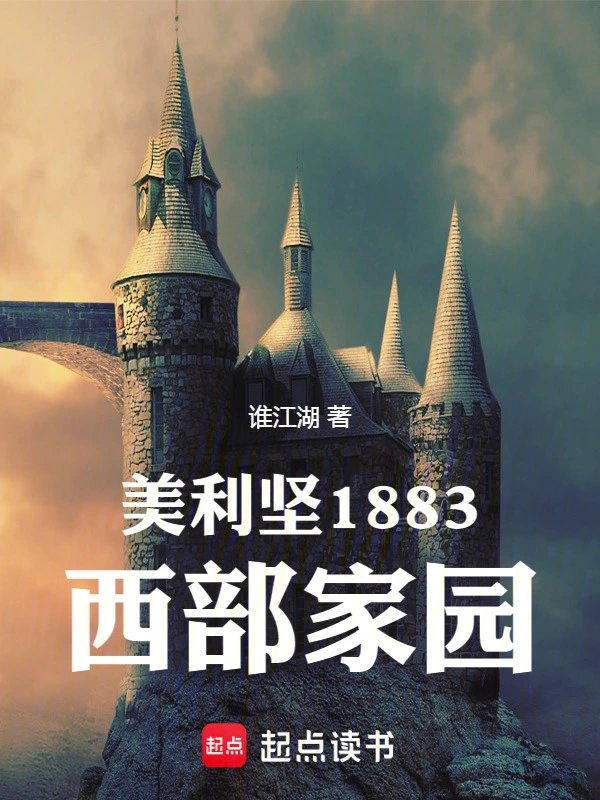
America 1883: the Western Homeland
美利坚1883:西部家园
- Status
- Completed
- Length
- 1.0M Words
- Genre
- Historical
- Audience
- Male
- Subgenre
- Foreign History
- Updated
- 9mo ago
- Source
- Qidian
Stats
0Monthly votes
5.5kRecommends
15.7kFans
403Chapters
Tags
Synopsis
Reader comments
Readers also read
 1914 Begins with the Rejection of the Schlieffen Plan
 In the Red Mansion: Escort Daiyu to Beijing at the Beginning
 Please Call Me Your Majesty the Tsar
 Talker in the Song Dynasty
 Never Walk Alone!
 Become the Second Generation of Aristocrats in the UK
 American Police: Los Angeles Escorts, American Ihehe
 Daming: Have I Become Wanli's Portable Grandfather?
 I Am Drawing a Hot-Blooded Episode in the Zhiyu Episode!
 The Survival Record of a U. S. Police Officer: Convincing People with Virtue
 British Overlord
 America: John Wick 1924
It's a poisonous thing to protect a family member who is acting like a nanny.
The composition of the American consortium
Morgan Group: Morgan Stanley, one of the world's largest investment banks, with operating income of US$76.7 Billion in 2007. Morgan Bank (later merged with the Rockefeller family's Chase Manhattan Bank to form JPMorgan Chase Bank) is the third largest bank in the United States, with operating income of US$99.9 Billion in 2007. GE General Electric Company is the world's largest manufacturer of electromechanical equipment and one of the world's three largest aero-engine manufacturers. Sales revenue in 2007 was US$172.738 Billion. General Dynamics, a US defense conglomerate. In 2008, General Dynamics was the world's fifth-largest defense industry contractor. Operating income in 2007 was US$27.2 Billion. Grumman Aircraft Company is the world's third largest arms company and one of the major manufacturers of US aircraft carriers and fighter jets. IBM is the world's largest IT company with operating income of US$91.4 Billion in 2007. General Motors The world's largest automobile company, with operating revenue of US$207.3 Billion in 2007, AT&T, one of the world's largest communications service providers, with operating revenue of US$63.3 Billion in 2007, and U. S. Steel, once the world's largest steel company, with operating revenue of US$15.7 Billion in 2007. Rockefeller Group; Exxon-Mobil Oil Company, the world's largest oil company, with operating income of US$347.2 Billion in 2007 Metropolitan Life Insurance Company, operating income of US$53.27 Billion in 2007. Its subsidiary Chase Manhattan Bank (later merged with Morgan Bank) is the third largest banking group in the United States, with total assets of more than 660 billion U. S. Dollars. Westinghouse Electric is one of the world's nuclear power giants, with total assets of more than 3 billion U. S. Dollars. United Airlines is the second largest airline in the United States, with 501 large passenger aircraft and 2007 operating income of US$19.3 Billion. Martin Marietta is one of the U. S. Arms companies and a manufacturer of the MK41 missile vertical launch system. Sperry Rand Corporation One of the earliest manufacturers of computer equipment in the United States. Citigroup; Citibank, the world's largest financial group, with total assets of more than 1 trillion U. S. Dollars, operating income of 146.8 Billion U. S. Dollars in 2007, its subsidiary Boeing Company, the world's largest aircraft manufacturer, operating income of 61.5 Billion U. S. Dollars in 2007 (Citigroup is the majority shareholder) J. C. Penney, the largest store and drug store retailer in the United States, operating income of 19.9 Billion U. S. Dollars in 2007, Caterpillar The world's largest manufacturer of machinery and equipment, with operating revenue of US$41.5 Billion in 2007. 3M Company, a multinational company with a long history, produces more than 50,000 products, with operating revenue of US$22.9 Billion in 2007. United Technologies, Pratt & Whitney, one of the world's three largest engine manufacturers, is a subsidiary of Carrier Corporation, the world's largest air-conditioning equipment manufacturer. Sikorsky is the world's largest helicopter manufacturer, and Otis Elevator Company is one of the world's largest elevator companies. DuPont Consortium; General Motors, the world's largest automobile company, with operating income of US$207.3 Billion in 2007 (jointly controlled with Morgan) DuPont is one of the world's chemical giants, with operating income of US$28.9 Billion in 2007. Boston Consortium; First National Bank of Boston One of the oldest banks in the United States, with total assets of approximately US$200 billion John Hancock Mutual Life Insurance Company, Massachusetts Mutual Life Insurance Company, Bell Helicopter Company One of the world's major helicopter manufacturers, Raytheon Company The third largest arms dealer in the United States, the world's largest radar and missile manufacturer (it has not yet completed its controlling stake, but is in the process of controlling it) with operating income of US$23.3 Billion in 2007. Mellon Consortium; Alcoa, the world's largest aluminum products company, with operating revenue of US$30.9 Billion in 2007, Gulf Oil Company, one of the six largest oil monopolies in the United States, operating revenue of US$30 billion in 2007, Armco Steel Company, one of the largest steel companies in the United States, operating revenue of US$27.8 Billion in 2007 Rockwell International, one of the major arms companies in the United States, space shuttle manufacturer, Goodyear Tire Company The world's largest tire company, with operating income of US$20.3 Billion in 2007, Mellon National Bank The world's largest financial securities firm, with assets under custody exceeding US$18 trillion, Pittsburgh National Bank, General Reinsurance Company. Cleveland Consortium; Republic Steel Company The third largest steel company in the United States, Lex-Youngstown Steel Company, Armco Steel Company The world's 53rd steel company, with an output of 5.88 Million tons in 2007, National Steel Company, Goodyear Tire Company The world's largest tire company, 2007 operating income of 20.3 Billion US dollars, Firestone Tire and Rubber Company, Chicago Consortium; Chevron-Texaco Petroleum The second largest oil company in the United States, with operating income of US$200.5 Billion in 2007 Bank of America The second largest bank in the United States, with operating income of US$117 billion in 2007, Deere & Company The largest agricultural equipment manufacturer in the United States, with operating income of US$22.8 Billion in 2007, Sears Department Store The largest department store in the United States, with operating income of US$53 billion in 2007, Tiffany Jewelry The largest jewelry retailer in the United States. California Consortium; Bank of America, the second largest bank in the United States, with operating income of US$117 billion in 2007. (It was Giannini's Bank of America, which later merged with Bank of America) Bank of the West, Wells Fargo, major banks in the San Francisco area of the United States, with operating income of US$47.9 Billion in 2007, Lockheed Martin, the world's largest arms company, with operating income of US$39.6 Billion in 2007 (taken away by the Rockefeller and Mellon consortium) Litton Industries, the fourth largest arms dealer in the United States, manufacturer of fighter jets, destroyers, and cruise missiles. (Litton Industries is still in the hands of the California consortium) Northrop Grumman is the world's second largest arms company, with operating income of US$30.3 Billion in 2007 (taken away by the Morgan family and the DuPont family). Texas Consortium; First National Bank of Dallas, First City National Bank of Houston, Republic Bank of Dallas, Texas Commerce Bank. Tonic Corporation, the largest oil and gas pipeline transportation company in the United States, LTV Company, the fifth largest arms dealer in the United States, Hughes Aircraft Company, one of the American aviation manufacturers (bought from Morgan, the aerospace and defense business of Hughes Electronics was merged into Raytheon, and Raytheon also obtained half of the control of Hughes Laboratory. In 2000, Boeing acquired Hughes Aerospace and Communications Company, and divided the Hughes Laboratory with Boeing, General Motors and Raytheon, and the rest went to the Texas consortium.) Texas Instruments The world's largest integrated circuit manufacturer, with 2007 revenue of US$16.7 Billion. The Boston Consortium is composed of the top founding political families in the United States; the Lowell, Lawrence, Hamilton, Adams, and Lodge families joined forces with the emerging Kennedy family to form the Boston Consortium. The Cleveland Foundation is named after Cleveland, where it is located. In the second half of the 19th century, there were several wealthy families in the Cleveland area who were closely related to each other, mainly the consortium composed of the Mather family, the Hanna family, the Humphrey family, the Eaton family and other families. The Chicago Consortium is a consortium in the Midwestern United States. In the early 20th century, it was composed of the local wealthy families McCormick family, Wood family and the emerging Crown family. It was named after the Chicago area as the center of activity. The Texas Consortium is a new consortium that arose in Texas after World War II. It developed mainly by relying on the oil industry and the arms industry. Take K. W. The McKesson family, S. The Richardson family, H. L. Hunter family, J. The Brown family, J. A. Founded families such as the Elkins family and the Bush family are represented. Citigroup; jointly controlled by the Stillman and Rockefeller families, Citibank emerged as the settlement bank for the Rockefeller Group. The Morgan family acquired the New York Central Railroad Company of the Vanderbilt family during World War II. Then in 1968, the Morgan family acquired the Pennsylvania Railroad Company controlled by the Kuhn-Loeb consortium of Squid through acquisition. Morgan then merged the two railroad companies into one company. Oh, by the way, General Dynamics was also acquired by the Morgan family from the Kuhn-Loeb consortium of Squid during World War II. Westinghouse Electric of the Rockefeller consortium was also acquired from the Kuhn-Loeb consortium of Squid through World War II. In other words, the Kuhn-Loeb consortium, the representative of Squid in the United States at the time, was divided up by established American families.
It's really a waste of my money. The more I look at it, the more angry I get. I want my money back, my money back.
From about Chapter 270, I have been passively beaten, being plotted by others, knowing clearly who the opponent is, without any defense, just passive. Others calculated once, defended, without any active or effective attack, wasted dozens of dollars on me, and I am getting more and more angry The writing in the following is getting worse and worse, I feel like it is either AI or ghostwriting. It really makes me want to vomit. I want my money back!
Citibank History
Taylor: The bank of a group of merchants turned into a bank of merchants The predecessor of Citibank was the New York branch of the First Bank of the United States, which was founded in 1791. In 1812, Samuel? Osgood reorganized it into the "City Bank of New York" - Citibank's early official name. In June 1812, Citibank was incorporated with an authorized capital of US$2 million and a paid-in capital of US$800,000. When it was first founded, the board members of Citibank were all big businessmen, which turned the original Citibank into a tool for them to provide credit financing for their own businesses. The bank director-related loans were "large in scale and had many defaults." In February 1814, for example, 12 of Citibank's 750 customers, or 12 bank directors, accounted for a quarter of the bank's total loans. Citibank's state of being "owned by and serving a group of businessmen continued until 1837. A financial crisis in 1837 brought Citibank to the brink of bankruptcy. In the end, the bank was rescued by Mr. John Jacob Astor, the richest man in the United States at the time and a real estate investor in Manhattan. Mr. Astor sent his representative Moses Taylor to serve as a director of Citibank. Taylor was a model of self-made man from poverty to wealth in that era. He single-handedly created a huge business empire integrating industry and finance: 1 commercial enterprise, 5 railroad companies, 3 financial companies including Citibank, 2 public utility companies and 1 communications company. Taylor served as a director of Citibank from 1837 to 1856, 18 years later. He served as president from 1856 to 1882. As a businessman and industrialist, Taylor transformed Citibank into a "bank owned by and for one merchant" (mainly controlled by Taylor and mainly serving Taylor's personal business empire, so that Citibank during this period did not have its own identity). In 1856, Taylor transformed Citibank from the Bank of New York into the National Bank of the United States. , The official name was changed to "National City Bank of New York." Taylor died in 1882, and his son-in-law Payne, who had been a director of Citibank since 1869, took over as president for nine years. Tyler, who took over Citibank during the financial crisis in 1837, left an important legacy to Citibank: "consistently conservative financial strategy" - cash strategy (Ready). Money), which enabled Citibank to "take risks" in many subsequent financial crises and stride forward over the corpses of failed banks. During the administration of Taylor and Payne, the United States had three banking crises in 1857, 1873 and 1884. In each crisis, Citibank's reputation for safety and reliability increased greatly. The crisis made Citibank the largest bank in New York City with $29.7 Million in assets, and the largest bank in the United States the following year. Stillman: Creating a Professional Manager Management Structure In 1891, the Citibank board of directors selected James Stillman, then 41, as president. Until this time, Citibank's management structure was still very limited. Simple: It is still a board of directors composed of a dozen businessmen each with their own business, and there is only one president and cashier as a full-time executive. Both Stillman and Taylor regard Citibank as a tool to support the development of their personal business empires. The difference is that Taylor is an industrialist, so he runs the bank like an industrialist, while Stillman is a financier and also uses finance. Perhaps this difference made Stillman the first person to start a professional manager to manage Citibank. After Stillman became president, he continued to increase his holdings of Citibank shares by purchasing from other shareholders and increasing capital for Citibank, starting from 1.1% And increasing to 1.1% In February 1892. 6.6%. In that era when there was no mature professional manager system, it was a very popular and reasonable corporate governance model for the owner-manager to purchase a large number of shares from the original owner and become the new owner-manager. It enabled the business owners-managers who were retiring or abdicating to realize the value of their businesses, and also enabled the new owners-managers to obtain a controlling share of the business. This dual transition of ownership and management forces the new managers of the enterprise to take care of the interests of the original owners while connecting their own interests with the enterprises they manage. During the 18 years from 1891 to 1909, when Stillman served as president, Citibank made rapid progress in its late-starting investment banking business, leading and participating in a large number of securities underwriting and corporate restructuring activities. Stillman was expanding the scope of banking business. Like Morgan, he reorganized many other companies and sat on their boards. At the same time, he also chose to reorganize and expand Citibank's board of directors. He also chose to introduce Mr. John Rockefeller to the Citibank board of directors, replacing the representatives of the Taylor-Payne family business with American industry giants, and also made Citibank at that time the capital settlement center of Rockefeller's Standard Oil. In 1909, Citibank was first established. After retiring from the position of bank president, Mr. Stillman became the chairman of the bank's board of directors. It can be said that the chairman of the board of directors of Citibank was a title created by Stillman as he stepped down as a consultant. Frank Vanderlip served as the president of Citibank. He was the first "modern payroll manager" of Citibank's previous presidents. They both held certain shares in Citibank, and were even the largest shareholders, so they did not take a salary at the bank. Vanderlip became president, and Mr. Stillman, the chairman of the board of directors, chose to move to Paris. At this time, the entire American business community, and those industrial tycoons who started their business, began to gradually withdraw from their daily involvement in the company. Management, company managers began to make financial decisions on behalf of company owners, and the personal relationships between tycoons who maintained business transactions gradually turned into relationships between institutions. As president, Vanderlip led Citibank for ten years, developing small and medium-sized enterprise customers in the United States, and at the same time establishing an international branch network to provide good services to large customers (at that time, American industrial companies began to expand overseas). In 1919, Citibank became the first head office in the United States. A bank with assets of $1 billion. In June 1919, Vanderlip resigned because his hope of obtaining a controlling stake in Citibank failed. Stillman's son, James A. Stillman, who had been elected as the second chairman of the board of directors of Citibank after his father's death in 1918, succeeded him as president (John Roy Stillman, the White House chief of staff under President Truman, was also a member of the Stillman family. John Roy Stillman started from 1 From 1946 until President Truman left office in 1953, he served as the White House chief of staff) Stillman Jr. Served until 1921 when Citibank suffered heavy losses in Cuba and resigned. The establishment of modern incentive mechanisms In 1921, Citibank's internal manager, 43-year-old Charles Mitchell, was elected president, and Swenson (a large landowner and entrepreneur in Texas) served as president. The chairman of the board of directors, however, made it clear that Mitchell was the "executive leader" of Citibank. In 1929, Citibank became the world's largest commercial bank. Mitchell resigned from the position of president and became chairman of the board of directors until 1933. Vanderlip left because he could not become an owner of controlling shares like the previous bank presidents, and Stillman Jr. Was unable to operate at the same time. He was not able to lead Citibank for a long time like his father. Without being able to own controlling shares and become owners, how to motivate capable professional managers to create value for shareholders has become an important issue for Citibank to continue to move forward. To this end, Citibank launched a bonus plan called the "Managers Fund" in 1923. The main content of the plan is to distribute the bank's profits in the following three parts: First, according to the bank's shareholder equity. The bank's excess reserves are withdrawn at a rate of 8%, and then dividends are distributed to shareholders at a rate of 16% per share. Finally, a managerial bonus fund is withdrawn at a rate of 20% of the remaining profits and distributed to senior managers at or above the vice president. This plan balances the risks and interests between the owners and managers: the owners provide the managers with a lower limit of compensation in the form of salary, and the managers provide the owners with a guarantee of a minimum dividend ratio. Owners and managers share the remaining profits in a ratio of 80:20. After being established as Citigroup in 1998, the company gradually adopted the long-term incentive plan that is commonly used in large American companies to grant restricted stocks and stock options to directors and senior managers. Since Mitchell, except when Perkins served as chairman of the board between 1933 and 1940, the chairman of Citibank's board of directors has always been C after retiring. The EO is held by a professional manager. However, under the strong leadership of the board of directors and an effective incentive mechanism, the professional managers who led Citibank produced continuous and stable returns for shareholders. In the third quarter of 1991, Citibank suffered a loss of US$885 million, resulting in Citibank shareholders not receiving a quarterly dividend of 25 cents per share for the first time since it began paying dividends in 1813. From Citibank. Bank to Citigroup, Back to basic banking after the crisis To bypass federal regulations restricting banking activities, Citibank established a bank holding company, First National City Corporation, in 1968. In addition to owning Citibank, which was then called First National City Bank, it also engaged in business activities other than commercial banking. At that time, several other major U. S. Banks also established similar bank holding companies. Widely recognized by consumers, First National City Corporation was renamed Citigroup in 1974, and First National City Bank was renamed Citibank. In 1998, Citigroup and Travelers Group merged into Citigroup. The company became the world's largest financial services group with total assets of US$698 billion, known as the "Global Financial Supermarket." John Reed, Chairman of the Board of Directors of Citigroup and Chairman of the Board of Directors of Travelers Group Sandy Weill co-led the new company as co-chairman of the board. In November 1999, Citigroup became the first financial holding group in the United States to own both banking and insurance businesses. In 2000, Reed, who lost the power struggle, became chairman and CEO. In October 2002, Charles Prince took over as chairman of the board of directors.
A plot complaint about the mule!
The mule is written in such a humane way, treating people like fools, and using the mule to create conflict and advance the plot! It's a bit down 😅😒, it's too poisonous. Please come on, everyone prefers horses, and the west can also write about the wilderness, scenery and migration process. You don't have to write about human conflicts all the time, just kill people.
The protagonist cannot be a dwarf
It has deviated from the main plot. What is a person doing running around? Also, the protagonist's family is too small. He should have more male members. He should be the owner of the manor first, then go into politics, and then start business.
As someone who has never watched American dramas, I have always felt a bit baffled. Looks tired
Chapter 1: I was almost poisoned to death. This kind of sister is still protecting me. She is sixteen or seventeen years old and dodges bullets at close range. . There are so many flaws that I don't know what to say.
After reading more than a dozen chapters, I decided to give up. Everything else is fine, but I really don't like the protagonist's character. He is a reincarnated killer, with a past of licking blood and getting killed if he is not careful. I didn't say that I wanted to write him as a dark old man, but he is not the kind of spirited guy who bluffs, rides a modified electric motorcycle, thinks he is handsome, but actually pretends to be ugly😅 It's too strong, you guys eat it🤫
I feel like the protagonist is constantly wandering between coldness and anger, and has no other emotions?
Isn't this the plot of the prequel to the American TV series Yellowstone? I've seen Yellowstone.
Was it written by AI or not edited?
First of all, I personally like this subject matter very much, and the author's overall writing style is also good. But if you watch it often, the plot will jump. Or there may be inconsistencies. Very affects the reading experience. I hope the author will continue his efforts and adjust his status.
What sister, why does such a person care about her?
In the bandit's lair. Got so many gold notes. I don't know how to convince my parents to live in a big city. I want to find a good home for my sister and a good school for my brother. I have to go to the line of life and death and become a rancher. So I want to get a ranch, but I don't know that I will use the knowledge I came back from the future to make money in a big city, and then buy a big ranch in the future. I have to endure hardships and risk countless lives to fight. These countless thrilling plots have made my eyes tired and my memory tired. You just fight slowly. Author, isn't a business war a war? Goodbye to you.
I have a mount, but I also need a hound and a falcon, a three-piece set to show off.
The original work can be used as a background, but the plot of the original drama cannot be read in the online version. It's so ridiculous and frustrating, so it's better to write it in a more relaxed way.
Poison
Starting from the first chapter, this sister does stupid things in every chapter
Montana is boring. It's sparsely populated and so poor that I have to deduct my card. I settled in Los Angeles, Southern California.
If this level is maintained, all orders
Just add more
When I read Chapter 77, I couldn't understand it at all. Passing through a supply point to survive the winter, I had to have a conflict to buy a piece of land and forcefully create a plot.
It's almost chapter 100, but I don't understand. Wasn't the Covington Ranch sold to the protagonist for $300? Why are there still people raising livestock there? Can bandits directly occupy the entire ranch?
It's a bit of an American neurotic expression. I once read a book called "What's the matter?" The father-in-law is the mayor and controls the separatist state of Texas.
There is the wild, wild West. But there's also a raw awkwardness.
The beginning is stiff and the relationship with the family is inexplicable. Maybe it hasn't been integrated with its predecessor yet? But the handling of external relations is pretty good, and the killing part is in line with the character. The tough guy father, the unruly sister, the rigid aunt, the insignificant mother, the little transparent brother, oh, I almost forgot the cousin, the characters are not distinct. Readable, but there is room for improvement. 😁Come on
I've read a few chapters and the writing is okay. As long as it's not toxic, I'll subscribe.
It looked really tiring, being beaten, deflated, repeating the process, and the more I watched, the more boring I became. Bye now.
The number of single sheets is too small. The three single sheets might as well be combined into one chapter.
Can anyone tell me why this chapter keeps jumping around? The plot is incoherent? Wasn't it really written by AI?
Thanks for seeing my Walker, but is he having trouble with his family? Otherwise, why not call him Walker Taft and use a pseudonym?
I, Walker, voted for nine monthly votes.
22854175447