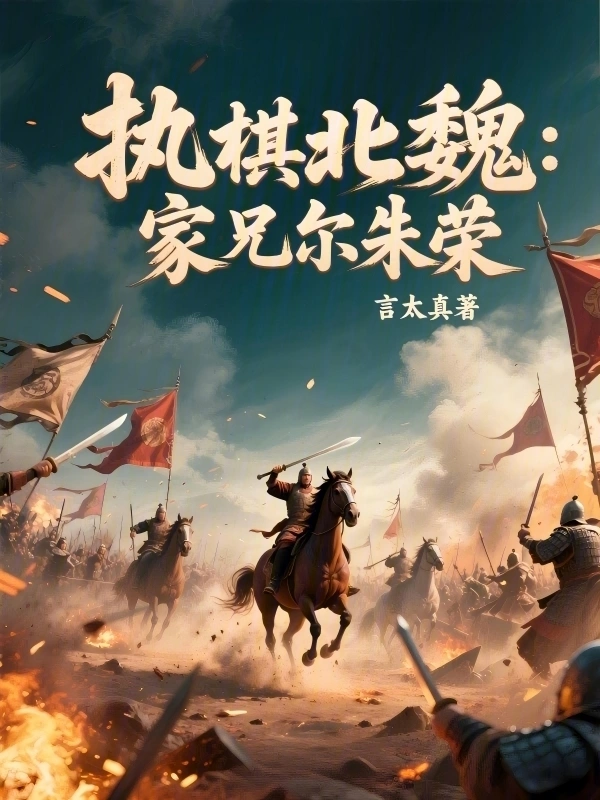
Playing Chess in the Northern Wei Dynasty: Brother Er Zhurong
执棋北魏:家兄尔朱荣
- Status
- Ongoing
- Length
- 750k Words
- Genre
- Historical
- Audience
- Male
- Subgenre
- Jin-Sui-Tang Dynasties
- Updated
- 9mo ago
- Source
- Qidian
Stats
0Monthly votes
1.6kRecommends
3kFans
352Chapters
Tags
Synopsis
Reader comments
Readers also read
 Red Mansion: Start Escaping and Farming from the Equipment Bar
 After Lying in Bed for Three Years, He Was Forced to Help the Han Dynasty
 Fu Ming 1627
 Northern Qi, Sage Khan
 If You Are Already an Adventurer, Who Should Work Hard on Your Own?
 I Am Lord Xinling
 Northern Qi: My Father, Emperor Wenxuan
 The Artist Begins in Prison
 Traveling at the Same Time: Great Love to the Heavens
 Emperor Ning Has the Guts
 Late Tang Dynasty: Last Descendant of the Clan
 Grandmother, Please Abdicate. I Want to Be the Crown Prince.
Will Zhu, the big and small, accept it? ? ? !
Luoyang map
This book has reached its climax [The Luoyang Rebellion of the Yuan Dynasty]. The map of Luoyang may be unfamiliar to you. Here is the reference design of the map of Luoyang City in this book: Luoyang City, the capital of the Northern Wei Dynasty, was the largest and most complete planned capital city in the Southern and Northern Dynasties. Its city layout, social gathering areas and landmark buildings have distinctive characteristics of the times. The following comprehensive historical materials and archaeological research are divided into three parts to sort out its core elements: 1. Fangshi layout The Fangshi system of Luoyang City in the Northern Wei Dynasty embodies the combination of "closed lifang system" and "economic functional zoning": Three major markets: Dashi (Xiguo City): Located in the west of the city and east of Baima Temple, it is the most prosperous commercial center in Luoyang, with a circumference of eight miles. Archaeological discoveries have found a 2-meter-thick accumulation of tiles that proves its prosperity. Specialized handicrafts are formed in the surrounding areas: Shidong: Tongshang Lane, Dahuoli (where industrial and commercial people live together, with huge wealth) Shinan: Tiaoyin Lane, Yuelü Lane (music industry (famous for their silk and bamboo crafts) West of the city: Tuifuli and Zhizhangli (the brewing industry is concentrated) North of the city: Cixiaoli and Fengzhongli (funeral supplies and funeral services). Small Market(Xiguo Niu Ma City): The original Han and Wei Ma City, mainly engaged in livestock trading. Sitong City (Yongqiao City): Located on the south bank of Luoshui River in the south of the city, relying on waterway transportation and proximity to Siyi Pavilion, it has become an international trade hub, gathering Hu merchants and traders, and is famous for its aquatic products and exotic products. Lifang Distribution: City West: Mainly inhabited by nobles, such as Shouchiuli (the imperial aristocrats and Xianbei officials, covering an area of 30 miles); at the same time, there are mixed industrial and commercial lifang (such as those around big cities). Chengdong: Mainly residential areas for Han scholars and bureaucrats, such as Jianyangli, Suiminli (ordinary scholars), Huiwenli, and Zhaodli (Han people). Chengnan: There are "Cultural Area" and "Expatriate Resident Area", including: Mingtang, Taixue, and Lingtai(Confucian Education and Astronomical Observation Center); Siyili and Siyi Hall: They house the Hu merchants and foreign envoys who surrendered, forming a multicultural integration area. North of the city: Close to Mang Mountain, with outstanding military defense functions and few villages, such as Wen Yili (where craftsmen live). 2. Social Gathering Places Class Mixing and Division: Royal Family and Bureaucrats: Concentrated around the palace city and in the west of the city, such as Shouchuli (Royal Clan) and the official district on both sides of Tongtuo Street. Han people: mostly live in the east of the city (such as Jianyangli) and the cultural area in the south of the city, and some live together with civilians (such as Guizhengli). Industrial and commercial people: relying on the three major markets to form professional lanes, such as Tongshang Lane (rich businessmen) and Zhijiang Lane (wine brewers). Foreign expatriates: There are Hu merchant settlements in Siyili in the south of the city, such as Muyili and Muhuali, to promote Sino-Western trade. Special Function Area: Religious Gathering: There are 1,367 Buddhist temples in the city, with Yongning Temple (Royal Temple) as the center, forming the core of religious activities. Military Defense Area: Jinyong City in the north of the city is the commanding heights and functions as both a palace and a military fortress. 3. Landmark buildings Core of the palace: Taiji Hall: The main hall of the Northern Wei Dynasty, located in the south of the palace. The existing rammed earth foundation is called the "Jinluan Hall". Changhemen: The main entrance of the palace city, which leads directly to Tongtuo Street and is the starting point of the city's central axis. Hualin Garden: The royal garden in the north of Miyagi City is famous for its landscape. Religious and ritual buildings: Yongning Temple Pagoda: A nine-story wooden pagoda about 147 meters high, it is the tallest building in the Northern Wei Dynasty and symbolizes the prosperity of Buddhism. Tai Temple and Tai She: Located on the east and west sides of Tongtuo Street, they embody the etiquette system of "Left Ancestor and Right She". City Axis and City Gate: Tongtuo Street: The north-south central axis connects the palace city, government offices and the southern circle of the city. It is 40 meters wide and has important government offices on both sides. Xuanyang Gate: The south gate of the inner city, connected to Sitong City and Yongqiao on the outside, is the north-south transportation hub. Defense and Educational Facilities: Jinyong City: a military fortress in the northwest corner of the inner city. The existing city wall remains are 8 meters high. Taixue Site: A Confucian education center that continued to be used from the Eastern Han Dynasty to the Northern Wei Dynasty. A large number of stone scripture fragments were unearthed. Summary The planning of Luoyang City in the Northern Wei Dynasty integrated "closed lanes" and "open markets", strengthening the symbol of imperial power through the central axis (Tongtuo Street-Changhemen-Taiji Hall), and at the same time achieving social control through functional divisions (such as the Noble District in the west of the city and the cultural district in the south of the city). Its landmark buildings, such as Yongning Temple Tower and Jinyong City, not only reflect the Sinicization process of Xianbei, but also mark the transition of ancient Chinese capital structure from "multi-palace system" to "single palace system".
I just want to know what the million-dollar works the author has completed are, and I want to take a look.
If you want to make the Erzhu clan strong, you must first make it monolithic with clear rewards and punishments, and then the protagonist hides behind the scenes and remotely controls the king Ming to unify the entire Kyushu and establish a unified dynasty.
Isn't it updated? I haven't seen it on the shelves yet.
This book should be on a female channel, why is it here? This book is like Nirvana in Fire, if you like it, read it
Well written! Come on, author, I would like to make a small suggestion. Reduce the intelligence aspect appropriately. Luo Sheng and Xuan Jing Division look a bit like Qin Shi Mingyue. Write more war scenes.
Chapter 44: Does it violate historical facts to write about the destruction of the six Han Dynasties?
Wasn't there the Six Han Baling Rebellion (Woye Uprising) and the Six Town Uprising before Er Zhurong entered Luoyang? Was the behavior of the Six Han Balings in Chapter 44 obviously inconsistent with historical facts? I skipped to the latest chapter to read it without reading the previous article. I just felt that Chapter 44 of the Six Han Balings was obviously inconsistent with the historical facts.
Have you been to the Northern Wei Dynasty? Some things are scribbled and taken for granted.
Cooking wine and discussing heroes
Author
Do all the novels you open have multiple female protagonists?