Yueyin in the Late Ming Dynasty
明末樾荫
- Status
- Completed
- Length
- 183k Words
- Genre
- Historical
- Audience
- Male
- Subgenre
- Song-Yuan-Ming Dynasties
- Updated
- 1y ago
- Source
- Qidian
Stats
0Monthly votes
12Recommends
0Fans
67Chapters
Synopsis
Reader comments
Readers also read
 Talker in the Song Dynasty
 Please Call Me Your Majesty the Tsar
 In the Red Mansion: Escort Daiyu to Beijing at the Beginning
 1914 Begins with the Rejection of the Schlieffen Plan
 Never Walk Alone!
 I Want to Revive the Tang Dynasty!
 Taichang Daming
 Daming: Have I Become Wanli's Portable Grandfather?
 I Am Drawing a Hot-Blooded Episode in the Zhiyu Episode!
 The Rise of Prussia
 Ji Hantianxia
 Jiajing Mingjun
 Live Broadcast of History: Picture Scrolls of Qing History, Viewed from the Sky
A feasibility analysis report on traveling through Chongzhen's violent purge: the paradox of legality, feasibility, and sequelae
In many novels, time travelers (especially those who are emperors) often purge opponents through massacres, believing that violence can quickly consolidate power. For example, after Chongzhen traveled through time, he massacred the Donglin Party, vassal kings or military generals, as if this would solve the problem once and for all. But in fact, history has already given a response: Jianan Feng in the Western Jin Dynasty killed the prince and triggered the "Eight Kings Rebellion", which led to the collapse of central authority. If Chongzhen in the late Ming Dynasty really cleansed the bureaucracy on a large scale, local vassal kings (such as King Fu and King Tang) would inevitably follow Zhu Di's "Jingnan" model to segregate their regimes and accelerate the split of the dynasty. Core issue: Power relies on social consensus and distribution of interests. Violence can only serve as a short-term deterrent, but it will undermine the legitimacy of rule and trigger broader resistance. 2. Confusion with the founding monarch Zhu Yuanzhang was able to purge the heroes because he had absolute military power and was the founder of the founding system. However, the late monarchs (such as Chongzhen) could not even concentrate military control, let alone comprehensive suppression. Zhu Yuanzhang's violent success relied on: 1. Founding bonus: the old system collapsed completely, and the cost of rebuilding the rules was lower than maintaining the old rules. 2. Military monopoly: 99% of the army is directly under the central government (even directly under Zhu Yuanzhang), and the army in the late Ming Dynasty has become a warlord (for example, Zuo Liangyu "obeys the tune but not the propaganda"). 3. Ideological hegemony: legitimacy was built through the restoration of China and the founding of the People's Republic of China, but the Confucian "divine right of kings" theory at the time of Chongzhen had long been bankrupt. Zhu Yuanzhang's violence was packaged as "the destiny of destiny", and his behavior was given legitimacy through the Confucian distinction between Hua and Yi and the ideological construction of "Da Gao". If a monarch in the last days kills indiscriminately, he will be regarded as a "tyrant" and directly undermine the legitimacy of his rule. In the late Ming Dynasty, the support of the gentry and local powerful people was crucial. Without their cooperation, finance, military resources, and local governance would completely collapse. About the violent purge of civil servants, nobles, and vassal kings: "This is a more dangerous forbidden area! Some people may say that in the late Ming Dynasty, the party was fierce, the civil servants were corrupt, the nobles were corrupt, and the vassal princes spent a lot of money. If they don't kill, the people will not be angry, and if they don't kill, it won't clear the obstacles. Some people may even cite the example of the Qing Dynasty's massacre after entering the customs, thinking that 'otherwise the new dynasty cannot be established.'" "Absurd!" Zhu Youyue sneered in his heart. "First, the feasibility is extremely low. Who do I want to kill? How many? Donglin Party? Eunuch Party? Zhejiang Party? Chu Party? Or all those who oppose my reform? The civil service group is intertwined and can affect the whole body. The nobles are hereditary and tied to the interests of the royal family. The vassal kings are all over the world, and they have guards in their hands. If you are not careful, you will be the second one. 'Jingnan'! How large and loyal an army must I build to complete such a large-scale purge? Will the army itself become a new warlord?" "Secondly, the emperor and the scholar-bureaucrats rule the world together, which is one of the foundations of the Ming Dynasty. One of the sources of political legitimacy. The emperor can depose, demote, or even execute individual ministers, but he must not massacre the entire civil servant group! This is equivalent to tearing up the contract between the monarch and his ministers. Once this happens, the scholars in the world will be disloyal, and the entire bureaucracy will be completely paralyzed. If I raise an army to "Qingjun", the world will immediately fall apart. I will be reduced from the "Emperor" to the "one-man thieves" who can be punished by everyone! Thinking of this, Zhu Youyue smiled bitterly. In fact, he is not even as good as Li Zicheng. Li Zicheng has conquered half of the world by himself, and there are hundreds of thousands of peasant troops loyal to him. But even so, he can't withstand the consequences of large-scale purges of civil servants! And the so-called "emperor", in the words of letting bullets fly inside, is often worse than an empty shelf! To put it bluntly, he is just a county magistrate who is begging for food. Emperor Hongwu can set off the Hongwu case because he is. The founding emperor! And even the great ancestor only dared to carry out the Hongwu Case when he was at the peak of his power! To suppress nationwide resistance (including civil servant groups, vassals, and local powerful people), Chongzhen needed at least a large-scale direct army, and even if he had this army, he would not be able to do anything in the violent system. Under the rule, the ownership of power was determined only by the strength of force. Go directly to the vassal towns of the late Tang Dynasty and the Five Dynasties Jiedushi dungeons, all of which came to power through mutiny. If Chongzhen turned on this mode, the Ming Dynasty would enter the era of "the emperor with strong soldiers and horses" The cost of violent rule was far greater than that of rule-based governance. The guard system was self-sufficient in the early days, but if Chongzhen wanted to rebuild the violent machine, he needed to extract additional money from the people, further intensifying the conflict. Violence required continuous investment, such as the warlords of the Five Dynasties and Ten Kingdoms, where the loyalty of soldiers depended on rewards, forming a vicious cycle of "whoever gives more money will follow." "Third, the nature of entering the customs is different from that of the Qing Dynasty. The Qing Dynasty was a foreign conquest, and it was not bound by the orthodoxy of the Han dynasty. The Eight Banners system is its core military and political foundation. It can deter resistance through massacres (such as the Ten Days of Yangzhou and the Three Massacres of Jiading), and then rebuild the ruling order by attracting Han gentry (such as recruiting scholars and compiling the "History of the Ming Dynasty"). This is a typical 'conquest-integration' model. But I am a descendant of the Zhu family and the crown prince of the Ming Dynasty! My power is rooted in this system. I cannot smash the entire system like an outsider! If I follow the Qing Dynasty's example of massacre, it will be like digging my own grave! " "Fourth, violence cannot solve the fundamental problem. If corrupt officials are killed, will new officials become corrupt? Will new interest groups be formed by killing opponents? The root cause of party struggle lies in the distribution of power and the competition for resources. The threat of the vassal king lies in the ancestral system and financial burden. These are deep-seated institutional and structural problems. Killing is the simplest, laziest, and most ineffective method. It can only bring destruction, not construction. " "Zhang Xianzhong massacred Shu. The killing was so intense that there was almost no one in Sichuan. What did he get in the end? It's just a wedding dress for others, and he himself will die. Violence will eventually come back to bite you. " If he really starts the massacre and violence mode, the lightest thing is the mutual protection between the Southeast and the Southeast in the late Qing Dynasty: for example, Cixi's declaration of war was met with local resistance, which exposed the consequences of the collapse of rules after the failure of violence. The most serious thing is Zhu Di's troubles, the vassal kings, civil servants, nobles, and military generals all over the world rebelled! He was directly delegitimized! Entering the Rebellion of the Eight Kings of the Western Jin Dynasty in advance: After the Sima clan killed each other, the barbarians took advantage of the situation and triggered the "Five Husbands and Chaos in China" The Five Dynasties and Ten Kingdoms (907-979) was an extreme case of violent rule: Warlord Game: Soldiers said, "The emperor would rather have a son?" Frequent coups were carried out on the grounds that "strong soldiers and horses will do it", and the average life span of the regime was only 10 years. The biggest problem with violent liquidation was not the killing itself, but the destruction of the legitimacy of rule. The reason why the emperor was the emperor was not because his sword was fast enough, but because the civil servants , military commanders, gentry, and common people all recognized this rule. Once the emperor himself broke the rules (such as killing ministers indiscriminately), vassal kings, warlords, and local powerful people would immediately look for new "legal agents", such as appointing another descendant of the Zhu family to the throne. 2. Excessive compromise: chronic death caused by accumulated evils But on the other hand, if the emperor is too weak and is completely kidnapped by civil servants or interest groups, then the ills accumulated in the Ming Dynasty for more than 200 years (such as land annexation, financial collapse, and military corruption) will never be solved. 3. " The utopian trap of "mobilizing the masses" Imagining Disney-style "people's awakening" is a fallacy: Organizational costs: Civilian organizations such as the White Lotus Sect in the late Ming Dynasty still need decades to penetrate, and cannot be mobilized with an edict. Class barriers: The interests of the gentry and the common people are opposed, such as the rich and poor in the Jiangnan Tax Resistance Movement. The people jointly oppose the imperial court instead of cooperating. Mobilize the masses? Let the bullets fly. The irony of "whoever wins will help whom" reveals: the people will not fight against vested interest groups for small favors. History slaps: Li Zicheng's slogan of "equal land and no taxes" briefly united the refugees, but quickly collapsed due to corruption after he invaded Beijing. Degree of distribution of interests. Popularity of public opinion: The Donglin Party monopolized the right to speak through the imperial examinations and academies. After Chongzhen killed Wei Zhongxian, he was kidnapped by civilian public opinion. Zhu Youyue's path choice: difficult "scalpel" reform "So, my path is destined to be difficult. I cannot engage in a purge and rely on pure violence. I must be like the most skilled surgeon, using a precise scalpel instead of a machete to remove the empire's cancer. "
Setting Chapter 2: Meager salary, redundant officials and the myth of "high salary to support integrity" - the realistic dilemma of official governance reform in the late Ming Dynasty
Introduction: A Beautiful Vision and Cruel Reality In many historical narratives that explore the rise and fall of dynasties, as well as many literary creations set in the late Ming Dynasty, "high salary to maintain integrity" is often regarded as a good medicine to solve bureaucratic corruption and revive official governance. The logic is simple and clear: giving officials a generous enough salary to enable them to live a decent life and support their families can greatly reduce their motivation for corruption, thereby clarifying the officialdom. The "Integrity Banking" system implemented by the Yongzheng Dynasty in the Qing Dynasty is often cited as an example of success. However, the complexity of history is far from being summed up by simple "prescribing the right medicine". This article aims to explore why such a seemingly "universal" system of "high salary and integrity" was almost a dead end for the Ming Dynasty, which had deep flaws, especially in its last years and twilight years (this article mainly refers to the late Wanli period to the Taichang and Tianqi years). This is not because the ancients were stupid and could not think of such a "good strategy", but behind it are entangled with more profound institutional diseases and insurmountable practical difficulties. 1. The two "original sins" of the bureaucracy in the late Ming Dynasty: redundant officials as ants and salary as paper To understand the infeasibility of "high salary to support integrity" in the late Ming Dynasty, we must first recognize the two fatal flaws of the bureaucracy at that time Traps: 1. The vicious expansion of the number of officials has reached the highest level in history: Since Emperor Taizu Gao established a relatively streamlined bureaucratic framework in the early Ming Dynasty, the number of officials in the Ming Dynasty has continued to grow like a snowball. By the end of Wanli, the total number of registered civil and military officials exceeded 120,000. If you include low-level subordinates and various "helpers", the number is even more shocking. Liu Tijian of the Ming Dynasty once bitterly stated: "The number of officials in the past dynasties is 7,800 in the Han Dynasty, 8,000 in the Tang Dynasty, and 34,000 in the Song Dynasty." In the Ming Dynasty, "the total number of military attachés totaled more than 100,000." By the time of Wuzong Zhengde, there were more than 24,000 civilian officials alone. Compared with previous dynasties such as the Han, Tang, and Song dynasties, the "ratio of officials and civilians" in the Ming Dynasty reached an unprecedented height. This expansion stems from many factors: the accumulation of enfeoffment of sons and nephews and the accumulation of favors and rewards at the beginning of the founding of the People's Republic of China; the instinct of self-expansion of yamen at all levels; and the pressure of the concept of "excellence in learning will lead to officialdom" under the imperial examination system, etc. Every new official position means an additional financial burden. Even the Song Dynasty, which was famous for its redundant officials, was not "extremely redundant to 34,000 people", including more than 100,000 official staff. In the Ming Dynasty, the number of registered officials has reached more than 100,000 since the Wanli period, and may have even increased to about 150,000 by the end of Chongzhen. Counting official personnel, it can even reach hundreds of thousands! 2. The helpless continuation and negative consequences of the "thin salary system": Corresponding to the rapid expansion in the number of officials, the "thin salary system" has been pursued since the founding of the Ming Dynasty. Out of "compassion for the people" and distrust of officials, Taizu Zhu Yuanzhang set the salary standards for officials surprisingly low, far inferior to those of the Tang and Song Dynasties. The annual salary of a first-rank official is only about one thousand shi, which is only two or three hundred taels in silver; and the annual salary of a local seventh-rank magistrate is only ninety shi. With this salary alone, it is difficult to maintain the daily expenses of a decent family in Beijing. The meager salary in the Ming Dynasty was not only reflected in the absolute quantity, but also in its serious disconnect with the social status and actual consumption level that officials should have. Civil servants still need to support staff, socialize with each other, and take care of the young and old; military generals still need to support their servants, repair their equipment, and reward their soldiers. This meager salary, without other "grey income", is simply unsustainable. 2. Why was "high salary to maintain integrity" an "unbearable burden" in the late Ming Dynasty? Under the two major premises of "redundant officials are like ants" and "salary is like paper", trying to implement "high salary to maintain integrity" in the late Ming Dynasty was simply an "impossible mission." 1. The finances simply cannot support the huge expenditure of "high salary": The cruel reality of calculation: Just imagine, even if the salary of the existing 120,000 officials is raised to the level of mid-level officials in the Tang and Song Dynasties, the total expenditure will be an astronomical figure, enough to instantly crush the already empty Ming Dynasty treasury. To achieve a truly "high salary" that is enough to "support integrity," the amount of money required is even more difficult to estimate. The true financial situation in the late Ming Dynasty: From the end of Wanli to the beginning of Taichang, the annual central fiscal revenue (regular part) of the Ming Dynasty was only 10 million to 15 million taels of silver. The royal family's expenditure on Lumi was already a heavy burden (during the Jiajing period it exceeded the national treasury's annual revenue), and Liaodong's military expenditure was like a bottomless pit. Under such circumstances, how can there be enough money to provide a general salary increase for such a large group of bureaucrats? 2. If the problem of "redundant officials" is not solved, "high salaries" will only exacerbate the fiscal collapse: The paradox of "the more people there are, the more redundant they will be": If the huge bureaucracy cannot be drastically streamlined first, simply raising the salaries of existing officials will only further worsen fiscal expenditures, which may eventually lead to a more serious fiscal collapse. "High salary" may actually stimulate the enthusiasm for "seeking officials" and aggravate the "redundant officialdom": If being an official is profitable (high salary), more people will squeeze into the officialdom through various channels (imperial examination, favor, buying an official position, etc.), Further exacerbating the expansion of the number of officials. 3. The fundamental difference from the "high salary to support integrity" in the early Qing Dynasty: Many people take the implementation of the "Integrity Bank" system implemented by the Yongzheng Dynasty of the Qing Dynasty as an example and believe that "high salary to support integrity" is feasible. However, it must be noted that the foundation of the bureaucratic system in the early Qing Dynasty and the late Ming Dynasty was completely different. The number of officials in the early Qing Dynasty was relatively streamlined: when the Qing Dynasty entered the customs, the scale of its bureaucratic system was much smaller than that of the late Ming Dynasty. When Emperor Yongzheng implemented the "Integrity Bank" policy, he faced a relatively small number of officials and had sufficient financial resources. Emperor Yongzheng's iron fist and centralization of power: Emperor Yongzheng used his strong personal authority and centralization of power to vigorously implement a series of financial and administrative reforms such as the return of waste to the public and the establishment of the Integrity Bank. This kind of reform intensity and monarchy authority were unimaginable in the late Ming Dynasty. The origin and essence of "Yanglian Yin": The "Yanglianyin" in the Qing Dynasty was not simply an additional allocation of huge sums of money from the national treasury. Its main source was the "legalization" of some additional local taxes (such as consumption) that were originally bad regulations, and were uniformly allocated by the central government. To a certain extent, this is an adjustment and standardization of the existing interest pattern, rather than creating wealth out of thin air. Moreover, the "Integrity Bank" system is not perfect, and its implementation effects vary from time to time and from place to place. 3. Why didn't the ancients engage in "high salary to support integrity"? It's not stupid, it's helpless We cannot simply judge the wisdom of the ancients from the perspective of future generations. It is an oversimplified understanding to think that the ancients did not realize the benefits of "high salary to support integrity" or blindly adhered to the "small salary ancestral system". Behind this, there are often profound practical considerations and institutional dilemmas: 1. The political taboo and financial reality of "competing with the people for profits": In traditional Chinese Confucian political ethics, "competing with the people for profits" is a taboo. Increasing official salaries will inevitably mean increasing fiscal expenditures, and the ultimate source of fiscal expenditures is taxes from the people. In an agricultural society, national finances are inherently fragile. If officials' salaries are significantly increased, it will easily be seen as "plundering people's support to support bureaucrats" and trigger public resentment. The establishment of the "small salary system" in the early Ming Dynasty itself had the dual considerations of Emperor Taizu to "sympathize with the people" and "defend officials." With his simple peasant thinking, he believed that officials only need to meet their basic needs, and that excessive salaries would breed extravagance and corruption. This kind of thinking has a profound influence on future generations. 2. The problem of "redundant officials" is persistent and the resistance to abolition is far beyond imagination: Abolition of officials means depriving countless people of their jobs and vested interests. The backlash and resistance it triggers must be carefully considered by any ruler. The riots caused by Du Yan's layoffs of officials in the Song Dynasty and the failure of the Reform Movement of 1898 in the Qing Dynasty were accelerated by the layoffs of officials. These are lessons learned from the past. Behind every official position, there is a complex network of relationships involving family, teachers and students, classmates, fellow villagers, etc. Removing an official may offend a large number of people. In the late Ming Dynasty, when party strife was fierce, this risk was even more difficult to estimate. 3. Lack of effective supervision and restriction mechanisms: Even if "high salaries" are implemented, if there is a lack of effective supervision and severe punishment mechanisms, it may not be able to truly "enhance integrity." Faced with the huge space for power rent-seeking and possible illegal profits, it is obviously not enough to simply rely on the "satisfaction" of "high salary" to restrain officials' behavior. Although the supervisory system in the late Ming Dynasty (the Metropolitan Procuratorate and the Sixth Section) existed, its effectiveness was greatly compromised by party strife and corruption. 4. Limitations of socio-economic structure and wealth distribution: In a society dominated by small-scale peasant economy, the total amount of financial resources that the country can draw from social production is limited. If too many resources are used to support the increasingly large bureaucracy (and clan) group, it will inevitably squeeze out other necessary expenditures (such as military spending, water conservancy, disaster relief, etc.), Or intensify the exploitation of farmers. This is not a simple question of "will the accounts be settled?", But an inevitable result determined by the entire socioeconomic structure and wealth distribution model. Appendix: Estimates of salary expenditure growth under different standards (only for 120,000 officials) Basic: Assume that the average annual salary of 120,000 officials in the late Ming Dynasty was 50 taels of silver. 1. Upgrade to the minimum standard of "enough to support a family" (average annual salary 120 taels of silver): The average annual salary increase required for each official: 120 taels - 50 taels = 70 taels The total annual salary expenditure required for 120,000 officials: 120,000 70 taels/person= 8,400,000 taels of silver (8,400,000 taels) 2. Raise to the "mid-Tang Dynasty level" (assumed to be 3 times the original salary, that is, the average annual salary is 150 taels of silver): The average annual salary increase for each official: 150 taels - 50 taels = 100 taels The total annual salary expenditure required for 120,000 officials is: 120,000 people 100 taels/person = 12,000,000 taels of silver (twelve million taels) If the reverse is based on "it is the Tang Dynasty's twenty-three", if the Tang Dynasty had twice the number of people in the Ming Dynasty, the increase in expenditure would be higher. For example, if the salary was increased to four times the average salary of officials in the Ming Dynasty (i. E. 200 Taels), an increase of 150 taels per person would be required every year, and the total increase would be 18 million taels. 3. Upgrade to the "high salary to support integrity in the early Qing Dynasty" level (assuming an average annual salary of 400 taels of silver): The average annual salary increase for each official: 400 taels - 50 taels = 350 taels The total annual salary expenditure required for 120,000 officials: 120,000 350 taels/person = 42,000,000 taels of silver (forty-two million taels) Simply put, these amounts will make Tiandi Bank want to raise interest rates. And if officials get a raise, will the staff get a raise? Will the price of Xungui rise? Clan, vassal king, soldiers...
The author changed Zhu Youjian's name to "Yue", which means that he has become a tree, so others can't hang it on my crooked neck tree?
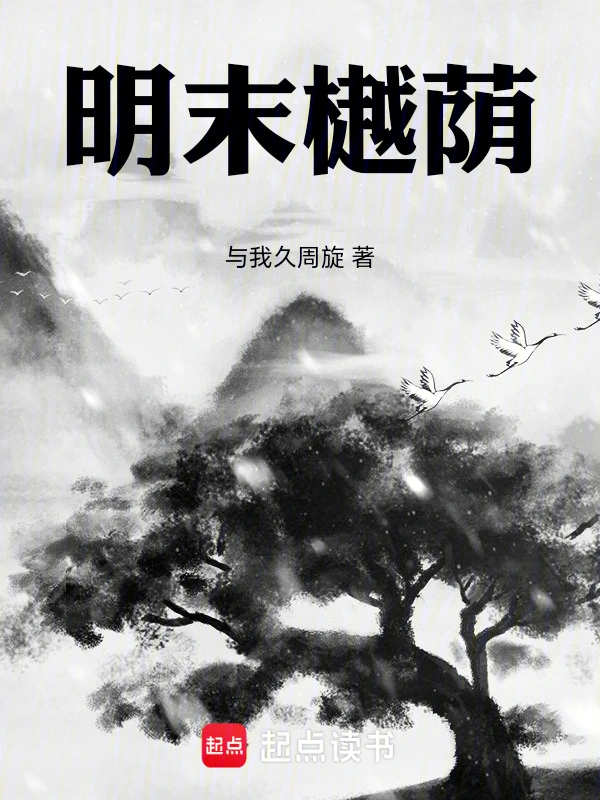
And the cover of the work is also very interesting... Is this the crooked-neck tree?
Brother, hurry up and push the plot, it feels like the pace is too slow. There are a lot of ineffective plots, and it is not as interesting as writing about the Donglin Party plotting to deceive the protagonist.