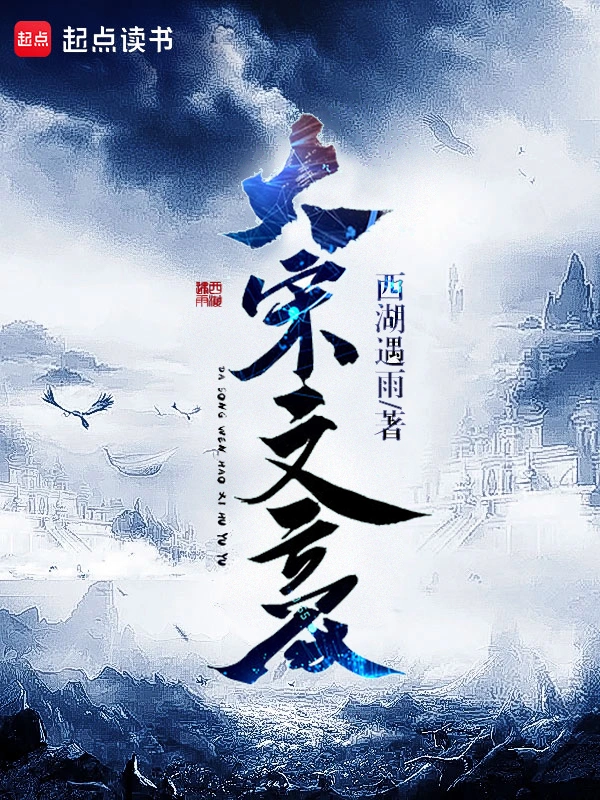
Great Song Writer
大宋文豪
- Status
- Ongoing
- Length
- 2.4M Words
- Genre
- Historical
- Audience
- Male
- Subgenre
- Song-Yuan-Ming Dynasties
- Updated
- 1d ago
- Source
- Qidian
Stats
Tags
Honours
Synopsis
Reader comments
In booklists 21
Yi Qi Jue Chen: a Book That Soared on the Monthly Ticket List in February
On February 2, the dragon raises its head, just like a good book takes the lead. Readers' votes in February mark the beginning of the new year's reading trend!
One of the Best Products Ordered from Thousands of People: Volume 2
Top-notch creativity, super writing power, and a charm that attracts thousands of readers make this book list the shortest path for you to find your next "starting masterpiece."
Skyrocketing! Good Books Soaring in the November Monthly Ticket List
There are rumors in the world that there is a volume of "Monthly Ticket List" hidden deep in the sea of clouds, and only the most ruthless people are not allowed to name it. All those who have made it onto this list are mystical scrolls that rely on their incessant writing and readers' blood as their salary. However, on the first day of this month, there was a sudden change on the list, and the rankings of many experts suddenly improved...
🌹All Typesflowers Must Be Tied to the Branches to Live up to the World 🌹
🌹🌹🌹🌹🌹🌹🌹🌹🌹🌹🌹🌹🌹🌹🌹 Time flies by, beware of mediocrity. What is this book list about? Talk about imagination Talk about the vastness of the sky and the vastness of the land Talking about mountains and flowing water, talking about life besides life Talk about the romantic figures of the past and the romantic figures of the future Talk about the rules of the game, talk about breaking the rules It is said that for those who have a will, things will always come true, and there will be no rain o

Mainly Recommending Seedlings and Books That We Have Forgotten or Have Always Remembered
We won't miss those books that we can't help but revisit several times, and those that bring us many insights every time we read them again. There is no limit to the type of book you can add to the book list. If you want the book owner to recommend your book, you can write the best highlights of your book in the message. Finding a good book is like finding a good friend, and it is also like finding your lifelong partner, looking at the other person with a somewhat critical eye. But if you cho
Historical Time Travel Novels of Song, Yuan, Ming and Qing Dynasties
Novels that travel through the Song, Yuan, Ming and Qing dynasties
[Books Recommended by Yu Feiyu] Collection with 20.25 Million Orders (The Book Was Published in the Same Year with 10,000 Orders)
(The book list "[Yu Feiyu recommends books] 2026 new works" is newly created, welcome to support) Selected works of Wanding in 2025! ——The book was published in that year, and thousands of orders were placed in that year. Due to the upper limit of the book list, the best of all books will be selected. Support genuine! Praise the starting point! A selection of works by popular authors! A niche work with strong standards! Thousands of high-quality products are included! Recommended: He Shouyue Man
Recommendations from the Sea of Books
Chitang personally reads and experiences, It has certain reference value. Pursuing books is risky, so investment needs to be cautious. Shan Zhu personally prefers fairy tales, cities, history, and light novels.
Lingmeng Bookstore 2
②No.
Dream Tower
Mainly, they are books that I think have good plots. I have been following them recently or have read them, such as YY Rejection Stallion, and I am not a novice. To me, each novel is like a big dream, and it is interesting to make the dream more beautiful and exciting, right?
Historical Archives
The long river of history flows endlessly; the thousand-year scroll is full of ups and downs.
The Storage Room of the Tibetan Scriptures
Personal favorite books
The Breeze Slowly Invites You to Share Good Books
It's just different, I don't have a picky appetite My personal little book list, the books recommended by the owner of this list, I hope everyone can update it well, not to mention that it is updated every day, it must be updated every day. Have moral integrity, not a fool, not a holy mother. It can have a single female protagonist or no female protagonist. There are no restrictions on genres. I like books that are good-looking and unique. The book at the bottom of the box today is a classi
The First in the History of Each Dynasty
Recommend the best historical articles written in various eras, various majors, and various angles


I Am Yuesheng
After twenty years of reading, I have accumulated three hundred thousand books.
History Book List, Mainly History.
Mainly history. Full Stars: Ten stars, you can watch it from one star to the next.
Personal Book List, Preferring History and Homology
(Dynamic adjustment) Five stars, top level, I will read it every day and give it priority Four stars, catch-up level, will continue to read the series intermittently Three stars, fattening grade, not attractive enough, so I'm saving it for watching. Two stars, placement level, tasteless and a pity to throw away One star, regrettable, I like it but it's anticlimactic or eunuch So sometimes one-star content can be very good.
Rebirth Through Fairy Grass!
After Miyu exploded, the filter was broken, and the entertainment culture was in danger. I like to read books about puff pastry, Jing Ke Shou, Tao Yue, riding a tortoise to kill sharks (I don't like to make trouble), and recording stories about joining the army. The plot is relaxed and the pace is very comfortable. Some good books will remain even if they are no longer available.
Book Waste Relief Center
The writing is smooth and the strokes are in order. You can read it all night long. If you don't make any mistakes, the writing will be deleted if it is damaged.
Little Me
Happy passing by

Not Allowed to Be Disgraced in the World
When I was a child, my family was very poor. The most valuable thing was the iron lock on the door, so I cherished it very much. ""When it rains, I rush to the gate, hold the big iron lock in my arms and say, old iron, old iron, you must not get rusty! Stop being rusty! "
Readers also read
 Red Mansion: Start Escaping and Farming from the Equipment Bar
 Gou Served as Sima Under Dong Zhuo
 After Lying in Bed for Three Years, He Was Forced to Help the Han Dynasty
 Northern Qi, Sage Khan
 Siheyuan: Start by Picking up Attributes
 Number One Scholar
 Five Generations of Elegance
 Immortal Who Seizes the Body
 Devouring the Starry Sky: Infinite Opportunities to Hoard Treasures at the Beginning
 I Am a Literary Giant in Russia
 Entrepreneurship in the Late Tang Dynasty
 Successor Emperor
 Imperial Master of the Ming Dynasty
 Ming Sage Grandson
This novel can be said to be experimental literature to a certain extent.
This collection of poems, songs, classics, and history is integrated into the writing framework of Xiaobaiwen. I don't know whether to say that the author's level is high or not...
Shennong
On 2025/05/19, I saw the section of preschool in the county. Comprehensive evaluation: High-end grain and grass, personally give it a score of about 85. Keywords: Song Chuan, literary giants, imperial examinations Supporting characters: Ouyang Xiu, Su Shi, Wang Anshi (most likely to have a lot of intersections, although I haven't mentioned them at all, but let's put them here first) It feels better than the previous two books. The early setting of Jiang Xinghuo's book is placed in the middle and late stages, and it has a very serious sense of separation from the book itself. Regarding the science and engineering knowledge system, the writing is not very good probably because the author himself is not a science and engineering student. The rest of the book is shocking. Excluding large sections of the lecture content, it is almost a white text. The second book, I saw a lot of Zhu Yuanzhang during that time, I was g-g-d before I could get through the beginning, my god. Back to this book, Pig's Feet Travels Through the Song Dynasty, Studying for Imperial Examinations, Like the first book, a lot of knowledge is introduced, such as the household registration issue in the Song Dynasty and the influence of Buddhism on people's lives in the Song Dynasty. However, because of the combination of this book and the protagonist's experience, these things are much smoother. The content of the "Literary Master" part is also within the author's comfort zone. Anyway, I am a dabbler in liberal arts and I don't know how to be good at it. There is a lot less content that guides emotions. I still agree with it. If this kind of content is not well written, it is better not to write it. Currently, I am just looking at the section where I wrote the lyrics after fiber-stretching. The overall processing feels not very smooth. Maybe there is not enough foreshadowing, but there is no problem. For readers who follow the update, it actually doesn't matter, because it may have been half a month since the last time I saw a pig's feet getting emotional. But if you read the book together, it might have been half an hour ago. Resonating with people's emotions also requires energy, which will be very tiring.
This book is so good that I am embarrassed to read the pirated version. All orders are given😍😍
"Emptiness is also a phenomenon arising from the mind."
In the previous part involving Zen Buddhism, I originally thought that the author also had research on Zen Buddhism, and I admired it very much. However, after seeing the debate between the protagonist and Qi Song later, it was inevitable that the bottom line would be revealed. From the perspective of Buddhist teachings, this debate is not valid because the protagonist's own understanding of emptiness is inherently biased. Based on this inappropriate understanding, fabricating this debate and unilaterally suppressing it has fallen into a cliché. Actually, I don't understand it a bit. The protagonist showed a deep understanding of Zen Buddhism at the beginning, but why did he have such a huge deviation later?
OK
The level of this book is much better than the previous one, although it goes to the other extreme, it just isn't fun enough. The emperor started the discussion with the old monk openly and honestly about who to choose as his successor. The old monk is still here giving advice on who to kill and who to establish. This book doesn't even feel like it was written by one person. The writing style has improved so much.
It's very well written, no matter from which aspect, this book is very well written. But I still feel that studying literature cannot save the Song Dynasty. This dynasty was deformed from birth, and no matter how good your strategy is, it cannot affect the deformity of using literature to control military affairs. Therefore, I cannot understand the feelings of you history and liberal arts students towards the Song Dynasty. From the perspective of science students like me, it is really better to push back the Song Dynasty all over again.
If the protagonist does not become the emperor, then the protagonist must carry out comprehensive changes that limit the emperor's rights. It is useless if the protagonist just copies the technology of later generations and adds a few reforms. If a country wants to produce a large number of original inventions and creations, it must carry out systematic changes in ideological foundation, political structure, legal system, social forces and other aspects. The reason why Britain was the first to enter the Industrial Revolution is that after experiencing the ideological changes of the European Renaissance, coupled with the British Glorious Revolution of 1688, the king's rights were further restricted. Britain established the framework of parliamentary sovereignty and the rule of law, and the bourgeoisie, the new aristocracy, and the king formed a check and balance, which allowed British civilians to gain unprecedented freedom. At this time, the degree of freedom of scholars, craftsmen, and farmers in Britain was higher than that of other European countries at the same time, and it was far more liberal than the civilians of China's Ming and Qing dynasties. The high degree of freedom of all British civilians fully inspired everyone's strength. The power of the Chinese emperor was not greatly restricted, and all officials, gentry and landlords were dependent on the imperial power. The freedom of civilians, who account for the vast majority of the country's population, is too low. This system inhibits innovation and hinders social development. China's Zhou Dynasty was a feudal system, and the central government could not control much of the local princes' affairs. The princes competed with each other. During this period, Chinese civilization truly allowed a hundred flowers to bloom. Most of the essence of Chinese civilization came from this period. During the Spring and Autumn Period and the Warring States Period, the "Mo Jing" recorded the principles of optics and mechanics, and the germination of geometry had emerged; the "Gan Shi Xing Jing" recorded astronomical observation data. But from the Qin Dynasty to the Qing Dynasty, there was almost no progress! The institutional innovation of the Spring and Autumn and Warring States periods stagnated after the Qin and Han Dynasties, lacking the ability to dynamically adjust. Since the Qin Dynasty, especially since the Han Dynasty deposed all schools of thought and only respected Confucianism, Chinese civilization has almost stood still and entered a dead end. The Zhou Dynasty and the Spring and Autumn Period and the Warring States Period were similar to the ancient systems of most European countries. They were all feudal systems. Even in successive years of war, less than 10% of the country's total population died directly or indirectly as a result of the war. But from the Qin Dynasty to the Qing Dynasty, every dynasty would kill half or more of the country's population due to war! What is even more tragic is that every time there is a change of dynasty, there is almost no progress in the system and culture! {"NickName":"Restriction and Supervision","UserId":417773267}
The writing is okay, but the author is a bit too much!
Readers have already paid to read your book, why do they still need to vote monthly to read the extra chapters? !
What mistakes are easy to make in historical novels❓ Before the Ming Dynasty, the emperor was not called "Emperor". In the Song Dynasty, he was mostly called "Guanjia", and in other dynasties, he was often called "Your Majesty". From the Ming Dynasty, the emperor was occasionally called "Emperor", and in most cases he was called "Your Majesty". After Kangxi of the Qing Dynasty, people began to be generally called "Emperor". Princes and princes call themselves: Princes in the pre-Qin and Han Dynasties can be called "Gu", and a few can be called "Ignores". After the Wei, Jin, Southern and Northern Dynasties, the title of "Ignores" gradually became exclusive to the emperor, and princes, princes and princes can only be called "Gu" or "I". Song, Yuan and Ming called themselves "I" or "I". Before the Qing Dynasty, princes and princes rarely called themselves "this king". Starting from the Kangxi year of the Qing Dynasty, princes generally called themselves "this king". In ancient times, women called themselves: "nujia" was a modest name for women after the Song Dynasty. Women in the Han and Tang Dynasties more often called themselves "concubine", and noble women could call themselves "I" and "I". Before the mid-Ming Dynasty, most dynasties used copper coins for daily transactions, with very little gold and silver. It was only in the mid-to-late Ming Dynasty that silver became the mainstream currency. -In the late Ming Dynasty, "meeting votes/deposit checks" appeared among the people. There were no unified rules. Most of them were deposits and withdrawals/exchange receipts from acquaintances or local circulation, and were not legal currency. In the early years of Daoguang in the Qing Dynasty (1823): Rishengchang Bank was established, and private banks began to issue standardized banknotes, focusing on cross-regional exchange. They were only circulated in Shanxi merchant trade circles and major commercial ports, and were not yet popular. In the third year of Xianfeng in the Qing Dynasty (1853): the official issued the Ministry of Revenue official banknotes (official banknotes), which were forced to circulate nationwide. At the same time, the network of private banknotes expanded to the whole country, and official and private banknotes ran parallel. The use of banknotes entered an explosive period and became the "starting point of popularization." High-leg tables and chairs only completely replaced the low tables for sitting on the floor in the Song Dynasty. During the Han and Tang dynasties, people knelt and sat on the tables to eat and discuss matters. The furniture was mainly low tables and couches. The memorial system was only established during the Kangxi period of the Qing Dynasty. Officials in the Tang and Song Dynasties used "memorials", "tables" and "statements" when submitting memorials, while in the Ming Dynasty they used "memorials" and "memorials". There is no such thing as "memo" or "zhezi". In ancient formal occasions, the hand-over gesture was performed with the left hand outside and the right hand inside. The right hand outside was a special "unlucky gift" for funerals. "Better greetings" is a unique etiquette of the Qing Dynasty. It was mostly used by subordinates to superiors and juniors to elders. During the Tang and Song dynasties, people often performed cross-hand salutes and bows to greet greetings when they met, and there was no such thing as "sending greetings". Before the Yuan Dynasty, lower-level officials rarely called superior officials "adult". In some dynasties, subordinates called eunuchs "adult", and in some dynasties, they called their parents and elders "adult". Beginning in the Yuan Dynasty, lower-level officials would occasionally call officials of second-rank and above "sir". From the middle and late Ming Dynasty, only officials of third-rank and above would be called "sir" by their subordinates. Officials with lower ranks could not be called "sir". However, in the late Ming Dynasty, there began to appear a few cases where officials above the fourth rank were called "adult". Before the mid-Qing Dynasty, following the rules of the Ming Dynasty, only officials of third rank or above would be called "adult". Starting from the mid-Qing Dynasty, calling officials "adult" gradually became common for lower-level officials. Attention! ! ! What is mentioned above is that lower-level officials refer to higher-level officials. No matter which dynasty, it is absolutely impossible for higher-level officials to call lower-level officials "sir". Some novels even write about emperors or nobles calling other officials "sir". This is simply contrary to Tiangang! ! ! Finally, let's talk about the problem of civilians calling officials Before the middle and late Qing Dynasty, civilians in various dynasties and generations called officials differently, and most of them called them "officials" and "masters". From the middle to late Qing Dynasty, civilians also called officials "adult". {"NickName":"Restriction and Supervision","UserId":417773267}
This book is more of a historical romance type, I guess.
The background can be adapted into a film and television adaptation. It deviates too much from history and is more like a legend covered in history. It is consistent with the Ming Dynasty Imperial Master. It is just fun and the feasibility is bullshit.
Is the author Wen Qing sick? The names of the recent chapters are all outlandish, and I can't even recognize the words, let alone their meanings. Not many readers will like it. Are you trying to make readers feel ashamed of their cultural insufficiency to show off your superiority as a literati?
The writings of literary giants have also begun to involute, including the Republic of China, modern times, modern times, Japan, Europe, Russia, and now the Song Dynasty. Zhu Lin and Gong Xue can finally take a break.
Unless you become the emperor yourself, it is impossible to be an official in a dynasty. If you are too strong, like Zhang Juzheng's death, the whole family will be miserable.
I feel that the author's pretentious plot is too old and a bit awkward, and the plot arrangement feels a bit deliberate. For example, the author's mastery arranges whatever is needed. There is no feeling that it comes naturally. Other than that, it is a good article.
It feels like the author wrote this novel for his own collection.
It was so boring. I wrote two chapters about an inner drama and decision. Those who didn't know better thought it was about deciding whether to start an uprising or not.
The writing of this novel is not like writing poems and essays in the book for the sake of the plot, but making up the plot in order to write poems and essays in the book.
Evaluation of the protagonist
Literary section: First class. In terms of most of the works that were truly created by the author rather than plagiarized, they are already first-rate among similar works at Qidian; Life part: second-rate, the detailed description is still vivid, but the behavior is too rigid, and there is a suspicion of great honor; Political and officialdom part: third-rate, the understanding of the social, economic and political issues at that time is too narrow and one-sided. It is recommended to read more professional books, such as Qian Mu's National History Outline.
The monthly pass to unlock the extra chapters is really disgusting. Probably only people who have started reading the book can see all the extra chapters. I'll just let the male protagonist be a eunuch.
In terms of official governance, I just want to say one thing. No matter how good the system is, there will be flaws. Any seemingly perfect policy will also have loopholes. No matter how good things like rectifying official governance are done, they can only be postponed but not eradicated There is no problem with the protagonist having a shocking strategy, but it is best not to think that it can really "solve" this problem. At most, it can be treated, and policies need to change with time. The situation of each era is also different. The most taboo is blind obedience. This aspect still needs to be considered
I have been reading books at Qidian for more than ten years. I was lucky enough to win the monthly ticket lottery this time, haha! Still quite happy! I received a gift from West Lake University today, and I immediately wanted to take it out and have a look. 😥😥😥How to do it? Need to do something... Fortunately, after a lot of effort, I finally got it done. How about showing it to everyone ?
To add more details, 62 votes are given, speed
Rt
Received monthly ticket raffle prizes
Very delicate and attentive, even with ink pad
Unboxing of the Great God's Light Winning Prize
I arrived yesterday. I came back too late and the station was closed. I got it during the day today and opened it when I had time at night. The mooncake gift box is very good and I am very happy. I hope everyone can win next time
The grand prize for the Light of God lottery has arrived
Excited heart, trembling hands
Love it, love it, update quickly
Let's go
I'm too tired from reading this book. I'm destined to not get great grades in this book. I just want to relax by reading online articles. It's like studying Chinese. I have to read all kinds of annotations. It's useless to write well.
The bald donkey of the Song Dynasty was not a good thing, right?
In the Song Dynasty, temples opened longevity libraries, essentially pawnshops + banks, with core businesses: 1. People were short of money, so they borrowed money by mortgaging their clothing, farm tools, and land contracts, and the interest was very high, generally 2 to 4 cents per month (annualized at 24%-48%). If they were unable to redeem it when it expired, the mortgaged property would be returned directly to the temple. 2. Governments, civilians, and small businessmen often seek loans from temples. Temples have strong capital and are larger than private private loans. 3. In name: Under the guise of "rescuing sentient beings", it is actually purely profitable, and the profits are used to support the expansion of the temple, support the monks, and purchase of land, forming a cycle of "lending → buying land → collecting rent → lending more capital".
There are too many loopholes in soul-traveling historical novels. A modern person who accidentally travels to a certain dynasty can remember so many details in history (even better than a history expert). China has thousands of years of history, and it is impossible for historical experts to remember every detail of a certain period of history in just a few years. Unless he is a historical expert who specializes in a certain period of history, does the protagonist of Soul Transmutation happen to be a historical expert who specializes in a certain period of history? Don't say that the protagonist was a lover of historical novels before time travel. Don't be ridiculous. Historical details are not something that historical novels can cover, it's not the same thing at all! Even if the protagonist happens to be an expert specializing in the history of a certain period. If you travel to ancient times, what can you do? This involves another big loophole in historical fiction. The protagonist can draw drawings of various machines and weapons, understand metallurgy and metal processing, chemical industry, and improve agricultural tools. In fact, these loopholes are easy to solve. Since the protagonist's soul has traveled to ancient times, it proves that ghosts do exist. Then write that when the protagonist goes to sleep at night, his soul leaves his body and returns to modern times. If he doesn't understand something, he can look up information in modern times. This solves various loopholes in soul-traveling historical novels. {"NickName":"Restriction and Supervision","UserId":417773267}
October monthly ticket lottery
Woohoo, my first monthly ticket win