


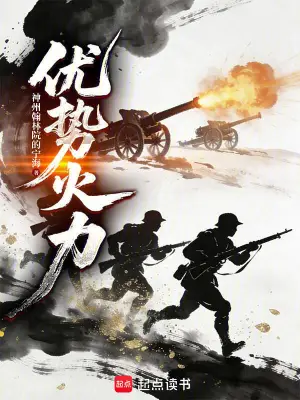
Overwhelming Firepower
优势火力
- Status
- Ongoing
- Length
- 517k Words
- Genre
- Historical
- Subgenre
- Alternate History
- Updated
- 2mo ago
- Source
- Qidian
Stats
223Chapters
5Votes
13.2kRecs
28.2kFans
Tags
Synopsis
More by this author
In booklists 3
Stunning Novels with Strange Beginnings
Collecting novels that might become iconic, stories with dazzling opening chapters, or books with especially unusual core concepts.
100Books692Follows3dUpdated

Supporting New Authors
Finding promising newcomers on the new-book charts
14Books87Follows12dUpdated
Worthwhile Reads, with Detailed Reviews
Collecting all kinds of decent new reads. Talent ratings: unremarkable, somewhat gifted, remarkably clever, extraordinarily talented, one in ten thousand.
72Books5.1kFollows1moUpdated
Readers also read
 Germany: 1914
 Seizing the Direct Descendant in the Red Mansion
 A Literary Master in Ancient Greece
 Great Ming: His Father Is Useless, So He Must Summon the Founding Emperor
 Simultaneous Transmigration: Is Everyone Starting Out in Prison?
 The Empire's Gravedigger
 Germany, 1903
 A Great Industrial Nation, Starting with a Fake Student Abroad
 A Dual Status Panel Descends into the Abyss, and the Assassin's Potion Is Right at the Entrance
 My Company Commander, Charles De Gaulle
 Mercenary Warfare Begins in Russia and Ukraine
 A Nobody in the Far East
 The Last Light of the Later Ming
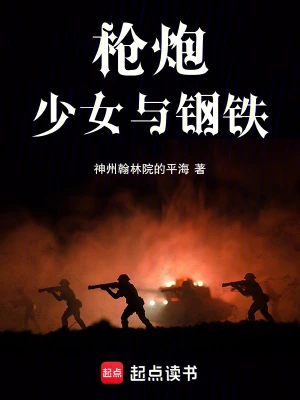 Guns, Girls, and Steel
Reader comments 27
Google Translate
Is it more reasonable to refer to Soviet Russia in the background design?
A multinational coalition attacking an industrial powerhouse with a population of 600 million? Your civil war faction is not very strong, the intensity is very low, the fighting is boring at the beginning, the sense of crisis is not realistic enough and the sense of crisis is not high at all 😅 Refer to the Red and White Song Festival, the protagonist sits on the reformist faction, real civil war and then wins the foreign intervention. Recover with all our strength, develop national strength and export it to the outside world for fifteen years. Chunchun retained a strong navy and industrial capacity so that Daxia could directly counterattack later. The result was that the multinational coalition looked very weird 😒 And your Xia country's 30 million tons of steel production combined with this infighting financial system, it is impossible to push it to Europe without development. Then I'm really tired of this capitalist parliamentary system with its own internal contradictions. What's the point of having the powerful people slap the protagonist in the face every book? In any case, the protagonist cannot promote any changes from beginning to end. He is just a handle for external expansion and transfer of internal conflicts. I would rather see a weaker national power, but a united revenge line or an external output gm line. You don't need to write any real thoughts. The protagonist Kuang Kuang enjoys fighting and just engages in arms race and military reform. The various settings in the mid-1930s are neither tragic nor exciting in combat. Although Liuliu is not good as a human, the artillery fire arc is much stronger as a reference. World War II, the Soviet side, the progressive (people's position) faction, anti-invasion, the situation is critical, and the protagonist has a lot of room to maneuver to turn the tide. These elements naturally have a sense of substitution and refreshment 😰 Do you have to protect this Great Xia Dynasty?
Come here because of its reputation
I heard that an account with less than 900 subscriptions was sentenced to 6,000 fraudulent tickets.
Alas, not trustworthy. Please keep in mind that this is the author's third book that has been cut, and he has only one book that has been completed normally.
I hope it will be better this time
KMT's finances are in bad shape. It's due to low taxes and the Hongwu-type finances are in trouble. We're not talking about patriotism here, we're talking about money. The fiscal revenue of Nanjing KMT in 2036 was 1.6 Billion French currency, equivalent to 450 million U. S. Dollars. It is mainly composed of five parts: tariff, salt water, unified tax, debt and others. If Nanjing KMT could unify the whole country and end the war in 1936. A 10% land tax is levied nationwide, 1.4 Billion acres of cultivated land, with an average yield of 200 kilograms per mu, and 20kg of grain is US$1. Only the agricultural tax part, levied at a rate of 10%, should be US$700 million. Agricultural taxes are important. New cn, for 50 years, it will be collected at a rate of 20%, and agricultural tax will account for 40% of the total fiscal revenue. Considering that the U. S. Dollar depreciated by half from 36 to 52, cn has not developed much, and the calculated result after depreciation is about 1.2 Billion U. S. Dollars.
Big🥚, how dare you send tickets secretly behind our backs! 😡😡😡
If there are mistakes, don't correct them
No one calls the protagonist Duan Zheng, and then tells others not to call him Duan Zheng. This mistake has been pointed out in the comment area for a long time, but the author just won't change it.
The Western invaders in the setting are a bit careless.
There are a few points I don't understand. ① Why the invaders came from the sea instead of going directly south from Maozi's territory (Maozi seems to have sent troops to join in) or attacking on two fronts ② Since Daxia is fighting a civil war, shouldn't they win over the opposition parties before the invasion? Why did the two sides join forces?
I've stopped updating again. Let's talk about your thoughts on this book.
Advantages: The tactics are really well written, which is very suitable for a bloodthirsty audience like me. Disadvantages: The emotional line is written very strangely, it would be better not to write it or to leave it out in one stroke. If you have to write about it, you can look at popular couples or couple couples. At least others can act well and you can learn from them. The routine of showing off and slapping someone in the face after winning a battle is too bland. It can be described from many angles, including soldiers, mid-level officers, prisoners of war, and high-level generals. I have no sense of identity with Xia Guo in the background. The more I look at it, the more I feel that it is better to side with the Revolutionary Party. The Xia family has a monopoly and the plutocrats are rampant. So what did the protagonist do to change it? Go and beat up the dude? Especially the dissatisfaction of the people due to war mobilization. This is in line with the reality of a garbage political system like the Xia Kingdom and is a reasonable deduction. But to be honest, it only creates trouble for readers. What do you want to show when people are dissatisfied? Let the protagonist join the revolutionary party? It should have been a long time ago to contact the revolutionary party, instead of Chapter 200, which is still a background. The overall feeling is that the author wants to deduce a story about the Republic of China fighting for world hegemony. But I always feel that the book is written for the purpose of deduction, and irrelevant deduction content is crammed in, which greatly reduces the description of the combat part that the author is good at. Now is the era of short videos, not the era of classical European world masterpieces where readers liked to watch reasonable deductions. At that time, many readers were aristocrats and had the leisure to appreciate the subtleties of deductions. Today's readers are exhausted from work and like to find pleasure and relax in novels. Moreover, there were few novels in ancient times, so people would just eat the plots they didn't like. Now there are so many novels, one more novel, one more, and one more, all depends on whether it can meet the needs of readers.
It's unreasonable. At that time, no one in the west felt that they had the ability to invade the mainland, even if there was a normal country in the east that was initially industrialized.
Be wary of random biting of QQ chat messages
Whose swipe their votes to get out of the 300th place on the monthly vote list?