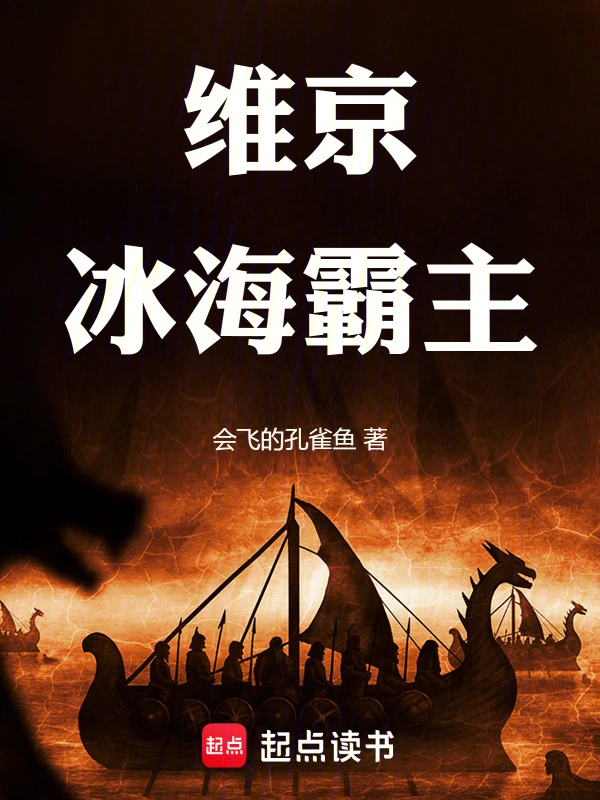
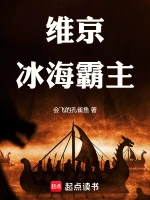
Vikings: Overlord of the Ice Sea
维京:冰海霸主
- Status
- Completed
- Length
- 859k Words
- Genre
- Historical
- Audience
- Male
- Subgenre
- Foreign History
- Updated
- 11mo ago
- Source
- Qidian
Stats
Tags
Synopsis
Reader comments
In booklists 7



Summer Schedule: No Need to Take Time Off, Travel Around the World
On the same summer night, it was raining in Tokyo, it was just dawning in Paris, and the neon lights of New York were just lighting up. You don't have to go there in person to experience a different time difference and life in these books.




History/fantasy/games/2d Books Some Recommended Books
Just put some of the books I'm reading I'll try my best to choose some that appear less frequently on other lists. Five-star full score system. Scores are purely personal and are for reference only. If you have any good books, please leave a message and recommend them ('▿') Friends are also welcome to leave their own opinions or suggestions ฅ( ̳• ◡ • ̳)ฅ Also, friends who like this book list Please give me some attention-(¬∀¬)σ We regularly clean up books that have too few likes and see if we c




A Book About People Who Have Tried Poison Themselves
It's a messy book list. It should be reasonable and have a plot. If you read it for a while and find it unreasonable or too watery, delete it. They are all books you read by yourself.



Aurora's Novel House
Come on, come on, get high


Bookworm's Book List
They are all things I have read and think they are good recommendations, no systematic writing.


A Century of Book Shortage
Searching for all good books, super personal subjective
Interesting Soul
The soul is dancing
Readers also read
 After Lying in Bed for Three Years, He Was Forced to Help the Han Dynasty
 Northern Qi, Sage Khan
 Fu Ming 1627
 Red Mansion: Start Escaping and Farming from the Equipment Bar
 If You Are Already an Adventurer, Who Should Work Hard on Your Own?
 1422: Restoration of Eastern Rome
 British Overlord
 The Artist Begins in Prison
 Traveling at the Same Time: Great Love to the Heavens
 At Once Sacred, yet Roman, and Even More Imperial
 Greece Recasts Rome
 Japan's Warring States Period: the Rise of the Wakasa Tiger
19 Tickets cheers
Come on
A group of people think only of the Americas. In this era, there is no support for going to Central America to fight the Mexicans. North America, which is easily accessible, is a bad land in the agricultural era and is useless. What the protagonist should do is to unify the Scandinavian peninsula, then follow the historical Viking invasions to defeat the British Isles, become Canute the Great and establish the North Sea Empire, invade Normandy and the lowlands, and contact Byzantium for trade. Letting the empire pass on is the right way. Going to America is just a joke
Before Britain's population exceeded 10 million, going to America was funny. Before the industrial revolution of steam engines and gunpowder was completed, going to America was just to deliver food. It would be incredible for the protagonist to be able to fully exploit Britain's resources in his lifetime. This time in the 9th century AD is not suitable for world hegemony. On the contrary, the victory of culture, religion, and science and technology is the most realistic.
I wrote a panel about the heroic spirit Vig, which I think was just a piece of fun. Don't make fun of me if it's not well written. As for stitching, it is naturally an indispensable part of Xingyue, and Vig can indeed be related to it.
Name: Vig. Tyne Castle Title: Viking Emperor/Snake of the North Position: Rider Strength: a+ (Due to the widespread martial arts in Viking customs, Vig was gradually deified in the process of being sung in later generations, and his image became majestic, becoming more in line with the strong man in the mind of the Vikings. In the process of descending from the Hall of Valor, through the fusion of some events, he received the blessing of Thor, the God of Thunder. Gained earth-shaking power) Durability: a (The foundation of the Viking Empire's huge territory was Vig's own outstanding war talent and operational talent. It was only through decades of hard work that the Viking Empire became great, including battles. The process of integrating with Thor's deeds also gained Thor's strong physique) Agility: c (Although he has not experienced anything in his life) Frustration, he is also perfect in life and business, but due to Thor's deeds of being fooled by Loki and his reckless character description in mythology, he is affected in this regard) Magic: a (Due to the influence of Thor's divinity and the singing of generations in the Viking world, he received the blessing of a mysterious power that he had never seen before in his lifetime after becoming a hero) Lucky b (influenced by the fate of Ragnarok, some Lower) Noble Phantasm: ex Job Skills Mounting a+: It is more like conquest than control. During the expansion of the Viking Empire, he conquered batches of peoples. He was even able to cross the ocean and include another continent on the other side of the ocean into the territory of the empire. He was a veritable conqueror. Even the legendary story of mastering thunder and lightning is actually a fact. It has unquestionable dominance over living/non-living/natural phenomena (thunder, storm, ocean) with the concept of [riding object] and can be used freely, but does not include dragon species. Convert ex: The main reason why Viking culture has become the mainstream culture of the world is that Viking shamans carried out religious reforms on the originally primitive and terrifying religious behaviors, and followed the footsteps of the Viking Empire and took root in various parts of the world. The shamans also used the influence of Vig and the Viking Empire to convert people who originally believed in other gods to the Aesir. As the direct promoter of this great act, Vege, who is revered as the Supreme King by the entire Viking world, enjoys the greatest honor and the highest immunity in the field of mysticism in the Viking world. Not only the mysteries belonging to the Viking world, but also the Celtic world, the Christian world, the Germanic world, the Slavic world, the Roman world, etc., Which were conquered or defeated by the Viking world, also have strong repressive power. The more lands are conquered, the less harm the mysteries originating from the region will do to Wigg himself. Often only attacks from gods can harm him. Inherent Skills: Dynasty Made ex: From a farmer in Gothenburg to the emperor who conquered Europe, Vig always believed that everything was his own hard work, and this was indeed the case. Has the ability to build the "Viking Empire" field from scratch. In the field, it will be regarded as being in the Viking world. Even if it is far away from the Viking homeland, it can obtain bonuses equivalent to the local value based on the degree of completion of the "Viking Empire". At the same time, it has extremely high control over things belonging to the "Viking Empire". The Chosen One: As a figure that has been sung for generations in the Viking world, he was naturally smeared with the color of divinity during the feudal period. Vig's deep connection with the Viking shamans undoubtedly deepened his influence in the field of mysticism. In his early years, Vig himself even won the title of the Chosen One for his act of drawing thunder. As the Viking emperor, chosen by Odin, there is no doubt that he will receive the blessings of the gods of the Asir clan and receive the blessing of divinity. Veg was deeply involved in the reform process of Viking culture, simplifying and universalizing the rune script, but also reducing the mystery of the rune script. As the master of the last generation of classical runes, he can obtain the protection of the Aesir through the runes taught by Odin. When using runes, he will receive an additional bonus comparable to the initial runes. He can even directly use the runes to call the Aesir. This is also the tradition of the Vikings Viking Declaration b+: The establishment of the Viking Empire was not a compromise between "barbarism" and "civilization" but a conquest of "civilization" by "barbarism", and it relied on the conquest of Viking force. As the Viking Empire grew stronger, the Vikings themselves gradually became synonymous with strength and bravery. Every Viking was a warrior, and this martial arts derived from the wilderness was the basis for the Vikings to conquer the world. It was the innate martial arts of the Vikings. Viger was also extremely good as a Viking warrior. He also had a good record in the field of hand-to-hand combat during his lifetime. He repeatedly charged into battle and killed several enemies with one against ten, and defeated Emperor Basil himself, who was a palace guard at that time, in several rounds. Later, as the "barbarian" emperor, Viking Vigor defeated the "civilized" Roman emperor, Basil. In close combat, Viking-style martial arts can be used to fight against any enemy. Even when the opponent has "civilized" qualities, the Vikings' power can be further strengthened, defeating "civilization" with "barbarism". Noble Phantasm The First Noble Phantasm: Conquest of Valhalla Level: a++ Type: Anti-Army Noble Phantasm Since Vig entered the world from the land of Gothenburg, all wars started by him have been It ended with victory. Now he blows the horn again. The sound of the horn spreads throughout the Viking world, representing another robbery, another war, and another conquest. Every Viking who hears the sound of the horn has his blood boiling. Even if he is in the Hall of Valor, he will leave everything behind and rush to this great battle. The gate of Valhalla opens, and the heroic spirits of the Hall of Valor (Viking) will join this war. Although they cannot liberate the Noble Phantasm, they will return to the Hall of Valor in a more honorable manner in this war. Second Noble Phantasm: Hammer of Thunder and Fire Level: ex Type: Anti-Fortress/Divine Noble Phantasm In the early years, when conquering the island of Great Britain, Vig's former loyalist Ragnar once called Vig the "city-breaking hammer." At that time, Ragnado praised Vig in a metaphorical way. But Vig's subsequent experience has made the name "City Breaker" a real thing. Using strategy, operations, tactics, and weapons, he must capture when attacking and win in battle. There is almost no city that Vig cannot capture. Especially after using artillery to usher in the era of hot weapons, and after using thunder and fire to completely establish the name of the Viking Empire, the name Vig will surely be engraved at the top of the history of world wars. The Noble Phantasm upgraded by the ancestor of artillery gained additional power from the artifact Mjolnir after being fused with Thor's deeds, and the original Noble Phantasm and Mjolnir were fused into a thick warhammer shape. With thunder and fire in one hand, perhaps the fate of Ragnarok can be changed. Third Noble Phantasm Dragon's Breath Sword Level: b Type: Anti-Human Noble Phantasm The sword that Vig won from the Byzantine Kingdom's court competition, it is a well-made authentic Damascus sword. The emperor himself loved it and always wore it as a sword, but it was rarely used directly after he was promoted to a great noble. There is nothing magical about it. However, as the Viking emperor's sword, in the process of his deification, this sword was also deified along with it. In folk mythology, it seems that it was given to Vig by Valkyrie. After that, there was a legend that the emperor himself used this sword to kill the Hydra. The Dragon's Breath Sword, which was sublimated from this myth, has special attack properties against fantasy species.
It is known that the protagonist's eldest son's thoughts are different from the protagonist's. He is more conservative and only wants to be a regional power. However, the protagonist's enemy has a very good illegitimate son. But the protagonist's career cannot be completed in one generation, so he must have a decent heir. emmm... This sense of déjà vu... Could it be that the child born to the protagonist's eldest son, the protagonist's grandson, will be a fierce man? Give the protagonist a "good saint grandson, who can bring prosperity to three generations."
Finish spreading flowers
Although a bit short, this book is very exciting, and it directly promotes the main plot. As the protagonist, Vig also created an empire of monsters. It is difficult to imagine how powerful the new empire that never sets on the island of Great Britain and France could be in the Age of Discovery.
There is a saying that Ragnar could not control these subordinates at all, and his finances collapsed within a few years.
At the starting point filled with hydrology. This book is really refreshing👍
Have you ever been a Viking? Most things are very rigorous and sophisticated👍👍👍
Laughing so hard, Great Britain Weightlifting Champion
Book Review (as of Chapter 196)
Grain and Grass, a Viking-style story from commoners to kings, the main focus is war and farming construction. The overall style is bland and realistic, unsystematic. The protagonist's advantage is wisdom. Compared with the Viking pirates, he knows how to organize troops and build territories
This book is generally good. But there are a few points that I personally care about: 1. The background is set in an era when wilderness is the mainstream and civilization is on the edge, but the protagonist's experience does not reflect this well. The author basically treats the protagonist as a feudal lord. The struggle of the Norse or Vikings in the harsh environment, the cruelty of plundering, and the simplicity of the tribe are all mentioned in one stroke; 2. The content is too dry, like all kinds of things that keep popping up during the game of P. The summary of battle reports and news, and except for the Ragnar disciples who have focused on the description, everyone else has become an NPC. This is actually very important for foreign history. Except for a few readers who know foreign history well, most other readers have only a partial understanding. Therefore, it is difficult to immerse the novel from the perspective of the protagonist. Appropriate writing of some group portraits and writing of some secondary important characters can also help readers understand and immerse themselves in that era. For example, in the "Conquest of Heaven" series, I was deeply impressed by the protagonist and the characters around him, and these characters all promoted the development of the story very well. The above are all personal subjective and non-neutral opinions. I just hope that the author will write better and better. Interested readers can read: "Conquest of the Kingdom of Heaven", "Conquest of the Kingdom of Heaven in the Age of Dawn", "Ancient Greece: The Overlord of the Mediterranean"
Sit and wait
It's a rare time-traveling Viking theme, so good! Let's talk about the historical information of the Americas in the 9th century, especially the northern European yellow people, the Sami people, want to win over!
Let the author create a group to communicate and give the author more information on world history in the 9th century! The author is reminded of the Viking prow dragon sculpture (iron horn). When the Toltecs and Mayans saw it, they immediately thought that the Vikings were also people of Quetzalcoatl! Call the protagonist Viking White Corn Man! So the protagonist takes the opportunity to use the Viking dragon totem to create communion with the Mesoamerican Quetzalcoatl! The protagonist came to Constantinople for the first time in August 841 at the age of 15, and returned home to Gothenburg in 842. It's another time-travel for a modern Chinese history college student. Does the protagonist remember high school science knowledge? Hurry up and write down high school mathematics, physics, chemistry, and biology in your personal notebook parchment! The protagonist is from the history department. Do you remember the history of gunpowder? Maritime history? Shipbuilding history? Industrial history? History of technology? Ragna is still the king of the Vikings, assisted by the protagonist. At that time, the protagonist proposes to King Ragnar that the islands found in Iceland and the West Sea will be the protagonist's fief of Vig! When the protagonist reaches the age of 25, he will go all out to build Iceland and discover Greenland to Vinland (Vinland Island on the east coast of Canada). The protagonist also becomes King Vigor of the New World in the west. It is not surprising that the struggle for hegemony and unification of Northern and Eastern Europe in the east is involved. It is cost-effective for King Ragnar to unify Northern and Eastern Europe! About Iceland: In 860 history, a Norwegian ship was wrecked and drifted to Iceland. The tribal leader Ingolf Arnason, who was expelled by the King of Norway in 874, led his family and slaves to settle in Iceland. They named a place with self-effluent hot springs Reykjavik (Smoking Fjord). Since then, the number of immigrants from Norway and occasionally from Ireland has continued to increase. In the early 10th century, the immigration period in Iceland's history ended. It means that if the protagonist discovers Iceland in 851 when he is 25 years old, he decisively plunders British farmers and recruits more immigrants from Norway and Ireland. After ten years of construction, Iceland in 861 will have a maximum of 10,000 immigrants, or at least 5,000 immigrants. The protagonist can also discover Greenland when he is 35 years old. Island, the first batch of immigrants, five hundred people, five cows, ten sheep, two pigs and three horses were sent to Greenland, and then the North Atlantic immigration route was carried out every year. As long as Iceland exceeded 10,000 immigrants, and Greenland exceeded 5,000 immigrants, the protagonist also transferred 100 people from the Nordic Arctic Yellow Sami tribe to Greenland! The protagonist should also learn the Sami language and the Sami survival skills of the Arctic Yellow people from the Sami people as early as 19 years old! The Dorset people are discovered in the north of Greenland. The protagonist is called a Sami soldier to communicate with a small Dorset tribe. After all, the Sami and Dorset people are both circumpolar yellow people with black hair, and they are also from the same Arctic language family. So the protagonist accepted tribes such as the Dorset people in northern and central Greenland, and had long encouraged the Vikings to learn the Arctic survival skills of the Sami people, and also learned to build igloos, raise reindeer, and use dog sleds! There are deer carts too! Then the middle-aged protagonist can send the first expedition fleet of more than 300 people to discover Vinland Island and map the eastern coast of Canada. To capture the three or four Beothuks (Indians) on Vinland Island, he must entertain the captured Beothuk captives with good wine and meat, learn the Indian language with gestures and drawings, and also cultivate the Beothuk translator to learn runes (Viking alphabet writing)! The foreign language speakers on the Viking expedition also had to learn more Indian languages. In short, the Beotuks, an Indian tribe that first came into contact with Vinland Island, must be as friendly as possible and offer fruit wine and dried meat to establish diplomatic relations. In particular, the Dorset people also speak Vinland Beotuk, so the protagonist brings a Dorset interpreter to first translate Vinland Beotuk into Dorset and then translate it into Viking. Therefore, the protagonist later learns Latin, Slavic, English, French, Germanic, Sami, and Dorset. , Beotuk of Vinland, Nahua (the lingua franca of Mesoamerica and the language of the Toltec Empire at that time), Yucatec Maya, Carib (shared by the Taíno and Caribbean people), Chibcha (shared by Costa Rica, Nicaragua, Panama, and Colombia), Arabic, and Chinese in the Tang Dynasty. The protagonist also has to learn the Indian language from the captured Beotuk boy. Newfoundland (Vinland Island) was originally inhabited by Indians and Inuit. In the late 10th century, the Vikings sailed here from Greenland. They tried to establish settlements on the island, but in 1006 they encountered resistance from the islanders and were forced to retreat. The Beothuks were an extinct American Indian tribe. Originally living on the island of Newfoundland, they lived by hunting and gathering. Speaks a Beothuk language, possibly related to the Algonquian language family. And the protagonist's expedition team discovered the species of Vinland: mountain grapes, cranberries, blueberries, maple sugar trees, argali sheep, reindeer, bison, peccaries (similar to pigs throughout America), turkeys, Muscovy ducks, dogs (Canadian Indian tribes have dogs and hounds). Waiting to go deep into the large rivers of eastern Canada to discover cold-resistant red rice (grown by the Indians in the Great Lakes of North America). Only then can the second batch of 1,000 people officially immigrate, bringing steel crossbows, ballistae, and Greek fire-breathing fire sticks. Among the immigrants are craftsmen, carpenters, stonemasons, and blacksmiths. There are ten horse viking knights too! The protagonist also relies on ten heavy cavalry and 300 heavy infantry, 500 light infantry (Viking berserkers), as well as archers and crossbowmen, as well as ballistae and Greek fire catapults (throwing fireballs). Therefore, the stone, wood, bone weapons, bows and bone arrows of the Indian tribes on Vinland Island and the large and small tribes in Canada are really unable to defeat the protagonist who is well prepared (the Vikings have advanced and complete equipment). Then in 871, the 45-year-old protagonist definitely succeeded in occupying Vinland Island! Call the carpenter and stonemason to quickly use the stone and wood on the island to build the first small settlement for immigrants! Deploy half of the soldiers to help build the stronghold! From now on, the protagonist's subordinates from Northern Europe, Ireland, and the United Kingdom will be imported to Vinland Island from the North Atlantic immigration route year after year! In 881, when the protagonist was 55 years old, the cumulative immigration to Vinland Island was close to 10,000, and at least 6,000 was acceptable. In short, there were at least 1,000 Viking soldiers on Vinland Island, and ten horses were shipped every year, with a total of 80 horses. It was also Vinland Island that opened horse farms, cattle farms, sheep farms, and pig farms, and Nordic chickens, ducks, and geese were introduced to Vinland Island. Moreover, the protagonist, King Vig, teaches the Beotuk tribe of Vinland Island about Nordic agriculture, animal husbandry, and iron-making, and the protagonist also wants to marry the daughter of the chief of Vinland! Encourage intermarriage between Vikings and other ethnic groups, so that white and yellow mixed blood and yellow and white mixed blood can coexist! The protagonist marries his daughter to a Sami warrior (Arctic Yellow Man). The protagonist is in his seventies and eighties and has already expanded to eastern Canada, the eastern seaboard of the United States (including New York), Florida, Cuba, and Haiti! It was also cultivated that the Yellow Vikings and the Vikings (white people) could intermarry and assimilate as equals and become one! Think about the first Yellow Vikings starting from the protagonist's incorporation into the Sami Emirate (Arctic Yellow Rand Emirate)! The elderly protagonist is old enough to become a Viking and a veritable overlord of the ice sea! And the elderly protagonist must occupy Ireland and connect Iceland, Greenland, and Norway in the North Atlantic. Enough! There are already large and small Indian chiefdoms in eastern North America. They have stone houses and wooden houses, and they can smelt copper. They use geothermal heat to smelt pure copperware! There are also copper plate books recording pictures and texts, because the Indians in eastern North America did not know about tin and lead mines, so bronze was not produced! Pure copper has been made using volcanic geothermal heat for three thousand years. Copper cups, copper bowls, copper basins, copper axes, copper needles, and copper plates are all pure copper. At that time, Mexico was within the scope of the Toltec Empire, so the Vikings came into contact with the Toltecs from Vinland along the east coast of North America to the east coast of Mexico! After 880 years, the protagonist can meet the Toltec Emperor Keshar Kotel, his son Mixcoatl (meaning "Cloud Serpent God") and his grandson Topilcen (in history, Quetzalcoatl the Great conquered the Yucatan Peninsula and founded the running station, and later the Aztecs inherited the Toltec people's running station). The elderly protagonist can visit the city of Tula, the capital of the Toltec Empire! I also drank with my contemporary Keshar Kotor in the city of Tula and discussed the division of territory and spheres of influence between the Vikings and the Toltecs! In particular, the protagonist Vikings discovered that South American bronze smelting technology was introduced to Central America, so the protagonist saw that the Toltecs had just begun to learn the South American bronze smelting technology, making their own bronze spearheads, bronze axes, and copper bells. Viking merchants joined the Central American trade circle, using land for long-distance trade, selling wheelbarrows, two-wheeled carts, horse carts, ox carts, and deer carts. The Viking wheelwrights instructed the Toltec carpenters to use iron tools to enlarge the Mesoamerican wheel toys into real wheels, and it was convenient to add rubber wheels! The Toltecs were a people who ruled in central Mexico around the 10th century. On the basis of inheriting and absorbing the Teotihuacan culture, the ancient Toltecs continuously enriched and developed their material and spiritual lives, and created a great artistic civilization-the Toltec civilization in this ancient land of Mexico. This civilization was strongly influenced by Mayan culture. Its architecture and art have the characteristics of both this culture and Mayan culture, forming a unique style. The Toltecs were originally a nomadic people living in northern Mexico. Around AD 800, they entered a class society and began to move south to the central plateau. About 50 years later, a famous leader named Horat appeared in this slave country, and he made outstanding contributions to the governance of the country. Later, he was unfortunately killed by the enemy, and his son succeeded to the throne and called himself Keshar Kotor. In 856 AD, Keshar Kotor began to build the large-scale city of Tula. In 967 AD, the Toltecs made an expedition to Dagin and Chichen Itza, where they established the new Mayan Toltec city-state. In 1156 AD, the Chichimecans captured the city of Tula, and the Toltec rule in the central plateau ended with the fall of the city of Tula. After the Toltecs moved south to the central plateau, the Teotihuacan civilization began to decline, which created an opportunity for the Toltecs to develop their own civilization. After the destruction of the city of Teotihuacan, although the Teotihuacan civilization began to show signs of decline, its development was not interrupted. It soon flourished in other places and gradually integrated with the local culture. In the process of this combination, a series of civilizations emerged, such as the Xochicalco civilization, the Elta civilization, the Maute Olfan civilization, and the Toltec civilization. Among these civilizations, the Toltec civilization is the most representative and has the greatest achievements. The Toltec civilization arose in the city of Tula. Tula, which belongs to the present-day Hidalgo state of Mexico, is located in the embrace of mountains 83 kilometers north of Mexico City. The city of Tula was built on a mountain, with Teotlapan at the foot of the mountain and the Tula River flowing through it. Although the city of Tula is on a mountain, rivers, forests, wild animals and stones have created favorable conditions for its development. Those who took full advantage of this advantage were the Toltecs. They created and developed their own civilization in the city of Tula based on absorbing Teotihuacan culture and post-Teotihuacan culture. It is a nation with its own culture, famous for its architecture and handicrafts, and created its own unique cultural system during its rule. Later, the area was invaded by another nomadic tribe, the Chichimaiga, and the Toltec culture gradually declined, leaving only a large amount of cultural heritage. The Toltecs, a Nahuatl-speaking people, ruled what is now central Mexico from the 10th to the 12th century. The name "Toltec" includes several meanings: "city dwellers"; people with "culture"; or literally, "reed people", originating from its central city Tollan ("the place of reeds"), which is adjacent to the current city of Tula, about 80 kilometers (50 miles) north of Mexico City (later the Aztec capital Tenochtitlan). According to legend, around 900, the Toltecs, under the leadership of Mixcoatl (meaning "Cloud Snake God"), looted the then famous city of Teotihuacan and then burned it. After Miskotel's son Ce Acatl Topiltzin Quetzalcoatl succeeded to the throne, he annexed many small states of different ethnic groups at the end of the 10th century to create an empire, adopted the Quetzalcoatl ritual, and called himself "Quetzalcoatl". The Quetzalcoatl ritual, together with some other Toltec systems, such as the classification of military medals into "Coyote", "Jaguar" and "Eagle", etc., Was adopted by many important Mayan cities south of Yucatan, such as Chichen Itza and Mayapan. This shows the wide influence of the Toltecs. The emergence of the Toltecs also marked the rise of the martial spirit in Mesoamerica. They are also famous for their architecture and handicrafts. It is said that they were the first to make metal crafts in the Americas, using giant doorways, serpentine columns, giant caryatids, human and animal-shaped flag bearers, and very unique recumbent statues of two gods. At the beginning of the 12th century, the invasion of the wandering Chichimecs completely destroyed the Toltecs' dominance in central Mexico; the Aztecs who invaded together destroyed the city of Tolan in about the middle of the 12th century. See the article on Mesoamerican civilization. Another legend "Toltec" means "famous craftsmen and scholars". Legend has it that about 50 years after the Toltecs moved south to the central plateau, in this slave country, there was a famous leader named Horat, who made outstanding contributions to the governance of their country. Unfortunately, he was later killed by the enemy. His son succeeded to the throne and called himself Keshal Kotor. In 856 AD, the construction of the large-scale city of Dura began. In 967 AD, the Toltecs made an expedition to Dakin and Chichén Itzá, where they established a new Maya-Toltec city-state. As a result, the central plateau area was gradually occupied by another nomadic tribe, the Chichimega. It was not until 1156 AD that the Toltecs' rule in this area came to an end after the city of Dura was captured. Create your own culture Toltec culture is an ancient culture that occurred in Central America around 800-1000 AD. "Toltec" in the Nahuatl language means "artisan". The later Aztec culture considered itself the successor of Toltec culture. Aztec oral legends and pictures often describe the deeds of the successive rulers of the Toltec Empire. There are also sun temples, charred palaces, courts, altars and living rooms, etc. The layout is symmetrical, has drainage equipment, and uses a large amount of molded adobe (that is, sun-sun bricks). Creation and use of columns The Toltecs are famous for the creation and use of columns in the history of ancient Mexican architecture. In terms of religious belief, they began to abolish the ritual of using living people as sacrifices and replaced them with birds and butterflies. In 856, Emperor Keshar Kotor began to build the city of Tula, which was an important cultural site in the Toltec civilization. The ancient cultural ruins of Tula City are distributed around a square square with a length of about 120 meters on each side. To the north of it is the largest temple, where the Toltecs worshiped Venus. In addition, there are sun temples, charred palaces, ball courts, altars, living rooms and more. The layout is symmetrical, has drainage, and makes extensive use of molded adobe (that is, sunbricks). There are also specialized stone tool workshops in the city of Tula. Most of the raw materials in the stone tool workshops are hard black stones. These black stones are used to make agricultural tools and weapons. The workshops are concentrated in specialized neighborhoods. In addition, there are specialized textile and pottery workshops in some neighborhoods, all of which are family operations. The city of Tula covers an area of about 13 square kilometers, with a population of 60,000 at its peak. About 60,000 people still live in the valley. Most of the people living in the valley are farmers, who are mainly engaged in the cultivation of corn, beans and peppers. Chichimeca, first translated as "Chichimec". Also a Nahua. A collective name for the Indians who lived by hunting and gathering in ancient times in northern Mexico and the southern United States. They live in caves and are considered "barbarians". In the 7th century AD, the Toltec and other tribes gradually moved south to central Mexico. Large-scale migration southward in the 12th century,
It's good to watch. The first update of the medieval novel is almost finished. Worth a look. 🤓It's just too short and I can already smell the ending. I wonder if the author is willing to expand the world map and write it longer. This book is quite sophisticated. The protagonist is already over 40 years old. Unlike other historical novels, they all wish they could have done everything in their youth for more than ten years.
When the stars of mankind shine
Some human-like operations are really nb. They can bankrupt the country on their own without natural disasters, external enemies, or conspiracies. They can even make the protagonist break through defenses. They can only be said to be worthy of being Vikings To put it simply, the Viking kings and queens indulged in luxury and enjoyment, leaving the treasury empty. Then they borrowed money from businessmen and nobles who could borrow, and then continued to enjoy their extravagance The protagonist still wanted to work hard at the beginning. He had put together a short-term plan to make money and a long-term plan to increase taxes, and he was not afraid of offending other nobles. When he was about to start a big fight, a piece of news from the palace made the protagonist break his guard The queen still wanted to continue buying luxury goods, and had no concept of the treasury being empty. The protagonist is relieved. No matter how much he earns, in the style of a Viking barbarian, he will spend as much as he can and rob if he has no money So the protagonist resigns decisively and goes home to prepare for the war. After that, there will definitely be a wave of foreign wars. If you win the war, you can still live, but if you lose, the country will be ruined It has the style of a Viking barbarian. In the past, I read novels where the nobles were all barbarians who couldn't govern the country. Sooner or later the country would be over. I also wonder if the biggest insect in the country is not the corrupt aristocracy. Now I understand what a barbarian is
I finished reading it in one go. Although it wasn't very long, it seemed to flow smoothly and it was really well written.
The ending is indeed too fast. Just because it's a finale doesn't mean it's a finale. There should be an extra story about the reign of the descendants, so that's the real ending.
Heroic Spirit Vigor the Great
Vig Haakenson Title: Snake of the North, Viking Emperor Strength: B (skilled Viking warrior) Endurance: A (proficient in long-term combat) Agility: B Magic: A (blessed by the secret cult propaganda such as Crow Whisperer) Luck: A (ascends to the throne as Lord of the North from the bottom) Combat Skills: Military Strategy, constant rationality, and insight into the opponent's weaknesses Battle Phantasm: Gold-Sniffing Raven, Viggo is not trapped by money in his life, and can temporarily seize other people's treasures and even abilities Combat Noble Phantasm: Ice Sea Overlord, Viggo can summon his former subordinates and large legions, with constant high morale, and is blessed by military strategy
The protagonist's age and starting year
The protagonist is 15 years old in the first chapter. After being captured and returned, the year is 843. Based on this, it is speculated that the first chapter starts in 841. By the time I write this review, it is already 859 in the book, which means that the protagonist is about 33~34 years old
This is probably the best book in the Viking genre.
Viking empire ceiling
The upper limit of the empire established by Vig is very high, if it can be guaranteed not to be divided in a short period of time. ① In terms of scope of rule, it occupies most of Europe. While the protagonist is still there, the unification of the British, French and German regions has been completed, the northern part of Italy has been newly occupied, and the nominal surrender of the western nomads and Nordic Vikings in Poland has been completed. This does not include other colonies such as Iceland. ② Institutional aspect: The feudal system has been improved, centralization has been strengthened, business has been greatly developed, capitalism has sprouted, and business has been controlled in advance. ③Military aspect: Complete the application of iron armored equipment, vehicle formations and the most basic firearms, without fear of nomadic invasion. At the same time, due to the geographical advantages of the Carpathian Mountains, which are bordered by the sea and the Alps on both sides, they will not be attacked from all sides. ④ In the direction of subsequent development, the opponents of the overseas colonial side in the Americas are Spain and Portugal, but because they are right next to them, the army can directly solve them. Later, the contradiction between man and land can be alleviated. Byzantium, Europe's only opponent in land expansion, was surrounded by enemies on all sides and would not be a problem. If it could be ensured that it would not be divided in a short period of time, the unification of writing, the awakening of national consciousness and the handling of religious matters could be completed. Solve the basic disk. The lower limit of the Ice Sea Empire is at least to inherit and surpass the Western Rome, rely on geographical location to unify Europe, and confront other regional powers. The upper limit can reach the great unity of the world and soar to the stars
Wonderful
It's a compact novel, not much of anything, I'm looking forward to the next one!
I thought it was entering the palace, but I didn't expect it to be finished.
This introduction is pretty good, it's considered a masterpiece.
Author, where is your new book?
Didn't I say it would be released in November? After looking up information for so long, it's time to write. Hurry up, there's no shortage of money!
Surprised! Haven't read the end of Chapter 20?
New books have been released, but there are too few and not enough to read.
This book is really good, but the key is that it's not watery
A new book is out, Brothers, although it only has three chapters 🤓