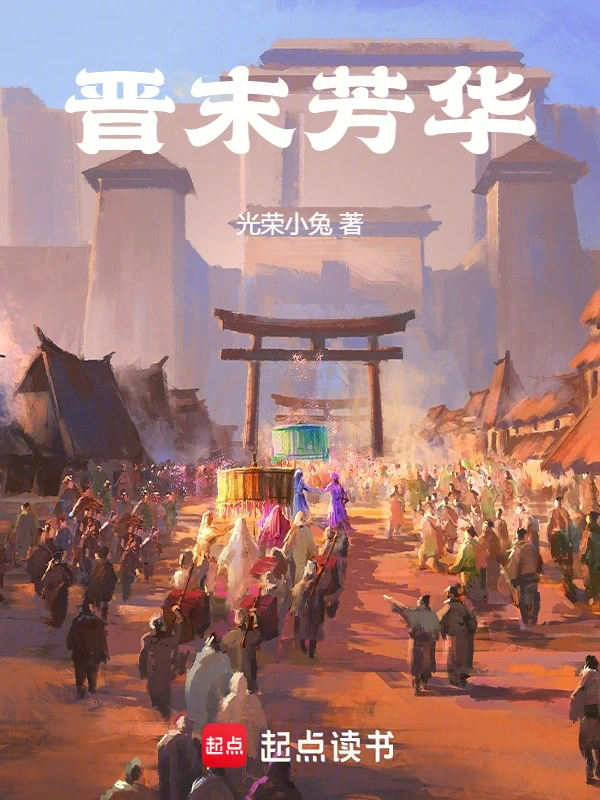
Youth in the Late Jin Dynasty
晋末芳华
- Status
- Ongoing
- Length
- 3.4M Words
- Genre
- Historical
- Audience
- Male
- Subgenre
- Jin-Sui-Tang Dynasties
- Updated
- 9h ago
- Source
- Qidian
Stats
297Monthly votes
35.2kRecommends
87.9kFans
1.1kChapters
Tags
Honours
Synopsis
Reader comments
In booklists 2
Readers also read
 Red Mansion: Start Escaping and Farming from the Equipment Bar
 After Lying in Bed for Three Years, He Was Forced to Help the Han Dynasty
 Northern Qi, Sage Khan
 Gou Served as Sima Under Dong Zhuo
 The King of Grass and Mustard
 Late Jin Dynasty: from Two-Legged Sheep to Human Emperor
 Five Generations of Elegance
 Red Mansion Garden Full of Spring Scenery
 Fuyao Rivers and Mountains
 Wei and Jin Dissatisfied with Zhou
 Late Tang Dynasty: Father-In-Law Strategy Guide
 Prime Minister Is on Top
 Yuan Shao, the Father of the Youthful Family of the Three Kingdoms
 Godly Cyber: This Rebirth Is Not Quite Right
 Love Monk in Red Mansion
Monkeys don't compete with donkeys in climbing trees, they have to compete with others in terms of length...
As in the title... I don't understand why the author neglects the development of technology, vision, logic and experience, and instead plays politics with noble officials in ancient times... How can you possibly be able to do this? You were studying political science when you could read, and it was probably a combination of interests when you met your first friend. The thing you had the most contact with before the age of 24 was going to school. Compared with this, the intrigues in school were just ridiculous.
Good historical article
Since San Chi Ya Sao, there are few historical works that can perfectly integrate character description and story development. Moreover, the author has strong writing skills and is familiar with the use of historical allusions. This will be another masterpiece of historical works and is worth looking forward to.
The biggest advantage of time travelers is their vision beyond the times. They do nothing in agriculture, military, science and technology, education and economy, and focus on human relations and political struggles. The only people in ancient times who were at the same level as you or even higher were these, 😅
What mistakes are easy to make in historical novels❓
Before the Ming Dynasty, the emperor was not called "Emperor". In the Song Dynasty, he was mostly called "Guanjia", and in other dynasties, he was called "Your Majesty". In the Ming Dynasty, the emperor was occasionally called "Emperor", and in most cases he was called "Your Majesty". After Kangxi of the Qing Dynasty, people began to be generally called "Emperor". Princes and princes call themselves: Princes in the pre-Qin and Han Dynasties can be called "Gu", and a few can be called "Ignores". After the Wei, Jin, Southern and Northern Dynasties, the title of "Ignores" gradually became exclusive to the emperor, and princes, princes and princes can only be called "Gu" or "I". Song, Yuan and Ming called themselves "I" or "I". Before the Qing Dynasty, princes and princes rarely called themselves "this king". Starting from the Kangxi year of the Qing Dynasty, princes generally called themselves "this king". In ancient times, women called themselves: "nujia" was a modest name for women after the Song Dynasty. Women in the Han and Tang Dynasties more often called themselves "concubine", and noble women could call themselves "I" and "I". Before the mid-Ming Dynasty, most dynasties used copper coins for daily transactions, with very little gold and silver. It was only in the mid-to-late Ming Dynasty that silver became the mainstream currency. In the late Ming Dynasty, "meeting votes/deposit checks" appeared among the people. There were no unified rules. Most of them were deposits and withdrawals/exchange receipts from acquaintances or local circulation, and were not legal currency. In the early years of Daoguang in the Qing Dynasty (1823): Rishengchang Bank was established, and private banks began to issue standardized banknotes, focusing on cross-regional exchange. They were only circulated in Shanxi merchant trade circles and major commercial ports, and were not yet popular. In the third year of Xianfeng in the Qing Dynasty (1853): the official issued the Ministry of Revenue official banknotes (official banknotes), which were forced to circulate nationwide. At the same time, the network of private banknotes expanded to the whole country, and official and private banknotes ran parallel. The use of banknotes entered an explosive period and became the "starting point of popularization." High-leg tables and chairs only completely replaced the low tables for sitting on the floor in the Song Dynasty. During the Han and Tang dynasties, people knelt and sat on the tables to eat and discuss matters. The furniture was mainly low tables and couches. The memorial system was only established during the Kangxi period of the Qing Dynasty. Officials in the Tang and Song Dynasties used "memorials", "tables" and "statements" when submitting memorials, while in the Ming Dynasty they used "memorials" and "memorials". There is no such thing as "memo" or "zhezi". In ancient formal occasions, the hand-over gesture was performed with the left hand outside and the right hand inside. The right hand outside was a special "unlucky gift" for funerals. "Better greetings" is a unique etiquette of the Qing Dynasty. It was mostly used by subordinates to superiors and juniors to elders. During the Tang and Song dynasties, people often performed cross-hand salutes and bows to greet greetings when they met, and there was no such thing as "sending greetings". {"NickName":"Supervision and Restriction","UserId":406440657} Before the Yuan Dynasty, subordinate officials rarely called superior officials "adult". In some dynasties, subordinates called eunuchs "adult", and in some dynasties, they called their parents and elders "adult". Beginning in the Yuan Dynasty, lower-level officials would occasionally call officials of second-rank and above "sir". From the middle and late Ming Dynasty, only officials of third-rank and above would be called "sir" by their subordinates. Officials with lower ranks could not be called "sir". However, in the late Ming Dynasty, there began to appear a few cases where officials above the fourth rank were called "adult". Before the mid-Qing Dynasty, following the rules of the Ming Dynasty, only officials of third rank or above would be called "adult". Starting from the mid-Qing Dynasty, calling officials "adult" gradually became common for lower-level officials. Attention! ! ! What is mentioned above is that lower-level officials refer to higher-level officials. No matter which dynasty, it is absolutely impossible for higher-level officials to call lower-level officials "sir". Some novels even write about emperors or nobles calling other officials "sir". This is simply contrary to Tiangang! ! ! Finally, let's talk about the problem of civilians calling officials Before the middle and late Qing Dynasty, civilians in various dynasties and generations called officials differently, and most of them called them "officials" and "masters". From the middle to late Qing Dynasty, civilians also called officials "adult".
Can't stand it anymore
Let's talk about mystery, but what does it mean to become a prophet and a magic stick? After reading so many historical novels, this is the first time I see that the protagonist needs to be a magic stick. Isn't time travel just using an information gap? Just make inferences based on the actual situation. It would be outrageous to directly treat him as a magic stick. It is also transformed into a big stallion. In less than a hundred chapters, it is just about a few noble women, and there are also scenes of four concubines at home.
During the period of chaos in China, we must kill decisively. In troubled times, we must not be hesitant and indecisive. We must not be like (The Fight for the Sixteen Kingdoms). The protagonist of a good fight in troubled times has the courage of Xiang Yu but writes a story of intrigue and palace fighting 😆😆😆
After reading the introduction, I felt that it was a harem novel. In fact, for an excellent urban novel, the harem should be moderate. If it is too much, it will fall off the grade. The author's writing style is very good. He also has a strong foundation in ancient Chinese prose. He also has three correct views and establishes the Tao through writing. The shortcomings are not hidden, but he is a little wordy and has too many explanations.
How long do you plan to go back home?
Why does the plot become less and less able to stand up to scrutiny as it goes on? The maid is of no use in Chang'an and she still bears risks in vain. They often practice heroism, as if a dynasty only looks at a few people to determine its rise and fall. The abilities of these people are very numerical. The success or failure of a war depends directly on the strength ranking of the generals. The political level is also directly ranked from strength to strength. There is no saying that each has his own strengths and changes with time. From time to time, he also makes meaningless literary youth problems. There is no plot or character building effect, it is just a disease. 🔨 ps: I hope this book can be written better after criticizing so much. After all, the previous ones are pretty good. Most of Qidian's other historical texts are even more rubbish 😒
Isn't the plot of fighting the evil mother a bit cliche?
I really can't figure out why the author always writes content that lowers intelligence. It's too low-level.
Xie Daoyun, the talented person who sings xu
Spiritual communication with Xie Daoyun
The writing is very good and the plot is also very good, but the old lady's foot-binding cloth... Smells and is long. Too much nonsense
Make the protagonist ten years older and Xie Daoyun ten years younger, and force them to be together 😅
Let me briefly talk about my personal feelings. I have only read Chapter 90 so far, so I'll just give it a try.
First of all, the writing style is very good, it is not a novice, and it also has a certain understanding of the history of the Eastern Jin Dynasty. However, the progress of the main plot is delayed. In order to let the protagonist show off, many conflicts are poorly designed and suspected of being misleading. Chapter 90 has not yet been officially adopted. The overall plot feels flat, without too many ups and downs. It does not have the urgency and dominance of the world at the end of the Jin Dynasty, when the world is about to change, heroes are competing for the throne, dragons are lurking in the abyss, and swords are being tested in the world. Instead, it has the feeling of being in a peaceful society and pretending to be cool, attracting many fans. It fits the title of the novel, but it is not in line with the main plot that the author originally designed, nor is it in line with the general environment of the late Jin Dynasty. I feel that the author's style of writing should be good for urban writing or peacetime historical writing.
I have been following this book since it started with more than 100,000 words, but recently I suddenly felt that I had no taste for this book and it was a pity to abandon it. The pace is too slow. More than one million words have been written in this book. Compared with historical hegemony articles of the same type, the other protagonists are not only kings and hegemons sweeping the world, but also powerful ministers holding great power. However, the protagonist of this book is still a small character who has to look up to others no matter what he does. I can understand that the author wants to try his best to restore historical details, but Internet articles are Internet articles after all, and there is no need to pursue "truth" too much. They should give readers positive feedback. This book has positive feedback, but it comes too slowly and too little. The content of more than one million words is almost the protagonist's exhaustive planning in order to achieve success in the future. The big bosses of all parties have a share of the pie, and so far, someone has won a Dongguan city, which was fought hard by the protagonist. According to my suggestion, the protagonist obtaining his own territory should be completed within 500,000 words. Now this pace is not considered slow, it can be called procrastination. When I am reading this book, I haven't finished reading this chapter at all. I can't wait for the author to immediately add the next chapter. Basically, I want to wait for a while before continuing to read. However, it makes me abandon the book and feel that it is a pity for such a good book. It is really contradictory. The above is just my personal subjective experience, please don't comment if you don't like it.
I'm giving out knives again... It seems that I still can't change the same rhythm as the original, I'm used to giving out knives to the male protagonist and the woman. The last hundred chapters have been dealing with swords and then wenqing. This is deceiving readers to come in and kill them😡
Oh, what are you talking about?
1: I feel that the author is a twisted person, and the character of the protagonist is also twisted. 2: Xie An is known as one of the most perfect men in Chinese history. What kind of thing are you trying to portray to Xie An? 3: I don't know what the author's thoughts were when constructing the two points of magic stick and illness. Is this okay if you are sick? People who still make this illness public (even though in fact they are not sick), in the eyes of others, you will not live for a few years, and may collapse at any time. What did the author think? Paralyzing political opponents? In that environment at that time, all the upper-level bureaucrats put family interests first. How many noble families were willing to make political investment in you? If you stand in the wrong line, it will affect the whole family. How can you, Wang Mi, who is always in line, have the charm to make people support you in line? In addition... , the magic stick is very difficult to stretch... It's not that I don't say it won't work. In the magic era of the Jin Dynasty, you had the name of a prophet, not to mention that it was very useful. 4: Seeing now, I always have an indescribable feeling. As a person who has traveled through the soul, looking at the development process at that time from the perspective of God, I feel that the author has not created a pattern for the protagonist. Yes, it is a pattern. There is no invincible heart of walking in the times, trying to reverse the tragedy of Wuhu Chaoshua, and reshape the universe. It makes people try to follow, but it also makes people feel that they are alone and outside. Personal opinion, don't comment. 5: Also, the narrative is a bit bland. Many plots could be made more enjoyable. The first time I led the troops into battle, I always felt that there was a lack of enthusiasm and memory points. Including the subsequent marriage and emotional scenes, there was a lack of touch.
The author's ability to advance the plot needs to be improved
Every time the plot is advanced, women cannot be separated. Reality does not need logic, fiction does. This is too deliberate.
What kind of person is the protagonist? When my mother died, I traveled back in time. Are my feelings for my family and my father real or just a pretense? Was the incident with the Zhang family daughter a deliberate attempt to seduce or was it sincerity? One moment it's written in a sophisticated and calculating way, as if one's past life experiences were all in vain, and the next moment it's written as emotionally rich and explicit as a novice's, and the next moment it's like being in a daze, the next moment being crazy, the next moment being stunned? Is this the complexity and conflict of human nature?
This book is gradually declining now
To be honest, I have read this book so far. The first half of the book is really good. It needs to be refreshing and refreshing. The girls are not forced to be recruited. The protagonist does not have any special tricks. The plot development is also good. But the plot has suddenly sped up since he led the army. The battle between Qin and Jin has strengthened Fu Qin so much. The male protagonist has been developing for so long and barely fought, and there is no sense of satisfaction at all. The male protagonist is stationed in the army and separated from the harem. The female protagonist's emotional drama is basically nothing. It is not interesting at all. I basically can't find the desire to continue reading.
Have some passion
The writing was pretty good before it was released, but why is the plot so bland later on? It's okay to have a bland plot, and it's good to write about love and romance, but it's almost 300 chapters and there aren't many female characters recommended? Watching like an incompetent husband makes me so uncomfortable
There are too many loopholes in soul-traveling historical novels. A modern person who accidentally travels to a certain dynasty can remember so many details in history (even better than a history expert). China has thousands of years of history, and it is impossible for historical experts to remember every detail of a certain period of history in just a few years. Unless he is a historical expert who specializes in a certain period of history, does the protagonist of Soul Transmutation happen to be a historical expert who specializes in a certain period of history? Don't say that the protagonist was a lover of historical novels before time travel. Don't be ridiculous. Historical details are not something that historical novels can cover, it's not the same thing at all! Even if the protagonist happens to be an expert specializing in the history of a certain period. If you travel to ancient times, what can you do? This involves another big loophole in historical fiction. The protagonist can draw drawings of various machines and weapons, understand metallurgy and metal processing, chemical industry, and improve agricultural tools. In fact, these loopholes are easy to solve. Since the protagonist's soul has traveled to ancient times, it proves that ghosts do exist. Then write that when the protagonist goes to sleep at night, his soul leaves his body and returns to modern times. If he doesn't understand something, he can look up information in modern times. This solves various loopholes in soul-traveling historical novels. {"NickName":"Supervision and Restriction","UserId":406440657}
I hate iron but it doesn't make steel. First of all, the protagonist's servant is afraid of not causing trouble for the protagonist. He doesn't sound like a servant in his speech. It doesn't match that era but looks like now. Second, there is too much nonsense. Third, if your mother was killed, just let it go? After your father found out, he kept the evidence and did nothing. You still said that he did what he could. Then my son is left alone in the village without a teacher. How can I thank the father? I thought you were planning the adoption so much because you didn't want to recognize this father anymore. Now I see that Bailaizhang has just been put on the shelves
I would like to ask if there is anything interesting about the female protagonist in this book? I saw some old posts discussing this but there was no follow up.
It was so difficult in those days without a golden finger
I can only say that the opening time of this book is both good and bad.
The good thing is that when it opens, books about the Eastern Jin Dynasty are rarely on the cold side. The bad thing is because the back profile is opened, and the gap is immediately apparent when compared. But it also reflects the completely different differences between a person who comes from the Wang Xie family and someone who is from the lower class.
It is recommended that there be more chapters about killing Japanese and destroying ghost countries.
If the three views are correct and the writing is good, everyone is responsible for the rise and fall of the world.
Chapter 369... Can I write two chapters even if I just fight? 😅
By the way, is Green Willow gone? I forgot about it a long time ago.