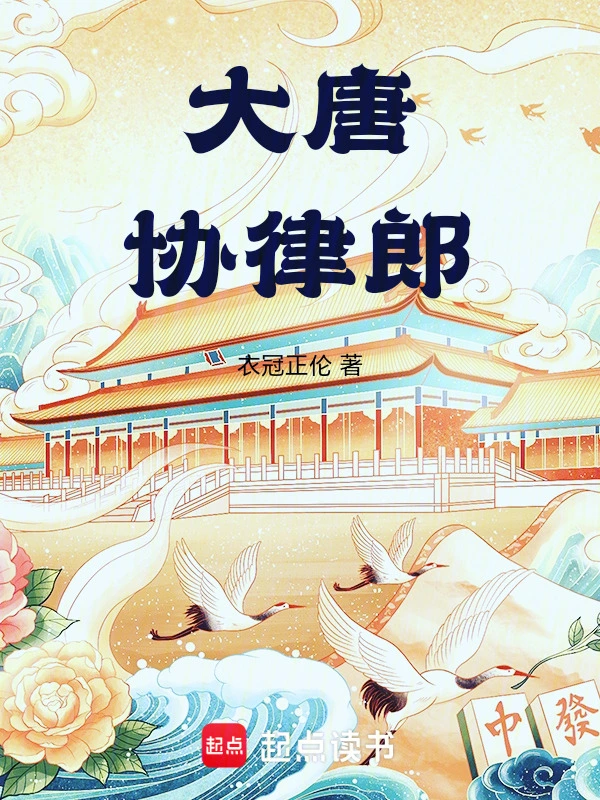
Xielu Lang of Tang Dynasty
大唐协律郎
- Status
- Ongoing
- Length
- 2.7M Words
- Genre
- Historical
- Audience
- Male
- Subgenre
- Jin-Sui-Tang Dynasties
- Updated
- 3mo ago
- Source
- Qidian
Stats
Tags
Synopsis
Reader comments
In booklists 4

Good Book Classifier
Have writing style Thoughtful Have depth
I Only Recommend What I Read (I Read Fast Food Literature)
(If you have read something good and found that it is not on my book list, please recommend it in the comment area. The book shortage is uncomfortable) I only recommend books that I have read well. I will only recommend books that I have read. Pay attention to the timeliness. If it shows that I am a trainee and the book has been out for a long time, it means that I have not read it. When I read novels, I never care about writing and plot. It's too tiring. As long as I feel good about it, I'll re
History Book List, Mainly History.
Mainly history. Full Stars: Ten stars, you can watch it from one star to the next.
Beautiful Articles That You Are Currently Trying or Have Already Tried
Why forget about worries and just read! The reason for adding books to the book list is slow, because I only want to add books that I think are good after reading them. Although I haven't paid attention to them, I always thought that there might be a book friend who has the same taste as me, so I saw it. I should be a little surprised😊
Readers also read
 Gou Served as Sima Under Dong Zhuo
 Northern Qi, Sage Khan
 Red Mansion: Start Escaping and Farming from the Equipment Bar
 After Lying in Bed for Three Years, He Was Forced to Help the Han Dynasty
 Siheyuan: Start by Picking up Attributes
 Five Generations of Elegance
 Wei and Jin Dissatisfied with Zhou
 Immortal Who Seizes the Body
 Devouring the Starry Sky: Infinite Opportunities to Hoard Treasures at the Beginning
 Entrepreneurship in the Late Tang Dynasty
 The Fierce Ministers of the Song Dynasty
 Number One Scholar
 Crowned Emperor of Tang Dynasty
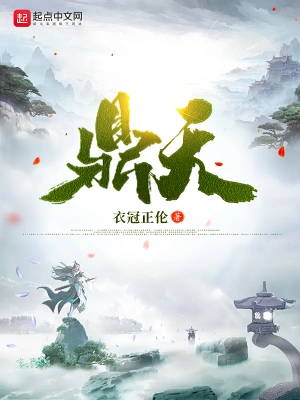 Dingtian
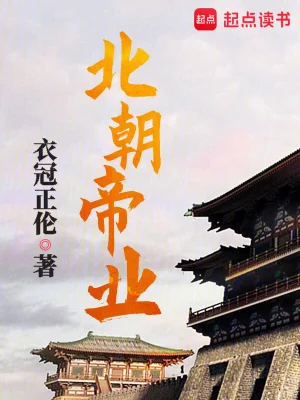 Northern Dynasties Imperial Industry
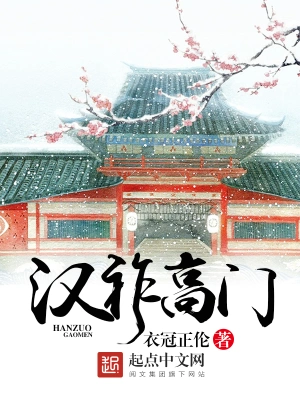 Han Zuo Gaomen
Come on
Work hard to update
Is the location of the imperial city in the article Luoyang or Chang'an? The beginning of the chapter is Luoyang, and the middle is Chang'an.
Is it Luoyang or Chang'an? The beginning of the article is Luoyang, the middle chapter is Luoyang
Can we be more romantic and talented? The majestic book, with its emotional pull with several female supporting characters, coupled with the author's classical Chinese skills, really feels like reading a play before. It is difficult to write a heroine in a historical essay. The romantic elegance of the Tang Dynasty, the poets, wine beauties, generals, ministers and talented men are all indispensable.
Some people always say that Wu Zetian returned power to the Li family. When did she return the favor? Wasn't it taken back by the Shenlong coup of the Li family?
Unknown target
I don't understand whether the protagonist wants to usurp the Tang Dynasty and become emperor or dominate the world. If he wants to help the king win the throne and rule the world, the article repeatedly hints that the protagonist is rebellious and reveals his disdain for the royal family. If you want to usurp the Tang Dynasty and become emperor: Looking at the overall situation, Tang Zuo only lasted for more than a hundred years, and it was a time of prosperity. How to usurp it? This time you are not from the Tang Dynasty. Generally speaking, it seems that there is no legal principle at present. Your surname is neither Li nor Wu. Besides, a cousin like King Shou and an aunt like Concubine Wu Hui, I think they are already extremely good to the protagonist. If you don't support King Shou, or if you support King Shou as a puppet to usurp the throne, in terms of human ethics and morality, the protagonist can sit at the same table as those relatives of the Southern and Northern Dynasties who usurped the throne, and he will be sprayed to death. This time it is not the unrelated emperors of the Yuan and Wei dynasties, nor is it the brother-in-law of the Jin emperor who lives in Jiangzuo. The Tang Dynasty is powerful all over the world, what about all the nations coming to court? Even if you prevent the Anshi Rebellion, can you manage it better than the Kaiyuan era? Unless King Shou is extremely sorry for the protagonist. But if you write the longevity king as a good boy who obeys the protagonist's words, then from a feudal perspective, you really have to dedicate your life to such a king. You can usurp such a king. . . You are worse than the Sima family Can't understand Can't understand
This book is definitely not as good as the author's previous books. The plot is too slow and too watery to be interesting. The layout is too small and the main plot is not clear. I gave it up.
I feel sick to death when I read Chapter 36. I worked so hard in the beginning just to escape from the master's house and avoid trouble. I can already walk away. Where are you dragging me? Then I was betrayed by the master's stepmother and my relatives were captured. Now I have to plunge in again and it's just a pure sand.
The author's books are very sophisticated and cite classics, but they are too literate, which leads to poor readability. However, no matter how much you cite classics, it is still a novel. If the readability is poor, your grades will definitely not be good.
It's been more than 500 chapters and I'm still writing some disgusting stuff. Are readers paying to find disgusting things?
Fight for hegemony or assist?
This book could have been renamed The Troublemaker King of the Tang Dynasty. Xie Lulang of the title had to write one million words before he formally addressed the title. He then spent less than ten chapters hastily talking about it and then quickly skipped it, and was about to start a new story. So brother, does your book have a central idea? When writing about Li San's rebellion, it is better to write about the business power. He sold insurance and arranged a temple partnership and Zhou Yong was gone. The money for water transportation was handed over to Wang Yuanbao. How can we restrain Wang Yuanbao without writing and not be afraid that he will take his property and return to Beimen? There is also a Weaving Workshop that disappears as soon as it is written. You can't just click on the upgrade and forget about it like playing a game. What I like to read more is that you describe the changes in yourself and the surrounding environment from the perspective of a small character under the guidance of the protagonist. This book is particularly short of writing and is all used to make trouble.
There is indeed a reading threshold
My first impression after reading it is that the author has a strong foundation in classical Chinese. Throughout the text, the text is mixed with white, and the reading has a sense of rhythm and beauty. In other words, the dialogue lines have a lot of charm, but if you try to use them in vernacular, they lose their charm. Secondly, it has a rich reserve of historical knowledge and a very detailed description of the style of the Middle Tang Dynasty. At present, I feel that the author's writing style is excellent, but there is indeed a reading threshold. This threshold lies in its use of language on the one hand and plot development on the other. It is semi-literary, uses uncommon words, and makes reading difficult. It is more like a long stream of water for readers to feel, rather than directly stimulating emotions. In other words, if you read too much, your brain will be tired. Coupled with the author's writing, there are too many descriptions and too many details, which makes it feel unfluent and slightly dry. In other words, be patient, it is of the long-lasting type. Anyway, it depends on what you like, this book is quite unique.
The biggest problem with this book is indeed that the pace is too slow. After five or six hundred thousand words, the protagonist is still white. He does things here and there, but there is no progress in his career. Cats and dogs can provoke all kinds of people. Everyone wants to see a beautiful woman who is as good as jade and gets promoted. Restoring the family's reputation, preparing for the future, etc. Didn't show much. The author's book with the smoothest rhythm is Han Zuo Gaomen. That book also doesn't have so many verbose words and explanations, and is closer to the style of online writing. The later books fell into popular science and word-for-word. Don't listen to other people praising the author for his good writing style. The writing style of Internet articles is really not the main thing.
The author, this book has written more than one million words now, and it has not even made it clear about the main plot. Is it the rebel who will rise to power, or will he turn the tide and become the savior of the Tang Dynasty? He has not given a clear hint, and the main theme is not clear. How can there be a long-term sense of anticipation? It is recommended that you write a good story, develop your career and accumulate strength, and don't mess around. Some authors insist on exporting opinions or showing picture scrolls of various aspects of the Tang Dynasty in their novels, putting the cart before the horse. People don't care and just want to read wonderful stories. If you want to set up a trap for Li Linfu in the latest chapter, then write it in one go. Write something else in between. It is obviously a small climax, but it breaks off in the middle. How can this be so exciting?
The bitch smell is too strong
If it weren't for Kaiyuan, I really wouldn't have been able to read Chapter 70, and I would have wanted to pretend and stand up
Did the author hire a ghostwriter for this book?
Strange, is this book really written by the same author as Han Zuo Gaomen? Actually, there is no need to write about those who are high in both quotients. People really don't see where they are high...
3 Questions
1. Why does a very orthodox historical text place Zhang Dai, Zhang Bian's son, under Zhang Jun's name? 2. How can a high-quality online article by a high-quality author have such a slow pace? It is said that the heroine is the heroine, but after hundreds of chapters, more words are added, and various historical materials, author's opinions, and character analysis are put into the plot. Is it a novel that everyone is reading, or the Four Books and Five Classics mixed with annotations in the story? 3. After hundreds of chapters, the meaning of the protagonist's time travel is still uncertain. Sometimes he is hiding in the court, sometimes he is licking the emperor, and sometimes he is slow to lay out the plot. It is mixed with many plots that have nothing to do with the main line and makes it diluted. Why come? 4. Why do characters use classical Chinese when speaking their lines, and use vernacular in their descriptions? The dialogues handed down from ancient times were rewritten by later generations of literati according to written language records. Isn't it tiring for ancient oral communication to use classical Chinese to communicate with each other? It greatly affects the effect of listening to books.
The progress is so slow and I have no desire to subscribe. Brother, you wrote so well about Han Zuo and Guan Mian back then. Recently, when I read Dandan's Kuo Jin, I can't stop thinking of Zhezi. There is really no need to be so arrogant. If you really can't write anymore, you can just start a new book.
Not cool
There is a reason why this book has poor performance. It has been doing some side projects in Luoyang. These things are not interesting and have no use in pushing forward the main line. If you want to pursue the line of powerful ministers, you must first build up the reputation of the protagonist, travel around the world to meet famous people, complete the imperial examination as soon as possible, and unite the disciples of the Zhang family in the party group.
Where did such a poisonous book come from so many trolls?
At the beginning, I pretended to be my grandfather and wrote epitaphs for others to make money. Only people with no brains would do that. They didn't care about their reputation and life in order to defraud money. The lower limit was extremely low, and they would die from poison.
Golden Flower Post: Ancient Imperial Examination Admission Notice
The imperial examination system was founded in the Sui Dynasty and formed in the Tang Dynasty. In the Tang Dynasty, gold scraps were painted on slips and slips as a way to announce good news when a Jinshi scholar came home, which was called "Bang Tie". The earliest list posts were lacquer posts, which were probably popular during the Kaiyuan and Tianbao years when Li Longji (Tang Xuanzong) was emperor. The "gold" technique is a traditional Chinese high-end painting process, which shows the importance it attaches to. Wang Renyu, a man of the Five Dynasties, wrote in "The Legacy of Kaiyuan Tianbao·Illuminated Posts": "When a new scholar reaches the rank, he will attach the post with an illuminated letter to his family to report the joy of passing the exam. In the Wen Zong Dynasty, this ritual was immersed." Yang Wanli of the Song Dynasty "Send Disciples of the Clan to the West to the Province": "The first one on the light ink list should be seen first, and the illuminated post does not need to be sealed." Mentioned the illuminated post. However, because the gold post is attached to the student's letter home and not delivered through official channels, many people think that this is an informal "admission notice". And what is the light ink list in Yang Wanli's poems? It turns out that those admitted to the imperial examination in ancient times used light ink on their book lists, which was called "light ink list". The Jinhua post appeared later, which was regarded as the "official version" of the imperial examination admission notice, and the function and nature of its admission notice have been recognized by modern academic circles. The "Golden Flower Post" in "Rong Zhai's Continuation of the Imperial Examination" written by Hong Mai of the Southern Song Dynasty states: "When a Jinshi in the Tang Dynasty passed the imperial examination, there was a golden flower post. It has been passed down for a long time, but it is rare in the world." Hong Mai's home has a golden flower post from the Zhenzong period of the Song Dynasty, which belongs to Sun Ji, a famous official in the Northern Song Dynasty. Sun Jiu and his brother Sun He were both well-known "student masters" at that time, and they successively won the first prize in the examination. Sun Ji's golden flower post was obtained after he was selected as the number one scholar by Song Zhenzong in the first year of Xianping. The higher the exam level, the more particular the materials used The materials used in ancient admission notices were also quite picky, with textures including silk, wood, paper, etc. The higher the exam level, the more particular materials were used. The second volume of "Yunlu Manchao" written by Zhao Yanwei of the Song Dynasty states: "In the early days of the Republic of China, following the Tang system, those who ascended to the imperial examination were written on yellow flower paper, about five inches long and half as wide." "Jinhua Bangzi" is written on a kind of wooden board, but this is not an ordinary wooden board, it has been carefully processed. The sizes of admission notices in ancient dynasties were different. For example, the golden flower banner is "one and a half feet high and six inches wide", while the yellow flower paper on which the golden flower post is written is "about five inches long and half as wide". The specifications and sizes of the posters in the Ming and Qing Dynasties were larger, so that they could be hung up and posted in the hall after being sent to the students' homes. Tang Dynasty , the "Golden Flower Post" in the Song Dynasty, in addition to reporting the merits achieved by students , it also prominently records the examiners. In addition to their titles, there are also their detailed information, such as the year, month and day they were born, as well as their grandfather's name, father's name, etc. The examiner must sign his or her name on it. According to "Rong Zhai Xubi·Imperial Examination Favors", Sun Ji's admission notice in the first year of Xianping in the Northern Song Dynasty was written as follows: "First, list the titles of the four chief ministers, saying: "Hanlin bachelor to Shi Zhongyang, the doctor of the Ministry of War to know Zhi Gao Li, the right secretary to admonish Zhi Shi Guan Liang, and the secretary Cheng Zhi Shi Guan Zhu, all prefixed. There are four people in the second book, a certain year, a certain day of the month, a certain day for the ancestor, a certain day for the father, and a certain day for the private person. Then he wrote to Sun Ji, the number one scholar, and his records are the same as today. " The above should be the common way of writing Jinhua posts in the Tang and Song Dynasties. "Yunlu Manchao" also says: "Written his name, monogram under it, protect it with a big post, and write his name on the top of the post. " The "Jinhua Bangzi" admission notice for the state examination in the Song Dynasty was relatively simple. It mainly wrote the name, hometown, and name of the three generations of the admitted students. The admission notice in the Ming and Qing Dynasties was relatively simple, directly writing the candidate's ranking. Fan Jin's admission notice in "The Scholars" read like this: "Fan Jin, the master of your house, ranked seventh in the Guangdong Provincial Examination in high school, "Ya Yuan", and was listed in the Huangjia in the Beijing News. " In the Ming and Qing Dynasties, there were special printing plates for the admission notices. After printing, just fill in the names, rankings, etc. Of the admitted students. The list officials did not need to write the entire content as they did in the Tang and Song Dynasties, but the admission notices such as the top three classes still had to be written. In addition, the ancient admission notices had to be stamped with the "Special Admission Seal" after they were written, which was called "Guo Zhu".
The layout of Chang'an Pingkangfang
Here are some information and layout of the most popular residential area in the Tang Dynasty: Pingkangfang: 1. There are 108 squares in Chang'an City: Zhang Shuo's residence is in Yongle Fang, which is also a famous noble square in Chang'an. 2. The basic situation and internal layout of Pingkangfang Long Anping Kangfang is located in the east of Second Street east of Zhuque Street. The street runs from the north to the fifth lane in the south. It faces Anrenfang, the most prosperous street in Chang'an City, in the north and Dongshi, one of the "two cities", in the east. It is the place where geishas belonging to Jiaofang in the Tang Dynasty concentrated their business and lived. The geographical location of Pingkang prostitutes in Pingkangfang is directly related to the sex skills of Pingkang prostitutes themselves, and has an obvious hierarchy. "There are Zhengzheng among the prostitutes, mostly in Nanqu. Zhongqu follows the wall. A despicable prostitute lives there, and the second song despises them." Pingkang prostitutes often have high levels of talent. After they first enter Pingkangfang, they will undergo strict training. "The songs of the first disciples will command and rebuke them. Their gifts are very urgent. If they are lazy at the slightest step, they will be whipped and ready to attack." After training, they often have very good talents. Their main service targets are nobles, bureaucrats and their descendants, their descendants, and businessmen who come and go. After the Anshi Rebellion, in order to better understand the central government's will and collect relevant information, local officials established many memorial halls in Beijing. Jinzouyuan provided residences for local officials in Beijing, and also provided a social place for them to interact with officials in the capital. Therefore, in Jinzouyuan, a large number of officials come and go every day. Since the Pingkangfang area is close to the offices of officials, for example, Chongrenfang to the north faces the Jingfeng Gate of the Imperial City and is closest to the Shangshu Provincial Council. In Xuanyangfang, there are also Wannian County House and Queyanyuan. In order to facilitate office work and collect information, many Jinzou Institutes took advantage of Pingkangfang and set up locations around Pingkangfang. In Anrenfang there are Jinzouyuan from Shang, Ru, Bian and other places; in Xuanyangfang south of Pingkangfang there are Jinzouyuan from Dongchuan, Zhenwu and other places. There are also thirteen Jinzouyuan in Pingkangfang. Since "officials in office in the capital and permanent residents in the city generally do not set foot in Pingkangfang," the main people who enter Pingkangfang are some local officials stationed in Beijing and local officials who come to Beijing. Therefore, the existence of a large number of jinzoyuan in the surrounding area provides a lot of customers for Pingkang prostitutes. 3. Residences of senior officials in Pingkangfang: The northwest corner of Li Lingwen's house purchased by Zhang Dai is the enclosed area, facing Cui Tai's house across South Street, to the north of Bodhi Temple and south of Sanqu. In addition to Cui Taizhi and Pei Guangting, there are currently Kong Yingda, Yang Zhiyi, etc. Who can be tested in this workshop.
Has the author sold his account? It's not as stunning as the classical Chinese literature it used to be.
Da Feng is the template of a watchman, but it is exactly that sentence, those who resemble me will live, and those who imitate me will die. I have read almost 600 chapters, and I have no previous literary talent. Has my talent as a talent been exhausted? The Imperial Industry of the Northern Dynasties is probably the pinnacle of
A brief talk about rhythm
It is a fact that must be admitted to say that the pace of this book is slow. But this cannot be blamed on the current plot of nearly 200 chapters. I think the plot development is reasonable. Choosing to start in the early Kaiyuan years at the age of nine means that this book cannot be fast. It is impossible to rebel in the prosperous times. To make an inappropriate analogy, it is even more difficult to rebel in the later years of Emperor Wu of the Han Dynasty. People's hearts are in Li Tang, how can they rebel? Is there any way to speed up the pace? If the book starts on the eve of the Anlushan Rebellion, the pace will definitely be fast. But since I chose to start in the early Kaiyuan period, I must have wanted to write about the prosperous Tang Dynasty. I even think there is a chance that this book will not be rebellious. Because in the plot, I found that although Zhang Dai currently has a low status, he is still sewing for the Tang Dynasty, whether it is for disaster victims or the border military. I wonder if An Lushan dares to rebel when Zhang Dai takes power, or will it have such a big impact if he rebels? But thinking about Li Longji's mediocrity in his later years, it is unrealistic for Zhang Dai to stay in power for a long time. Then I deduce that Zhang Dai will be in power for a period of time, stay in the frontier army for a period of time, and then the basic plan will be established, and there is a high probability that he will lay out his position for a period of time. The three are in no particular order. As for the plot, it should follow the historical context. The prosperous Tang Dynasty will be written for a long period of time, and then be moved as time goes by. After all, the book has hinted many times that it will give some color to Brother 🐔 and a group of clans in Li Tang. Finally, regarding the number of words in popular science, this is an old problem. If you don't write it, it will easily make people who are not familiar with the Tang Dynasty feel comatose. If you write it, it will make people feel confused. This is an unsolvable contradiction, and the only way is to add more updates, but with this textual writing method, there is no explosive update. At the same time, expressing one's own opinions in popular science is also one of the purposes of the author's writing. It's really unscientific, and there will definitely be a group of people who criticize it for not being able to understand it. Difficult to stretch. I had to read some of the dialogues in the novel "Nine Years Old" several times before I could fully understand the meaning. After all, I had to translate it into vernacular to understand it better. This style severely limits the audience. Well, there is another way to solve the problem. Wait for a while and then read it. I read it once a week. But after all, this method is not good for the author and it also tests his patience. But those who can't stand the slow heat probably won't read this book.
Relatives of Zhang Dai's Wu family - Wu Yuanheng's fathers and ancestors Wu Pingyi and Wu Jiu
Wu Yuanheng (758-815), courtesy name Bocang, was a native of the Feng family (now Yanshinan, Henan). He was the grandson of Wu Pingyi, the commander of Jintan, and the son of Wu Jiu, the imperial censor in the palace. Minister and poet of the Tang Dynasty of China. The Wu family did not completely disappear after Wu Zetian's death. There are still some figures, among whom Wu Yuanheng's grandfather and father are representative figures. Although they are not high officials, they all have good reputations and talents. 1. Wu Yuanheng's father - Wu Jiu Wu JiuFrom the Wu family's point of view, he is the same generation as the protagonist and his cousin . Wu Jiu (713-790), named Guangcheng, was a native of Fengshi, Henan, and the son of Wu Zhen. In the official palace, he serves as the censor. With his son Yuan Henggui, he gave it as a posthumous gift to the Minister of the Ministry of Civil Affairs. He has authored five volumes of anthology, "New Tang Calligraphy and Literature Chronicle" which is popular in the world. [○Therefore, Sima Runzhou, the Censor of the Imperial Palace, presented the inscription on the Shinto of Peiguo Wugong, Minister of the Ministry of Civil Affairs (with preface) Cultivation of virtues and examination of auspiciousness, the virtuous man accumulates a long career; respecting benevolence and justice, a gentleman's filial piety makes his name known. To respect and nurture them is to teach them the way; to celebrate them is to teach them to be loyal. Hong Bao was in the Yuan Dynasty, and he gathered his beloved souls to pursue his fate. He saw him in the official book of Wu Gong. Gong Tajiu, named Guangcheng, was born in Pei State. The prosperity of the Zhou Dynasty was based on loyalty, and the descendants of the King of Zhao were indeed virtuous. The infantry minister of the Yuan and Wei Dynasties, Yanmen Shuofang, contacted the prefects of the four counties of Mayi in Yunzhong and granted the title of Jinyang. From the fourth year of Shou Yang, the king of Taiyuan was tabooed about Hua, Taiyuan was born in the country Jiegong, tabooed about scholars, Jiegong gave birth to the prince of Hejian County, tabooed about benevolence, and King Wulie of Yingchuan was born in Hejian, tabooed about virtue. He was replaced by a talented man in civil and military affairs. He was appointed as a general with two thousand stones. He recognized the bright and bright spirit, secretly praised the emperor's plan, inherited the auspiciousness of Shalu, and enfeoffed Qili. Yingchuan student examination officer Wai Lang Xiu Wen Dian bachelor Ta Zhen, the courtesy name is Pingyi, and his writing style is in line with the times. The title of Weiwei has the same name, Hong is erudite, and he is a humanistic tortoise. In the Tianhou Dynasty, he could not afford to conquer the country. He was afraid of the nobles and nobles, so he often obscured his knowledge and practiced the Wusheng Dharma with the Sangmen masters. After the restoration of Zhongzong, he just practiced Zhou Xing, wrote and discussed his thoughts, and was particularly popular with Yuan's selection. He wrote poems to express gratitude, and he must take prosperity as a warning. Although the position has a descending position, the road has no phosphorus. The clusters nourish the queen and the queen, and the compilation and submission of the remaining heroes. The Duke is the third son of Kao Gongfu. He is solemn and clear, simple and honest. Loyal and upright, trustworthy and strong, rich in friendship and understanding of the constitution. From then on, scholars from Fang Wen were used to respond to imperial edicts and assist palace guards. Duke Li Liang of Xian was guarding Fufeng on the right, acting as a military force with Cao Cao. When Emperor Xuan was in Qi, he was waiting for a job, so he changed the order of Yongle and visited Cao, the governor in the middle of the river. Asking for officials under the boss, he will be transferred to the Prime Minister for ten thousand years. When the mausoleum was built and the soil was restored, it was recommended to be enshrined and worshiped by Liquan Order. The imperial court praised his talent and promoted him to the position of imperial censor. Cultivate the correctness and be firm and wise and never turn back. At that time, the imperial army and chariots were just driving, the spring goods were weak, and the emperor's flowers were galloping. Dong Jingheng was worried about Han Mian's poems, and was invaded by the officials and was demoted to Jurong Cheng, the Wei of Chen County. In the two places, there are Nanyue Sanmao and the relics of spiritual immortals. So Haoran was content with himself and took the Tao as his disciple. He also said: "Poverty and wisdom are in my spirit's tortoise ears. What is the appearance of external things?" The observation envoy of this Taoist community followed his rumors and recommended the secretary Lang Runzhou Tuan Lian Envoy to be appointed as the Jingzhao Facao and the official of Zhongsan. Suddenly I was unhappy and asked to be the Sima of Runzhou. When he was full years old, he moved to Songluo, where he became more and more famous in Yikuang. He became a famous official in China and the dynasty, and was a well-known noble prince in all directions. He was often a moral friend of the public. Jia Taifu, Wei Gong, used Qingjing to manage Dongjun to cover the public affairs and treat the public affairs. His violence also stopped, and he suddenly changed his temper. It was the winter of November of the sixth year of Zhenyuan, and he was seventy-eight years old. In the dim light of the bright moon, Li Mingzhi finally controlled the rituals of the Taoist sect, and descended his body to the northern plains of Mang Mountain. There were hundreds of spiritual cranes, hovering and chirping. They stopped conquering, and their original deeds? Wei Gong used literature and political affairs to serve as an official twelve times and was crowned the God Sheep. Driving four horses, he is strong and correct in his words, and his supervisor is prosperous. The way of a gentleman is to have some harmony, some may be jealous of public uprightness, or some may love public talents, he may be unyielding in his ways, and he may benefit the king if he is mourning. He sang poems and poems with Zhang Libu and Yuan Rongzhou, and wrote five volumes of essays. He has his own style of writing, which is different from Zepan's poems. His ex-wife, Mrs. Li of Longxi, lost her eldest son, Tan. Tan was the order of Jintan, the scholars practiced Qing Dynasty, and the officials surrendered to their ambitions. The step-wife, Lord Zhou of Runan County, is the grandson of Sijun, who was born in Zhongshushe, and the daughter of a single father, Lingying. She is gentle, careful, and upholds the integrity of her family. There is a disciple named Yuan Heng. His writing style is grand and elegant, he is quiet and thorough, he walks according to the Tao, and he has etiquette that can be imitated. On behalf of Tiangong, he was entrusted with Emperor Xi, and he was given a clear mandate to praise the emperor. In the spring and first month of the third year of Yuanhe, the minister of household affairs paid homage to his subordinate minister Tong Zhongshu Pingzhangshi. In autumn and August, he also took charge of the affairs of the minister of household affairs. In winter and tenth month, he appointed the minister of household affairs to inspect the school and the minister of official affairs of Chengdu. Above the well network and below, the water and fire are newly removed, and it is also shaking and shining, which is for reproduction. So he left the position of being the Prime Minister of Taiwan and became the teacher of Ci Hui. In the ten years of the year, the three orders of Xi, He Jia Hui, preparing for the pivot, trusting in rewards and gifts, and being a leader in the community, are they not the way of justice, not to bring disaster, but to make prosperity greater than the queen, to suppress the righteousness of the family, and are inherently similar? After four years of public donation, his wife died. Next year, the Duke of Linhuai held the memorial ceremony for his wife's funeral, and buried her instead. At first, the king of Huai came to supervise the imperial censor and was left alone. Later, he served as a law enforcer in the central government. Then she presented it to the Minister of the Ministry of Public Affairs, and the wife first pursued the title of Taijun of Wenshui County, and also granted the title of Mrs. Tai of Ruyin County. Gu Fu was rewarded by Wang Ji, and the gift of mourning and returning to the family was a gift of virtue, which was called a famous religion. Linhuai Gong Kao Gongfu Jun was banished to Wu Ye, and he had a happy relationship with De Yu Wang Kao Fu Jun. You Susi was there, and the Qing Hui Dynasty was not lost. Deyu got acquainted with Xiangjun, and acted as a local official, Xiao Situ, to accompany the final discussions of the outer court, and to inherit the lenient administration of the Zaifu. It is written in the theory of destiny, forgetting its meagerness, and carving it into stone to show its originality. The inscription says: The way of a gentleman is to be firm and square. It may wax or wane, remain silent or speak. Yu Wei Shangshu was in charge of the constitution of the Celestial Dynasty. In the secret attendant's hall, clear out all the dormitories. The front is willing to blow, and the lake and the sea are flowing. Use tranquility to cultivate wisdom, and there will be nothing left for me to do. It matches the virtual element, and the sound is sharp when it is removed. The title of the sword is revealed, and the favored spirit is prepared. Yuan Gun Jie Gui, where Liuguang comes from, Huanghuang Taisi, the emperor is next to him, shades the Min'a, and sprinkles the water. Regarding this loyalty as nothing more than filial piety. The Goushi family is located in a steep plain, and their secluded house has a long history. Cui Wei is standing on the stone, and Tian Jiao is the head of Chi. Carve out the good news and show it later. 2. Wu Yuanheng's grandfather - Wu Zhen (Wu Pingyi) Wu Pingyi, named Zhen, with the character line, grandson of Wu Zetian clan and son of Zai De, the king of Yingchuan County. Erudite, familiar with "Spring and Autumn". Later, when he was still alive, he was afraid of disaster and refused to do anything. He hid in Songshan Mountain and practiced pagoda, but he ignored repeated edicts. When Zhongzong was restored to power, Ping Yiju's mother died, and he was forced to call her a living servant. In the second year of Jinglong's reign, he concurrently studied for a bachelor's degree in Wen Guan, and moved to be an imperial examination official, Wai Lang. Although there is a banquet in advance, it is because of the rules and regulations of poetry. In the early Ming Dynasty, he was demoted to Suzhou and joined the army. Move to Jintan Order. Although he was relegated, his reputation will not fade away. He died at the end of Kaiyuan. A volume of poetry. Related records of Wu Pingyi's deeds "New Tang Book·Biography 44" records: "When Empress Wu was afraid of disaster, she did not dare to do anything, so she hid in Songshan Mountain to practice pagodas, but ignored repeated edicts." This should be the only record of his early life, and the year of his birth is unknown. Wu Pingyi's father was the king of Yingchuan County. According to Tang Dynasty regulations, he could enter the official position under his family name. Although in the Tang Dynasty, "most of the men were young men" and could usually enter the officialdom at the age of thirteen or fourteen, Wu Pingyi "feared misfortune and did not dare to intervene, so he hid in Songshan Mountain to practice pagodas and ignored repeated edicts", which was definitely not something that a young man could do, so Wu Pingyi should have been an adult at this time. According to Wu Pingyi's "Jinglong Wenguan Ji": Zhongzong Li Xian convened a banquet for his scholars at the beginning of spring. Wu Pingyi wrote a poem accordingly, and Zhongzong wrote in his hand: "Although it is the least in the Ping year, the writing is very new... Now I give a flower to show its beauty." At that time, Cui Riyong was drinking heavily and wanted to seize the flowers given by Pingyi. He came up and saw them under the curtain. He called Pingyi and said, "Why does Riyong seize the flowers from Qing?" Pingyi knelt down and said: "I have read thousands of volumes, and I have been full of bluffs every day. If I give you a flower, I will never get anything from learning Pingyi for a lifetime." The ministers laughed and gave him a glass of wine. People at that time marveled at the beauty. Therefore, Wu Ping Yiying was the youngest among the academicians who participated in the "Ying system" at that time. According to historical materials such as "Full Tang Poems", the officials and bachelors who participated in the "Yingzhi" banquet with the title "Fenghe Beginning of Spring and Colorful Flowers and Trees Yingzhi" included Shangguan Wan'er, Li Qiao, Song Zhiwen, Liu Xian, Zhao Yanzhao, Shen Quanqi, Cui Shi, Su Ting, Cui Riyong and others. Among them, it can be found that Cui Riyong was born in the fourth year of Xianheng, that is, 673 AD. To sum up, "Jinglong Wenguan Ji" says that Wu Pingyi was the youngest person who participated in Zhongzong's spring banquet. He should have been born four years after Xianheng (673). Emperor Zhongzong of the Tang Dynasty particularly emphasized that Wu Pingyi was "the youngest", so the difference between him and Cui Riyong seemed to be four or five years old. His birth year should be around the third year of Yifeng (678), Emperor Gaozong of the Tang Dynasty. According to "Tongjian", Wu Zetian changed the Yuan Dynasty in the first month of the first year of Shenlong (705), returned to Zhongzong in February, and "died in Shangyang Palace" in November. "Repeated edicts should not be answered" is said to have occurred before the first year of Shenlong (705) or even earlier. Moreover, "repeated edicts should not be issued" means that edicts were issued many times and should not occur in the same year; "Yin Songshan repairing the pagoda method" cannot be a year and a half, at least within two or three years. If Wu Zetian issued the last edict in the fourth year of Chang'an (704) and Wu Pingyi was between 24 and 25 years old at that time, pushing forward 25 years from the fourth year of Chang'an (704), his birth year should be in the fourth year of Fengyi (679), which is basically consistent with the previous test. According to this, Wu Ping was born around the third year of Yifeng (678), Emperor Gaozong of the Tang Dynasty. "Tongjian·Volume 250" records: On the twelfth lunar month of the first year of Long Live Tianchi, "General Anping Wang Wu Youxu, the general of You Qianniu Guard, had few ambitions, was indifferent and had few desires. He returned from Feng Zhongyue, and asked to abandon his official position and hide in the sun of Songshan Mountain. The Empress Dowager suspected it. You are cheating, and you can watch what they do. Youxu then wanders around the rock ravine, living in the grass in the winter, and living in the stone house in the summer, just like the people in the mountains and forests. Wu Ping lived in seclusion in Songshan, and it seems that he was influenced by his uncle Wu Youxu. There are many records of his worshiping Buddha after becoming an official, but there is no mention of practicing the "Buddha Method" in "New Tang Book: A Biography of Wu Ping" and "Quan Tang Poetry Volume". 1" Also recorded the deeds of Wu Pingyi and Cui Riyong in discussing the "Spring and Autumn Annals". In the early days, Cui Riyong himself explained the "Zuo Shi Chunqiu" to the princes and officials. The next day, there was a large gathering of scholars, and Riyong Zhepingyi said: "Your articles are durable, but if you talk about the scriptures, you will lose your achievements. "At that time, Cui Shi and Zhang said that Su Zhi Pingyi should practice, and they gave orders and asked questions. Pingyi asked the doubters. Riyong said: "Lu Sanhuan, Zheng Qimu, what can I do? The answer was: "Qingfu, Shuya, and Jiyou are the three sons of Huan." Meng Sun to Shi Fan were the ninth generation, and uncles Sun Shu and Ji Sun Fei Fan were the eighth generation. Zheng Mugong's eleventh son, Zi Ran and his second son, Zi Kong, died. Zi Yu was not a minister, so he was called Qi Mu, Zi Han, Zi Si, Zi Liang, Zi Guo, Zi You, Zi Yin and Zifeng. "I sat down in shock. Ping asked Riyong: "When Duke Huan of Qi and King Zhuang of Chu were kings of Qi, how many princes belonged to Qi and Chu Fan? During the reign of Duke Ping and King Ling, how many princes belonged to Jin and Chu? How many people were in power among the six ministers of Jin and Qi and Chu? "Ri Yongxie said: "I don't know, can you know? "Ping Yitiao moved from beginning to end, leaving no words. Riyong said: "I invite you to the north. "They all sat together and laughed." Judging from this, Wu Ping's familiarity with "Spring and Autumn" requires long-term study to achieve such an attainment, and it cannot be achieved overnight. Therefore, from his youth until he lived in seclusion in Songshan Mountain, he should have practiced more in the Spring and Autumn Annals. As for the practice of "Fu Tu Method", it seems to be an excuse for "repeated edicts should not be answered" or it is combined with the practice of "Spring and Autumn". Zhongzong period (1) In court. "New Tang Book·Wu Ping Yi Biography" says: "Zhongzong was restored to power, Ping Yiju's mother died, and he was forced to be a living room servant. He was eventually made a beggar, but no one heard about it. In the second year of Jinglong (708), he also studied as a direct bachelor of literature." Therefore, Wu Pingyi became an official "living room servant" before the second year of Jinglong. According to "Tongjian·Volume 280": "In the first month of the Shenlong year, in March, Ji Chou... He set up a chariot to levy Wu Youxu, King of Anping, in Songshan. When he arrived, he got rid of the prince's guests. Please return to the mountain and promise him." Wu Youxu, Wu Pingyi's cousin. The two of them lived in seclusion on Mount Song together, and Gai Pingyi practiced with Wu Youxu. Although Ping Yi "lived in the mourning of his mother", he was summoned to the court at the same time as Wu Youxu. Therefore, Wu Pingyi's "forced summons to serve as a living roommate" should be in March of the first year of Shenlong (705). In May of the second year of Jinglong (708), Wu Pingyi was concurrently a bachelor of Xiu Wen Guan. Because of his erudition and knowledge of ancient times, he favored Zhongzong and often served at banquets. "New Tang Book·Wu Ping Yi Biography" records: "In the second year of Jinglong, he was concurrently a direct bachelor of Xiuwen Guan." Wu Pingyi was a direct bachelor of Xiuwen Guan in May of the second year of Jinglong (708). In October of the same year, Wu Ping moved to the "examination officer Wai Lang". "New Book of Tang Dynasty: A Biography of Wu Ping" records: "At that time, the emperor was secretly and unruly, Empress Wei was in chaos, and her relatives were prosperous. Ping Yizhong reprimanded him, that is, he asked himself to suppress his mother's party... The emperor comforted him, but he refused. He moved to be a meritorious official." "Tongjian·Volume 29" records: "Winter, October, Jiyou, Xiuwen Hall Wu Pingyi, a scholar of Zhizhi and a native of Zhiju, expressed his gratitude to his relatives. He did not dare to criticize Webster, but he would not allow it to harm his own family. " During the Jinglong period, Wu Pingyi "favored Zhongzong and even gave a banquet to Yu." "New Tang Book, Volume 211, Biography of Du Shenyan" records: "In the beginning, Shenyan was very ill. Song Zhi asked, Wu Ping and other provincial governors how they were doing, and they replied, 'It's because of the fate of the children, what can I say? However, I have been here for a long time, and now I am dead, which is a great relief, but I hate not to see a replacement.'" Fu Xuancong verified that this was a misinformation. However, it is a fact that Song Zhiwen and Wu Ping went to visit Du Shenyan when he was seriously ill. "Chronicles of Tang Poems, Volume 6" records: "When Shenyan died, Li Qiao had already asked for an additional order, and Wu Pingyi was determined at that time." "Full Tang Poems, Volume 268" contains Wu Pingyi's article "Please give Du Shenyan an official list posthumously". According to "Old Tang Book·Volume 140·Song Zhiwen Biography", "My friend Wu Pingyi compiled it into ten volumes and passed it down to generations." During the reign of Emperor Xuanzong of the Tang Dynasty "New Book of Tang Dynasty·A Biography of Wuping" records: "Xuanzong was established, demoted to Suzhou to join the army, and moved to Jintan Order." Regarding the reason for Wu Pingyi's demotion, the rumor in "Book of Tang" is Pu Shuo said, "When Ping Yi met Zhongzong, he favored Zhongzong. Although he had a banquet in Henan, he tried to sing poems and admonitions, but he could not be led away by Zhuo Ruo, so he was banished. Although he was relegated, his reputation has not declined." It has been relegated and his reputation has not declined. But he was also admired by people at the time. According to Wu Ping's way of life when he lived in seclusion in Songshan, perhaps "demoting to Suzhou to join the army and moving to Jintan Order" was exactly what he hoped for. Year of death The year of Wu Ping's death is not specified. Only "New Tang Book: A Biography of Wu Ping" says "at the end of Kaiyuan, Zeng Man died." Traveling to Wuyue. According to the "Complete Poems of the Tang Dynasty·Zu Yong Collection", the starting point of Zu Yong's return trip was Suzhou. On the way he crossed the Huaihe River and wrote the poem "Crossing the Huaihe River to Pingyi". When he arrived in Chenliu, Henan, he wrote the poem "Staying in the Kuiting Hall of Li Shaofu in Chenliu". "Old Tang Book·Biography 76·Li Kui Biography" records: "Li Kui was named Duanqing and was born in Chengji, Longxi. His family was in Zhengzhou, and he was of the Guan clan. ... The young man is smart, studious, and good at literature. At the end of the Kaiyuan Dynasty, he was promoted to Jinshi, supplemented by Chen Liuwei, presented books to the palace, ordered imperial edicts to write test articles, and was promoted to worship You Shiyi. "Also see Xu Song's "Entertainment Examination":Li Kui was promoted to Jinshi in the 29th year of Kaiyuan and supplemented Chen Liuwei. ps: This Li Kui is also a very interesting character. He is the brother-in-law of the protagonist's third uncle Zhang Wei. If you are interested, you can check it out) According to this, Zu Yong traveled to the south and returned to the north in the autumn of the 29th year of Kaiyuan. At this time, Wu Ping Yi should still be alive. Wu Pingyi should have died in the autumn or winter of the 29th year of Kaiyuan (741), at the age of about 63. —————————— In summary, there are still some people in the Wu family, especially Wu Pingyi and Wu Jiu, who were both famous literati at that time.
I've read all the author's books, and they were all bad and boring the first time I spent money on them.
What if this isn't love? Set up my semen!
A nine-year-old and ten-year-old fan came uninvited!
Long suite building
Let's build a unified supporting building. Let's put the supporting characters here for the author to choose from. Name, family background, gender, appearance, age, what plot do you want to appear in. (The author can only adopt part of the settings) For example: Zhao Guang, a businessman, over 30 years old, from Jingzhou, the plot is not limited.
The author is in poor health and has temporarily stopped updating to recuperate. I hope the author can reply to me. I have reached more than 700 chapters. If I am just a eunuch, I will not continue. I came from Han Zuo Gaomen, so I can be considered an old reader 🙂
Okay, this is my last ripple 🙂