


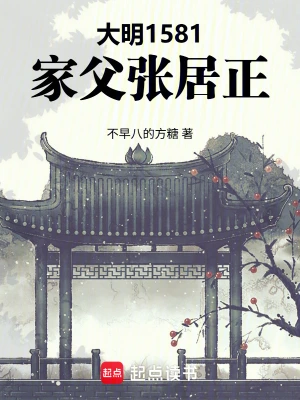
Ming Dynasty, 1581: My Father Is Zhang Juzheng!
大明1581,家父张居正!
- Status
- Completed
- Length
- 2.0M Words
- Genre
- Historical
- Subgenre
- Song-Yuan-Ming Dynasties
- Updated
- 5mo ago
- Source
- Qidian
Stats
534Chapters
2Votes
10.2kRecs
125.8kFans
Tags
Synopsis
More by this author
Readers also read
 A Literary Master in Ancient Greece
 Great Ming: His Father Is Useless, So He Must Summon the Founding Emperor
 Seizing the Direct Descendant in the Red Mansion
 Germany: 1914
 Forum Troll, Romance Master
 Ming Dynasty Veterinarian: From the Start, I Save Zhu Biao's Life
 Northern Song Dynasty: I Spoiled the Future, and Zhao Kuangyin Broke Down
 Hong Kong Films: In Wo Hop To, Uncle Deng Begs Me to Take Charge
 I’m Not a Suit-Wearing Thug, I’m a Chameleon Actor!
 Great Ming: I, Yan Maoqing, Really Am Blessed
 The Fierce Minister of the Great Song
 Great Tang: How to Become the Mastermind Behind the Xuanwu Gate Coup
 One Piece: Old Man Garp, Kicking Kizaru in a Rage from the Start
 Reborn as Bao Guowei, I Never Wanted to Be a Literary Giant!
Reader comments 33
Google Translate
I feel like I wrote about the emperor too well, and the problems all belong to the gentry, but in fact the essence is the problem of the centralization of power in the ancient feudal government. In order to ensure eternal stability, the emperor will inevitably centralize power. Centralization will bring excessive power to the bureaucratic network, because the bureaucracy is the emperor's hand in maintaining his rule. In other words, feudalism If the power of the bureaucracy is weakened relative to the common people, the status of the emperor is actually unstable, and power and money are interconnected. If the power is too great, the money and land representing interests will gradually be concentrated in the bureaucracy through various means. The power of the bureaucracy and the emperor are not antagonistic, but actually derived.
If the protagonist does not become the emperor, then the protagonist must carry out comprehensive changes that limit the emperor's rights. It is useless if the protagonist just copies the technology of later generations and adds a few reforms. If a country wants to produce a large number of original inventions and creations, it must carry out systematic changes in ideological foundation, political structure, legal system, social forces and other aspects. The reason why Britain was the first to enter the Industrial Revolution is that after experiencing the ideological changes of the European Renaissance, coupled with the British Glorious Revolution of 1688, the king's rights were further restricted. Britain established the framework of parliamentary sovereignty and the rule of law, and the bourgeoisie, the new aristocracy, and the king formed a check and balance, which allowed British civilians to gain unprecedented freedom. At this time, the degree of freedom of scholars, craftsmen, and farmers in Britain was higher than that of other European countries at the same time, and it was far more liberal than the civilians of China's Ming and Qing dynasties. The high degree of freedom of all British civilians fully inspired everyone's strength. The power of the Chinese emperor was not greatly restricted, and all officials, gentry and landlords were dependent on the imperial power. The freedom of civilians, who account for the vast majority of the country's population, is too low. This system inhibits innovation and hinders social development. China's Zhou Dynasty was a feudal system, and the central government could not control much of the local princes' affairs. The princes competed with each other. During this period, Chinese civilization truly allowed a hundred flowers to bloom. Most of the essence of Chinese civilization came from this period. During the Spring and Autumn Period and the Warring States Period, the "Mo Jing" recorded the principles of optics and mechanics, and the germination of geometry had emerged; the "Gan Shi Xing Jing" recorded astronomical observation data. But from the Qin Dynasty to the Qing Dynasty, there was almost no progress! The institutional innovation of the Spring and Autumn and Warring States periods stagnated after the Qin and Han Dynasties, lacking the ability to dynamically adjust. Since the Qin Dynasty, especially since the Han Dynasty deposed all schools of thought and only respected Confucianism, Chinese civilization has almost stood still and entered a dead end. The Zhou Dynasty and the Spring and Autumn Period and the Warring States Period were similar to the ancient systems of most European countries. They were all feudal systems. Even in successive years of war, less than 10% of the country's total population died directly or indirectly as a result of the war. But from the Qin Dynasty to the Qing Dynasty, every dynasty would kill half or more of the country's population due to war! What is even more tragic is that every time there is a change of dynasty, there is almost no progress in the system and culture! {"NickName":"Supervision and Restriction","UserId":406440657}
Everyone has mentioned the advantages, but I will talk about the shortcomings that I personally think of: the protagonist is too arrogant and has no respect for the elders, and is more ruffian than calm, and the above.
Zhang Juzheng showed that even a capable and ideal official could not save the Ming Dynasty. He would only get himself involved and could only usurp the throne or create a republic.
The author should fix it
The writing is readable, but the framework is a bit lacking. The writing of the plague section is too slow. If you want to develop modern medicine, you don't need to go through such a long period of plague. Moreover, it has never made the readers happy. Killing two censors is anticlimactic and not fun at all. The mastermind behind the scenes is even more incapable of controlling the same. It makes people feel frustrated while reading. Also, Zhang Juzheng's writing is too incompetent, the villain is too fierce, and he remonstrates every day. At least when Zhang Juzheng was in power, he could be labeled as slandering the emperor and deceiving his reputation. Also, the officials are ignorant. Even the common people at the bottom know that plague therapy is effective. It is impossible for officials not to know. A contemporary section chief knows that he cannot confuse right and wrong in the Headwind Bureau.
I am Shennong. To be honest, it is a pity that this novel has no traffic and has been buried.
Rating: Five stars The content is exciting yet soothing. The only drawback is that it updates once a day, which is too slow. There is no common sense error, and it may be the reason that is consistent with the actual situation? (Is it too cumbersome to check the information, which leads to fewer updates?) It ranks among the first-class articles in the history department. I really admire Zhang Juzheng's writing with flesh and blood.
Excellent grain products! Worth reading
It is not easy for the author to embellish the desolate twilight of the dynasty and create a lively atmosphere around the protagonist 😃😃. In ancient times, the confinement of feudal ethics was too heavy, and most people who read novels do not want to be so old-fashioned and dull. The author's ability to write with childlike interest and vitality without the oppression of feudal ethics at the beginning shows the merit of his writing skills 🌹🌹. Although the writing is not as stable and solid as that of the old author, the charm of the young author is the freedom to be open-minded, joyful and witty! 😁😁😁
The problem of the Ming Dynasty was that the land could not support so many people. The Manchu Qing Dynasty relied on enslaving the people. The only solution is to open borders and close the country
This is what you call heavy taxation. Is it called paying money in the south? When the Qing Dynasty came, they paid less than one-tenth of what they paid to the Ming Dynasty. Basically, the north was responsible for what they could do. Why is the south so powerful?
This is nonsense, and misses the point. This is not how we save people.