


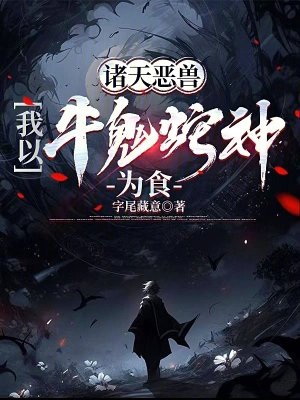
Beasts of the Myriad Heavens: I Feed on Monsters and Demons
诸天恶兽,我以牛鬼蛇神为食
- Status
- Completed
- Length
- 1.5M Words
- Subgenre
- Infinite Flow
- Updated
- 6mo ago
- Source
- Qidian
Stats
Tags
Synopsis
In booklists 5
Books I’ve Enjoyed Recently
Mostly books I've enjoyed recently. Every now and then, I might recommend a classic completed masterpiece. Maybe. Probably. I'm lazy, so I'll write reviews later. That's all. (I might not forget.) I just fixed this up, so don't gossip about me behind my back.
My Personal List, So I Don't Forget
If you're out of books to read, come on in and browse. There's bound to be something for you.
Books I'm Reading
Just sharing.

The New Novel Collection: All Kinds of Genres
There’s nothing more frustrating than running out of books to read. These are books I dug up from the vast sea of fiction and found readable. I’m looking for promising new authors. I’ve read way too many books. I generally don’t recommend books that everyone already knows about. Mostly, I’m looking for good new talent. Primarily science fiction and urban fiction. Updated irregularly. If I find a good book, I’ll add it. They’re all very young seedlings. I’ll also add works I find interest

Personal Data Backup for 2025
Books I like or want to read, rated out of 10 Below 5: not recommended; 6: decent page-turners; 7: distinctive; 8: favorites; 9: classics
Readers also read
 Marvel: The Multiverse Protagonists' Apartment
 Infinite Terror: I Come from Kunxu
 Simultaneous Transmigration: It Begins with Mysterious Revival!
 Covering the Sky: Sacrifice to the Yellow Sky in One Life
 A Record of a Mortal's Journey to Immortality: I Earn Immortality by Grinding Achievements for Rewards
 Martial Arts Through Evil-Eating, Exorcising Demons Across the Myriad Worlds
 Starting a Folk Horror Game with the Filthy Organ Technique
 Lord Evolution
 A Record of a Mortal's Journey to Immortality: Choosing Hextech in the Chaotic Star Sea
 The Origin Player
 Bodhisattva, Please Help Me Cultivate!
 Infinite: Starting as a Spy in Other Dimensions
Reader comments 50
Google Translate
A more classical knight-errant protagonist. Assuming that this is a unit drama, then the performance of the protagonist of each unit drama is very good. But if the unit dramas are connected together, it actually seems a bit visual fatigue. In addition, in fact, the protagonist has never had a goal at the current stage. Basically, things come to the protagonist. The protagonist doesn't see it and needs to be killed or saved. But there are actually some central themes missing. [What is the protagonist's current goal? What are the plans for this? After reading three volumes, I don't even know what the protagonist likes to eat, what he likes to watch, what he likes to play, what hobbies he has, and what his personal relationships are. Nothing. This is a very classic, very chivalrous, and very desperate template shell character. To put it more seriously, he is not like a human being, like some kind of triggering mechanism, with more mechanical and divine nature. In other words, the protagonist is more like a tool for the author to serve certain plots. The second problem is that the current plot is very deliberately arranged after being separated from the mission requirements. Of course I knew there was a foreshadowing, and it was revealed very quickly. But it is like a black cloth that has been covered on a stage play. It cannot even be placed behind the scenes. It must be unveiled at a certain stage when the plot transitions. But the black cloth itself concealed the surprise. The third problem is that it is good that the supporting characters have their own personalities, but they have no characteristics. These special diagnoses are not limited to [mouth habits, hair color, behavior, equipment, clothing]. For example, in Bai Yan at the end of the current volume, the appearance of the monster race that is different from ordinary people was mentioned, but it was never mentioned again in the subsequent plot. There are other characters. The author likes to describe part of the body, especially when they appear, but rarely describes the characteristics. These keywords are a very important part in reading novels. Otherwise, readers will not be able to distinguish the differences between characters just by their names. Writing this, I don't even know what the protagonist looks like. Does he have a crew cut or a buzz cut or bangs, what is his eye shape, thin lips or thick lips, a high nose bridge or a flat nose bridge, thin eyebrows or thick eyebrows, etc. There needs to be some perspectives from other characters to simply highlight some features. The fourth question, does the protagonist say 25 less now? It's really not appropriate to call him a boy again. And those [girls] in their twenties. Although my brother is now in his twenties, for many readers, anyone over 20 can be called Yujie. The fifth question is that the main force in disputes in this world should not be given to the protagonist. In particular, Bai Yan mentioned a very crucial piece of information, [It took him twenty or thirty years of practice to reach level three, and it takes two or three years for a human to walk to reach level three]. Then, there should be a large number of people walking in this world. No matter how many monsters and monsters there are, there must always be personnel left behind at the headquarters. It would be too weird for a third-level cultist to walk in and attack him. There are too many background conditions, making this plot even more bizarre. The sixth question is, what do you say about the cult? Several characters work for merit. Then working for the government is also rewarding, so why do you have to work for a cult? And he also took great pains to kill a Luan guest who had just climbed up the ranks. This is the headquarters. If you swagger in, anything you do can cause chaos in the headquarters, unless you kill someone. What does this mean? No matter how high-end or rubbish the villain is, if you want to make people sacrifice their lives, profits alone are definitely not enough. What benefits are better than those given by the official? Especially the setting of cause and effect points. There must be a conflict, or some conflict worthy of the believer's life. The protagonist does not need to know, but from the perspective of a cultist, he must know. The seventh question, I have never understood the setting of [Heavens], such as Jamfu, Walking, and Luyin. To be honest, there are too many proper nouns. I just chewed through the beginning. This kind of threshold for screening readers should be set as little as possible. The eighth question, what exactly are the heavens? Why can [walking] only appear in this world? Are the heavens a kind of [script world]? Like infinite horror? Why can't [walking] appear in those worlds in the heavens? Are these worlds real? Just like the protagonist encounters Xun Yu in the Southern Han Dynasty, can other characters walking into the same world also encounter him? Are these supporting characters not [unique]? Become a [Usser], can you become the only Yu? Otherwise, if other Xun and Yu in the Southern Han world also became tyrants, would things be in chaos? To be honest, I actually quite like this type of novel, but I can't stand it. Especially these questions will always be asked in my mind. Ninth Question In the Southern Han Dynasty, there are many times when the perspective will suddenly be pulled to the field of view of a certain minor character. This is a good thing. Many great masters like to use it. In this way, when the protagonist appears, the overall situation and the character design of the minor character will be more complete, and it can increase the protagonist's personality. This trick is easy to use. But the problem is how to cut the perspective to the minor character. The transition in between is very important. You can't be with the protagonist in the front and suddenly pass in the back. For example, if the protagonist gets on the ghost car, you have to mention where the destination is and what the protagonist is going to do there, and then switch [location, time] to see what the xx character is doing. And this transition cannot be placed at the end of the chapter or the beginning of the chapter, as it will make your eyes dark when you follow it. Also, you can't use this method all the time, it will get boring, and there are only so many templates, and it will be repetitive if you keep using it. The tenth question is, what level is the current team? The entire official system actually needs to be reviewed when it is first recruited. Moreover, before joining this special branch, there must be a ceremony. For example, you need to go to the capital, and then visit the real [National Special Branch Headquarters] to understand the history since the emergence of [Walking], understand the current status of this department in the country, what major events there are, and what the entire world is like. It is best to set a time and hold a meeting regularly for orientation and presentation. Especially the preaching of some behavioral restraints, [walking] manuals and the like, you can not use them, but you can't live without them. The protagonist's joining the job is not like entering the officialdom and receiving official salary, but rather like joining some mercenary group. There are many, many details that I can't remember at the moment. This book is like a meal of dumplings. They are all good, and the boiled ones are healthy, but they are too simple and monotonous. They are good for occasional consumption, but not good for banquets. However, when the same ingredients are used to make white flour snacks, they are completely different. Now it's 350,000 words. Let me look at the back. After all, there is an outline, and more than half of the authors can finish it.
I finally know where the problem is with the reality chapter. The reality chapter is more tiring than reading the dungeon. What happens in the dungeon can be solved by killing. There are many things in reality that cannot be solved in reality. I feel emotional and tired when I read it. I want to escape and quit this book.
Is this the promise you made before?
Who made the promise before that the real-life chapters were not good enough and that the real-life chapters would be reduced and the focus would be on the feeling of pleasure, and then that's it? Are you trying to crush all the managers of a company or branch, and then write a dozen or so chapters of a real-life story with no end in sight? Do you still want to get good grades? Do you really think the reality articles you wrote are good?
Briefly rate this book
Let's talk about the benchmark works first: Earth Evil, Monster Killing, Infinite Brilliance Picture Scroll, Guhuo Bird Zhutianliu|Righteous Protagonist About the system of the gods in this book: It's a bit [disordered]. There are many novel settings, but due to the rapid growth of the protagonist, there is little time to practice, so the props in the early stage are easy to be fleeting. About the telling of the story: The main question arises here. I can understand what the author wants to say and what he wants to write. But. I have a hard time empathizing. . Even some of the descriptions are too laborious and half written and half white. (As a result, I skipped reading some of the narratives, because sometimes I felt awkward.) Of course, it is based on a book I read before. (I won't mention the title of the book.) I think the author has two ways out. The story is simple and the routine is straightforward but clear enough; no matter how complicated the story is, good and evil can be unequal, and people can be chaotic, but it must be vivid. The most embarrassing thing about the current situation is that the author does not have enough writing power to tell the story deeply into people's hearts. Taking the Southern Han Dynasty in the second world as an example, the author focuses on describing the misery of the people, but there is an extremely lack of description of the villains. Are military men evil? Yes, killing good people and taking merit. But it's not enough. The villain treats human life as nothing, is arrogant and contemptuous, and it all looks very cliché! The whole process is about the bloody cannibalism of demons and ghosts. The complex skills occupy a lot of the senses. As for the upper level of the evil people, the way of eating people, the purpose of eating people, the evil people's big wishes and ideals (exaggerated description, not to talk about hardships, but to talk about "human nature", greed, ignorance, anger, and breaking defenses are also a fun part), nothing, nothing. It's just that the balance between good and evil is unbalanced and a deus ex machina is created. It's not cool enough to insert Bai's plot here. . The characters are a bit fleshed out, but for such a scumbag, it would be more professional to let him watch the destiny he weaved return to the original track, and the dream shattered into nothing. Tear points, redemption, justice execution. I feel that the protagonist has no ideas of his own. At best, he has the empathy of a normal human being, sympathy, compassion, anger... But, knowing his true nature, why did I do this? What kind of world do I want to see? What should I do for this? This is something worth thinking about. The setting of Qiqing is interesting, but is there no concept? The beginning and development of emotions will produce different "desires" for different reasons. This is what I think is missing... Of course, the author may explain it later Continue talking about people. Miserable, each in their own way. It feels abrupt. Yes, human nature has its cowardice, numbness, and bloody nature. But the blood has always been there, and she died a long time ago... So about the last woman, I can't quite accept this explanation (it's not that I don't believe in the power of names... There are too many words. In short, my writing skills are not enough to practice, and the scope of the narrative can be narrowed... I wrote it as a writing guide, sorry... The long comment is just for a laugh... Come on, author)
It's really unpleasant to be sent to a place where you will die by one of your own. No matter how you deal with it later or whatever the reason is, it's just unpleasant.
It's okay if the official story fails once or twice, but if it happens more, it seems that the official story is too useless. The key point is that your writing is very good, but when something happens (with the protagonist around) it becomes useless. There is no need to watch a plot where the protagonist can only survive by himself.
Welcome everyone who clicked on this book. Here are some questions about this book.
1. The world in this book is basically original. Only a few worldviews similar to Journey to the West draw on famous works. 2. The first story in this book, the digitization and description of props, is laid out to serve the protagonist in defeating the strong with the weak, and it is a special start. What follows is a story-driven development that takes light on data. 3. The style of this volume [Southern Han Dynasty] is basically the main style of this book. The subsequent world is also in a similar style, with a sense of evil and chivalry. It is demonized and strange based on a historical node such as the Republic of China, the late Qing Dynasty, the Tang and Song Dynasties, the Spring and Autumn Period, etc., Or a team battle map is created. Of course, in addition to ancient versions, there will also be modern versions and future versions. If you read the volume "The Sword Cleanses the Southern Han Dynasty", you can make a preliminary judgment as to whether this book is for you. 4. The heavens and worlds I want to write are not simply copies, but can be connected through the main thread of reality. The past is not the past. What I want to tell is to make people feel that everything and everyone along the protagonist's journey has the meaning of his appearance. This point, or this style, I will also show in the third volume "The Sword Washes the Southern Han Dynasty", which is the first copy in the true sense. 5. Original creation is not easy, and original creation is the leader of Liangmen. I knew it before I started writing, but I still wanted to give it a try, because only originality can show the world I want to show in Article 4. If it appeals to you, please stop reading and keep reading~! Thank you for the above, stay and go as you please, good books will always be with you.
It's getting more and more boring. The reality is suppressed. The villains are jumping more and more happily. Their abilities are not low. What's the point of suppressing it? On the contrary, it limits the official's own people.
Seeing the front of Daqin Heavy Industry, I just want to say that the protagonist, an official monk, lives like a casual cultivator. The protagonist is a son of a good family. From the beginning, the author himself said that loyalty is not absolute, but it is absolutely unfaithful. He concealed his talents and Jiuli Ding at the beginning. It can be said that he just joined and waited. The protagonist behind the Bai family incident was very moved, and then continued to conceal the gains of the Southern Han Dynasty. At this point, I don't understand. Is any of the protagonist's harvests shameful? He is afraid that the authorities will forcibly confiscate them. If the authorities really do this, they can only say that they are taking jujube pills. The result of concealing it is the protagonist's knowledge of breaking through the situation. The direction of progress depends entirely on self-perception. Occasionally, you will make rapid progress if you are reminded by the official seniors. Why did you go there earlier? Another consequence is that the protagonist gets a lot of good things, but doesn't know how to use them. The most obvious one is the Ghost Golden Sheep, which is completely useless before you understand the soul. After you understand it, you will have a physical breakthrough, but in the end you have to bear the karma and enter the Great Qin, which is a trap. There are also talents with bad roots. It feels wrong to get Zhuoxian in the Southern Han Dynasty, because Zhuoxian is restricting the bad roots. In this case, isn't the most appropriate thing to do is to ask the official seniors about the hidden dangers? But the protagonist didn't do anything, and the bad roots are not something that can't be seen in the light. Their origins can be traced, so why should they be hidden? If the protagonist truly regards himself as an official, he will feel stronger and progress more smoothly. It can only be said that the protagonist lives his life as a casual cultivator. Another thing that makes people speechless is the Lu Yin mission. From the forum posts, we can know that as long as the mission is successfully completed, there will be no problem and there will be spiritual pets. In the first copy, Li Jing kills General Yin, and the protagonist obtains the Millennium Demon Heart, so the Lu Yin mission can be completed by others, but the protagonist does not say it. Officials will help him complete the mission if they know about it. After all, he does not want to go crazy with a traveler, or the Golden Crow will be resurrected.
What is reality writing? Is the literary youth suffering from a disease? I'm here to see you happy and grudges, not to see all kinds of losers.