


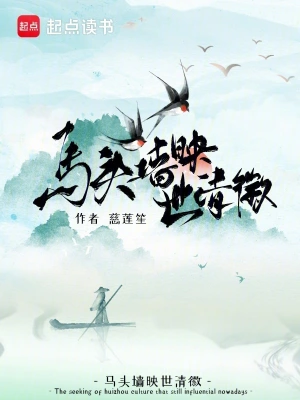
Horsehead Walls Reflect the Pure Elegance of the Age
马头墙映世清徽
- Status
- Completed
- Length
- 371k Words
- Genre
- Ancient Romance
- Subgenre
- Transmigration Romance
- Updated
- 10mo ago
- Source
- Qidian
Stats
116Chapters
0Votes
149.9kRecs
36.8kFans
Tags
Synopsis
More by this author
 Born Like a Star: Cloud Movement
 Born Like a Star: Four Seas
 Born Like a Star: Stepping on the Snow
 Born Like a Star: Soar
 Born Like a Star: Rush To
 Warm Sunshine in Snow Season
 Ruoxin Ruoxian
 Good Times and Good Times
 Water Moon Gold Essence
 New Moon and Spring
 The Prosperous Age of Qingzhu in Haiyan River
 Qi Gives Birth to All Things
In booklists 1
Readers also read
 Longing for Spring’s Return
 Good Things Come to Those Who Wait
 The Beauty I Yearn For
 I Became the Worst Mother-in-Law
 A Good-for-Nothing Cultivator Contracts an Ancestral Dragon from the Start
 Wasteland: The Three-Star Sanxingdui Toddler Is Overpowered
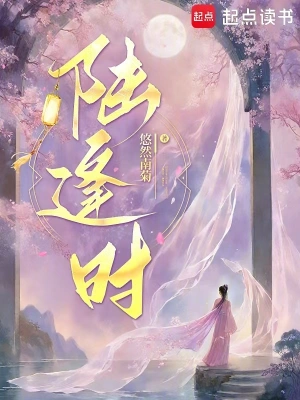 Lu Fengshi
 Midas Touch
 After Seeing the On-Screen Comments, the White Lotus Junior Sister Leaves the Whole Sect in Tears
 In the Tenth Year of Disaster, Come Farm with Me
 The Seeker of Lost Kin
 Adding Fragrance to Brocade
 Forging Youth in a Golden Age
 Clouds Roll, Breezes Ease
 When the Glitz Fades, the Young Man Returns
 Peace Under Heaven, Clear Skies Through the Seasons
 Azure Luo, Serene Scenery
 After the Rain Clears, Colors Fill the Sky and the District Shines
 Spring Rain, Summer Flowers
 Clear Water Welcomes the Sails
Reader comments 29
Google Translate
Huizhou back then
In 2016, I went on a school study tour to Huizhou, and I realized that ink painting in Jiangnan is also Jiangnan. The writing back then was childish and clumsy, but looking back, the emotions are quite different from today. Later, I visited Huangshan City again because of several regrets... Later, I asked about Huizhou in history for the sake of the script. Finally I have this book "The Horse Head Wall Reflects the Qing Hui in the World"
[Ma Tou Wall April Interaction] Personal Statistics Post
Diligence can make up for the shortcomings, and one step can make a thousand miles.
Ma Tou Wall Comment Activity
Huizhou culture, in addition to the four carvings of Huizhou: stone carving, brick carving, wood carving and bamboo carving. The Four Treasures of Huizhou: Hui ink, She inkstone, rice paper, and Hui pen. The Huizhou architecture with blue bricks, small tiles, horse-head walls, and hanging lattice windows in the cloister is a self-contained whole. The Huizhou architecture with blue tiles and white walls is elegant and unified. Even people who don't understand architecture will be impressed by the row upon row of Huizhou buildings. Ma Tou Wall, also known as wind and fire wall, fire wall, fire sealing wall, is an important feature of Gan style architecture and Hui style architecture, and plays an important role in Jiangyou folk residences. Horse-head wall refers specifically to the wall that is higher than the two gabled roofs, that is, the top part of the gable wall. Because its shape resembles a horse's head, it is called "horse-head wall". The "horse head" on the horse head wall is usually in the "gold seal style" or "Chao Hut style", which shows the owner's pursuit of the ideal of "study and becoming an official". The horse, among many animals, can be called a mascot. In ancient China, "one horse takes the lead, succeeds, and makes great contributions." As the so-called white walls, black tiles, horse head walls, cornices and lattice windows with raised corners.
Ma Tou Wall Comment Activity
As expected of a big boss, Golden Alliance's new book is really great. After reading it, I feel that the author has a strong cultural heritage, a very broad range of knowledge, and a very in-depth understanding and research of various intangible cultures and Huizhou culture. I was really shocked when I saw the titles of each chapter. The titles of each chapter are very beautiful, neatly contrasted, and rhyme, just like ancient poems. The key point is not just written casually, it is a high-level summary and concentration of the content of this chapter, and it also creates a special artistic conception. It feels like reading the titles of each chapter in conjunction, it is a long ancient poem with a far-reaching artistic conception, fragrant and fresh fragrance, so awesome! And the author's ability to control words is also quite strong. In the main text, he always describes a complete picture with just a few strokes, making many sentences very beautiful and moving, which is rare in online novels. This shows that the author put a lot of thought into polishing it to achieve this effect. I didn't even find a single typo in the entire text. When reading this book, there is always an immersive feeling. The author really knows all kinds of life and culture in ancient times very well, just like an ancient person who has traveled through time and told us slowly.
Ma Tou Wall Comment Activity
"The Horse Head Wall Reflects the Qing Emblem of the World" is another masterpiece by Cilian Shengda. "The Horse Head Wall Reflects the Qing Hui" is based on Huizhou culture. It tells the story of the modern female supervisor Yin and the male protagonist Cheng Heng who accidentally traveled to ancient times and became the female husband and teacher. They helped each other and had a cultural exchange with ancient times using modern thinking. The novel tells a gripping story through delicate writing and also displays strong cultural elements, making readers feel as if they are among the mountains and rivers of Huizhou. The background of the novel is set in Huizhou, a place full of cultural heritage and historical inheritance. The various elements of Huizhou make people immerse themselves in the same period. Huizhou is famous for its unique natural scenery and rich cultural heritage, such as Huizhou opera, Huizhou carvings, rice paper production and other intangible cultural heritages. Through the display of these cultural heritages, readers can gain an in-depth understanding of the profound heritage of Huizhou culture during the reading process, especially Huizhou's customs, intangible cultural heritage, admiration for learning, opera and cultural exchanges, etc. Are vividly displayed.
Huangshan Story
In the early morning, I set foot on the stone steps of Huangshan Mountain. The mist is lingering, the pine shadows are whirling, and the distant peaks are looming. As we climbed all the way, our clothes were soaked with sweat, but the coolness in the mountains was refreshing. At noon, we took a short rest at Guangmingding, ate the dry food we brought with us, and looked at the rolling sea of clouds. In the afternoon, I walked down the steep trail and occasionally passed by porters. They carried heavy loads on their shoulders and walked steadily. In the evening, I returned to the foot of the mountain. My legs were sore, but my heart was full of satisfaction. The beauty of Huangshan lies in its authenticity and magnificence, without any modification.
The 98th anniversary of the founding of the Chinese People's Liberation Army
𝟮𝟬𝟮𝟱.𝟖.𝟎𝟏|Army Day. The mountains and rivers are safe and sound. I am grateful to have you.
[Huiyun enters Beijing]
The Hui Troupe came to Beijing. What is the "Hui Troupe"? As the name suggests, it is a theater troupe of Hui people. The four major Anhui troupes are collectively known as the four famous Anhui troupes that were active in Beijing theater circles during the Qianlong period of the Qing Dynasty: Sanqing, Sixi, Hechun and Chuntai. "Axis" means that the Sanqing troupe is good at performing the whole drama from beginning to end. "Ququ" refers to Kun Opera, which means that Sixi Troupe is good at performing Kun Opera repertoire. "Children" refers to child actors, which means that the actors in the spring stage troupe are mainly young people and are full of vitality. "Ba Zi" refers to martial arts, which means that the martial arts in Hechun Troupe is popular and the most popular. The earliest Anhui troupe was established by Cao Wenqian, a native of Xiongcun, Shexian County and former minister of the Qing Dynasty, in the 42nd year of Qianlong's reign (1777) in the Qing Dynasty. He established the "Hua Lian Troupe" in order to entertain his mother. At first, it mainly trained child actors and sang Kun opera. Later, it recruited famous actors, mainly singing Anhui opera. On the 80th birthday of Emperor Qianlong in the fifty-fifth year of the Qianlong reign of the Qing Dynasty (1790), the court held a celebration. Cao Wenqi changed the name of "Hualian Class" to "Qingshengban" (which means celebrating peace). He led a troupe to Beijing to perform in the palace for two days and two nights. The repertoire included "Seven Flooded Armies", "Odd Double Club", "Havoc in the Heavenly Palace", "Phoenix Mountain", "Water Overflowing the Golden Mountain", "Run the City", etc. He was highly praised for his superb acting skills. Emperor Qianlong and his concubines watched from the attic and rewarded the actors. Since then, the reputation of Hui opera has become so great that it has attracted the "four major Anhui opera troupes" to come to Beijing one after another. In the fifty-fifth year of the Qianlong reign of the Qing Dynasty (1790), in order to celebrate the birthday of Emperor Gaozong Hongli, the "Three Celebrations" Hui Troupe with the famous opera artist Gao Langting as the mainstay was recruited from Yangzhou to Beijing, which became the beginning of the Hui Troupe's entry into Beijing. Since then, Anhui troupes such as Sixi, Qixiu, Nicui, Hechun, and Chuntai have come to Beijing one after another. During the performance, the six classes gradually merged into the four famous Anhui classes of Sanqing, Sixi, Chuntai and Hechun. At that time, it was a period when local operas were booming and fine arts were competing for success. Some emerging local operas, such as Gaoqiang (then called Beijing Opera) and Qinqiang, had already flowed into Beijing. On the basis of its original ability to sing a variety of operas, Hui Troupe has also integrated Beijing and Qin operas, especially absorbing the essence of Qin opera in all aspects of repertoire, vocals and performances to enrich itself. At the same time, adapting to the diverse needs of the Beijing audience and giving full play to the strengths of the actors in each class, the four major Huizhou troupes gradually formed their own different artistic styles, which are as follows: "The axis of Sanqing (referring to the Sanqing troupe's reputation for performing the entire drama in succession); The tunes of Sixi (referring to the Sixi troupe's reputation for singing Kunqu opera); The tricks of Hechun (referring to winning by being good at performing martial arts); The children of Chuntai (referring to the outstanding child actors)". The situation emerged that "the four Hui classes are each good at winning" (according to "Menghua Suobu"). During the Jiaqing and Daoguang years, Han Tiao (also known as Chu Tiao) artists came to Beijing to participate in Hui Troupe performances. The Hui Troupe also learned from Chu tunes, laying the foundation for the integration of Erhuang, Xipi, Kun and Qin tunes into Peking Opera. Therefore, the arrival of the "four major Anhui troupes" in Beijing is regarded as the prelude to the birth of Peking Opera and is of great significance in the history of Peking Opera development. In the second year of Xuantong in the late Qing Dynasty (1910), the "four major Anhui classes" had been scattered one after another
Reminder
May ends and pigeons fly to June, traveling around every three days. Although update notices have been released, the implementation rate is extremely low. Damn, the pigeon spirit is reincarnated? If you don't update this month, you'll need more, I'm telling you!
Destroy the Son of God Again
Destroy another Son of God