
Ming Dynasty: Chongzhen Did Nothing
大明:崇祯不作为
- Status
- Ongoing
- Length
- 662k Words
- Genre
- Historical
- Audience
- Male
- Subgenre
- Song-Yuan-Ming Dynasties
- Updated
- 1y ago
- Source
- Qidian
Stats
0Monthly votes
6.2kRecommends
19kFans
206Chapters
Tags
Synopsis
Reader comments
Readers also read
 After Lying in Bed for Three Years, He Was Forced to Help the Han Dynasty
 Red Mansion: Start Escaping and Farming from the Equipment Bar
 Fu Ming 1627
 Northern Qi, Sage Khan
 Siheyuan: Start by Picking up Attributes
 Taichang Daming
 Chongzhen: I Will Operate in Reverse and Revitalize the Ming Dynasty
 Immortal Who Seizes the Body
 Devouring the Starry Sky: Infinite Opportunities to Hoard Treasures at the Beginning
 What's Wrong with Me, Zhu Changluo, Being a Bit Shabby?
 Daming: Moral Kidnapping? I, Chongzhen, Have No Morals!
 Tianqi: My Teacher Is a Mechanical Pioneer
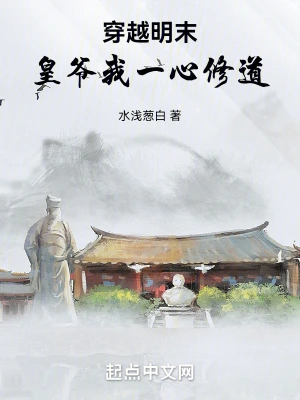 Traveling Through the Late Ming Dynasty: Your Majesty, I Am Devoted to Cultivating Taoism
 I Am Really Not a Great Teacher!
A water pump can be built without a sealing ring. It is estimated that one generation will be on the moon in less than ten years and out of the Milky Way in 30 years.
If you dare to chop off the heads of the royal family members, the common people will dare to chop off your heads.
It is the first time that beheading is used, and the punishment is clearly explained, and the royal family members are killed in front of people watching. This is such a mindless novel.
Shouldn't Zhou Kui be dealt with severely? They are both conferring official positions and giving benefits. Historical records state that Zhou Kui betrayed his grandson and even invaded the palace without making any donations.
It's confusing why the Ming army was not satisfied with their pay but was invincible when fully paid. Do you know the pay gap between the Ming and Qing Dynasties? The infantrymen of the Ming border army were paid 1 tael of silver per month, and the cavalry army was paid 1.5 Taels per month. The infantry of the Qing soldiers were paid 2 taels of silver per month, the horse soldiers were paid 2.5 Taels of silver per month, and the white-armored soldiers were paid 3 taels of silver. And it was stipulated that the Ming army who surrendered would immediately be given eight sheep, one donkey, 30 acres of land, and a wife. How do you compare?
A group of people write about Chongzhen, but isn't he the number one war criminal? A group of people talk about the difficulty of returning because they are all excuses. If they don't talk about anything else, they just talk about Xianfeng. If Chongzhen came to Xianfeng, the two crows of the Qing Dynasty would have perished.
It seems that the author doesn't know much about the history of the late Ming Dynasty. The Southwest Chieftain Rebellion started from the second year of Tianqi to the second year of Chongzhen, with millions of casualties and spread to four provinces. Didn't you even mention it? The two hundred thousand sects in the world who eat the emperor's food can be ignored? The extreme weather of the Little Ice Age, poor harvests, and land annexation by local classes, are these all harmless scabies diseases? In this dungeon at the end of the Ming Dynasty, a real tycoon like Chongzhen in history had more than fifty CEOs in more than ten years. A high-ranking person like Yuan Dudu was killed as soon as he was told, and he still worked like a cow and a horse every day. Even this could overturn the situation. The difficulty level is considered to be hellish.
Are you still bragging about the low tax clearance?
First of all, I would like to emphasize that the Qing Dynasty never really completed the task of apportioning people into acres, and there was always an increase in new taxes and taxes such as "people's corvee". Moreover, the royal family of the Qing Dynasty in the north and the nobles of Manchu and Mongolia also often sent out ancient corvee tasks. Dividing a small amount into an acre is essentially a simplified tax base determination standard to reduce collection costs. Let the land produce materials as hard currency to bear the tax payment of all people. Incorporate taxes on labor, corvee, specific products or skilled services that once belonged to different groups of people, and then let the market adjust pricing. It is an indirect taxation, not an exemption. To achieve this, in the era before the mid-Qing Dynasty, even the basic technical conditions were not met. The head tax in the form of pure currency was not actually popular for a long time in Chinese history, because the general equivalents in most dynasties were not as developed as copper coins in the heyday of Qin and Han Dynasties. Therefore, it is not always possible to form a monetized market for taxes and corvees. Under the pressure of high-intensity national defense all year round, most dynasties in China needed more direct corvee collection in the absence of a monetized labor market and a monetized food market. However, due to insufficient computing power, in the later stages, the direct collection and conversion of Ding corvee labor will be very uneven. In the Qing Dynasty, the allocation of people to acres only solved the problem of direct imbalance, but could not solve the problem of indirect imbalance. And the price is an overall tax increase. Subsequently, new taxes were continuously added and new labor tasks were assigned. Although it has incorporated the exorbitant taxes and miscellaneous taxes in the late Ming Dynasty into the regular taxes. Of course, the most outrageous thing is that in the Qing Dynasty, there were always conscripts who directly conscripted manpower to work for free. Note that the essence of dividing land into acres is to integrate land tax, servants and land tax into one, forming "everything comes from land tax". This is Zhang Juzheng's "one whip method". So, when officials and gentry work together, it means double taxation - because everyone has already paid, and they are "divided into acres". If the government still has servants, it can pay to hire people to do them. However, the actual situation is: the government at that time often did not hire people according to the market price, but only hired people according to the official price. For example: In the 16th year of Kangxi, the market price of river workers was four taels of silver per month, but the governor of the river channel only offered one or two taels of silver per month, which caused a large number of river workers to flee. What should I do if I can't hire anyone? Then the local gentry would be levied an additional sum of money to make up the difference. Regardless of the Ming and Qing Dynasties, land taxes were not exempted and gentry had to pay them. During the Qianlong Dynasty of the Qing Dynasty, Li Tiaoyuan (third grade) from Sichuan studied politics in Guangdong. He also paid the land tax in his hometown in Sichuan honestly. In the Qing Dynasty, the items such as land tax, servants, and dingyin were gradually integrated into one, forming a real whipping method that all came from land tax. ——"From the Enlightenment of One Whip Law to the Clearing of One Whip Law", "Journal of the Graduate School of the Chinese Academy of Social Sciences" 1993 In other words, the Qing government now folded the Ding corvee silver that originally provided gentry preferential exemptions into the Tian Fu, which was equivalent to virtually canceling the preferential exemptions. Okay, now that every acre has been spread, the local government should spend its own money to hire people to build bridges and pave roads, instead of continuing to recruit people to work for free. The background of Tian Wenjing's implementation of "official and gentry integration" was that he wanted to renovate the Yellow River, and renovating the Yellow River urgently needed manpower and civilian men. As early as the Kangxi Dynasty, river workers in Henan had been converted to recruitment due to the large number of forcibly recruited civilians who fled. The stipulation was 2 taels of silver per month. However, Jin Fu, the governor of the river at that time, felt that the burden of 2 taels of silver was too heavy, so it was only implemented for one year and was changed to 1.2 Taels of silver per month in the 17th year of Kangxi. At that time, how much was the market price for a peasant to hire someone to work on the river for him? 4 taels of silver. In other words, during the Kangxi period, although the court hired servants, the wages actually paid were far lower than the market price. So, how much money did Tian Wenjing pay? According to the standard for river construction in the 17th year of Kangxi's reign: one or two taels of silver. According to relevant historical data, because Jin Fu lowered wages, the civilian workers on the river workers also fled in large numbers. Soon, Tian Wenjing required all landowners with land on both sides of the Yellow River to provide at least one man to work on the river, regardless of whether they had at least one and a half hectares of land. This also means that Tian Wenjing passed on the risk of civilians fleeing due to "low income" to the landlords. But whether the husband of the people fled, anyway, as a landlord, he must have a husband. If he fled, he would have to give me another husband. What should these landlords do to prevent the peasants (their tenants) from fleeing? You can only pay the laborers according to the market price, and it is even possible that you have to advance the wages of the laborers yourself. Even if we calculate based on the hiring price in the 17th year of Kangxi's reign: 4-1.2=2.8 That is to say, under the background of "sharing a small family into an acre", the landlords need to pay at least an additional 2.8 Taels of silver. Is 2.8 Taels a lot of silver? According to research by Professor Dai Yi, a master of Qing history, during the Qianlong period, a medium farmer (50 acres of land?) Earned 32 taels of silver a year, but his annual expenses were between 30-35 taels. The river worker's wages of 4 taels of silver refers to each month.
The best way for a time traveler to save the Ming Dynasty is to directly travel to become Huang Taiji. Don't worry, the Manchus will not be able to enter the pass.
Test poison, system text, slipped away.
Can this be saved?
The Chongzhen period was so bad that even God could not save it, and it would be even harder than reopening it. Even if Chongzhen himself rebelled and started over again, it would be easier than saving the Ming Dynasty. There are all kinds of monsters and monsters in the court, the army is rotten, the finance is rotten, and the society is rotten. If you want to do things, you can only have endless quarrels and dragging your feet, plus a bunch of moles. If you still have industry, if you have industry in front of you, you will be a Jurchen in the back.
Chongzhen: An emperor who perfectly avoided all the right answers. After 17 years in office, I just didn't get the answer right once. It is not difficult to save the Ming Dynasty. As long as we find ways to promote grain in 17 years, solve land annexation, official collusion, and numerous parties. Don't say it can't be promoted, after all, it's 17 years. . .
Are the natural disasters that have occurred in the Chongzhen Dynasty for more than ten years a joke? Other plagues and plagues are more serious, and the court has disasters that are a hundred times more powerful. No matter what you do, if you don't have a huge cheat, you will die.
It is unrealistic to repair railway tracks. Do you know why wood was used instead of iron in the first place? Cost is one aspect, and another aspect is that if you repair it today, someone will dare to steal it and sell it for money tomorrow. In the early days of the founding of the People's Republic of China, a large number of people stole the wires, not to mention the railroad tracks. There is also Western learning. What does Western learning have now? Arithmetic is the mother of science, and Western arithmetic is not that they look down upon them, but that they really have nothing to offer, and culture and medicine are even worse than them.
I don't even want to engage in industry even if I don't even have mathematics, physics and chemistry.
If you kill the princess, the world will only think that the emperor is unkind.
With such chaos, do you think the civil servants would not dare to kill the emperor?
The writing is neither good nor bad, just smooth. But the author himself doesn't know much about the history of the Ming Dynasty or the late Ming Dynasty. He probably came to write the book after reading a few novels about the Ming Dynasty and the Ming Dynasty.
The novel about time travel and becoming Emperor Chongzhen has been completely broken a long time ago, right? Emperor Chongzhen destroyed the Qing Dynasty thousands of times
This kind of subject matter has long been completely written down. . . . . . I've read at least a few hundred books since time travel to Chongzhen and the destruction of the Qing Dynasty.