


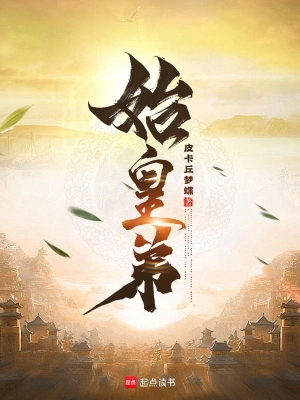
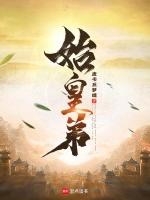
The First Emperor's Younger Brother
始皇弟
- Status
- Completed
- Length
- 1.4M Words
- Genre
- Historical
- Subgenre
- Qin-Han & Three Kingdoms
- Updated
- 1y ago
- Source
- Qidian
Stats
369Chapters
0Votes
82.9kRecs
217.7kFans
Tags
Synopsis
More by this author
In booklists 2
A Record of the Books I've Read Over the Years
Invincible protagonists, fanfiction, well-written stories, and a few slice-of-life ramblings
10Books2Follows1yUpdated
Personal Taste: All Great Reads, Come Check Them Out (*Σ´∀`)σ
Come on in, honored guest, and have some fun~ Please send flowers, leave a good review, and follow me. (Get to know a veteran bookworm!) Main genres 🎉 entertainment, cultivation, historical fiction, fan fiction, and light novels [Once the likes hit 500, I’ll pin the list again] These are all books I personally like, and every one is definitely worth reading. (The recommended books are all good. I’ll update the list whenever I’m in the mood.) Five stars is the maximum ⭐⭐⭐⭐⭐ Boohoo, I’m a little s
45Books132Follows1yUpdated
Readers also read
 Chronicles of the Red Mansion
 An Important Town in the Residual Tang Dynasty
 The Corpse Plague of 1916
 In the Ming Dynasty, the Days When the Cows and Horses Turned Over
 Simultaneous Transmigration: Becoming a Legend Before the Story Begins
 In the Sixth Year of Zhenguan, Shimin Was Still Awake
 The Ming Dynasty's First Brother-in-Law
 Starting with Saving Manchester United
 Myriad Worlds: Starting with Darkest Dungeon
 In the Hongwu Era, Starting Out as a Rebel
 Naruto: The Uchiha Man in His Thirties Can't Get It Up
 Great Ming: I Asked You to Die in Protest, So Why Did You Really Die?
Reader comments 38
Google Translate
I hope the author will work hard to update
Nowadays, the rules of the book review area are corrupt and traitors are everywhere. This is due to the lack of updates. If the author diligently updates 10,000 words every day, then the traitors will be afraid and retreat, and the moral gentlemen will rejoice. This is a feat worthy of praise by Yao and Shun! I have heard that calves born in sheep pens do not behave like sheep when they grow up. You are at the starting point and your computer keyboard is often used, but you have lost interest in updating it. Is this reasonable? The reason why Qidian is strong is that we have inherited the etiquette and skills of our ancestors. Stop bursting, the pressure has nowhere to release, and instead you become tired. Isn't this the same as abandoning the roots of the tree and pursuing the treetops? If this continues, great disaster will surely happen! The reason why Bai Jin can have tens of thousands of royalties and not be harmed by villains is because they are willing to listen to what upright gentlemen say. However, Poujie cannot get royalties and is even looked down upon by his girlfriend. This is because they are close to evil villains. I hope you can think carefully about the difference. There is one thing for which the author can cry bitterly, and six things for which the author can sigh. Since ancient times, when performing actions, the words are often very passionate. If they are not passionate, they will not be able to move the actor's heart. Harsh words are akin to slander. Author, you should think carefully about whether such a thing is right or wrong. Those authors who updated less, delayed, or missed updates had no time to feel sad about themselves, so they were drowned in the torrent of works, leaving only later authors to feel sad about them; later authors felt sad and did not learn from it, and future authors felt sad about it.
After reading dozens of chapters at first, I was very satisfied with it. Now, in one or two chapters, the image of Wei Zhe, who was still in the background before, has been established. In fact, not only Wei Che, but also many characters have been established. Despite the gimmicky title, this book has great potential and I'm optimistic about it.
It can only be said that it is difficult to save Qin, because Qin's problems are multifaceted First of all, in terms of officials, Qin's lower-level officials are seriously insufficient, which means that Qin's control of the lower levels is extremely weak. There is a document called "Qianling Official Records" among the Qin bamboo slips in Liye, which records in detail the absence of official officials in Qianling County during a certain period of time. During this period, the actual capacity of Qianling County was 101, and the number of people "seeing in the county court" was 51. Specifically, Ling Shi has a quota of 28 people, with no vacancies, but 10 are deputies; a miser has a quota of 10, with 2 vacancies, and 3 are vacancies; a principal has a quota of 6, with 4 vacancies; officials and assistants have a quota of 53, with 7 vacancies, and 22 are vacancies; and chief officials have a quota of 3 people, with 2 vacancies. It can be seen that, except for Lingshi, the number of other types of officials in the county is less than half of the maximum number, and the overall shortage of officials is relatively serious. At that time, all those who could read were nobles. Therefore, it was not that Qin did not dare to kill the nobles of the six countries, but it was that it could not kill them. Who would rule the world after killing them? A commoner who can't even read can't be a small official. The State of Qin itself prohibited private education. After Shang Yang's reform, talents relied on imports. Although there was a school system, it was a hereditary system. Only the sons of officials could study, and they only taught law. It was better than nothing. Secondly, in terms of political credibility, Qin'spolitical credibility has long been bankrupt due to the betrayal of the monarchs of the Qin Dynasty. During the period of Qin Xiaogong, Shang Yang invited the Wei army leader to meet with the prince Yan, but Shang Yang took the opportunity to detain the prince Yan, resulting in the Wei army being leaderless and ultimately defeated; During the period of King Huiwen of Qin, the Qin State asked Zhang Yi to cede six hundred miles of land as bait to induce King Chu Huai to sever diplomatic relations with Qi. However, when King Chu Huai and Qi State After breaking off diplomatic relations, Zhang Yi only admitted that the promised land was six miles instead of six hundred miles. This caused the relationship between Chu and Qi to break down, and was attacked by Qin; After the Battle of Changping, the Qin State besieged Handan of the State of Zhao. The State of Zhao asked the State of Wei for help. The King of Wei sent an envoy, Lord Pingyuan, to the State of Chu to ask for help. When the State of Qin learned about it, it tried to detain the Lord of Pingyuan to prevent Zhao, Wei, and Chu from joining forces to fight against Qin. Then in terms of institutions, Qin's laws were too strict and cumbersome. Although they ensured social order and state control in the short term, they greatly suppressed people's freedom and creativity, causing widespread dissatisfaction. Qin laws are very complicated and detailed, and the laws cover a wide range of areas. In a society with extremely low literacy rate, it is difficult for ordinary people to understand many legal provisions, which makes them easily fall into the dilemma of "frequently breaking the law". Law enforcers can use their legal knowledge to carry out selective enforcement and cause "legitimate harm" to the people; People dare not commit crimes" in order to consolidate autocratic rule and "use punishment to eliminate punishment". For example, Legalism advocates imposing heavy penalties on misdemeanors to intimidate others not to violate the punishment; "execute punishment in the past", that is, as long as there is a "potential criminal motive", it is equivalent to having committed a crime; The Qin Dynasty continued the joint sitting system in the Shang Yang period. People who have not committed crimes may be implicated in crimes because they have some relationship with the perpetrators. (Additional: The enforcement of the law is related to the quality of the law enforcers. Although Qin's law has advantages in some places, it may not be implemented well due to the quality of the law enforcers) Then there is the cultural aspect. Qin Chu was at the lowest end of the contempt chain at the time, and was even regarded as a barbarian in front of the other five countries. The idea of unification had just been enlightened and failed to fully penetrate into the hearts of the people.Qin did not handle cultural contradictions and unified thinking well. The State of Qi has Jixia Academy. No one would think that the State of Qi does not belong to the Central Plains culture. Zhao, Wei, and Han were split from the Jin Dynasty, and they and Qi occupy the Central Plains. The State of Yan is the only vassal state with the surname Ji among the Seven Kingdoms. Although it is located in the north, its Other vassal states cannot deny that the Yan State is not a Central Plains culture. The Chu State has always been squeezed out, and the Qin State has always been mingling with the Xirong. The bad habit of burying ministers and friends as sacrifices was only abolished during the reign of Duke Xiang of Qin. The countries outside the Pass looked at the Qin State just like the Song Dynasty people looked at the Xixia people and the Jin people. The State of Zhao has been living together with the Hu people since King Wuling of Zhao was riding and shooting in Hu clothes. The State of Yan was the only vassal state with the surname Ji, so the "Li" of Zhou had a certain status in the State of Yan. The State of Qi valued merchants, while the State of Qin placed the most emphasis on agriculture and suppressed merchants. The two sides naturally disagreed. There are also issues left over from the war. When Qin unified the world, it also directed the contradictions accumulated over hundreds of years of war in the Eastern Zhou Dynasty against itself. Not to mention that in the process of Qin's conquest of the six countries, there were many massacres of people from the six countries. For example, Bai Qi: Yique defeated the Han and Wei coalition forces and captured 240,000 heads; When attacking Wei, he captured three generals of Wei and beheaded 130,000; Fighted with Zhao general Jia Yan Throw the opponent's 20,000 prisoners into the Yellow River; attack Xingcheng, South Korea, beheading 50,000; in the battle with Zhao Jun, bury all 400,000 prisoners alive. A total of more than 450,000 Zhao Jun were beheaded and buried alive before and after this battle. There is also the problem of large-scale corvee. Qin did not choose to rest after completing the great cause of unification. Instead, it continued to squeeze the people, exacerbating people's dissatisfaction and accelerating the demise of the Qin State. The Qin State built a total of Afang Palace, Lishan Mausoleum, the Great Wall, Zhengguo Canal, Ling Canal, Tongling, Miluo River, Xingcheng Canal, Qin Canal, Pipagou, Taishan Drive, Jiuyuan Straight Road, Yang Yuexin Road, Weicheng to Changyuan Road, Kunshan to Wucheng Road, Dantu to Kuaiji Road, Danyang Road, Haiyan Road Wei Bridge, Jifa Bridge, Qinliang Road, Ge Road, Li Bing Seventh Bridge, and Haizhong Stone Bridge (some of which have not been completed yet) These seem to be a headache, let alone repairing them. This may not be the case. It is not unreasonable for Chen Sheng and Wu Guang to gather so many people at once. Finally, as for the people of Lao Qin,Qin lost the hearts of the people of Lao Qin. For the people of Lao Qin, if they destroyed the Six Kingdoms, they would definitely feel that they are superior to the people of the Six Kingdoms, but the result is that their life may not be as good as the people of the Six Kingdoms; Summary: The Qin Dynasty's system was out of date, with heavy corvee duties, failed to handle cultural differences, failed to implement unified thinking, lacked control over the grassroots, and was backward in education.
Book review
First of all, I personally feel that the title and introduction of the author's book are really attractive, because I was attracted to it. However, one thing to say is that the chapters in this book are really short. I hesitated for a long time between saving and pursuing the book before I decided to click in and take a look. Because I have read a few historical novels before, I felt that the introduction was very attractive, but some authors went off topic when writing, so I decided to read it first. Generally speaking (excluding some minor flaws), the language style of this novel, the citation of classics, and the choice of words close to the Warring States Period all give people a refreshing feeling. It is a bit surprising at first glance. After reading, although many of the vocabulary are biased towards classical Chinese, the more I read, the smoother it becomes. Judging from the content of the novel, I have also read a lot of comments. The argument is probably that since the protagonist has traveled through time and has the favor of King Qin and the support of most ministers, and has this advantage, why should I not be King of Qin? In fact, I have read many similar novels before. Introduction Everyone said that he would become a prince, but in the subsequent development, he became an emperor again. It was not bad, but as far as the Qin Dynasty was concerned, he still wanted Brother Zheng to be the emperor. And although the protagonist is a time traveler, he does have many advantages, but in fact, the protagonist is a person living in a peaceful era, and with Pure ancient people are different, as can be seen from the fact that Lu Buwei kills people and the protagonist watches people being killed and vomiting many times. I have read Chapter 60 so far. For now, the protagonist is very smart and has indeed mastered many modern things. Perhaps with continuous training, the protagonist can become a Wise King, Emperor is a bit worse, and in these more than 60 chapters, the protagonist does not want to be the King of Qin, the future First Emperor, has appeared many times. If the protagonist later becomes the Emperor, then I can only say that if the turning point is not written well, there will really be a sense of separation. As far as the current characters are concerned, the protagonist has no system, and he is not a time traveler, but omniscient and omnipotent. The young man has a very distinct personality, but he is also very smart. He often thinks that things that are too much and unexpected actually have his little plans in them. In addition, Ying Zheng, Lu Buwei, Zi Chu, etc. Also have their own personality characteristics. I can't say that I have a thorough understanding of history books, and their characters are very close to history. I can only say that the author's portrayal is really good, I like it. Excluding some negligible points, judging from the current story discovery, it is a four-star recommendation. This is my own opinion. Everyone has their own opinion. If you refute it, you are right!
Shang Yang's plan is that every Qin person is sentenced to death as soon as he is born, and his sentence can be commuted if he works hard. I suggest everyone read Shang Jun's book. If you don't read the original text of Shang Jun's book, you won't be able to imagine how there could be such an evil person.
The author unified the whole world with the strength of the Qin Dynasty. Does this conform to historical materialism?
The fairy grass delayed by the title of the book
I didn't see Shennong, so I had to come by myself. First of all, let me lament that there are too few historical articles on the starting point and the Warring States period. The first thing I thought when reading the title of the book was that it was a brainless and refreshing article written by Xiaobai. If you look closely at the plot, it is not poisonous. The behavior of the supporting characters is logically consistent with history. After reading for a long time, I discovered that the author has a very deep understanding of the historical and cultural systems of the Warring States Period and other details. The annotations made me lament my lack of talent and learning The words are easy to understand and have the characteristics of the times - "great father" (grandfather), "old Qin people", etc. Personally, I think the best one so far is the third volume, which is very novel in its description of the collision and confrontation of ideas of various schools of thought. There are also many details on the system, such as the Du Hufu used by the Qin State to mobilize troops (existing in the Shaanxi History Museum) In terms of war, it is a pity that the author does not describe much about the battlefield. Finally, I made my own decision. I personally think this book should be called "Yi Qin" I will speculate on the plot based on the ideas and change the introduction: Literary version: Yi, one means tomorrow; the other means assistant. Under the nine stone steps of Xianyang Palace, where the historian's pen hovers, half of the magnificent story is hidden. Holding a newly minted gold, silver, and bronze ruler, Prince Cheng Yu stopped his brother who was about to be crowned in front of Zhangtai Palace: "What does brother want, the territory of the Six Kingdoms, or the law of eternity?" Entertainment Edition: Many years later , Qin Shi Huang, who unified the six kingdoms, faced his younger brother Cheng Xi's strong request to continue the east and west expeditions again. He will think of the afternoon when King Qin Zhuang Xiang was critically ill... King Qin Zhuang Xiang had two sons, the eldest son Ying Zheng and the second son Ying Cheng Xi. King Zhuangxiang of Qin: Cheng Xi is smart, how can Ying Zheng compare with Cheng Xi? Xiangbang Lu Buwei: If you become a virtuous person and love the people, you will achieve a great cause of kingship. Empress Dowager Mi: Cheng Xiu attaches great importance to love. If he becomes the king, he can ensure the peace of the Chu Dynasty. All the generals: I am willing to die for the young master. King of Qi: When the young master becomes king, Qi and Qin will surely become a powerful force, and their great cause will be accomplished. The rest of the princes: Cheng Yu has the seal of the six kingdoms. If he is the king of Qin, the country will be peaceful, the people will be safe, and the world will be peaceful. Cheng Xi: I shouldn't! Being a king is too hard and tiring. Why do I have to work so hard when I can win! Ying Zheng:... Digression line For the sake of monthly votes, can the author provide some details? You said the monthly ticket is too few? The wool comes out of the sheep, which means that the author should make more updates (
Ying Zheng is indeed conservative, otherwise Hu Hai would not be needed. Humor, the charming moment of the emperor and tyrant through the ages
Fake Conservatives: Radicals are too radical, Real Conservatives: Radicals are too conservative.
What rules are there for ghost talk female channel novels?
Isn't this protagonist really afraid of being killed if he still dances like this when he's not on top? There is no person who can be the emperor Besides, power is not created out of thin air. Those forces that support the protagonist, or the forces that support Ying Zheng, cannot accept the other side If Ying Zheng and the protagonist really go down the same path, I will label you as a rules-based ghost talk female novel.