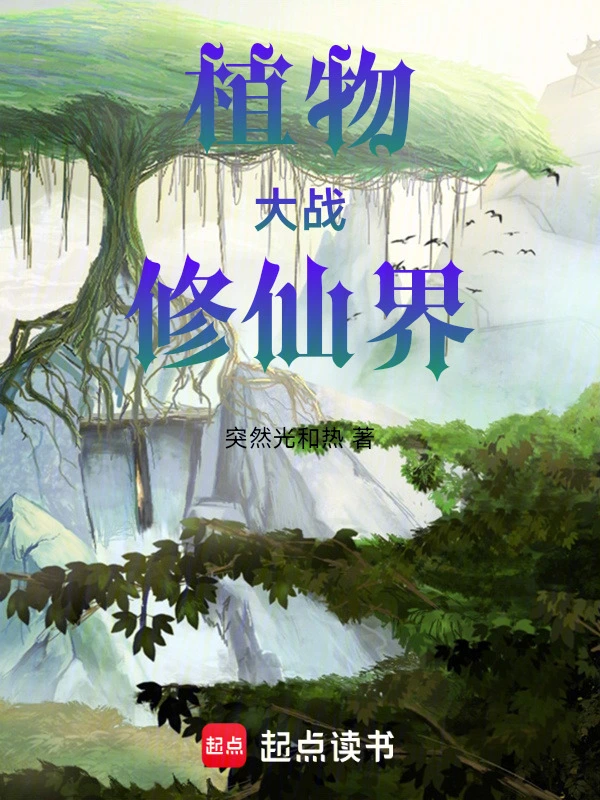
Plants Vs. Immortal Realm
植物大战修仙界
- Status
- Completed
- Length
- 991k Words
- Genre
- Cultivation
- Audience
- Male
- Subgenre
- Cultivation Civilization
- Updated
- 1y ago
- Source
- Qidian
Stats
0Monthly votes
15.9kRecommends
40kFans
285Chapters
Tags
Synopsis
Reader comments
In booklists 3
[Wanjuan Bookstore] New Books in Time Series, Updated as the Situation Arises, Tao-Based Life
Book friends who come in click follow ↹ to collect, thank you! This book is updated because the owner Shan is a person who likes Taoist Wuwei. I'm a little lazy, I just go with the flow. Water doesn't compete with all things, but all things allow it. Updates sometimes only come in three or two days! ! ! Um! The time is uncertain, just let it happen! Mainly because of laziness! I didn't have time to wave my hand, づづ─=≡Σ((( つ•̀ω•́)つdynamic light waves beep beep!!! Rolling around...~(~O ̄▽ ̄)~o...
35Books411Follows8moUpdated
Hodgepodge
Miscellaneous
68Books7Follows1yUpdated
A Donkey's Bookstore
Subscribe to the complete book yourself
17Books2Follows1yUpdated
Readers also read
 Xuanjun
 Your Magic Weapon Version Is Too Low!
 Guixuxuanji
 Immortal Travel
 Never Walk Alone!
 Cultivation of Immortality: Starting from Fu Cultivation
 Abyssal Invasion? as a Demon Cultivator, I Laughed
 Daming: Have I Become Wanli's Portable Grandfather?
 I Am Drawing a Hot-Blooded Episode in the Zhiyu Episode!
 Longevity: Start by Refreshing the Entry in Farming
 From Immortal Sect Cow Horse Gou to Qing Emperor Immortal Lord
 Earth Immortal Taoist Master Starts from Farming
 Twelve Movements of Gods
 Extremely Skilled Swordsman
 Ghost Swordsman
 It Is Better to Control Yourself Than to Control an Animal
 I Have a Wormhole to the Earth
 My Deck Is Invincible
 Gun Master
 Card Holder
Come on
Guangre started writing a book again? I hope it will be well written and may sell well. ps: The early stage of this book is a bit long-winded. A slight refinement of 20% is best.
Finish spreading flowers
This book is okay in the later stage and can be read. When reading Guangre's new book, it should be relaxed and pleasant without thinking. In the early stage, there may have been too many poisonous points, and many people were discouraged. I hope that after the light and heat, I will learn a little bit about how to deal with an outline that is not rounded. Don't feel that it is unreasonable and have to write hard for the development of the plot. It will be poisonous when written. And in terms of writing, AI is so developed now. We don't advocate using AI to write all, but it can be used as an assistant to polish it. Sometimes repeated words and grammatical errors really affect reading.
Miscellaneous Spiritual Roots, Amnesia Flow, Was Poisoned During the Handyman Examination? Chapter 1 I ran away without looking at me
After all, he is also a writer who has written many novels. Why can't he even distinguish between Suzaku and Phoenix? Suzaku has no blood heritage. He is the fourth of the sky, like the incarnation of the stars. The so-called bird shape is just his illusion. In ancient times, Suzaku was also called Lingguang Shenjun. He is the god of the four seasons. The following are details about the Taoist titles for the four sacred beasts. Description, combined with its cultural background and the evolution of Taoist deification: 1. The origin of the Four Sacred Beasts and Taoist deification The Four Sacred Beasts (Green Dragon, White Tiger, Suzaku, Xuanwu) originated from the worship of the ancient stars. The ancients divided the twenty-eight constellations near the ecliptic into four groups, corresponding to the four celestial phenomena: - The Eastern Qisu (Jiao, Kang, Di, Fang, Heart, Tail, Ji) are shaped like a dragon and are called "Green Dragon"; - The Western Qisu (Kui, Lou, Wei, Pleiades, Bi, Gou, Shen) are shaped like a tiger and are called "White Tiger"; - The Southern Qisu (Well, Ghost, Willow, Star, Zhang, Yi and Zhen) are shaped like a bird and are called "Suzaku"; - The seven constellations in the north (fight, ox, female, virtual, dangerous, room, wall) are shaped like turtles and snakes, and are called "Xuanwu". After Taoism absorbed this belief, it personified the four sacred beasts as the guardian gods of the four directions and gave them titles, becoming important guardian gods in Taoist rituals. 2. The Taoist titles and symbols of the Four Holy Beasts Taoist classics (such as "Tai Shang Yuan Shi Tian Zun Speaks of the Northern Emperor's Divine Curse to Conquer Demons") clearly record the titles and responsibilities of the Four Holy Beasts: Holy Beasts Taoist Titles Direction Five Elements Symbolic Meaning Constellation Composition Qinglong Meng Zhang Shenjun East Wood Vitality, Power of Thunder and Rain Jiao, Kang, Di, Fang, Heart, Tail, Ji White Tiger Supervisor God West Jin Warfare, chilling wind Kui, Lou, Stomach, Pleiades, Bi, Gou, Chen Suzaku Lingguang God South Fire Bright, burning ability Well, ghost, willow, star, Zhang, Yi, Zhen Xuanwu Zhiming God North Water The underworld, the power of immortality, Dou, Ox, Female, Xu, Danger, Room, Wall Note: - Meng Zhang Divine Lord: Sichun, represents the Qi of Shaoyang, belongs to the Qing Emperor, and controls the growth of all things. - The God of War: Si Qiu, which symbolizes war and punishment, has the power to ward off evil and prevent disasters, and is often regarded as the god of war. - Lingguang Divine Lord: Si Xia, unlike the Phoenix, the Suzaku is a pure Yang fire and is the symbol of the Southern Yan Emperor. - The Ming-Zhi Shenjun: Si Dong, a combination of a tortoise and a snake, who knows the underworld and asks for divination. He was later promoted to the "Zhenwu Emperor" and guarded the north. 3. Taoist Rituals and the Functions of the Four Sacred Beasts 1. Protector Gods: When Taoist priests practice Dharma, they need to think about the names and images of the four gods and summon them to protect themselves. For example, the "Secrets of the Purple Garden's Life Expansion in the Seven Yuans of the Big Dipper" states: "The green dragon on the left is named Meng Zhang, the white tiger on the right is named Supervisor, the Suzaku in the front is named Lingguang, and the Xuanwu in the back is named Zhi Ming. They build festivals and hold banners, and carry bells and drums on their backs, and they are at my front, back, and left." 2. Symbols of alchemy: - The green dragon represents "liver qi" or "lead" and belongs to yang fire; the white tiger represents "kidney qi" or "mercury" and belongs to yin water. The harmony between the two symbolizes the intersection of yin and yang, which is the core of inner alchemy practice. 3. Feng Shui Guard: - In the layout of tombs and buildings, the pattern of "green dragon on the left and white tiger on the right" is used to ward off evil spirits. For example, white tiger statues were often carved on tomb doors in the Han Dynasty to suppress ghosts. 4. Cultural influence and documentary records - Taoist classics: "Baopuzi Zaying" states that when Laozi travels, "there are twelve green dragons on the left and twenty-six white tigers on the right", highlighting the status of the four gods. - Folk beliefs: - The White Tiger Star Lord is regarded as the reincarnation of a fierce general (such as Xue Rengui in the Tang Dynasty), and the Suzaku is derived from the belief of "Nine Heavenly Mysteries". - The difference between the Four Spirits and the Four Symbols: - "Book of Rites·Liyun" uses Lin, phoenix, turtle, and dragon as the "four spirits", while Taoism uses the four sacred beasts as the "four symbols". The latter emphasizes the combination of the stars and the five elements system. 5. Summary The titles of the four sacred beasts in Taoism (Meng Zhang, Jian Bing, Ling Guang, Zhi Ming) reflect the deep integration of star worship and Taoist theology. Its functions have expanded from astronomy to military, alchemy, Feng Shui and other fields, and have become an important symbol throughout traditional Chinese culture. For further information, please refer to Taoist classics such as "Tai Shang Yuan Shi Tian Zun Speaks of Beidi's Divine Curse to Conquer Demons" and "Sanfu Huang Tu". Festivals and cultural connotations corresponding to the Four Sacred Beasts and the Four Seasons In traditional Chinese culture, the green dragon, white tiger, red bird, and Xuanwu (collectively known as the "Four Sacred Beasts" or "Four Symbols") are not only symbols of directions and stars, but are also deeply bound to the cycle of the four seasons and natural rhythms, deriving a series of festivals with distinctive seasonal characteristics. These festivals are not only the ancient people's observation and reverence for the laws of nature, but also important carriers for praying for blessings, exorcising evil spirits, and celebrating harvests. The following is a detailed review of the corresponding festivals and cultural significance of the four sacred animals in the order of the four seasons: 1. Spring: Qinglong (Eastern·Wood·Vitality) - Dragon Heads Up (the second day of the second lunar month) Corresponding logic: Qinglong is the astrological combination of the seven constellations in the East (angle, Kang, Di, Fang, Heart, Tail, Ji), shaped like a giant dragon. In spring, the Qinglong Qisu rises from the eastern horizon, and the Spica (dragon horns) are the first to appear, so it is called "the dragon raises its head". Festival name: Dragon Heading Up (also known as "Spring Plowing Festival", "Farming Festival" and "Green Dragon Festival") is the most representative festival in spring. Cultural connotation: - Prayer for farming: Spring is a critical period for the beginning of farming. "The dragon raises its head" symbolizes the return of spring to the earth and the recovery of all things. The ancients believed that the dragon was the god of rain, and "the dragon raising its head" meant that rain was coming. Therefore, there was a custom among the people to worship the dragon god and pray for good weather. - Folk rituals: On the day of the festival, people have customs such as "shaving dragon heads" (haircuts), "smoking insects" (driving away pests), and "eating dragon food" (such as noodles called "dragon beard noodles" and dumplings called "dragon ears"), which mean to awaken the power of the dragon and bring about a good harvest for the year. - Astronomical connection: The essence of "dragon raising its head" is the ancients' observation of the trajectory of the Eastern Canglong Qisu. In winter, Canglong Qisu disappears below the northern horizon; in spring, Spica gradually rises, forming a celestial phenomenon of "dragon raising its head", which the ancients used to judge the timing of spring plowing. 2. Summer: Suzaku (South, Fire, Hot) - Dragon Boat Festival (the fifth day of the fifth lunar month) Corresponding logic: Suzaku is the astrological combination of the seven constellations in the south (well, ghost, willow, star, Zhang, Yi, Zhen), shaped like a red bird (fire bird). In summer, the seven constellations of Suzaku rise to the mid-heaven in the south, among which the star "Great Fire" (Antares) is the brightest, symbolizing the heat and vitality of summer. Festival name: Dragon Boat Festival (also known as "Duanyang Festival" and "Dragon Boat Festival") is one of the most important traditional festivals in summer. Cultural connotation: - Dragon Totem Worship: The red bird and the dragon are both miraculous animals in mythology. The core custom of the Dragon Boat Festival, "dragon boat racing", originated from the worship of the dragon by the ancients. Legend has it that the dragon is the ruler of the waters. Dragon boating can pray for the protection of the dragon and avoid floods. - Summer Solstice Rhythm: The Dragon Boat Festival falls around the summer solstice (the fifth day of the fifth lunar month). At this time, the sun shines directly on the Tropic of Cancer, making it the longest day of the year. The ancients believed that Yang Qi is at its strongest at this time, and it is necessary to balance Yin and Yang through festival activities, so there is a blessing of "Dragon Boat Festival good health". - Expelling evil spirits and avoiding epidemics: Summer is the season when mosquitoes breed and epidemics are prone to occur. During the Dragon Boat Festival, there are customs such as hanging mugwort, wearing sachets, and drinking realgar wine, which are meant to ward off evil spirits and avoid epidemics and protect the health of the family. 3. Autumn: White Tiger (Western·Jin·Qingsha) - White Tiger Day (September 26th in the lunar calendar) Corresponding logic: White Tiger is the astrological combination of the seven constellations of the West (Kui, Lou, Wei, Pleiades, Bi, Xiang, Shen), shaped like a fierce tiger. In autumn, the White Tiger Qisu rises to the center of the sky. At this time, all things mature and wither, symbolizing the solemnity and order of autumn. Festival name: White Tiger Day (also known as "Autumn Sacrifice Day") is an important sacrificial festival in autumn. Cultural connotation: - Harvest guardian: The white tiger is the incarnation of autumn and controls the order of harvest. According to folklore, white tigers do not tolerate any behavior that breaks the order of autumn (such as deforestation and theft), so villagers will set up altars to worship on White Tiger Day to pray for a good harvest and peace. - Order warning: The "chilling" attribute of the white tiger is not evil, but reminds people to respect the laws of nature. Legend has it that if someone is greedy for personal gain and destroys the ecology, the white tiger will punish him (such as violent storms and withered crops). Therefore, the White Tiger Day also has the cultural significance of "warning people to exercise restraint." - Astrology connection: In autumn, the White Tiger Qisu is located in the center of the sky. This is the best time for stargazing. The ancients judged the climate changes and harvest prospects in autumn by observing the movement of the White Tiger Qisu. 4. Winter: Xuanwu (North·Water·Collection) - Winter Solstice (Nov. 22/23 Of the lunar calendar) Corresponding logic: Xuanwu is the astrological combination of the seven constellations in the north (fight, ox, female, void, danger, room, wall), shaped like a turtle and snake (the turtle represents longevity and the snake represents transformation). In winter, Xuanwu Qisu rises to the northern sky. At this time, everything is collected and dormant, symbolizing the calmness and nurturing of winter. Festival name: Winter Solstice (also known as "Winter Festival" and "Long Solstice Festival") is the most important solar term and festival in winter. Cultural connotation: - Yin and Yang conversion: The winter solstice is the day with the shortest day and the longest night in the northern hemisphere. After that, the day gradually becomes longer and the yang energy begins to rise. The ancients believed that this was the turning point of "yin and yang", and it was necessary to balance yin and yang through festival activities, so there is a saying that "the winter solstice is as big as the new year". - Worshiping ancestors: Winter is the season when everything goes dormant, and people have more time to spend with their families. On the winter solstice, people have the custom of worshiping their ancestors, which means remembering their ancestors and inheriting family culture. - Health customs: Winter is the season of "hiding". The ancients emphasized "treating winter diseases in summer" and "nourishing yin in autumn and winter". There is a custom of eating dumplings (in the north) and glutinous rice balls (in the south) on the winter solstice, which means "replenishing the winter" and strengthening the body to withstand the cold winter. Summary: The cultural logic of the Four Sacred Beasts and the Four Seasons Festivals The correspondence between the Four Sacred Beasts and the Four Seasons Festivals is essentially the product of the ancients' combination of astronomical observations (the movement of the stars), natural rhythms (the cycle of the four seasons) and cultural beliefs (the worship of mythical beasts). The green dragon represents the vitality of spring and the hope of farming, the red bird represents the heat of summer and the celebration of harvest, the white tiger represents the solemnity and warning of order in autumn, and the basalt represents winter collection and the transformation of yin and yang. These festivals are not only markers of time, but also the ancients' profound understanding of nature, life and society. They are still widely passed down among the people and have become an important part of Chinese culture. Folklore activities related to the Four Sacred Beasts Social fires and parades - Playing Xuanwu (also known as "playing Xuanwu"): A social fire show in the square using a large "Xuanwu" animal head and an animal more than ten meters long as props, and performing "lure-capture-jump-devour" and other sections with gongs and drums, which means to ward off disasters and evil spirits and pray for good weather. In Xinjie Village, Yuncheng, Shanxi, the Xuanwu head weighs more than 100 kilograms and requires the cooperation of 2-3 people to control it. It is often performed at large-scale events such as the fifteenth day of the first lunar month. - Four-beast themed social fire: A social fire procession with the green dragon, white tiger, red bird, and Xuanwu as the "four directions", accompanied by dragon and tiger flags, etc., Parades along the village to pray for blessings and good luck, and to protect the safety of the area. - Throwing "turtles and snakes" at temple fairs: At the Lecong Yuebu Temple Fair in Shunde, Foshan, Guangdong, throwing coins symbolizes the shape of Xuanwu (a turtle and snake combined), and hitting the head means "taking the lead" and receiving good fortune. It has become a landmark interaction at the local temple fair. Temple Fairs and Markets - Four Saintly Fairs and Lantern Festivals: City lantern fairs/markets and interactive H5 "Cloud Lantern Festival" with the theme of the Four Holy Beasts, integrating Qinhuai lanterns, Sichuan opera masks, lion dances and other regional intangible cultural heritage elements with four-image elements to create an immersive folk experience (such as Nanjing Confucius Temple, Beijing Wangfujing, Guangzhou Beijing Road, Sichuan Zigong linkage activities). - Theme cultural creations and "lucky boxes": We launch red envelopes, couplets, lucky bags, New Year pictures and other cultural creations around the Four Sacred Beasts, forming a new scene of festive consumption and communication. Cultural and museum education and handicrafts - Museum social education class: carry out theme courses around the four sacred beast mural tiles of the Wei and Jin Dynasties in the museum, explain the origin, orientation and folk customs of the four elephants, and organize interactive experiences, such as the gesture dance "Wanjiang", questions and answers on the four sacred beasts, etc., To strengthen young people's understanding of the four sacred beasts culture. - Online handicraft class: With the theme of "Auspicious Beasts Welcome the Spring, Receive Good Luck and Accept Good Luck", we provide guidance on the production of pendants of four mythical animals and other handicrafts, combined with live broadcast interaction, to expand the education and communication methods of traditional festivals. Space decoration and religious rituals - Building and utensil decoration: Since the Tang and Song Dynasties, the four images have been widely used in tiles, brick carvings, stele monuments, tomb murals, etc., And are placed on the roof ridge or gate to "guard the four directions, ward off evil and protect blessings"; Taoist temples also often have statues of the four gods, following the pattern of "green dragon on the left, white tiger on the right, red bird on the front, and Xuanwu on the back". - Feng Shui and spatial order: In Feng Shui Kanyu, "green dragon on the left and white tiger on the right" symbolize the combination of protection and situation. They are commonly used in practices such as cemetery site selection, village and courtyard layout, etc., Reflecting the influence of the four images on spatial order and the concept of peaceful homes.
Guys, can anyone help me with the answer?
This protagonist is a virgin and a nanny. He used to be a money-distributing boy and started some small group. It was of no use to him and he was given free spiritual stone support. I tolerated this, but in the end, I started to talk about the special constitution of the women in the small group, taught me magic, and later gave them high-grade spiritual rice. It is said that this woman's formation knowledge is useful to him. In fact, with the protagonist's plug-in, if the author hadn't tried every means to lower the level and build the foundation every minute, these people would still be refining Qi and wandering around. Not to mention that these people's understanding is not good, how can they use formations and other help? By the time they had barely mastered the knowledge of the early and middle stages of Qi refining, the protagonist would have already built a foundation elixir, and even a fart would be better than this. I won't say that anymore, but I also said that the Perfection Cleansing Technique can increase the potential of the foundation, and it is still several times stronger than the same level. I knew it was over. As expected, the technique mastered by the protagonist is actually a love-making technique. In less than a hundred chapters, a small group of women and inner genius female disciples have hooked up with the protagonist, engaging in ambiguous exploration of the whole body and using cleansing techniques to improve their background. . . Moreover, there is an extremely cliché story about a certain inner sect disciple who has magical nose powers, and he just happened to meet this small group of women. Her physique is beneficial to him, and the invitation to be his follower cannot be refused, and then he takes revenge. Then this woman contacted the protagonist and asked him to wipe his butt. I didn't watch the rest, so I knew without even thinking that the protagonist would wipe his butt like a dog to help. I can't watch the rest of it for the time being. Could anyone who has watched it please tell me if these two women are dead? Are there any of these messy dog-licking and ambiguous articles later?
You have no memory, how can you understand the words of another world 🙂
Flying on a sword is the stupidest and ugliest way to fly. Another author who was misled by the Legend of Sword and Fairy.
In the last chapter, Shennong was poisoned to death with extremely poisonous
The plot of this last chapter is really rubbish. If this were the case, this woman's special physique should have been exposed from the beginning. Now, is there nothing to write about?
I've always been stupid and suppressed the protagonist like crazy. Stop writing books.
Come to Benjingying
It's good to go back to the DNF comfort zone for a while.
Jianghu tracking order, proposed reward [Sudden Light and Heat].
The outrageous plot slipped away.
It's really unreasonable to write eleven books like this 😒😒 Who dares to subscribe if it's published like this? 😒😒 The main character is forced to overwhelm the plot. He loses his memory at the beginning and is plotted. Joining a useless group is like a dog that brings its own dog food to its owner. Lingshi, licking his face with a happy face 😅😅 Several women rely on the protagonist's perfect cleaning skills to help a group of handymen break through the first and second levels of Qi training, and hide and go 😒😒 It's really hard to live in Bengbu, this book is so outrageous 😒😒
This author has the potential to be a licker! Mention your female companion at the beginning? Are beautiful women something you can mess with? Also giving advice on cleaning techniques? Don't even think about it before you have the strength, and you still have a special physique to help keep it secret? Do you really think it's your little secret? Sometimes, the more you know about your own business, the quicker you will die.
I actually opened a new book
When I was in middle school, I used to chase card holders on Tieba. Now I am a social beast. The light and heat can be regarded as our childhood memories.
The outline is pretty good, but I got sidetracked after writing about 60 chapters. Especially the stage of upgrading the sunflower. Too poisonous. The author obviously suppresses the protagonist. Everyone knows that in the world of immortality, you need to be strong yourself. All your time was wasted on upgrading the sunflower. Wait until you are about to reach the foundation building stage before upgrading, and the sun and flowers will rush there. It's only level four now. Time spent with the upgraded sun is complete. This piece of writing is so disgusting. This outline is useless.
I feel that I have chosen the wrong track. Fighting in cultivation novels is usually one-on-one or attacking, but Plants vs. Zombies is a positional battle. According to the current situation, the feeling will disappear in the mid-term. It is recommended to use the spiritual planter to apply a patch so that the plants in Plants vs. Zombies can be turned into seeds. They can be summoned at any time during the fight. Even if the characteristics of Plants vs. Zombies are retained, the protagonist will not be able to only fight in positional battles. It can also give the protagonist the ability to transform plants, so that the hybrid version can also be used.
Level 2 spiritual planting and level 1 spiritual land
Good guy, I feel like you haven't considered the fertility issue in this land, and you have been planting randomly... Level 1 land, even if the upper level 1 varieties are in the middle grade land of level 1 Question: Are you sure there is no problem with your level 2 spiritual planting land, level 1 land? Is there so much spiritual energy to supply you with level 2 spiritual plants? Anyone with any brain knows about the problem of soil fertility consumption and spiritual energy consumption, and nearby spiritual plants will be affected, right? Not to mention, even if a person is practicing and has good spiritual roots and good skills, he can absorb all the nearby spiritual energy. The protagonist can't absorb much spiritual energy to practice next to him. So you understand the problem, right? I initially thought that the protagonist smashed the spirit stone to replenish the level 2 spirit plant, but it turned out that it didn't, so it directly consumed the earth's energy... You will seek death and bullshit.
The subject matter is quite good. But the author's brain circuit is not good. The overall architectural outline is too retarded. The protagonist is portrayed like a bitch. What a pity about the subject matter.
I remember when I was watching Followers of the Cute God a few years ago, the writing seemed okay.
The big one doesn't know how to open the small one, and the body is outside the body. As long as there are puppets, the desire to see outside the body is reduced by half.
Written by AI, the plot is the same. In the first part of Qi training, you have to buy the hidden method, but the mechanics are different and the environment is different, so there is no logic in reading.
This is gone 😰
This sect's top brass has become a fool through training. The plot is too blunt.
The poison became apparent in Chapter 22. In order to hide his strength, he bought the sect's secrets and kept emphasizing that the sect was a dark forest. Others discovered that my physique was stronger than others. If I mentioned it, everyone else would be fools and didn't know it. Exposing a full-level Cleansing Technique can not only explain everything, but also make money and practice using the Cleansing Technique. The protagonist just wants to keep his level up, use the sect's soil to plant, so he doesn't care about traces, and he calls it his top secret. I have a full level of cleaning skills. I say that I have a high level of understanding and am not afraid of discovery, but I just don't dare to expose it.
I suggest CSP use AI to assist you in writing more novels every day. Otherwise, if I only read one chapter of yours every day, I won't be able to save a single monthly ticket, so how can I vote for you? How can your book get better grades?
Is the author unable to take a break? . .
This book is very beautiful and can be said to be the first masterpiece of Qidian. I have been reading books for more than 600 years, and this is the only book that I am full of praise for