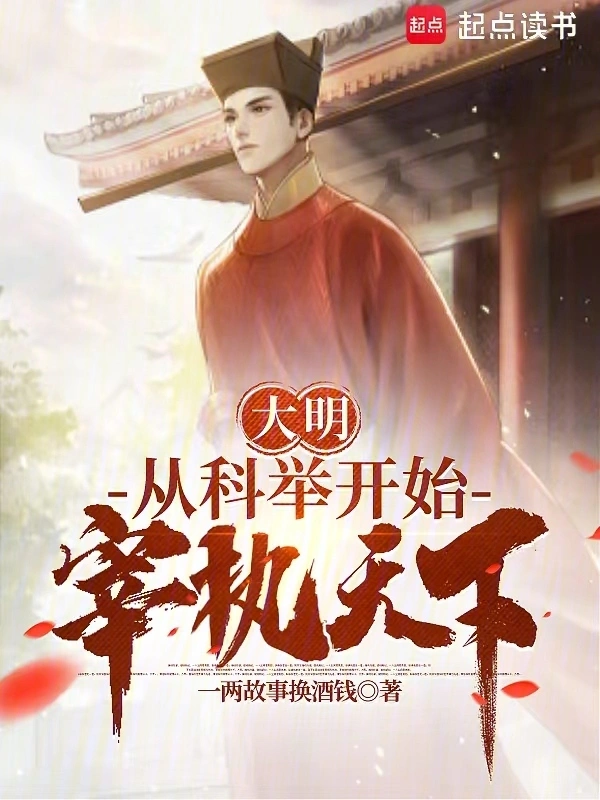
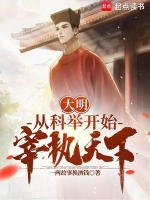
Ming Dynasty: Starting from the Imperial Examination and Ruling the World
大明:从科举开始宰执天下
- Status
- Ongoing
- Length
- 1.1M Words
- Genre
- Historical
- Audience
- Male
- Subgenre
- Song-Yuan-Ming Dynasties
- Updated
- 1y ago
- Source
- Qidian
Stats
0Monthly votes
32.3kRecommends
117.6kFans
421Chapters
Tags
Synopsis
Reader comments
In booklists 2
Readers also read
 Fu Ming 1627
 Northern Qi, Sage Khan
 After Lying in Bed for Three Years, He Was Forced to Help the Han Dynasty
 Red Mansion: Start Escaping and Farming from the Equipment Bar
 Zhenguan Warrior: Starting from Teaching the Prince to Counterattack
 The Ming Dynasty Started with Taking Zhu Yuanzhang to Visit the Forbidden City.
 Ming Dynasty: in the Beginning, He Complained That Zhu Di Was Not the Right One to Succeed to the Throne.
 Northern Song Dynasty: Spoiler of the Future, Zhao Kuangyin Collapsed
 The Grandson of Zhenguan of the Tang Dynasty: Please Call Your Majesty the Crown Prince!
 Respect the Art of Ink
 Zhu Di: My Staff Come from the Future?
 When I Was in Hongwu, I Started by Rebelling Against the Party.
 Suppress the Qin Dynasty
 Poor Understanding? It's None of My Business, I'll Take Care of It!
Stand in the giant's face and spit
First, in the past few decades, tens of millions of people have explored, opened up, and expanded our country to achieve its current prosperity (countless people have shed their lives and blood for it, and there are countless silent and unknown ancestors). Second, the Ming Dynasty was hundreds of years ago. No matter what period it was in, there is no point. Neither pathfinders nor pioneers were born yet. Third, reform and innovation are easy to talk about, especially if you are a radical person trying to "excite yourself". I have offended those in power and the landlords. Are you worried? (I have only read about 20 chapters so far. If you are talking about radical reform in the following chapters, then I will scold you directly - talking on paper, speaking lightly, being unreasonable and unrealistic)
To be honest, the Hongwu Dynasty had already started imperial examinations, and there was no basis for overthrowing feudal society. During the Republic of China, the democratic consciousness was inspired by the cruelty of outside gunfire, but the remnants of feudalism still occupied half of society.
The author analyzed Zhu Yuanzhang very thoroughly, but if someone really dared to speak as mentioned in the article during the Hongwu Dynasty and now Zhu Erba, it would definitely be too long-lived.
I just sprayed it for the sake of spraying, but the content is empty. Later, when I became an official, I licked purely for the sake of licking, and began to prove to myself that I was right. According to the author's theory, compare pig's feet with various unexplained enemy-making behaviors. It is no easier to reform the industrial system under this framework than to rebel directly.
This book is all about the same thing as "Xinshun 1730", "From Chief to Captain", "Warring States Ambitions", and "The First Minister of the Ming Dynasty", but the approach is different. The approach of "1730" is the subtle work of the central flower. After modernization, the approach of "The Chief" is to overcome all obstacles and start from scratch, the approach of "The Careerist" is to borrow the eggs laid by Mohist chickens, and the approach of "The First Minister" is to guide Zhu Yuanzhang before he truly becomes a feudal leader. This book is a hit right from the beginning. It is absolutely tough, not strict, and just does it. The method is novel and makes people look forward to it. It is very exciting. I hope the author can finish it safely without being disturbed.
The protagonist's reform is doomed to fail. Why, because the protagonist is truly an enemy of the country, and no one in the entire country will help him. Revolution lies in infection and need. I remember that Jing Ke was reformed in the Mayan civilization in the human paradise. It was very simple. There was no modernization reform because the people of the Mayan civilization did not need it. Similarly, the people of the Ming Dynasty did not need it, and they did not even reach the point where reforms were needed.
The carnival of idealists👍🏻
With the protagonist's behavior, you won't be able to survive China and North Korea, let alone Ming Dynasty. Chen Xingjia would say it's impossible when he saw it.
Too angry and unrealistic
After reading Chapter 5, the protagonist must have gone crazy and said these things in public. Or does he really think that Zhu Yuanzhang, who conquered the world, is a good-tempered person?
How to reform? How long can peace be maintained after the death of the protagonist, and can the industrial revolution be carried out alone? There is also the Little Ice Age. The country is too big. Without the pressure of colonial transfer, it will definitely be a troubled time. If there are colonies and transportation is not as good as it is now, the best result is that after a few hundred years, Asia will be unified. How big it is depends on luck.
It's all private goods, so angry. Many points of view are correct, but you can't give any examples at all, but they can convince other people. You can't convince readers like this. There are too many things to take for granted. It feels like a collection of emotional output
If that doesn't work, just change the slogan.
With no armed force to protect themselves, a group of people who have accepted the idea of the emperor of heaven and earth since they were young are facing the danger of their own lives and that of their families, while at the same time the emperor is promoting them to a higher position. What do you think they will do? In their world view, bowing down to the emperor is their pursuit, and the temptation of power is natural. Or maybe the family members around you don't understand or even turn against each other. Their lives are always in danger. What do you think they will do? There is another unavoidable factor in the reform in modern history, which is the long-term foreign oppression, persecution, and hatred between the country and the family. The cruelty of the war has made people's lives miserable and miserable. They are looking forward to change. Even so, there are so many traitors. After the founding of the People's Republic of China, there are still many years of ideological education work, from informed sending to the countryside to the current nine-year compulsory education. Cultivate everyone's three views. Does the protagonist have this condition? What could he do? In the year of Hongwu, when the world was just at peace, many people felt that Emperor Hongwu was better than the previous dynasty (the ambiguity of feudal society, the lack of information) The vast majority of people would not starve to death, and when their lives were not in constant danger, who would be willing to follow the protagonist and go against the emperor? Without a gun, you are controlled by others, and do things based on the emperor's face. To put it mildly, you are not afraid of death, but your death has no meaning. Not everyone is Li Dazhao. The era and background are different. How many people know the life and death of the protagonist? Who knows and who cares about what he said. Imperial power and red ideas cannot coexist. If you use the name of the emperor to improve the quality of life of the people, it will only deepen the people's belief in the imperial power, and they will worship the imperial power and obey its words. Completely opposite to the slogan shouted by the protagonist At present, the protagonist's slogan is loud and has a high intention, but the current outline does not see the possibility of realization How about changing the slogan and changing the idea, you just say that you want the people to live a better life, then there is no problem with you writing like this
Seeing the essence through phenomena
This is a book that promotes capitulationism, opportunism, and eclecticism. It is a "good teaching material" that can educate the broad masses of the people.
Does the protagonist want revolution? It's all talk until it's put on the shelves.
Damn it, you actually said that the dynasty will perish. Isn't this nonsense? Just after the founding of the country, you said that the dynasty will perish. Back then, because a minister opposed the title of vassal king, he was put into a sack and beaten to death by Zhu Yuanzhang. You. . .
The more I read, the angrier I get. The whole article is talking about reasoning and talking, and the pig's feet are either arguing or on the way to argue.
How does this protagonist survive? In modern times, only children like his remarks, not everyone. There is no logic in what he says and he does not understand human nature, and he has no logic in what he does.
Let me ask the author a few questions. Can the protagonist achieve his maximum official power and become more powerful than the emperor? Can an advanced ideal revenge be accomplished if there is no supreme authority at hand? Is it safe to entrust one's ideal revenge to the ideological consciousness of others? How effective is the reform revolution based on history? Relying on temporary turmoil to influence future generations? The book keeps mentioning that the dark age will not come again, indicating that there will not be too much time. The short-lived highlight cannot have much impact on the hundreds of years of ancient society (Ming Dynasty to the Republic of China). Even the success of modern revolutions was only achieved when the supreme power was in the hands of revolutionaries. Therefore, do not expect that being an official in the imperial society can change the times. Being the largest official can only influence limited national policies, but cannot lead them. The only person who can lead is the person with the highest authority. Africa is a good place. The backward people have joined the world's emerging technologies, so in many cases, it saves time and effort to massacre the people there. The ideal revenge carried out by relying on imperial power and serving as an official can only play a preliminary role, so as to optimize the inherent order as much as possible, and this can only be done in this way. Aren't countries like the UK a good example to this day? What's the progress? The era has come, and as science and technology advance, people will naturally live a convenient and efficient life brought by the era. However, without progress, the constitutional monarchy will run counter to the times, remain stubborn, and gradually decline. You can't expect the monarch not to consider his own interests and launch some policies that harm his own interests. People are selfish, and there are great people, but if they don't have the power, it's just empty ambition and they can't be carried out. I can't imagine how the author can solve the above problems without resorting to wisdom. As long as rights are strong, there must be oppression. Technology and food cannot save the people. What can save the people is the revolution that requires someone to lift the huge boulder that is pressing on the people. The first thing this person must master is the supreme authority, and he must form a plan to benefit the people after the authority is not left in the hands of one person for too long. It must be implemented step by step according to the plan according to the general direction of the changes in the social era with minor changes. So the author, please tell me how the protagonist changes and how to realize his ambition? Could it be that relying on science and technology to rejuvenate the country led to people's opposition when there was oppression, and the imperial power had weapons that could better kill the powerless anti-people? Or might the civilized people also have weapons to resist the imperial power, thus causing endless separatist turmoil? Wouldn't it be more smooth to abolish the imperial power and monarchy by giving the protagonist the courage to act like an emperor? Isn't this kind of decision comparable to the wise merits of the Three Emperors and Five Emperors Yao, Shun, and Yu?
Protagonist: "Listen to me, listen to me, listen to me." Zhu Family: "I don't listen, I don't listen, I don't listen." As the author, each chapter is basically a long dialogue, but the protagonist is doing things.
The best ending of this book is just an improvement. Imperial Power may cooperate with the protagonist due to crisis, but they will eventually part ways. Saving the country through curves will most likely lead to capitulationism
This is a great historical novel. The plot is too ridiculous and many of the actions of the protagonist are simply speechless.
Say hello to yourself
No one is urging you, but the sick eunuch is quite scary...
There are two problems with this book at the beginning. Isn't that right? Well, the first one is that after the protagonist writes such an anti-rebellion article, he should go home, close his eyes and wait for death. How can he still be in the mood? It is completely illogical to argue with others about the division between north and south. The second protagonist risked his life to write an article, but the content turned out to be false and empty. You just said that there is no moment in theoretical knowledge, not a single example sentence, and no facts at all. Even if you introduce which law will lead to what kind of measures and how to correct it, you can just say it, but there won't be any. So disappointing