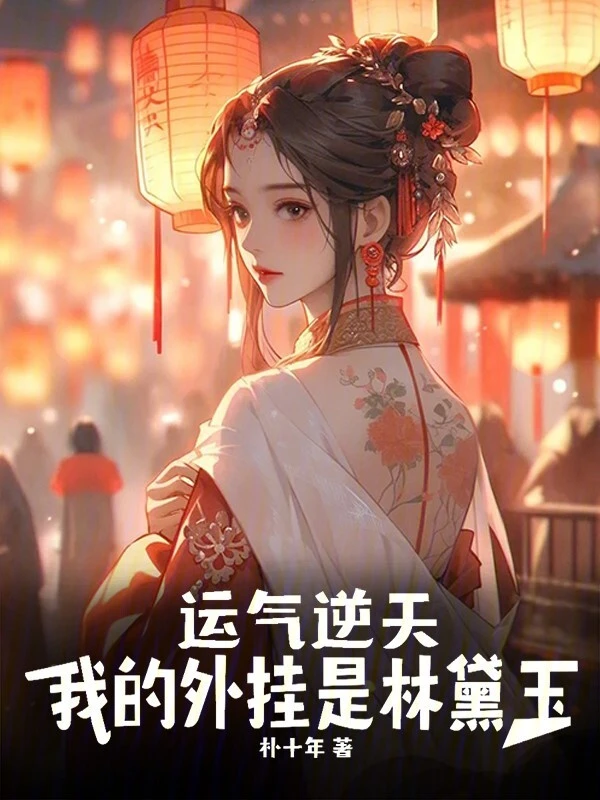
Unlucky, My Plug-In Is Lin Daiyu
运气逆天,我的外挂是林黛玉
- Status
- Ongoing
- Length
- 111k Words
- Genre
- Historical
- Audience
- Male
- Subgenre
- Alternate History
- Updated
- 1y ago
- Source
- Qidian
Stats
0Monthly votes
143Recommends
2Fans
52Chapters
Tags
Synopsis
Reader comments
Readers also read
 Red Mansion: Start Escaping and Farming from the Equipment Bar
 Fu Ming 1627
 Northern Qi, Sage Khan
 After Lying in Bed for Three Years, He Was Forced to Help the Han Dynasty
 If You Are Already an Adventurer, Who Should Work Hard on Your Own?
 Red Mansion Xiaoke
 Red Mansion: Starting from Joining Jinyiwei
 The Artist Begins in Prison
 Traveling at the Same Time: Great Love to the Heavens
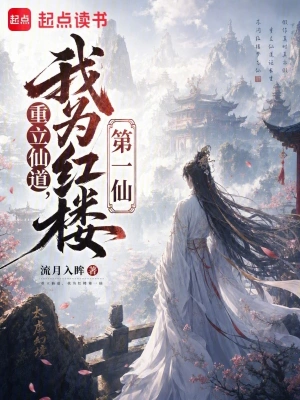 Reestablish the Immortal Way, I Am the First Immortal of the Red Mansion
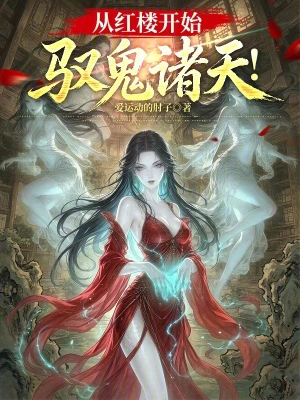 Starting from the Red Mansion, Control the Ghosts and Heavens!
 Dive into the World of Heaven: Only I Know the Plot
Identity Archetype Reference
King Zhongshun, Prince Yi Zhong, King Beijing, these titles gave me a sense of recognition as Anle Gong, Gui Minghou, Disobedience Hou, etc. Then Zhongshun is generally an exclusive title for surrendered generals And there are also some bad endings such as Sui Zhong Xiao Wang Wu Jianzhang Also, The "Jin Guiyi Qiang Marquis Seal" collected by the Gansu Provincial Museum is similar to the "Wei Guiyi Dihou Seal" and the "Jin Guiyi Di Wang Seal". Their seals are all in small seal script and were awarded to the chiefs of ethnic minority tribes by the central government of Cao Wei or the Western Jin Dynasty. Marquis Guiyi ❶The Eastern Han Dynasty granted a title to the rulers of ethnic minorities. "Book of the Later Han·Hundred Officials Five": "The kings of the four barbarians led all the kings, and they were the marquis of Guiyi, the king of the city, and the chief of the city. They all had prime ministers, who were better than the commanderies and counties." ❷Official titles. It was established in the Eastern Jin Dynasty and granted to the rulers of the conquered regime. For example, after the Sixteen Kingdoms were destroyed and the Han Dynasty was established, the leader of the country was granted the title Li Shi. After the Sixteen Kingdoms, Qin also established it. In the 17th year of Taihe in the Northern Wei Dynasty (AD 493), it was designated as the fifth grade, and in the 23rd year, it was changed to the fifth grade. The Northern Qi Dynasty was still in the fifth rank. ▋ Spring and Autumn Period Jinggong of Jin (? - 349 BC?), Also known as Duke Jing of Jin and Duke Mou of Jin. His surname is Ji and his given name is Jujiu. He was the last monarch of Jin in the Eastern Zhou Dynasty and the son of Duke Xiao of Jin. Wei, Jin, Southern and Northern Dynasties Northern Zhou Jing Emperor Yuwen Chan was the grandson of Northern Zhou Emperor Wu Yuwen Yong and the eldest son of Northern Zhou Emperor Xuan Yuwen. In 579, Emperor Xuanxuan ascended the throne at the age of 7, and was assisted by Yang Jian, the Duke of Sui and his maternal grandfather, Prime Minister. In the third year of the Elephant Period (581), the Zen abdicated the throne to Prime Minister Yang Jian, who ascended the throne. At this point, the Northern Zhou Dynasty fell and the Sui Dynasty was established. Tang Zhang Fu was a native of Huazhou (now Huaxian County, Henan Province). He served as the county magistrate of Fengcheng (now Fengcheng, Jiangxi Province) in the last years of Tianbao, Emperor Xuanzong of the Tang Dynasty. After the Anshi Rebellion broke out, Zhang Yi went to the front line to participate in quelling the rebellion and became a subordinate of Zhang Xun, the deputy envoy of Henan Jiedu. In the battle to defend Suiyang (now Shangqiu, Henan), Zhang Wei, Zhang Xun, Nan Jiyun and other 36 people were martyred. In the Tang Dynasty, he was granted the title of "Ganxing Taibao", in the Song Dynasty, he was granted the title of "Lingyou Marquis", and gradually became the "Zhongjing King". Song Dynasty Zhao Yuanfen (969-1005), whose real name is Zhao Deyan, male, Han nationality, was born in Bianliang, Tokyo (now Kaifeng, Henan). The clan minister of the Song Dynasty, the fourth son of Song Taizong Zhao Jiong, his mother was Ren Taiyi[1], and the grandfather of Song Yingzong Zhao Shu. In the eighth year of Taiping's rejuvenation of the country, he changed his name to Yuan Jun, paid homage to Tongping Zhangshi, and was canonized as King of Ji. In the third year of Yongxi's reign (986), he was renamed Yuanfen, granted the title of School Inspector, and was conferred the title of King of Yue. Zhenzong of the Song Dynasty ascended the throne, was granted the Order of Zhongshu, and was granted the title of King Yong. During the Yongxi period, he paid homage to Taifu and was canonized as King of Shang. During the Northern Expedition of Emperor Zhenzong of the Song Dynasty, he served as a guard in Tokyo. He died in the second year of Jingde at the age of thirty-seven. He was awarded the title of Taishi and Shangshu Ling, and his posthumous title was Gongjing. After his grandson Song Yingzong Zhao Shu came to the throne, he was granted the title of King of Lu. Zhao Bogui, the half-brother of Song Xiaozong. At the beginning, he used his kindness to supplement the generals and ministers, transferred him to the Huating Lieutenant in Xiuzhou, and promoted him to work in the Criminal Department in the west of Zhejiang Province. Xiaozong accepted Zen. In addition to compiling and writing in Jiyingdian and knowing Taizhou, he had considerable political achievements. He changed his name to Mingzhou and served as an envoy to the coastal system. Following the imperial edict, he moved to Dinghai to garrison the sea. At that time, the pirates were rampant. He sent people to surrender Ge Ming, the leader of the bandits, to capture Ni De, and to appease his gang. The pirates were put down. He was promoted to bachelor's degree in Xianmo Pavilion and Longtuge Pavilion. During his ten years in the county, he worked for the administration of justice, dredged lakes and rivers, developed water conservancy, and vindicated unjust prisons. Guangzong ascended the throne, was promoted to Shaoshi, moved to Taibao, and was granted the title of King Xiu. In the second year of Shaoxi (1191), in addition to judging the main affairs of the emperor, he invited Xingzong to teach his disciples, pay homage to the grand master, and also worshiped Xinjun as military governor. He died at home and was posthumously named King Chong. In the second year of Jiatai (1202), Zhao Bogui died at home. He left the court for three days and was posthumously named King Chong and given the posthumous title Xianjing. Prince Jing, surnamed Zhao, named Xun, was the sixth brother of Song Xiaozong, the second emperor of the Southern Song Dynasty, and the youngest imperial brother. The younger uncle of Song Guangzong. Born in 1145 AD in the 19th year of Shaoxing, Emperor Gaozong of the Song Dynasty (1162 AD). After Song Xiaozong succeeded to the throne, he was immediately appointed as Prince Jing at the age of 17. King Jing, like his brother Xiaozong, was eager to regain the lost territory in the Central Plains and make achievements. In 1165 AD, King Jing presided over comprehensive financial management, checked household registration and food, and rectified the officialdom, which was quite effective. He also often assisted Emperor Xiaozong in reorganizing the army, strengthened the promotion of young generals, and became a long-lasting friend with Xin Qiji, the leader of the rebel army, who later went south. Ming Zhu Zhuan (February 6, 1378 - August 23, 1438), the Ming Dynasty clan, the 16th son of Ming Taizu Zhu Yuanzhang, his mother's concubine Yu Shi[1], the first Qing Wang in the Ming Dynasty, and one of the nine great kings of the Ming Dynasty who fought against the barbarians. In the eleventh year of Hongwu (1378), he was born in Yingtianfu, the capital (now Nanjing, Jiangsu). In the twenty-fourth year of Hongwu (1391), he was granted the title of King Qing. In the twenty-sixth year of Hongwu (1393), Ningxia (now Yinchuan, Ningxia) was granted vassal status. He died in the third year of Zhengtong (1438) at the age of 61. He was buried in Luoshan, Weizhou. He was given the posthumous title of "Jing" and was known as King Qingjing in history. Zhu Dong (June 21, 1388 [2] - November 14, 1414), a royal family member of the Ming Dynasty, the only King of Ying in the Ming Dynasty, the 24th son of Ming Taizu Zhu Yuanzhang, his mother was Concubine Liu Hui. Born on May 17th in the 21st year of Hongwu (1388). On April 14, the twenty-fourth year of Hongwu (1391), he was named King of Ying; on August 12, the sixth year of Yongle (1408), he conquered Anlu. On the first day of November in the twelfth year of Yongle (1414), Zhu Dong passed away at the age of twenty-seven. His posthumous title was Jing. Emperor Yongle mourned deeply and retired from court for fifteen days. Because King Ying had no children, the country was destroyed. Known as King Yingjing Zhu Shugui Ningjing King of Nanming Zhu Shugui (October 24, 1617 - July 20, 1683), with the courtesy name Tianqiu and the nickname Yi Yuanzi, a native of Jiangling County, Jingzhou Prefecture, Huguang Province (now Jingzhou City, Hubei Province), a member of the Ming Dynasty clan, the ninth grandson of Zhu Yuanzhang, the Taizu of the Ming Dynasty, the eighth grandson of Zhu Zhi, the king of Liao Jian, the son of Zhu Xianhuan, king of Changyang, and the brother of Zhu Shuya, king of Liao. In the forty-fifth year of Wanli (1617), he was born in the Changyang Palace. Emperor Longwu was named Prince of Tingjing, and served as supervisor in the armies of Fang Guoan, Zheng Hongkui, and Zheng Chenggong. After Zheng Chenggong regained Taiwan, Zhu Shugui went to seek refuge. When Zheng Keshuang surrendered to the Qing Dynasty, Zhu Shugui and his five concubines committed suicide and martyred their country. Later generations built a temple for the five concubines to commemorate them. Beijing King is homophonic (Beijing King) ▋ "Yin County Chronicles" and "Ningbo Prefectural Chronicles" both record: Liang Shanbo was a native of Kuaiji in the Eastern Jin Dynasty. He once served as the magistrate of Yin County and had outstanding political achievements. He became ill due to overwork in flood control. During his lifetime, he asked Jiulong Ruins to be the burial place, and was later memorialized as "King Yi Zhong". ▋ King Zhongshun In the eighth year of Yongle (1410), King Zhongshun Tuotuo of Hami died of a violent illness. His younger brother Tamerlane was loyal and conscientious, and was highly praised by everyone. The Ming Dynasty appointed him King Zhongyi, and gave him a seal and a jade belt to protect Hami. This is the beginning of the establishment of the loyal king in the Ming Dynasty. By the time of the death of Tamerlane in the first year of Xuande (1426), the Ming Dynasty established Tuotuozi Buda Shili as his heir, King Zhongshun. In another three years, due to his young age and failure to win, Tuohuan Timur, the son of Bili Timur, was appointed King of Zhongyi and assigned to the subordinates of Suifu, King of Zhongshun. In the second year of Zhengtong (1437), Tuohuan Timur died, and his son Tuotuotamur succeeded him as King Zhongyi. He died soon after his reign. Since then, King Zhongyi has not been established again. Anke Timur: The younger brother of Wuna Shili, reigned from 1393 to March 1405, and was named King Zhongshun in June 1404. 12 Years Tuotuo: The son of Anke Timur, reigned from March 1405 to March 1411 (King Zhongshun). 6 Years Tuli Timur: Tuotuo's younger brother, reigned from March 1411 to December 1425 (King Zhongshun), 14 years; Buda Shili: Tuotuo's son, reigned from December 1425 to December 1439 (King Zhongshun). 14 Years Halisuolutan: the son of Budasili, reigned from December 1439 to August 1457 (King Zhongshun). 18 Years Pulege: The younger brother of Hali Suorutan, reigned from September 1457 to March 1460 (King Zhongshun). 3 Years Nu Wenda Shili: the concubine of Bu Dasili, reigned from March 1460 to November 1472 (Queen Zhongshun). 12 Years Batamur: The grandson of Tuohuan Timur, reigned from 1466 to November 1472 (King Zhongshun). 6 Years Hanshen: Son of Tamur, reigned from November 1472 to 1488 (King Zhongshun). 16 Years Yan Kebola: Hanshen's younger brother, reigned from 1488 to December 1497 (King Zhongshun). 9Th year Shaanba: Tuotuo was a close nephew and grandnephew, reigning from February 1492 to April 1493 and from December 1497 to October 1505 (King Zhongshun). 8 Years Baiya is: the son of Shaanba, reigning from October 1505 to August 1513 (King Zhongshun). 8 Years ▋In summary Zhongshun means the royal family that foreigners voluntarily surrendered to, Jing means the royal family of the previous dynasty or the descendants of the former emperor who lost their rights after the struggle failed, Yizhong, should be taken as "Guiyi Zhong" When it means, it means the descendants of the royal family who have been surrendered to foreign tribes, should be taken as "Yizhong", which means outstanding ability and being loved by the people If the Qing Dynasty is used as the background, then King Zhongshun, may be a prince of Horqin Mongolian descent, Prince Beijing, may be the late emperor's prince from Beijing, and may still be the prince who once had the right to inherit, Prince Yi Zhong, may be a Junggar Mongolian prince who surrendered from Junggar, The three dynasties of Kangxi, Yongzheng and Qianlong should be used as the background, ▋King Zhongshun, Horqin Bendi (The eldest son of Heta) The ninth king of Wendur: Jigmot Langbu (the third king of Darkhan, named 1671-1710 in the seventh year of Kangxi) was compensated with the title of "prince" ▋King Beijing, The Fourteenth Prince is also the Fourteenth Prince, the Eighth Prince, the Third Prince Zhu, ▋Old Prince Yizhong, Prince Amu of Junggar Ersana, Amursana's mother, Bolotok, was a princess of Junggar, and her father was Galdandanzhong, the eldest son of Lhasang Khan of the Heshuote tribe Guo Xiu (1638-1715), a native of Jimo, Shandong. He was a famous upright official during the Kangxi period of the Qing Dynasty. He served the country and the people, was honest, diligent and capable, and was good at solving suspicious cases. During his tenure in the local government, he was "the best in governance in Jiangnan" and was highly praised. Regardless of personal gain, he impeached powerful traitors and showed no fear in front of powerful ministers who were "flaming with power and dazzling thousands of miles". On the birthday of the powerful minister Mingzhu, he used a memorial as a gift to impeach Mingzhu for forming cliques for personal gain, which shocked the government and the public, and was known as the "Iron-faced Censor". Guo Xiu was upright and upright in his life. He became famous all over the world for his three impeachments and left his name in the annals of history. Guo Xiu's three major works, especially the last two, effectively criticized the corruption of corrupt officials and the unhealthy tendencies of forming parties for personal gain, and played an important role in the "prosperity of Kangxi and Qianlong". Yu Chenglong (1617-1684), a native of Luliang, Shanxi, was a famous minister and official in the early Qing Dynasty. In the sixth year of Kangxi's reign (1667), Yu Chenglong was promoted to the post of magistrate of Hezhou, Sichuan. He has successively served as acting magistrate of Wuchang, inspector of Fujian, chief envoy, governor and governor. In the 20th year of Kangxi's reign (1681), he went to Beijing for an audience and was promoted to governor of Jiangnan and Jiangxi. In the twenty-third year of Kangxi's reign (1684), the imperial court ordered Yu Chenglong to take charge of the political affairs of the governors of Jiangsu and Anhui. He died in office soon after. He was posthumously given the posthumous title "Qingduan" by Emperor Kangxi as the crown prince's Taibao. During his more than 20 years of official career, Yu Chenglong was rated as "outstanding" three times. With his outstanding political achievements and honest and hard-working life, he was deeply loved by the people and was praised by Emperor Kangxi as "the most honest official". Chen Tingjing (1638-1712), a native of Jincheng, Shanxi Province, was a minister and scholar of the Qing Dynasty. In the 15th year of Shunzhi (1658), he was promoted to Jinshi. In the 14th year of Kangxi (1675), he was promoted to a cabinet bachelor and minister of the Ministry of Rites, and served as a lecturer at the Jingyan. Later, he served as the censor of Zuodu, the minister of the Ministry of Industry, and the minister of the household department. In the 42nd year of Kangxi (1703), he became a bachelor of Wenyuan Pavilion and the Minister of the Ministry of Personnel. In the 49th year of Kangxi (1710), he served as the chief editor of the "Kangxi Dictionary". He died of illness in April of the 51st year of Kangxi's reign at the age of seventy-five, and was given the posthumous title "Wenzhen".
It's been more than thirty chapters, and I was confused by the early foreshadowing...
Why do you feel that the "good news" and "bad news" in the introduction are all works that are popular?
Forty-eight chapters were written in ten months. Updated two days ago. Give the author likes and little red flowers 🌹