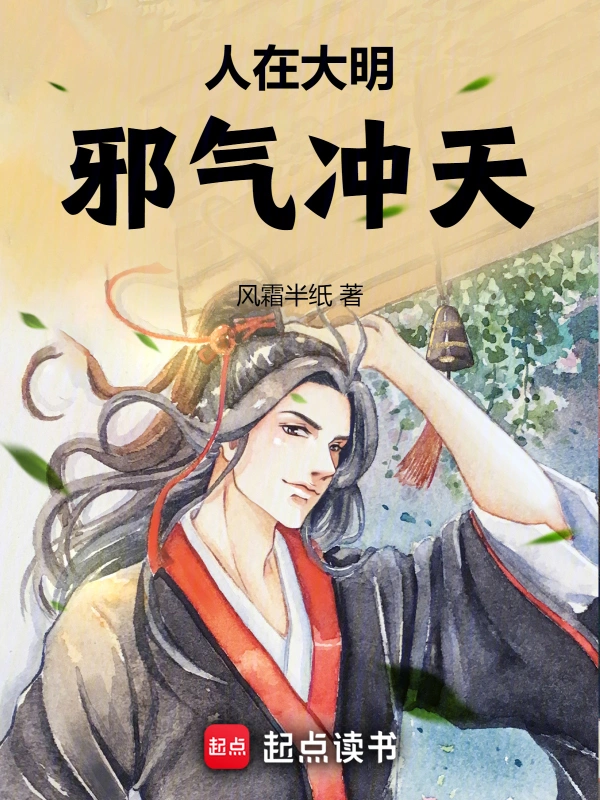
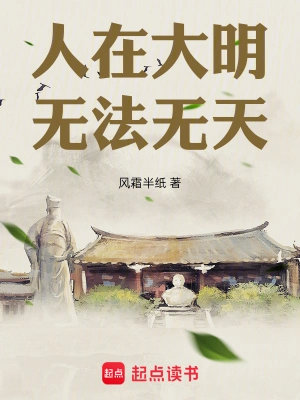
People Live in the Ming Dynasty, Evil Spirits Are Soaring into the Sky
人在大明,邪气冲天
- Status
- Ongoing
- Length
- 1.3M Words
- Genre
- Historical
- Audience
- Male
- Subgenre
- Song-Yuan-Ming Dynasties
- Updated
- 1y ago
- Source
- Qidian
Stats
0Monthly votes
17.4kRecommends
53.9kFans
467Chapters
Tags
Synopsis
Reader comments
Readers also read
 Red Mansion: Start Escaping and Farming from the Equipment Bar
 Fu Ming 1627
 After Lying in Bed for Three Years, He Was Forced to Help the Han Dynasty
 Northern Qi, Sage Khan
 If You Are Already an Adventurer, Who Should Work Hard on Your Own?
 The Heavens: Starting from the Time Stopper
 I Planted a Sacred Tree in the Late Ming Dynasty
 The Artist Begins in Prison
 Traveling at the Same Time: Great Love to the Heavens
 Without a Red Alert Base, What Kind of International Leader Would You Be?
 Stars in Ming Dynasty
 My Amazing Wisdom
 People in the Ming Dynasty Are Lawless
Thinking too simply, do you really think the emperor is omnipotent? Do you really think that except for the founding emperor, no other emperor wanted to cheer up? Jiajing was also very ambitious when he succeeded to the throne, and he was also extremely smart. However, he could not carry out official governance policies alone, let alone land and commercial reforms. The so-called cultivation of immortals was just a way to save his life after realizing the danger. Let's put it this way, civil servants and military generals, one after another, are all landlords who do not pay taxes. If there is an emperor as stupid as this book, his imperial edicts will not even be able to leave the Forbidden City. Except for Zhu Yuanzhang and Zhu Di, the emperors of the Ming Dynasty encountered crises such as: died by falling into the water, dying by taking laxative red pills, eunuchs entering the emperor's bedroom with sticks, palace maids collaborating and almost strangulating the emperor, and a tripartite collusion between Beijing officials, Shanxi merchants and border defense generals to lure the Manchus and Mongols. Entering the customs and plundering the capital to intimidate the emperor, the generals supported the pirates and watched the rebellion expand. The three palaces caught fire several times, the gunpowder factory exploded. Maritime merchants colluded with the Japanese pirates to plunder the southeast. Shilin controlled public opinion and organized the emperor into the "Cricket Emperor, the Carpenter Emperor, and the Immortal Emperor"... In other words , if the emperor really dares to take action, then the civil and military generals will also take action, including but not limited to: the first step is to destroy the palace and the arsenal and granary, and issue a warning. If the emperor turns a deaf ear, the second step is to collude with and lure foreign enemies in to plunder the capital and the southeastern tax-rich areas. If The emperor still insists. The third step is to infiltrate the emperor indefinitely and then collude with the palace maids and eunuchs to kill the emperor and support the next emperor. If the next emperor still refuses to change his will, then everything will be done to the death and the rebellion will expand and the dynasty will change. It doesn't matter who the county magistrate is, as long as I am the county magistrate's wife. Why were Zhu Yuanzhang, Zhu Di and the Qing emperors able to partially reform and take power completely? Zhu Yuanzhang relied on a group of people who conquered the world, and sealed a large number of founding heroes, and overthrew the Yuan Dynasty and won the support of the people at the bottom. Zhu Di also had a group of people who conquered the world, and sealed a lot of heroes who had contributed to Jingnan. After that, the Ming Dynasty never gave out large-scale rewards, and it was not until Nanming that official positions were wholesaled again. In other words, these two soldiers had direct control of the army throughout their lives. It was difficult for other emperors to leave the palace, let alone fight in person. They cleaned up the officialdom of the previous dynasty, and had a large number of official hats in their hands to be wholesaled directly without the need for imperial examinations. It was impossible for other emperors to clear out the officialdom. The scholars who studied hard in the imperial examinations in cold windows did not thank the emperor at all. Similar to these two emperors were the early and middle Qing Dynasties. Why did the Qing emperors dare not treat Han officials as human beings? Qianlong scolded Academician Ji Xiaolanji for "advocating excellence" because he relied on the Eight Banners Army to rule the country, not Han officials. It was not until after Qianlong that the Eight Banners could not move and had to rely on the Green Camp and the Hunan Army to suppress the uprising. Only then did the Qing emperor regard Han officials as human beings. This is why Yongzheng of the Qing Dynasty was able to successfully reform, but the Ming Dynasty emperor could not. In short, the premise for the success of the reform is that the emperor directly controls the army without relying on his own hands, killing gods and Buddhas, having a large number of loyal followers, not relying on the old bureaucracy, and daring to directly clear the officialdom when the bureaucracy is shut down, and immediately let the team take over without causing major turmoil. If you don't believe it, recall this dynasty again and think about why the land reform of this dynasty was successful? Is there an army directly led by me, with a group of cronies who share the same beliefs, the old bureaucracy has been cleared, and a large number of red official hats can be directly wholesaled? If you cannot do this, those who dare to speak out about reform will only die.
Although there are flaws in the list, my head is buzzing after watching it, but the most important thing is that it is relaxing and enjoyable to watch, and it can relax the body and mind. It is not bad, I read it in one go, and I look forward to the update
What age is it? It still advocates killing for hegemony. Even the so-called most advanced American system is showing signs of decline, and it still advocates killing to solve all problems.
Although it is a bit taken for granted and different from other historical articles, it is really enjoyable to read. The author will update it soon.
Now the protagonist's evil is based on thinking it's a game, and I always feel like something is missing. When does the protagonist discover that he has traveled to a real world and is so evil? Is it really interesting? ! !
Wang Mang: I thought the same thing as in the introduction. I also chased and killed many Liu Xiu. Everyone knows what happened to me in the end. Time travel is still a challenge 🤔
I originally thought that the protagonist would rely on summoning a large number of subordinates to implement policies, but after dozens of chapters, he summoned Cao Zhengchun, and the rest relied on the natives. I couldn't help but complain when I saw this, it was completely mindless.
You can tell from the introduction that this is a cool article. You can save your thoughts in this comment of mine.
It's not like Gao Wan at all, just a little neurotic.
Seriously, if there is someone who can protect the emperor from being assassinated and nothing can limit the emperor, don't tell me that everyone can betray the emperor with one heart and one mind. Is it possible? In today's society, a company can provide you with services at any time, let alone the ancient times where classes were more rigid.
The writing is really cool. I haven't seen something so white and cool in a long time. I read it from QQ and voted for it by voting monthly.
The writing is too much, so many people have been killed, and others are not afraid. It would be better if the Manchus were so tough when they entered the customs. I feel that even if the protagonist kills all the scholars and wants to reform, there will still be opposition?
Everything is theoretical and too idealistic. Just talking about the reform to make merchants and landlords pay taxes, if you dare to issue an order today, you will be able to rebel in many places tomorrow. There is no consideration at all whether the actual environment allows for reforms. The people have no food or clothing, and the national treasury has no money. At that time, most of the food and money were in the hands of aristocratic families and merchants. As soon as the reform came out, the protagonist and Zhang Juzheng were the first to die. And the emperor can give power to the protagonist in just two sentences when he is 10 years old. Do you really think everyone is a fool?
Isn't it too routine and written in the Kong family? The scholar prince has no ideas of his own and was very aggressive when he came. When the protagonist said, "Yes, yes, yes," he had no opinion at all. I don't know if it's getting worse here or if it's just here.
You can understand the author's historical knowledge when you see the author reversing the case for Guangshen.
The author, your work has achieved the ultimate in cool characters. I also read the previous book because I had read Lawless in the Song Dynasty and didn't read a few pictures. This book has several problems. The first is the character design of the protagonist. From the beginning, the protagonist's attitude towards the world should be that of a gamer. He basically treats people as data. Every time after shooting, he will sigh that the game is so realistic. This shows that the protagonist has always been a player, but when you kill corrupt officials, you show It's very contradictory that a speedrun player can actually reveal his true feelings to some NPCs. The miner plot is even more eye-catching and very fragmented. I can basically conclude that this character is basically a doll. Secondly, it is clearly said at the beginning that as long as it benefits the people, it can be enjoyed, but the reality is that once you have privileges, there will definitely be people who abuse them. And once you enjoy the rights, needless to say, you have basically reached the extreme of double standards Thirdly, let's be realistic. Common people did not have a sense of belonging to the country in that era, especially in the late Ming Dynasty. I remember a typical case. The Xu family was resisting the Qing Dynasty, but the Xu family's hometown was directly killed by the mob. People are a very realistic thing. Once you have enough food and no illness, what follows is endless desire.
Cool! (Shen Teng version)
Cool articles, cool articles with some logic, although not many 😁. But cool. It perfectly fits my mental journey. After reading a serious and sophisticated historical novel, I just feel aggrieved. I have to deal with rules and tactics with a group of disgusting and dirty feudal gentry, who have been nailed to the pillar of shame by breaking the bones and sucking the marrow out of the common people. Maybe you need to do this to really travel through time, but I'm reading a novel! Still reading cool articles! So, leave half of your brain with me, and feel free to read it, it's a great experience.
It's too idealistic. It's okay to kill the leader. Killings on this scale in the book cannot be carried out with reason.
Based on the world view of the game, it feels okay. First, he obtained the official title for his rescue efforts. After gaining command of Jinxiu Guard, and gaining military power. Then slowly began to reform. We need reputation, we need military strength, we need power. There is also public opinion. Well, then only positive opportunities can avoid their reforms, otherwise you really can't avoid it. We need the scholar Zhang Juzheng to have a group of people he can use, and we need military generals. There are also teams available. So said. It's a bit of a cheat, and here's a look at the world of the game. This pattern can be said to be very good.
It's so fun to watch, like it like crazy
The emperors of the Ming Dynasty had a dangerous profession. If you do this, you will assassinate the emperor one after another.