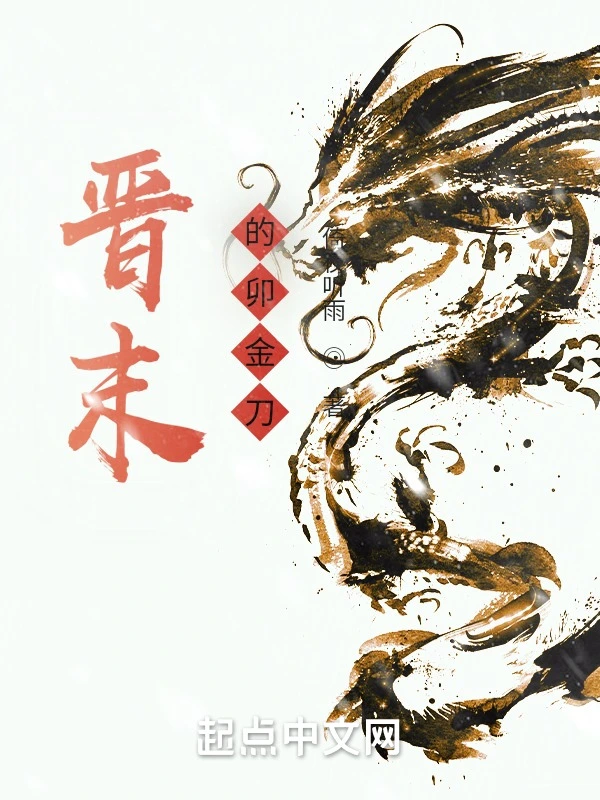
The Maojin Knife from the Late Jin Dynasty
晋末的卯金刀
- Status
- Completed
- Length
- 1.5M Words
- Genre
- Historical
- Audience
- Male
- Subgenre
- Jin-Sui-Tang Dynasties
- Updated
- 1y ago
- Source
- Qidian
Stats
0Monthly votes
9kRecommends
28kFans
373Chapters
Tags
Synopsis
Reader comments
In booklists 4
Some Interesting Books
A book that made me still spend money to read it at the beginning.
75Books105Follows4moUpdated
China Eternity, Fictional History Genre
Returning to the era of Shenzhou Lu Chen, changing the world and rebuilding the world, Shu Jin felt unsatisfied
6Books6Follows2yUpdated
Cai Feng Envoy,——(history, Fairy Tale, Fantasy, a Little Strange)
Spring and Autumn Yuefu
13Books6Follows12moUpdated

Read It Personally
Like 😊
100Books1Follows2moUpdated
Readers also read
 Please Call Me Your Majesty the Tsar
 1914 Begins with the Rejection of the Schlieffen Plan
 Talker in the Song Dynasty
 In the Red Mansion: Escort Daiyu to Beijing at the Beginning
 Never Walk Alone!
 Gou Qin
 Long Wanshengshi
 Daming: Have I Become Wanli's Portable Grandfather?
 I Am Drawing a Hot-Blooded Episode in the Zhiyu Episode!
 Late Jin Dynasty: from Two-Legged Sheep to Human Emperor
 Taipingji
 Common People in the Late Han Dynasty
 Go: the King of Go
 Cultivating Zhenguan
 Array Monk
 Jade Pendant Fairy Mansion
 I Just Want War
 Who Still Uses the System After Being Reborn?
 Elf: Start over Again
 Battle of War
A few words to the author
The author's idea is very good, and the entry point in this era is relatively new and worthy of encouragement. The problem is that there are too many common sense errors. For example, the rogue soldiers at the beginning had three meals a day and folded blankets to practice military discipline... Not to mention that at the end of the Jin Dynasty, the world was so scarce that people could eat each other, and there were countless armies that used people as food. Is the productivity of that era so outrageous? The Central Army does not receive this treatment either. It can be seen that the author really wants to write some stories about heroes, but the lack of verification of realistic materials will only make it difficult for people to take it into account, and there will be flaws everywhere at a glance. This becomes my own pleasure. I suggest you learn from July's writing. He focuses on verifying the information in detail, and can bring whatever utensils he uses for drinking, so that readers can have a sense of involvement. In addition, when Squid writes about mysteries, he also collected a large amount of information from the Victorian era to make the story more realistic. Epic fantasy that is divorced from reality can only be called self-pleasure, and readers cannot understand it. In this regard, I recommend you to read more of Mr. Tian Yuqing's articles and do some research. As the saying goes, those who seek the best will get the best. Writing historical articles is not just for fun. Personally, I think that although "The Romance of the Three Kingdoms" doesn't have any underlying narrative, it does portray heroes well and its flaws are not hidden. Your problem is that the emperors, generals and ministers were eager to use the people's view of history to focus on the bottom before they were outstanding, but they knew very little about the living conditions of the bottom people at that time, and what they wrote was nondescript and incomprehensible. Looking forward to your improvements. Of course, I am just an ordinary reader. If you have any questions, please feel free to point them out.
There is no need to read it, The Eunuch must be unfinished, several books have been like this. Funny mentality, he gave up before we gave up. If you really want to read it, read it after finishing it, otherwise you will be furious. Brothers, lift me up.
After looking at a few pictures of the protagonist's understanding of values and thoughts, I have a feeling. You are showing off your wealth to beggars. A modern man is reborn into your ancient mind. Your vision and mind are too narrow. The protagonist does not understand the mentality of people in ancient times at all. In ancient times, most ordinary ethnic groups had no national plots and could only survive as long as they lived. It doesn't matter who rules, what matters is whether there is food to eat.
I'm convinced, I have to have a 12-year-old protagonist. What prestige does a 12-year-old protagonist have? Isn't it more reasonable to have a 32 or 42-year-old protagonist than a 12-year-old protagonist? I don't know anyone who would take a 12-year-old doll seriously.
The leader of the first battalion also asked people to play with his hands. He is already young, doesn't it make people feel childish?
Another author who is unwilling to look up historical data is writing history. How can you write a historical article without checking historical data? Just write a self-congratulatory message
The overall feeling is like self-pleasure, 1. At the age of 12, it is not convincing, especially when you are from a civilian background, not a wealthy family 2. In the turbulent era at the end of the Western Jin Dynasty, the army was a bandit. If your army does not plunder, you still want to be on par with the Red Army in all aspects. Is it possible? The people here are either orphans, or they have interests in the land they were given, and if they don't follow to defend the land, if the government comes, the whole family will be robbers and bandits, and they will be beaten to death. Interest, threat, hatred, and faith are all there are. What did you give your soldiers? 3. Eat three meals a day and train every day. Do you know that the food consumption of no training and training is fundamentally different, and the difference is even more than double? 4. Yecheng, the capital of the Cao Wei period, has tens of thousands of defenders and countless wealthy families. No matter how useless the commander is, you can't defeat it with just a few hundred people, 400? Control tens of thousands? Who do you think you are when you ask other forces not to plunder? King Chu Ba is still alive? To sum up, it is difficult to substitute. The author is happy to say that you can learn from the long sword of the late Jin Dynasty
Free love in ancient times is nonsense. People who don't want to fit into the world but act independently will be regarded as aliens by everyone.
The protagonist keeps digging holes for himself, capturing the famous general Hua Gou Xi twice, resurrecting him with full health, and continuing to threaten him from behind, forgetting the story of the Yue King Gou Jian; allowing a generation of Jiesile to become bigger and stronger, adopting appeasement, and forgetting the fate of France in World War II! If it weren't for the aura of the protagonist, he was simply seeking death, and Liu Tai's subordinates would have lost their fighting spirit because of his ostrich policy.
In this era, there were no dukes. Besides the king, the highest title was the duke. Liu Cong actually wanted to upgrade Liu Tai's title from duke to marquis of Che. Is this a reward or a demotion?
I can't accept that the protagonist follows the Huns to kill the Han people. There is national defense in every era. If he was under the Huns from the beginning, there would be no way. As a result, we first rebelled and then defected to the Huns. I felt that this was such a big deal.
Looking at the late Jin Dynasty, I advise everyone to read those well-written works by old fritters.
About the protagonist taking refuge in Liu Yuan
I just want to say one thing, I think Wang Meng is not a traitor, so the protagonist cannot be considered a traitor. If you don't agree with this sentence, then I have nothing to say. I can only say that benevolence is in the eyes of the beholder and wisdom is in the eye of the beholder.
I originally read the comments and said that I wanted to see the level of the character, but then I saw that the protagonist started leading troops at the age of 12? What the hell is this trick thought up by a god? This alone is enough for me to sweep it into the trash can. No matter how good the writing is, I won't read it because he is treating me as a fool. Don't make nonsense of the history. Those people can't do it even if they exclude family power, and we don't know how much content there is. Furthermore, what a novel needs is that the reader feels comfortable reading it, not that it makes sense for me to write it if there is history. What I want to say is that as long as something that affects the sense of reading is reasonable, it is garbage, because this is a novel and not a documentary article. Novels need to be relatively reasonable and not use reasonableness as an excuse. To put it bluntly, it just needs to be able to scare readers.
It's a bit funny, splitting the earth to seal the king and the island on the sea. Is the author overly flattering himself?
Is the author too mythical about Shi Le and so afraid of going north to Jizhou to fight against Shi Le? I'm complaining that Shi Le's army command level is actually at Cao Cao's level, and even Cao Cao's winning rate is higher than him. Li Ju, Wang Zan, Sun Wei, Ji Zhan, Duan Wenyang, Wang Jun. Zu Ti Ke even tortured Shi Le The one who is truly powerful in commanding the army is Shi Hu, the chosen god of Khorne. Shi Le, who doesn't have Shi Hu, can bluntly say that with the current protagonist's strength, it's no problem for five or six thousand people to push him flat.
Don't use modern examples. MiHoYo and Yingjiang are too ridiculous!
Earlier it was said that the rushing Yellow River was going to freeze, and later they dug rivers around Yecheng to trap Shi Le. Wouldn't the artificial river freeze?
The author is a bit idealistic. He defeated Shi Le and Liu Yao, but instead of picking peaches, he ran back to Hebei to be a dog. He also used so much manpower to build canals. It was really funny. He won the battle without occupying the land first and letting others occupy it. The peaches were picked by others and returned to the people. When people develop, wait until they occupy Henan and develop well before attacking them. Doesn't this make it difficult for yourself? You are still too timid to fight. The protagonist who was scared by his ancestors did not dare to go south in Hebei. He relied on the civil strife in the Eastern Jin Dynasty. If there was no civil strife, you still wouldn't be able to defeat the Eastern Jin Dynasty. If the Eastern Jin Dynasty had been so strong, it would not have been beaten into a dog by Shi Le. The Northern Expedition would have been successful long ago. The endless plains of Henan are all cavalry. Okay, but you don't even dare to fight in Henan. You said how do you strive for hegemony? The opportunity is not to be missed. If you win, you should attack the north with all your strength. Attack first and develop slowly, instead of retreating after winning and running to repair canals. Canals cannot be repaired at any time, but this is the time to go.
Have you finished the book? When you finish it, start a new book quickly. I want to read the three gods together. If there is no synopsis, I will give you an outline. The beginning of the Southern Song Dynasty, the big coward, the big gold, the Mongolia, and the pioneer of the king will work all the way.
It is a decisive and above-the-level novel about fighting for hegemony in troubled times, but the results of this book have been buried. Publicity and distribution are not good enough, this book is too hard to find. In addition, I took a look at the first few books written by the author. It is estimated that the style change was too drastic and failed to complete the rolling accumulation of readership.
For historical novels, I prefer the Han Dynasty, or the late Han Dynasty. The most interesting historical war novel I have come across is "The Age of the Yellow Sky", about the Yellow Turban Rebellion, and the historical background of the Jin Dynasty. How should I describe it? The existence that is deliberately concealed in history books is even worse than the Song Dynasty. It is sad and lamentable that people are starving everywhere, people are devastated, and the Central Plains artifacts have changed hands. I still can't figure it out. During the Han Dynasty, there were many expeditions outside the Great Wall to attack the Xiongnu. During the Three Kingdoms period, they were even more martial and moral, and they treated the Wuhu aliens as dungeons. However, how come the Jin Dynasty, which was only a few decades old, was so rubbish? The imperial court is so weak that it is unreasonable, and the generals are even more so weak? In the land of China, with so many people, they were whipped and allowed to run wild by the alien tribes? It's unbelievable and sad. The Sima family is truly a sinner through the ages! ! !
A novel has a world, and the author does not do whatever he wants. Once the character's origin, social relations, and personality are determined, and combined with the general trend, he will be given an independent humanity. The decision he makes is not the author's discretion. He will move forward according to his own inertia. Even if the author is heartbroken, he should follow the nature of the character, otherwise he will be a ninth-rate novelist.
Is it actually a book about traitors? It was the first time I saw a book that helped the Xiongnu kill the Han people, and I had different views on it.
This book will probably be much better if I change the title, and the content is also very exciting.
It's March, and it's still updated once a day. What did you do, author?
The cavalry uses cuirassiers combined with nomadic cavalry. The nomadic cavalry supports archery on both sides, and the cuirassiers charge frontally to create an iron pagoda and form a uniform cavalry.
I found a problem. Many authors' protagonists proclaimed themselves emperors, but many of them did not posthumously crown their ancestors as emperors. I hope that after the authors proclaimed themselves emperors, they would posthumously crown their parents and grandfathers as emperors.
The first chapter is a bit of a persuasion to retreat and join the Huns...
The writing is a mess, and it's a mess.