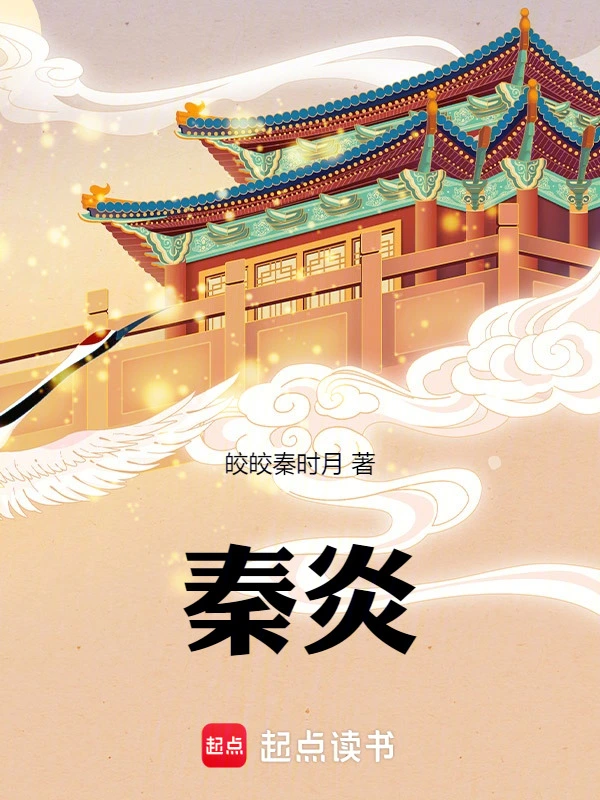
Qin Yan
秦炎
- Status
- Completed
- Length
- 2.8M Words
- Genre
- Historical
- Audience
- Male
- Subgenre
- Qin-Han & Three Kingdoms
- Updated
- 1mo ago
- Source
- Qidian
Stats
0Monthly votes
37.1kRecommends
102.7kFans
954Chapters
Tags
Synopsis
Reader comments
In booklists 1

Readers also read
 In the Red Mansion: Escort Daiyu to Beijing at the Beginning
 1914 Begins with the Rejection of the Schlieffen Plan
 Please Call Me Your Majesty the Tsar
 Talker in the Song Dynasty
 Never Walk Alone!
 When I Was in Hongwu, I Started by Rebelling Against the Party.
 The Ming Dynasty Started with Taking Zhu Yuanzhang to Visit the Forbidden City.
 Daming: Have I Become Wanli's Portable Grandfather?
 I Am Drawing a Hot-Blooded Episode in the Zhiyu Episode!
 I Really Don't Do My Job Properly
 My Father, Cao Cao, I Really Don't Want to Seize the Legitimate Son.
 Taichang Daming
 Da Qin: Xuanwu Sect Succession Law
 Da Qin: Join the Spy Network at the Beginning
 The Qin Dynasty Had a Prosperous Period
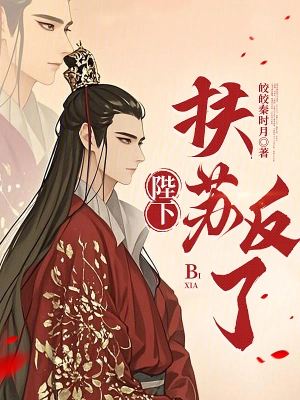 Your Majesty, Fusu Has Rebelled!
After reading six chapters, I currently rate it a 6 (out of 10, Liangcao). I feel that the advantage is that the information has been carefully checked, and I have my own views on history, so I am not a novice. Acceptable Disadvantages: The author's description of the male protagonist may be a bit lacking, he looks more like a loser than a clan aristocrat, and the description of his psychological thoughts is too unconstrained and childish. There is no sense of being a ruler in his behavior, and there is no political ambition or revenge for the position of prince. Instead, he feels like a businessman pursuing goals for profit. For example, I just want to make money, so I sell this. In short, the political positioning is vague, the portrait is unclear, and the characters' behavior is frivolous. To summarize, it is difficult to write historical articles nowadays. Readers who are familiar with history are very demanding, and readers who just want the pictures to be refreshing do not care about the elegant writing. Fans are polarized. It has also led to the differentiation of writing styles. One is novice writing that is popular to make quick money, and the other is high-quality and sophisticated writing. I hope the author can continue to improve and write a truly excellent book. Good books are not easy to come by.
Take a group photo in the front row, it will be platinum if you finish it
You can't speak for that position just because you're in that position.
I also can't understand why there are always so many ass-isms? Always trying to think of your butt as your head. The problem is that the butt is the butt, and the head is the head. If you always think of the butt as the head, then the head will really become the butt.
The book overwhelms the main character a bit. Progress is slow. 700,000 words have not yet unified the six countries, and the next project will also be successful. According to the introduction, it will have to wait a few years after Ying Zheng ascends the throne. When the title abdicates, it will require nearly a million words. But this book, I thought it was about ascending the throne to reform and conquer the world. According to the process, the 30-year-old prince is almost finished, and it has basically ended without doing anything. The prince is not important, the important thing is the reform, but according to the plot, you have to wait until you have the power to force the palace. Not to mention anything else, he deliberately made Zhao feel disgusted. After returning to ancient times, I climbed high and shouted for the people. The theme is reform and fighting against the nobles, rehabilitating the enemy, recruiting and burying the backhands of the Six Kingdoms, Zhang Liang, Xiang Yu, Liu Bang, etc., And then go to surrounding Japan to get silver or fight out. But according to the author's plot direction, these would cost 5 million words. But the premise is that so many people have to read it. The author has not been on the right track for so long. Later readers chase after him and realize that something is wrong and run away. There are not that many people subscribing, so the author either cuts the book or runs away. When watching Qin, you must watch the struggle for hegemony. Every day, you have a family and a family, but you still dominate the protagonist. 🤫
I think it was reasonable for Qin Shihuang to appoint Hu Hai as his successor, and there was no tampering with the imperial edict. Fusu is the eldest son. If Qin Shihuang wanted Fusu to inherit the throne, he would have made Fusu the crown prince. The delay in making Fusu the crown prince shows that Qin Shihuang has no intention of making Fusu his successor. Not to mention that Qin Shihuang didn't establish a prince because he thought he would live forever. This is pure nonsense. There were many emperors in later generations who pursued immortality. Why did they all establish princes? Some people would say that we should learn from history to avoid repeating the same mistakes. Hehe, I don't believe that before Qin Shihuang, there was no king in the royal family of the six kingdoms who pursued immortality. Qin Shihuang couldn't be the first person to pursue immortality, right? Does anyone live forever? No! Therefore, Qin Shihuang could not place all his hopes on immortality, and would definitely leave some backup just in case. Why do I think it is reasonable to appoint Hu Hai as the heir? 1. Fusu likes Confucianism, while Da Qin is governed by Legalism. (If we take modern society as a reference, this is the difference between socialism and capitalism) Pre-Qin Confucianism and later Confucianism are not the same thing at all. 2. Would Qin Shihuang be worried about the risk of someone's demise if Fusu was appointed as his successor? 3. The most proud thing of Qin Shihuang must be to destroy the six kingdoms and unify China, but Fusu wanted to restore Zhou rites and implement a feudal system. If Qin Shihuang established Fusu as his heir, all his hard work might be in vain. 4. Hu Hai is obedient and makes Hu Hai the crown prince without the risk of his government being overthrown. 5. Is Fusu really pedantic in committing suicide? I don't think so. What if Qin Shihuang really ordered it? If Qin Shihuang felt that his time was running out, Fusu would be a hidden danger to the empire. There would be too many people supporting Fusu, and even Li Si would be Fusu's father-in-law. 6. If Hu Hai is really appointed as the heir, in order for Hu Hai to succeed to the throne safely and the country's inheritance to be stable, the death penalty for Fusu is completely justified. The emperor's family has no family ties. There were hundreds of thousands of troops around Fusu. If Qin Shihuang hadn't given the order, would Meng Tian have watched Fusu commit suicide? Soldiers are crafty. A general who commands hundreds of thousands of troops shouldn't be so pedantic! 7. If the Six Kingdoms want to restore their country, don't the heroes of Qin want to enfeoff it? In the pre-Qin period, the feudal system was the mainstream. The heroes of the Qin Dynasty were enfeoffed and became princes, and they could also break up the soil and build a country. Fusu supports the feudal system, and there will definitely be a large number of ministers surrounding Fusu. As a result, the first emperor of Qin killed Fusu, and Hu Hai, who supported the system of prefectures and counties, came to power, and the ministers' hopes of enfeoffment were dashed. 8. Hu Hai was the emperor who succeeded to the throne, and his prestige was not as high as that of Qin Shihuang. In order to prevent ministers from contacting brothers and sisters to rebel, he killed all his brothers in advance as a precaution. It made sense, and maybe some brothers were already taking action. After Hu Hai succeeded to the throne, in order to maintain the system of prefectures and counties, he was at odds with the courtiers, and the remnants of the Six Kingdoms rebelled in the country, causing internal and external difficulties. It can be said that he died in three years. I think that after Hu Hai succeeded to the throne, there must be a big problem in the central court of Qin, otherwise a young unified empire would collapse in three years, which would be too fast. It's not that the Sui Dynasty had no foundation in the Qin Dynasty. It took Qin five or six hundred years to establish the country! Only the Qin Empire that the great Qin hero group collectively abandoned, and the Qin Empire that the old Qin clans also abandoned, will lead to the Qin Empire's demise in three years. Otherwise, relying on inertia and vested interest groups, it would not have perished in three years, just like someone playing Hu Hai again. It is also possible that Qin Shihuang made the same mistake as Zhu Yuanzhang. Zhu Yuanzhang was also a great man, but the heir he chose lost his throne within a few years.
Looking at the title, I thought it was about the end of the Qin Dynasty, when Fusu launched a coup and forced the First Emperor to abdicate. Unexpectedly, he used his talent to win his father's approval. This kind of plot ends with the protagonist becoming the emperor, which has been the routine of novels for more than ten years.
There were a lot of comments at the beginning, and then there were fewer and fewer comments. Although writing a novel should be based on one's own ideas, with these fewer and fewer comments, does the author really not consider whether the storyline is attractive? Or is it necessary to pull it so long?
In fact, Qin Shihuang should have had a queen in the early days of his accession to the throne, because according to the laws of the Qin State, the monarch had to marry the princess after the crowning ceremony. At that time, Ying Zheng had no real power in his hands. Even if he didn't want to marry, he would not be able to marry him. He might die later, and he would not have a queen after he became emperor.
Zhao Gao gives me the feeling of being pulled repeatedly, and it's like pulling my crotch. Forget it, just start raising it. I favor other authors and wait until you finish Zhao Gao before coming back.
Haha, the centralization of monarchy is indeed quite controversial. But I want to say that this system can only be used temporarily, not forever. If a country wants to grow, its ideas cannot be imprisoned, otherwise it will still be hard to escape being bullied by the West a thousand years later. You simply think that you can just make the weapons first? As long as the mind is imprisoned, the wise emperor may still be using these things hundreds of years after his death. But after people learn from you, they will still surpass you. The prerequisite for the survival of centralized monarchy is to depose hundreds of schools of thought and only respect Confucianism. Imprison the people's thoughts. It's the so-called master of heaven and earth. Because it is impossible for a person not to make mistakes. When the imperial power is one word, a small mistake will cause a huge disaster. The most terrifying thing is that the people below will use this power to exert power, and they can manipulate others at will as long as they are wearing a layer of skin. Because the imperial power was too great, everyone was afraid and did not dare to do or think about it. In the end, they could only stand on their own feet. The protagonist can be emperor for a hundred years, but can he be emperor for two hundred years? Finally, let's talk about the root cause of Qin II's death. Shang Yang's method was the root of the disaster, and the unwillingness to cultivate one's health after unification was the focus of the disease. But the main reason was that Ying Zheng wanted to centralize power. But why did other dynasties last for hundreds of years after the death of Ying Zheng II? Zhao Gao and Hu Hai are just leftovers. The real reason is that the power of the nobles at that time did not come from Ying Zheng, and he was not popular. Other founding emperors can make their courtiers fearful because their power comes from the emperor. But the Qin Dynasty was not.
I haven't seen it for a long time, but I happened to see it today and it's still so stained
About the monarchy in historical novels Every time I see someone discussing this, I can't understand it. Now that you have become a monarch, you should think about it from the perspective of the monarch, instead of still assuming that you are the ruled. People are not immortal, and the people they can know are only their grandchildren or even their sons. But as it says in "Historical Records: Mengchang Jun Li Xue", "What is the son of the great-great-grandson? It is impossible to know." A person who can't even see or recognize his great-great-grandson's son has to feel wronged because he thinks about things that will happen hundreds or even thousands of years later. Isn't this a waste of food because of choking? The reason why monarchs centralize power is just so that they can control the power and then pass it on to their important relatives, such as sons and grandsons. Why do they need to worry about the future? Maybe my quotation is not appropriate, but I still want to ask: Now that you have accumulated a lot of treasure, who do you want to leave behind?
I'm really impressed by you. I asked you how long you have to write before you can reach Fa Chu. I haven't seen you write anything about it in a single chapter. It's all about Zhang Cang and Zhao Gao. You don't want Fusu to have left Xianyang by next month.
Let me say a few words about Zhao Gao. The author needs to think about it. This is a novel, a fast-food entertainment. In order to resonate with the spiritual stimulation, the writing method is to suppress first and then increase. It is refreshing to explode. Zhao Gao has been suppressing, and there is no counterattack at all. Reading the novel will automatically assume the role of the protagonist. As long as you see the character of Zhao Gao, you will always feel aggrieved. You can also hint and express that you want to counter Zhao Gao, and have countermeasures to kill him to counter him. This will repeatedly hook the readers and give them some fantasies, and most readers will be hooked and unable to stop. But you have no countermeasures or ideas at all. You didn't even respond at all. So you asked someone to check the letter and scare Zhao Gao. I don't see that you have any idea about getting rid of Zhao Gao. From more than 80 chapters to almost 100 chapters now, with more than 200,000 words in nearly two months, there is only one investigation on Zhao Gao's counterattack, which is not a cool thing. We all know that Zhao Gao is difficult to kill and easy to deal with. If the author has no clue at the moment, then he should not mention him less, set up other plots, and detonate other exciting points. Don't always bring him up to criticize others. but Zhao Gao's problem that readers are too impetuous does not account for the most part. The biggest problem is the author's writing style and speed.
The line of benevolence and righteousness is not suitable for Fusu, but the hegemonic line of Emperor Xuan of the Han Dynasty is more suitable. This line of hardness and softness is very suitable for the next monarch after unification. The 11 years when Qin Shihuang unified the world and became emperor were too short. The concept of great unification has not been deeply rooted in the hearts of the people. It is difficult to eliminate the barriers between the six Shandong countries and the Qin Dynasty. It is also destined that the next emperor will hardly be a conservative king.
I suddenly had an idea and I don't know if it's right or not. All systems must rely on people to implement them, so developing education and improving people's intelligence is a top priority. This can not only solve the problem of shortage of talents, but also when the people's intelligence develops to a certain extent, even if there are problems with the system, internal reforms and optimization will be carried out quickly. On this basis, optimizing the selection and elimination system of officials seems to be able to achieve the long-term success of the country.
Why do I feel that the author's writing becomes stiffer as I go to the end? I feel that the author's writing ability has declined and is not as smooth as the previous ones.
When this book reaches its climax, author, please stop writing about those old guys. The purpose of pursuing this is to see the merits of Qin II, the time traveler, and the other emperors behind him to build a Qin Empire that can be passed down for thousands of years. It is not to see the intrigues between the emperor and his ministers.
The title of your book is so rubbish, I haven't bothered to open it even after reading it several times.
Sima Qian's "The Battle of Han Xin Defeating Zhao", I spent money to read the text
Untitled
The hidden dragon is in the abyss, and the fierce dragon is in the mansion. The king's dominance is as dangerous as the flames. The candlelight night returns, and the dangers are gradually approaching. Su Shi Suoying will eventually prosper.
Discussion on the choice of capital in the late Qin and early Han dynasties
After thinking about it carefully, the Yellow River still flows north along the Taihang Mountains. In the next few hundred years, even if it is completely cut off, it will take its channel between the Haihe River and Jishui in the North China Plain (wetland swamp) and enter the Bohai Sea. In this case, the whole should be regarded as two horizontal and three vertical cores and four peripheries. The Weihuang River and the Yangtze River form two horizontal lines. The Taihang Mountains form two vertical lines from east to west. The west side is from Datong (Baotou and Hohhot are extensions), Taiyuan, Yuncheng, Xi'an to Baoji, and the east side is from Beijing, Shijiazhuang, Handan, Kaifeng (Zhengzhou, Luoyang), Nanyang to Jingzhou. In addition, the coastal Jishui estuary is connected to the Taihu Plain via Taishan and Sishui, and Zibo, Linyi, Xuzhou, Yangzhou and Hangzhou. The Sichuan Basin is a closed one, one is around the Liaohe River Basin, and the other is in the Pearl River Delta. The upstream part before the southern section of the Yellow River and the Hexi Corridor are the most loose. In ancient times, bulk commodity (goods) transportation relied on canals. The framework between the Yellow River, Jishui, Huaisi and the Yangtze River has been built by the canal originally opened by the State of Wu. It is also possible to connect the Pearl River from Changsha and Hengyang to Guilin by building the Ling Canal (a small but difficult project). ... The water conservancy project is really good, the most powerful river nation in ancient times (so corvee is really unavoidable, do you understand now? It is our duty to maintain our common lifeline) ... In this way, the basic territory of the Central Empire is absolutely controlled. Only the Hexi Corridor (the larger one is the line between Yinchuan, Lanzhou, Wuwei, Zhangye, Jiuquan, and Yumen, really a line) was the most difficult to maintain communication. Although the land carrying capacity was okay at the time, due to the limitation of average annual precipitation and evaporation, the population density would definitely not increase. In the face of threats from the north and south, whether it is offensive defense or defensive counterattack, a large number of troops must be stationed in a central blood transfusion. The sea conditions in the Bohai Sea are not bad, and there have always been coastal shipping routes in ancient times. The relationship between latitude and productivity at that time was that the population density was not enough, and it was impossible to rely on local forces to deal with the fishing and hunting in the east and west of the Xing'an Mountains and the plunder of nomads. Central maintenance of blood supply is required. (Maybe taking the entire Korean Peninsula and communicating by sea along the south coast can reduce the pressure on the central government) ... The above is an analysis of the geography of the late Qin and Han Dynasty ... I think there are only two (or three) choices for the capital at this time, namely Xi'an and Luoyang (and Kaifeng). Xi'an can directly control the most developed vertical line of Taihang Shanxi, and can also bring the west of the chasm under its nose through a horizontal link. Facing the Xiongnu who had already moved south to occupy Hetao and even Yinchuan Lanzhou at the end of Qin Dynasty, it would be more efficient to mobilize the accumulated resources. Luoyang, Zhengzhou, and Kaifeng are all at key connecting points vertically and horizontally, and their geology is quite stable. The advantage of the eastern part is that it is closer to Jishui and has more convenient vertical communication with the coast. The disadvantage is that the Huaihe River Basin is geographically unstable and is actually one side of the Yellow River alluvial fan. It is too accessible and is too easy to be raided. Although Luoyang on the west side is small, its geographical environment is very stable, and it is both dangerous (as long as the troops are not strong enough to defend the city) and accessible. Resources and transportation can also play the role of a capital for a longer period of time. The light, heat and rain conditions make it unnecessary to worry about the deforestation necessary for overpopulation, causing the Wei River and Fen River to turn into the Yellow River. However, the use of troops in the northwest direction appears to be relatively inefficient. Although the ability to gather the resources of the entire country will be stronger, it will be more difficult to deliver them to Qinghai-Tibet, Mobei, and even the Western Regions. ...... Everyone is welcome to discuss your own choice of capital here.
So far, it feels like a good book. There is no messy system or messy characters.
The subject matter is very good, but it's very suffocating to watch and I don't like the protagonist's character.
It's been almost a month since the author posted his self-lament about the slow progress of the plot on May 4th, and the plot is still delayed. I don't know how the reading situation is this month? But it shouldn't be very good. If there is no improvement after waiting two more days, the book will be deleted from the bookshelf. This is really excessive and will disappoint readers' expectations.
The current plot can be said to have entered the stage where the protagonist dies and is resurrected while reading the CD after Qingjun side-killed Zhao Gao, but the problem is that the resurrection time is too long. This kind of atmosphere where the First Emperor is fatuous and the environment is depressing is like you are trying your best to write about how powerful the big boss is, but what we want to see is what the protagonist does after he is resurrected. As a reader who has watched the latest plot from 0 in a few days, I feel that Fusu is still not in charge, and most of the new chapters have been skipped. I don't dare to think about how much suffering other readers have to endure.
How many chapters has Zhao Gao killed? It's too ink-blazing to kill him yet.
It feels pretty good, what do you think
Guaranteed by ten years of experience, I really like this book 🙂
It's interesting. Science students said they liked it.