


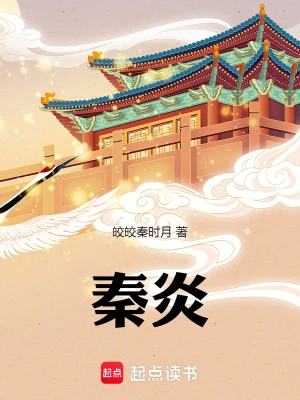
Qin Flame
秦炎
- Status
- Completed
- Length
- 2.8M Words
- Genre
- Historical
- Subgenre
- Qin-Han & Three Kingdoms
- Updated
- 2mo ago
- Source
- Qidian
Stats
954Chapters
0Votes
9.1kRecs
102.6kFans
Tags
Synopsis
More by this author
In booklists 1

Readers also read
 My Only Method: I Will Add More Points to Become Stronger at the End of Ming Dynasty
 Daming: Asking for the Throne at the Beginning, Lao Zhule Went Crazy
 My Father Is Wen Tianxiang, and We Win the Battle of Yashan from the Start
 A Guide to Building Civilization in a Primitive Tribe
 A Record of a Mortal's Journey to Immortality: I Earn Immortality by Grinding Achievements for Rewards
 In the Hongwu Era, Starting Out as a Rebel
 Ming Dynasty: Taking Zhu Yuanzhang on a Tour of the Forbidden City
 Lord Evolution
 A Record of a Mortal's Journey to Immortality: Choosing Hextech in the Chaotic Star Sea
 My Father Is Cao Cao, but I Never Planned to Usurp the Throne
 Reforging the Three Kingdoms: Only the Uphill Battles Are Fun
 Great Tang: How to Become the Mastermind Behind the Xuanwu Gate Coup
 Great Qin: The Xuanwu Gate Succession Method
 Great Qin: Joining the Spy Network from the Start
 Great Qin in Its Golden Age
 Your Majesty, Fusu Has Rebelled!
Reader comments 39
Google Translate
The book overwhelms the main character a bit. Progress is slow. 700,000 words have not yet unified the six countries, and the next project will also be successful. According to the introduction, it will have to wait a few years after Ying Zheng ascends the throne. When the title abdicates, it will require nearly a million words. But this book, I thought it was about ascending the throne to reform and conquer the world. According to the process, the 30-year-old prince is almost finished, and it has basically ended without doing anything. The prince is not important, the important thing is the reform, but according to the plot, you have to wait until you have the power to force the palace. Not to mention anything else, he deliberately made Zhao feel disgusted. After returning to ancient times, I climbed high and shouted for the people. The theme is reform and fighting against the nobles, rehabilitating the enemy, recruiting and burying the backhands of the Six Kingdoms, Zhang Liang, Xiang Yu, Liu Bang, etc., And then go to surrounding Japan to get silver or fight out. But according to the author's plot direction, these would cost 5 million words. But the premise is that so many people have to read it. The author has not been on the right track for so long. Later readers chase after him and realize that something is wrong and run away. There are not that many people subscribing, so the author either cuts the book or runs away. When watching Qin, you must watch the struggle for hegemony. Every day, you have a family and a family, but you still dominate the protagonist. 🤫
I think it was reasonable for Qin Shihuang to appoint Hu Hai as his successor, and there was no tampering with the imperial edict. Fusu is the eldest son. If Qin Shihuang wanted Fusu to inherit the throne, he would have made Fusu the crown prince. The delay in making Fusu the crown prince shows that Qin Shihuang has no intention of making Fusu his successor. Not to mention that Qin Shihuang didn't establish a prince because he thought he would live forever. This is pure nonsense. There were many emperors in later generations who pursued immortality. Why did they all establish princes? Some people would say that we should learn from history to avoid repeating the same mistakes. Hehe, I don't believe that before Qin Shihuang, there was no king in the royal family of the six kingdoms who pursued immortality. Qin Shihuang couldn't be the first person to pursue immortality, right? Does anyone live forever? No! Therefore, Qin Shihuang could not place all his hopes on immortality, and would definitely leave some backup just in case. Why do I think it is reasonable to appoint Hu Hai as the heir? 1. Fusu likes Confucianism, while Da Qin is governed by Legalism. (If we take modern society as a reference, this is the difference between socialism and capitalism) Pre-Qin Confucianism and later Confucianism are not the same thing at all. 2. Would Qin Shihuang be worried about the risk of someone's demise if Fusu was appointed as his successor? 3. The most proud thing of Qin Shihuang must be to destroy the six kingdoms and unify China, but Fusu wanted to restore Zhou rites and implement a feudal system. If Qin Shihuang established Fusu as his heir, all his hard work might be in vain. 4. Hu Hai is obedient and makes Hu Hai the crown prince without the risk of his government being overthrown. 5. Is Fusu really pedantic in committing suicide? I don't think so. What if Qin Shihuang really ordered it? If Qin Shihuang felt that his time was running out, Fusu would be a hidden danger to the empire. There would be too many people supporting Fusu, and even Li Si would be Fusu's father-in-law. 6. If Hu Hai is really appointed as the heir, in order for Hu Hai to succeed to the throne safely and the country's inheritance to be stable, the death penalty for Fusu is completely justified. The emperor's family has no family ties. There were hundreds of thousands of troops around Fusu. If Qin Shihuang hadn't given the order, would Meng Tian have watched Fusu commit suicide? Soldiers are crafty. A general who commands hundreds of thousands of troops shouldn't be so pedantic! 7. If the Six Kingdoms want to restore their country, don't the heroes of Qin want to enfeoff it? In the pre-Qin period, the feudal system was the mainstream. The heroes of the Qin Dynasty were enfeoffed and became princes, and they could also break up the soil and build a country. Fusu supports the feudal system, and there will definitely be a large number of ministers surrounding Fusu. As a result, the first emperor of Qin killed Fusu, and Hu Hai, who supported the system of prefectures and counties, came to power, and the ministers' hopes of enfeoffment were dashed. 8. Hu Hai was the emperor who succeeded to the throne, and his prestige was not as high as that of Qin Shihuang. In order to prevent ministers from contacting brothers and sisters to rebel, he killed all his brothers in advance as a precaution. It made sense, and maybe some brothers were already taking action. After Hu Hai succeeded to the throne, in order to maintain the system of prefectures and counties, he was at odds with the courtiers, and the remnants of the Six Kingdoms rebelled in the country, causing internal and external difficulties. It can be said that he died in three years. I think that after Hu Hai succeeded to the throne, there must be a big problem in the central court of Qin, otherwise a young unified empire would collapse in three years, which would be too fast. It's not that the Sui Dynasty had no foundation in the Qin Dynasty. It took Qin five or six hundred years to establish the country! Only the Qin Empire that the great Qin hero group collectively abandoned, and the Qin Empire that the old Qin clans also abandoned, will lead to the Qin Empire's demise in three years. Otherwise, relying on inertia and vested interest groups, it would not have perished in three years, just like someone playing Hu Hai again. It is also possible that Qin Shihuang made the same mistake as Zhu Yuanzhang. Zhu Yuanzhang was also a great man, but the heir he chose lost his throne within a few years.
Looking at the title, I thought it was about the end of the Qin Dynasty, when Fusu launched a coup and forced the First Emperor to abdicate. Unexpectedly, he used his talent to win his father's approval. This kind of plot ends with the protagonist becoming the emperor, which has been the routine of novels for more than ten years.
There were a lot of comments at the beginning, and then there were fewer and fewer comments. Although writing a novel should be based on one's own ideas, with these fewer and fewer comments, does the author really not consider whether the storyline is attractive? Or is it necessary to pull it so long?
Zhao Gao gives me the feeling of being pulled repeatedly, and it's like pulling my crotch. Forget it, just start raising it. I favor other authors and wait until you finish Zhao Gao before coming back.
In fact, Qin Shihuang should have had a queen in the early days of his accession to the throne, because according to the laws of the Qin State, the monarch had to marry the princess after the crowning ceremony. At that time, Ying Zheng had no real power in his hands. Even if he didn't want to marry, he would not be able to marry him. He might die later, and he would not have a queen after he became emperor.
Haha, the centralization of monarchy is indeed quite controversial. But I want to say that this system can only be used temporarily, not forever. If a country wants to grow, its ideas cannot be imprisoned, otherwise it will still be hard to escape being bullied by the West a thousand years later. You simply think that you can just make the weapons first? As long as the mind is imprisoned, the wise emperor may still be using these things hundreds of years after his death. But after people learn from you, they will still surpass you. The prerequisite for the survival of centralized monarchy is to depose hundreds of schools of thought and only respect Confucianism. Imprison the people's thoughts. It's the so-called master of heaven and earth. Because it is impossible for a person not to make mistakes. When the imperial power is one word, a small mistake will cause a huge disaster. The most terrifying thing is that the people below will use this power to exert power, and they can manipulate others at will as long as they are wearing a layer of skin. Because the imperial power was too great, everyone was afraid and did not dare to do or think about it. In the end, they could only stand on their own feet. The protagonist can be emperor for a hundred years, but can he be emperor for two hundred years? Finally, let's talk about the root cause of Qin II's death. Shang Yang's method was the root of the disaster, and the unwillingness to cultivate one's health after unification was the focus of the disease. But the main reason was that Ying Zheng wanted to centralize power. But why did other dynasties last for hundreds of years after the death of Ying Zheng II? Zhao Gao and Hu Hai are just leftovers. The real reason is that the power of the nobles at that time did not come from Ying Zheng, and he was not popular. Other founding emperors can make their courtiers fearful because their power comes from the emperor. But the Qin Dynasty was not.
I haven't seen it for a long time, but I happened to see it today and it's still so stained
About the monarchy in historical novels Every time I see someone discussing this, I can't understand it. Now that you have become a monarch, you should think about it from the perspective of the monarch, instead of still assuming that you are the ruled. People are not immortal, and the people they can know are only their grandchildren or even their sons. But as it says in "Historical Records: Mengchang Jun Li Xue", "What is the son of the great-great-grandson? It is impossible to know." A person who can't even see or recognize his great-great-grandson's son has to feel wronged because he thinks about things that will happen hundreds or even thousands of years later. Isn't this a waste of food because of choking? The reason why monarchs centralize power is just so that they can control the power and then pass it on to their important relatives, such as sons and grandsons. Why do they need to worry about the future? Maybe my quotation is not appropriate, but I still want to ask: Now that you have accumulated a lot of treasure, who do you want to leave behind?
I'm really impressed by you. I asked you how long you have to write before you can reach Fa Chu. I haven't seen you write anything about it in a single chapter. It's all about Zhang Cang and Zhao Gao. You don't want Fusu to have left Xianyang by next month.