


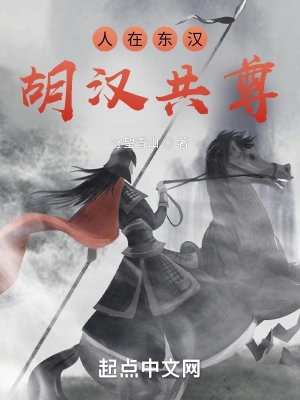
In the Eastern Han, Honored by Han and Hu Alike
人在东汉,胡汉共尊
- Status
- Completed
- Length
- 864k Words
- Genre
- Historical
- Subgenre
- Qin-Han & Three Kingdoms
- Updated
- 3y ago
- Source
- Qidian
Stats
419Chapters
0Votes
7.8kRecs
38.1kFans
Tags
Synopsis
More by this author
In booklists 3

A Veteran Reader’s Monologue
I think these books are reasonable and not stupid. I only post books I've read and approve of.
26Books36Follows1yUpdated
A Fresh Take on History
Regrets from history
32Books8Follows2yUpdated

Power Fantasies You Can Read with Your Brain Turned On (Mostly Fantasy and Historical)
Wish-fulfillment novels you can enjoy without having to view web fiction through rose-colored glasses. After making this list, I ended up following every one of these books myself.
7Books5Follows3yUpdated
Readers also read
 My Father Is Wen Tianxiang, and We Win the Battle of Yashan from the Start
 A Guide to Building Civilization in a Primitive Tribe
 Daming: Asking for the Throne at the Beginning, Lao Zhule Went Crazy
 My Only Method: I Will Add More Points to Become Stronger at the End of Ming Dynasty
 A Record of a Mortal's Journey to Immortality: I Earn Immortality by Grinding Achievements for Rewards
 The Wily Qin
 The African Entrepreneurial Saga
 Lord Evolution
 A Record of a Mortal's Journey to Immortality: Choosing Hextech in the Chaotic Star Sea
 The Golden Clan: I Lead the Mongol Cavalry to Conquer Europe and Asia
 Please Call Me Your Majesty, the Tsar
 The Age of the Yellow Sky
 Battle Through the Heavens: Reborn as Liu Xi
 Xuanhuan: I Can Burn My Lifespan
Reader comments 28
Google Translate
Without cameras, how can we have a family? 😅 Decades ago, murders and robberies were common. Now it is easy to be caught and people dare not dare to do so. In the past, the people outside the Great Wall would kill people every day without cameras.
The author's understanding is very problematic. Even if the nobles are killed, other nobles will take their place. The productivity of ancient times determined that its dynasty had to rely on the landlord class in order to rule stably. This was determined by objective conditions, and it was not something you could do whatever you wanted. What's more, the protagonist's family also belongs to the landlord class. Compared with those from high-ranking families, they are just of lower status. The nature of their exploitation is no different. There is no need to look down on one and the other.
This idea is quite good. Finally, it is not about Liu Han in the Three Kingdoms, the struggle for hegemony in the Central Plains, the martial arts prodigy Yuan in the Three Kingdoms, or the fantasy of Nanhua.
Isn't this the Tang Dynasty version? I remember that the stability period of the Tang Dynasty was shorter than that of the Eastern Han Dynasty
In May, when the book wrote about the main character rebelling against the Han and becoming independent, I told you that the story about the struggle for hegemony in the Central Plains was badly written. There were too many novels about the Three Kingdoms, Sui, Tang, Ming, late Ming and Five Dynasties. Since you chose Liangzhou as the starting point, why didn't you just write about the semi-nomadic and semi-agricultural empire setting a precedent for the Western Expedition? I really don't understand why you wanted to listen to those people writing about the struggle for hegemony in the Central Plains in the first place? Now that you can't write well and are being criticized, you have lost your mentality and failed to finish. Can you tell me the difference between yourself and Yuan Shao and Yuan Shu? If you are a poor player with a good hand, have you ever thought about why people still read your writing? As an old bookworm, I have already told you that the most enjoyable part of your book is that nomadicism replaced Mongolia's western conquests for thousands of years and whipped Central Asia and the West, allowing readers to see different possibilities for Han civilization. In the end, I wrote a few movies, a few chapters, and talked about it, but it couldn't save you. Now that you have to write about the struggle for hegemony in the Central Plains, your mentality is still unbalanced? Didn't you ask for all this? I don't even look at how many readers later advised you to write the Western Expeditions but you refused to listen. Now I really think you deserve it. I am too lazy to say a lot of things. It is obviously a good work but you insist on completing such a mess. I can only respect you.
What a pity for such a good subject matter and freshness. I have said before that the conflict between Kansai and Kanto is very low and the sense of identity is very low. The main character's family background can only make sense by conquering Liangzhou in the middle of Guanzhong and establishing a semi-nomadic and semi-cultivating empire outside the Great Wall. The author insisted on explaining it forcefully. As a result, the writing style was not good enough to write a cool novel. The enemy surrendered as soon as they were beaten, and pledged allegiance to the death as soon as they surrendered. It was clear that the hearts of the common people from the noble family were not in the hands of Kansai Takeo, so he had to force his wits down. Are Yuan Shao, Cao Cao, Liu Bei, and Sun really so unbearable? Were the civil servants and generals of the late Han Dynasty really that bad? The entire text does not include any internal policy strategy. Quite disappointed 😔
After reading the last few chapters, how about decisive killing? Jizhou will kill them if they don't cooperate. Guanxi and Youzhou are more willing to cooperate. You kill the Xiongnu with ruthless hands, but when you kill the biggest enemy, you turn into a white moonlight... Wake up, no matter how nice you are to them, you are still a local in Liangzhou. Have you not seen what happened to Dong Zhuo? Now is the time when you are most powerful. It is only right to turn your own people in Kansai into nobles in the world.
The simplest way to integrate is to seal off those minority areas and then use culture to invade, but this is calculated in at least ten years, such as the Zhou Dynasty. During the Zhou Dynasty, the territory was not very large, and then the Zhou people were slowly spread out in the form of kings, and then the nobility was exported with Zhou Lilai as the culture. Gradually they became Zhou people.
Kanto looks down on Kansai. For more than 100 years, the Liangzhou rebellion has been suppressed by Kanto, and there are only so many positions in the imperial court. For every Kanto station, there is one missing from Kansai. In the late Eastern Han Dynasty, look at how many Kansai people there were in the imperial court. The benefits were not given to them! Kansai united under Dong Zhuo and wanted to break through the class upwards, but Dong Zhuo was a man who knew how to fight (a political novice) and was united by Kanto and fought back from Luoyang.
The author broke the pot and planned to forcefully end the book. I originally wanted to see the grand scene of the battle against Xianbei, but it turned out to be all vernacular. The author's writing style is not good enough to handle such scenes. It is tasteless to eat and a pity to throw away.