


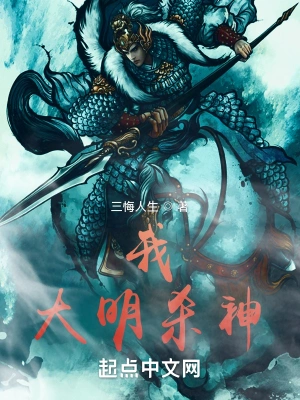
The Greedy Wolf of the Great Ming
大明贪狼星
- Status
- Completed
- Length
- 1.5M Words
- Genre
- Historical
- Subgenre
- Song-Yuan-Ming Dynasties
- Updated
- 3y ago
- Source
- Qidian
Stats
Tags
Synopsis
More by this author
 Good Saints and Grandsons Can Make the Ming Dynasty Prosperous
 Invited to Become an Immortal Master by Emperor Wu of Han from the Start
 Great Ming, Mighty and Secure
 Crimson Tang
 Forging a Glorious Tang Dynasty with the Blood of the Barbarians
 Raising an Empire: The Tang Dynasty
 Where the Sun and Moon Shine, All Is Great Ming
In booklists 6





The Great Ming Is Mighty
The Great Ming.



No Saintly Heroine, Stay True to Yourself, Embrace the Darkness, Anime, Revive China
Amateurish writing and cookie-cutter plots, stay away. No boring, toxic stuff, please. Wild imaginations and fresh, fun ideas are welcome!


Personal Favorites (Shared Values, Mostly Obscure)
I personally prefer books with sound values. They also need to be logical and have something special about them. (I recently watched Qianhu's videos, and now I can barely read any historical novels.)


A World That Makes My Heart Flutter: Like a Dream
Imaginative ideas, smooth logic, and topics I enjoy.

[History] So Much Has Happened Through the Ages, All Now a Subject for Laughter
The virtue of the Three Sovereigns and Five Emperors, the fame of Xia, Shang, and Zhou. The Five Hegemons and Seven Warring States fought through the Spring and Autumn period, and in an instant, their rise and fall was decided. A few names remain in the pages of history, while countless barren graves dot Beimang. The people of the past sowed, and those who came later reaped. What is there to say of dragons battling tigers? Living in the modern world, people often imagine returning to ancient ti



New Year's Reading List
In a reading slump, these are the books I'm reading.
Readers also read
 My Father Is Wen Tianxiang, and We Win the Battle of Yashan from the Start
 My Only Method: I Will Add More Points to Become Stronger at the End of Ming Dynasty
 A Guide to Building Civilization in a Primitive Tribe
 Daming: Asking for the Throne at the Beginning, Lao Zhule Went Crazy
 A Record of a Mortal's Journey to Immortality: I Earn Immortality by Grinding Achievements for Rewards
 In the Hongwu Era, Starting Out as a Rebel
 Great Ming: My Brother Is Zhu Yuanzhang, and I'm Founding America
 Lord Evolution
 A Record of a Mortal's Journey to Immortality: Choosing Hextech in the Chaotic Star Sea
 The Ming Dynasty's First Brother-in-Law
 Story of Minglan: I'm a Son of the Xu Family
 The Scholar in the Siheyuan
Where the Sun and Moon Shine, All Is Great Ming
Raising an Empire: The Tang Dynasty
Forging a Glorious Tang Dynasty with the Blood of the Barbarians
Crimson Tang
Great Ming, Mighty and Secure
Invited to Become an Immortal Master by Emperor Wu of Han from the Start
Good Saints and Grandsons Can Make the Ming Dynasty Prosperous
The Scholar in the Siheyuan
Where the Sun and Moon Shine, All Is Great Ming
Raising an Empire: The Tang Dynasty
Forging a Glorious Tang Dynasty with the Blood of the Barbarians
Crimson Tang
Great Ming, Mighty and Secure
Invited to Become an Immortal Master by Emperor Wu of Han from the Start
Good Saints and Grandsons Can Make the Ming Dynasty Prosperous
Reader comments 34
Google Translate
Come, the author reads with me My solemn oath: starting from today, I will never update. I will not watch dramas, travel, or get sick. I will play no games, no hydrology. Strict self-discipline, cherish time like gold, perseverance, hard work, advocating flow, striving to create brilliance, taking pleasure in coding, being refined into steel a hundred times, worthy of readers, worthy of youth, and worthy of the future. As an author, I solemnly swear: Coding is my bounden duty. I have unlimited potential and am not afraid of hardship!
Come to the author, follow me and swear that I will not take a break or get sick from today on. Except for the 7 hours a day for eating, going to the toilet and sleeping, I will spend all the other time writing books. I have not written enough 30,000 words in a day. I will never take a break. I refuse games, parties and other activities outside the home. I will write a book and publish it as much as I can. If I can't do it, I will shorten it by one centimeter. If I do it, add 0.001 Centimeters.
Bored, I want to see the river of blood!
Don't always belong to Emperor Xuande, Zhu Zhanji is short-sighted! Zhu Zhanji's short-sighted behavior is not only reflected in the southwest, but also in the northeast and northwest. Zhu Di made a mistake in abandoning Daning, but at the same time he also opened up Nurgandusi and Hami Guards. The military policy of the Yongle period was to replace defense with attack, creating a large no-man's land on the border, and the Mongols came one after another. This made both Mahamu and Arutai miserable and had to surrender and accept the Ming Dynasty's tribute system. Mahamu, the leader of Wala, has been in limbo for more than ten years. He died in a fight with Arutai. Zhu Di, who liked to play off the balance, obviously would not allow the Tatars to dominate. For this reason, in addition to three northern expeditions to wipe out the Tatars, he also vigorously supported Mahamu's son, Choros Tuohuan, the leader of the Walatroros tribe. After his father's death, Tuohuan became a slave of Arutai to help him herd sheep. Arutai is actually pretty good about Tuohuan, and even his wife does not shy away from him when combing his hair. Arutai's younger brother persuaded him several times to get rid of Tuohuan, but Arutai did not listen. Tuohuan's mother was admitted as Hatun by Adai Khan and interceded for her son. Adai Khan finally ordered Tuohuan to be released, and now he has become the head of the Choros tribe. Arutai had long been tortured out of the shadows by Zhu Di. When he heard that the Ming army was leaving the fortress, he only did one thing: escape. Although he failed to capture the main Tatar force several times, Zhu Di still achieved some results, such as demolishing a batch of illegal yurts, burning a large area of green grassland, and taking away the cattle and horses that the Tatars had no time to take away, etc. After more than ten years of debauchery, he finally took advantage of Zhu Di's last personal expedition in the 21st year of Yongle to launch a large-scale raid on the Tatars. This opportunity was perfect. Arutai was running away in embarrassment and was completely unprepared. Most of the population, horses and sheep were taken away, and even Adai Khan was captured and killed. Tuohuan, whose strength and prestige had greatly increased, immediately started his ambitious plan. First, he spent two years conquering the Torgut tribe of the same tribe, and killed the Xianyi King Taiping and Anle King Batu Polo, who were canonized by the Ming Dynasty. The Torgut tribe, which once had the same say as the Choros tribe, became a subordinate of Tuohuan. Then he continued to conquer the east and west, controlling the entire Oara. Tuohuan is an ambitious man. His plan has three steps in total. Unifying Oara is only the first step, and the second step is to unify Mongolia. During the Yongle period, unifying Mongolia was just like "surpassing limits and surpassing oneself", which was just a slogan to win blood. Because whoever dares to do this, Zhu Di will beat them until they don't even know their mother. However, during the Xuande period, the dream actually became reality. Tongyuan Wala's Tuohuan was already stronger than the severely damaged Arutai. In the following years, he replaced Zhu Di, played a wolf-catching-sheep game with Arutai, and appointed the Bor as the puppet khan, and he became the grand master. Arutai was really a master of escaping. He actually managed to hold on for more than nine years under extremely unfavorable circumstances. In the ninth year of Xuande (1434), Arutai was finally freed. After Tuohuan attacked and killed him, he collected all his troops and their pasture lands, effectively unifying all Mongolia. It was none other than Zhu Zhanji who realized the dream of divorce. He carefully cared for the tribesmen wandering in the Hetao, gave tacit approval to the Wuliangha who moved south to herd, ignored the Haixi Jurchens who were attacked and moved eastward, and scolded the Ming army sergeants who expelled Oara. This completely goes against Zhu Di's policy of holding a stick in one hand and a carrot in the other. What medicine is he selling in the gourd? Zhu Zhanji attaches great importance to northern defense, just as he attaches great importance to southwest defense. The strategic policy he formulated for border defense officers and soldiers is passive defense. Zhu Zhanji taught the border generals many times that the defense must be solid. The border troops are not allowed to take the initiative to attack. We must wait for the enemy to attack before we can repel them. When the enemy retreats, we must not pursue it. In order to prevent generals from being greedy for merit, he also wrote two poems for everyone: "If you are cautious, you only need to learn from Li Mu, but if you are greedy for merit, there is no use learning from Chen Tang." As a result, Li Mu could not learn from it, and the defense line was seriously shrinking. In the border areas between Ming and Mongolia, there is no such thing as peaceful coexistence and joint efforts to build a beautiful homeland. In some cases, the enemy advanced and we retreated, while the enemy retreated and we advanced. Under Zhu Zhanji's wise guidance, the Ming army took the initiative to leave the fortress and disappeared, and the Mongolian forces began to advance continuously. The emperor is also a human being, and as a human being he will make mistakes. As long as he can correct himself, he will still be a good emperor. For example, he must have the courage to fight back decisively and let the Mongolians know who is the boss. But it would be another matter if the emperor did not realize that it was a mistake. Zhu Zhanji didn't think it was a mistake to give up Jiaozhi. Since giving up brought him a lot of peace, why couldn't he copy it to the north? He decided to give up again. On the northern border of the Ming Dynasty, there was a border town called Kaiping, located northwest of today's Duolun, Inner Mongolia, and about three hundred miles north of the Great Wall. It was one of the results of Li Wenzhong's lightning-fast military campaign to conquer the capital of the Yuan Dynasty. Zhu Yuanzhang established Pingwei here, which formed a triangular defense system with Daning Guard to the east and Xinghe Guard to the southwest. Zhu Yuanzhang sealed his seventh son, King Zhu Shu of Qi, in Qingzhou and ordered him to leave the town to Kaiping. Zhu Di also ordered Han King Zhu Gaoxu to lead his troops to Kaiping for preparations. Zhu Di's northern expedition all started from here. He once said: "As long as we stick to Kaiping, we can keep Daning and Liaodong in the east and Gansu and Ningxia in the west safe and sound." This shows the importance of Kaiping Guard. Zhu Di abandoned the defense of Daning, but did not give up the defense of the Daning area. He created a no-man's land of thousands of miles and did not allow groups of Mongolians to appear at all. The style of painting changed during the Xuande period. Under the guidelines of passive defense, Daning in the east of Kaiping was bound to lose control. Zhu Zhanji was an emperor who was very open-minded about his territory. Since it was so difficult to defend, wouldn't it be easier to just give up? "What's the harm to me if I lose this small territory?" Not only did the Ming army fail to secure Daning and Xinghe, they even gave up Kaiping. At the same time, they also gave up the dangerous terrain south of Kaiping and north of the Great Wall, shrinking the northern defense line by more than 300 miles. The abandonment of three important strongholds on the northern defense line meant that a large military buffer zone was lost north of the Great Wall, which brought about two very serious consequences. First, the entire northern defense system lacks depth. The Mongolian tribes in Mobei gradually moved south to the Great Wall, and the distance between the enemy's attacks on Beijing and the interior was greatly shortened. The second is to compress the eastern part of Liaoning, turning this area into a long and narrow corridor, making the northern border defense even more empty. The northern defense line lost its forward base, and it became very difficult for the Ming army to leave the fortress. From then on, it gradually suffered passive attacks. "The emperor defends the country's gates" was actually realized in this way. More than twenty years later, Zhu Zhanji's son Zhu Qizhen will pay for my mistakes. He also completely terminated the fleet's activities to the Western Ocean, which saved the Ming Dynasty a lot of money, but the consequences were obvious. Some scholars in later generations commented: The sails of cultural exchanges in the Xuande Dynasty no longer sailed. From the perspective of cultural exchanges, the maritime ban policy also brought many regrets, making the Ming Dynasty a civilization surrounded on all sides. Without the maritime ban policy and the decline of Chinese navigation, the initial contact between the Chinese and European colonists was likely to have been in the Indian Ocean rather than Southeast Asia. If this is the case, then the initial integration of the cultural circles of the Far East and Western Europe may be different - the outpost of contact with European colonists is as far away as the Indian Ocean, and China will be more relaxed. The contraction did not end there. On October 22nd of the second year of Xuande, without encountering any military threat, Zhu Zhanji decided to withdraw the Hami guards who had been stationed in the Western Regions during the Yongle period to the capital, and appointed King Zhongshun of Mongolia to rule Hami over Watasli. The court only maintained nominal control over the guards in the Hami area, and time seemed to have gone back to the era of the Hami small kingdom of King Zhongshun. In the third year of Xuande's reign, Xuanwei envoy Si Renfa from Luchuan invaded Nandian, Tengchong and other places. The chief military officer of Yunnan, Mu Sheng, Duke of Guizhou, submitted a petition to send troops for conquest. Mu Sheng also reported a situation. The Jiaozhi rebellion was supported by the Xuanwei Division of Laos and the chieftains of Ningyuan Prefecture. This group of people is guilty of cheating, so why not just deal with it together? In the end, Zhu Zhanji didn't bother to care at all. He replied to Mu Sheng like this: Didn't you discuss the Luchuan matter with the senior management of Southwest before? You can do whatever you want to do, and we will do it this time. As for Laos and Ningyuan, forget it, why bother arguing with them? Laos and Ningyuan are accomplices, Luchuan is stamping his nose and face, but he is still ignored. You, Zhu Zhanji, do not have the prestige of your grandfather Zhu Di. Stamping your feet will make half the world tremble. The result of raising tigers was that the Ming Dynasty lost its prestige in the southwest, and Luchuan expanded wildly. As a result, Zhu Qizhen had to pay a huge price and still left sequelae.
In political struggle, if you fight, you still have a way to live, but if you don't fight, you will die. At first, you cried and begged others to support you, Han Wang. Now, if you say you won't fight, you won't fight and walk away. Others support you with their heads. Now you just sell it if you say it. Most people can't do this.
The History of the Ming Dynasty and the History of the Qing Dynasty are two of the most unreliable history books in the history of the world. One is widely criticized and the other is widely fanned. Internet novels are more reliable than these two written rubbish.
After reading the introduction, I can only say that the probability of Zhu Di making the emperor of the Han Dynasty is the same as the probability of Zhu Yuanzhang making someone other than Zhu Biao the emperor.
I don't know when it started, but people writing novels about the Ming Dynasty like to talk about the weather. Isn't this a typical example of ugly people blaming their parents, and poor people blaming society? If the Little Ice Age was really so impressive, how did the women in the north live? How does a furry bear live? Any other Arab can live well in the desert.
Awesome, it's only been 140 chapters and we've already invaded Little Japan. It's great. Those who are on horseback are still scheming in the capital after three or five hundred chapters. This kind of person is the most annoying. I read books for entertainment, for happiness, and for pleasure. I'm not looking for discomfort. Don't say anything, Quan Ding!
The author, I'd like to give you an opinion. It's up to you whether you want to listen to it or not. Stop adding so many plots about the Riddler to the text, okay? I saw that the Riddler's behavior has appeared hundreds of times so far in the latest chapter! (Almost every chapter has it, and one chapter will appear multiple times) Although most of you can 'decrypt' it very quickly, you really can't stand it! Originally the article has a depressing theme, but you still engage in crazy Riddler behavior? It will make people very uncomfortable to watch! To prove that I am not talking nonsense, I will give you an example: Chapter 317, the Riddler's behavior appears several times in one chapter! ! !