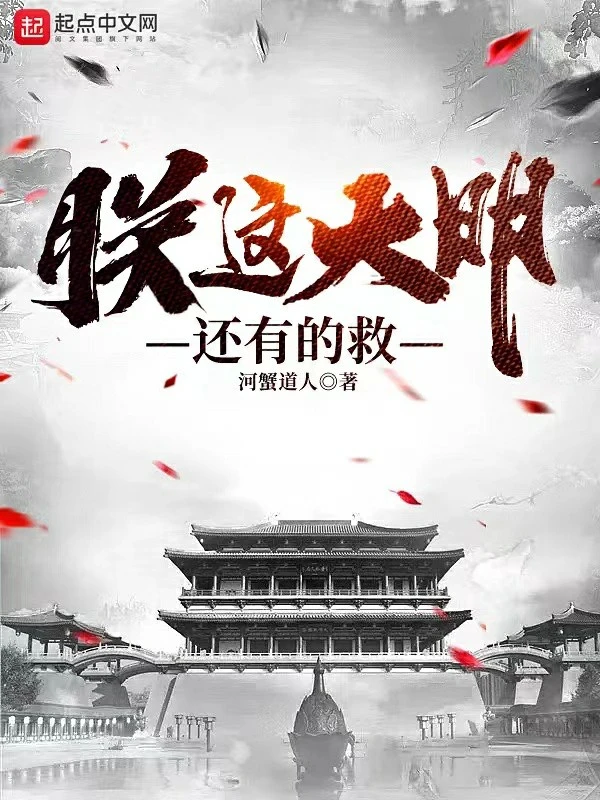
I, the Ming Dynasty, Can Still Save Me
朕这大明还有的救
- Status
- Completed
- Length
- 1.9M Words
- Genre
- Historical
- Audience
- Male
- Subgenre
- Song-Yuan-Ming Dynasties
- Updated
- 8mo ago
- Source
- Qidian
Stats
1Monthly votes
32.1kRecommends
107.3kFans
727Chapters
Tags
Synopsis
Reader comments
In booklists 5

Book List of the Twenty-Four Solar Terms
I have read the works and liked them very much. I hope that I can enjoy them together with others and analyze their doubts together. There will be no specific evaluations such as scores, because different people will have different conclusions. It is better to see for yourself than to listen to what others say. After reading the recommended books, I thought I might add them to the book list. If I didn't add them, it just doesn't fit my current taste. The current book list mainly includes history
80Books113Follows2yUpdated
Long History
5000 Years of culture has too many regrets
7Books112Follows2yUpdated

Mortals Share Their Favorite Books
Reasonably cool,
13Books13Follows2yUpdated
Travelers of the Ming Dynasty
IQ online, fluent historical text
10Books3Follows3yUpdated

Review Historical Novels
Evaluate
9Books2Follows2yUpdated
Readers also read
 Fu Ming 1627
 After Lying in Bed for Three Years, He Was Forced to Help the Han Dynasty
 Northern Qi, Sage Khan
 Red Mansion: Start Escaping and Farming from the Equipment Bar
 Siheyuan: Start by Picking up Attributes
 Nanming, This Emperor Is a Bit Stable
 Long Wanshengshi
 Beastmaster: I Can See the Evolutionary Path
 Immortal Who Seizes the Body
 Huang Ming
 I Really Don't Do My Job Properly
 Daming: Moral Kidnapping? I, Chongzhen, Have No Morals!
 Ming Dynasty
 The Journey of Immortals Starting from the Tang Dynasty
 Weird Cultivator: My Backing Is the Country
Most of the late Ming Dynasty articles analyze the factors that led to the demise of the Ming Dynasty, including civil servants, gentry, eunuchs, frontier troops, slaves, refugees, etc., But in the end, the emperor and the vassal kings were as clean as white lotuses. I couldn't understand it, but I was shocked 🤫
I think this book is good. It is already considered a very rigorous historical time travel text, and the author also has reference to historical materials. It is really good. I hope it will continue to be good and don't let the protagonist just push it all the way. I have read some outrageous historical time travel novels. They built guns when they came out, evened the land, popularized Arabic numerals, equality between men and women, and compulsory education. I was numb. They turned a blind eye to the shortcomings of the small-scale peasant economy when they did this in the feudal era, and even if they did it, they had to make a slow transition. But they are not, they are just mindless white texts, too rushed. This is the current situation of most historical literature. But I think this book is pretty good. It knows how to weigh the pros and cons, and it does everything step by step. It is more realistic. It is very good. Come on, the author (ง •̀_•́)ง
The previous reading was pretty good, but when I saw the protagonist directly accepting without modification the Western religion that forbids followers to worship gods and ancestors, which is the root of Chinese culture, and allowing them to preach, it was a bit unacceptable, and I wanted to abandon the book.
When traveling through the Apocalypse, don't focus on talking and arguing in court. It's useless. The bureaucracy in the late Ming Dynasty was rotten to the core, and no matter how good the policy was, it couldn't be implemented. The first step is to clear the inner palace. Knowing that the apocalypse dissolves in water, one's own safety cannot be guaranteed. The emperor's every move, the foreign ministers and the queen know everything, and there are no secrets in all policies and military actions. What else do you expect? Therefore, clearing the inner palace is the first priority. The second step is to reorganize the factory guards. The factory guards are the emperor's personal daggers. Only by sharp daggers can they defend themselves and fight back. Wang Anluo Yangxing's relationship with Dong Lin is too close. This sword is no longer useful and must be replaced quickly. The third step is to reorganize the ordnance camp, improve the treatment of craftsmen, and improve the quality of firearms. If a craftsman wants to do his job well, he must first sharpen his weapons. The fourth step is to rectify the Beijing camp. The Beijing camp is the emperor's sword. If the sword is not good, the emperor's words will have no deterrent effect. It will not be able to form a deterrent to border towns such as Jizhen, Liaodong, which have become warlords. If the central government is unable to punish the local areas, the central authority will be lost. The execution of the emperor's orders depends entirely on the mood of the local governments. The fourth step is to rectify the officialdom, use the preliminary force formed by the factory guards and the Beijing camp, implement the examination method and the final elimination system, kill a group of models, and make the bureaucrats nervous and serious. The fifth step is to rectify the border town and build fences. Use the money from corrupt officials who confiscated their homes and Shanxi merchants to make up for the wages owed to the Nine Borders, crack down on empty wages and grassland smuggling, cut off the collusion between courtiers, Shanxi merchants, and officers in border towns, and prevent the courtiers from jumping over the wall and letting go of the border defenses to lure the Manchus and Mongols into the customs, plunder the capital, and intimidate the emperor. The sixth step is to establish the Royal Martial Arts Hall and the Royal Academy of Sciences, and begin to cultivate its own administrative and military teams to replace the old bureaucrats and military officers in the future. The seventh step is to rectify the nobles and clans, relax the ban on ordinary clans, and no longer provide subsidies for titles below the prince, allowing them to eat freely. The eighth step is to rectify the navy, rebuild the shipyard, increase naval investment, combat piracy, develop maritime trade, and profit from maritime trade. The ninth step is to improve people's livelihood, reduce the burden on farmers, and cope with the upcoming disasters of the Little Ice Age. Never increase taxes, halve the Liao salary, crack down on all kinds of bad taxation habits, cancel the messy exorbitant taxes and miscellaneous taxes, collect fees and tariffs, and transfer fiscal revenue from farmers to businessmen. The tenth step is to abandon the government-run system of salt and iron, drive down the price of salt and iron, and increase market vitality. The eleventh step is to rectify financial banks, crack down on loan sharking, establish a central bank, and issue silver coins. The twelfth step is to re-measure the acres of land, divide the land into acres, and let the officials and gentry pay the grain as one, attack the officials and gentry, force the landlords' money to invest in maritime trade, industry and commerce, and make the gold and silver buried underground flow in the market. The thirteenth step is to cancel the distinction between officials and staff. To join the cabinet department, one must have grassroots management experience. Officials who excel in the assessment can be promoted to officials, and officials who fail the assessment are demoted to staff. The fourteenth step is to add a military aircraft department or a general staff department, separate military and political affairs, civilian officials will no longer participate in the military, and civilian officials will no longer lead troops. The military supervision system was changed to the military education and propaganda system, and scholars who failed to pass the Jinshi examination were transferred to the army and township grassroots. The fifteenth step is to gradually dismantle the garrison, organize and train the new army, and restart the land granting system for military merit. All the newly conquered lands in Northeast China, Hetao, Western Regions, Taiwan, and Nanyang will be granted land to soldiers, which will increase the motivation for the army to fight and expand the market for raw materials for merchants. The sixteenth step is to reform the official system, separate the functions and powers of the six ministries, and transform the six cabinet ministries into the direction of the Prime Minister's Yamen and the sixteen ministries, with refined and professional responsibilities. The seventeenth step is to improve the construction of the rule of law and introduce modern legal systems such as patent law, industrial and commercial law, marriage law and civil law. To sum up, after gradually mastering military power, the state system was gradually transformed from a backward feudal society that was not adapted to productivity to a capitalist state system that was adapted to productivity.
This book is very good, although it has some obvious shortcomings. 1. Except for rebirth, the author has not opened any obviously unreasonable plug-ins, which is quite in line with my taste. If you don't come up, just build steel and guns, and then open a modern military academy and other messy things. 2. Respect social customs. You cannot create new ideas in Confucian culture, you can only transform them, so scholars should continue to use them. I think it is quite reasonable. 3. The shortcoming is that it is not refreshing enough. Personally, I would like to see more market aspects written in the article. That is, with the reforms implemented by the emperor, the changes in the lives of ordinary people can also be written about other places, and cannot always be written about the changes around the capital. For example, with the opening of the sea, Guangzhou has changed. After all, there are more Southeast Asians from here, such as how Taiwan will face the indigenous people in the subsequent development.
The mud-legged rebel rebelled without a job. You are attacking the Jiangnan gentry, nobles, and powerful landlords. Now the clan is also going to attack. Everyone is against you. So who is supporting you?
This is a map of the situation when the protagonist traveled through time and became Emperor Tianqi when he first ascended the throne. You can refer to it (reprinted from the History Museum)
If he didn't fail, Zhu Youxiao was basically hopeless. There were people holding him back inside and outside, there were powerful enemies outside, big troubles inside, and God was sending disasters. If he wanted money or no money, he would be a second-rate man, but he himself was still an idealist. He didn't know how to do serious things, and he was the first to do random things. Unless there is a hardcore army that kills people and a group of unpaid talents to help you survive for a few years, there is hope.
After reading it, I found that the author's politics are negative and he has a wishful thinking that some people are good and some people are bad. Just like Xu Guangqi, Xu Guangqi loved money. The so-called military training in Tongzhou was because he bought a lot of wasteland in Tianjin and Hebei, which needed labor, and Pang Di of the Jesuit Society had been sending money to Xu Guangqi. Of course, Ye Xianggao received the most. The essence was that the comprador family of Ye Xianggao's group took advantage of the maritime embargo and smuggling from foreign countries. After he became an official, his whole family converted to the Jesuit order. Source of information: "Xu Guangqi's Family Letters" and "Three Mountains Theory"
It's also not good to travel through the emperors without any sense of historical reality! Zhu Youxiao didn't like carpentry, and Zhu Houzhao wasn't smart, out-of-the-box, or martial. The emperor who is in his teens or 20s, because of your experience in later generations, is always playing tricks with the court ministers all day long, and he thinks he has mastered the emperor's mind, and is very thoughtful. You think too highly of yourself and underestimate the ancients! They are still those middle-aged and elderly people who have been immersed in officialdom for decades and have doctorate degrees or above. If you were so good, you wouldn't still be coding now. You should be a successful businessman or be in a high position. Your IQ and EQ are both low, and you are only equivalent to a child born in the Ming Dynasty or a scholar at best, the kind that doesn't go well!
Did the protagonist borrow money from his relatives? The King of Fu, the King of Chu, and the King of Shu are so rich that they can raise an army of 100,000 people for more than a year by copying one of them. Basically, no one will object to your appointment of vassal kings, officials, or nobles.
Idiot, the problem is the economy. I've read a lot of books about the late Ming Dynasty recently, but I can't even write about the point. The Ming Dynasty died due to a huge deficit in revenue and expenditure. It can be said that the process must be very dangerous. Two emperors of the Ming Dynasty fell into the water, were hanged by palace maids, and were beaten. You may not survive for seven years after traveling through time. Cultivate your own talents, discard the talents who came from the imperial examination, strictly guard your own security, and unify the interests of the people around you, instead of using whoever is famous. If the fundamental problem is not solved, everyone will die
After Chongzhen succeeded to the throne, he spent ten years fighting Zhang Xianzhong to surrender, forcing Li Zicheng to flee the mountain, and basically resolved the Annei War. Just when he was about to turn his energy to the war against foreigners, a strange drought suddenly broke out in North China. From the Great Wall to the Huanghuai River, hundreds of millions of acres of fertile farmland fell into a state of no harvest, and tens of millions of people were unable to make a living. Only then did Li Zicheng ride into the disaster area and raised his arms to save millions of hungry people. Therefore, in the face of the three-year drought in North China, Li Zicheng, Zhang Xianzhong, and Huangtai chicken were just suffering from scabies. If we want to revive the Ming Dynasty, we must deal with three years of severe drought. We must build canals, dig irrigation wells, plant corn, and plant sweet potatoes in advance.
At the end of the Ming Dynasty, no one could save it, and the interest groups were rotten to the core. Unless it is broken up and reorganized, it can only be plowed all over again. Without excellent interest groups, how many people can you manage?
Modern reforms are so difficult and have reached a dead end, let alone the late Ming Dynasty
Very worried for the author
The worst Little Ice Age is about to come, and the emperor is still entangled with civil servants and nobles? Go south to grab land and move the refugees to farm it. I told the officials that X had a dream. In the next twenty years, the weather would be colder and natural disasters would occur more frequently. X wanted me to take back the land in Annan to cultivate the people. Even if the civil servants don't believe it, time will prove it, and it saves the civil servants from forcing you to issue a criminal edict when a natural disaster occurs. Taking advantage of the "She'an Rebellion" to mobilize troops southward, Annan seems to be in civil strife at this time. There will be chaos if there is no plan for civil strife. Anyway, history is also in chaos. Immigration should be done slowly, and you can plan ahead. The pirates on the southeast coast can take advantage of it. The British started using pirates. As for predicting dreams or predicting dreams yourself, it depends on whether the author wants to develop science. Don't you have a newspaper? Ask Yan Guan, who is fine, to check the history books. Can you find out about the small glacier natural disaster that occurs every three hundred years or so? As for Liaodong, it was said that the weather was cold and uninhabitable, so we temporarily contracted the defensive position and left the cities that were difficult to defend. In order to prevent the Qing army from encircling and attacking for reinforcements and turning it into a fuel situation, Shanhaiguan must send reliable and capable people to defend it. At the same time, Shandong and Pidao were used as bases to cross the sea and harass the guerrillas. The Liaodong Army has the problem of raising the self-respect of the bandits, so it cannot be allowed to grow to prevent Liaodong from bringing down the Ming Dynasty economically. When the weather gets warmer and the Ming Dynasty's economy improves, Liaodong will be taken back. In short, Liaodong cannot spend too much on military expenditures. The right way is to use military expenditures to develop territory southward and use pirates to keep up with the pace of great navigation.
Regarding my views on the book, there are many negative emotions. Let me say something. There are more than 40 chapters that I have not read and I am not ready to continue. The overall impression given to me is that it is a relatively mediocre book. At the beginning, I had some expectations of resisting the collapse of the system and saving the world, at least I haven't seen it yet. For example, bring the protagonist into a project. The main purpose of the project is to solve the collapse of the Ming Dynasty government entity. Project background-The imperial court in the late Ming Dynasty was like a classic car that was almost at the end of its design life. The problems were all-round. Main problems of the project - internal and external troubles, government corruption, inability to collect money, officials being stuck in the old ways, degeneration of the ruling class, etc. Protagonist's solution - eating big households, training new troops, running newspapers, opening up the sea, eliminating and beating those who disobey. What's going on in the book? The author's method for dealing with the main problem is to describe the problem and send a blank document to someone else, and then it's gone. However, the specific implementation takes time (there are almost a million words in the book, and it takes about a year), and it is necessary to work out the details to solve the problem, and there is very little written here. The lack of these things gives people a sense of unsteadiness, just like an iceberg floating on the sea. To sum up, it is a book about people who wanted to save the world in the late Ming Dynasty and used simple routines (newspapers, new armies, big eaters) but could not write down the various details and emotions behind the routines.
Many Ming Dynasty novels are about being an emperor in time travel, and for the sake of conflicts, they especially like to create inexplicable civil servant cabals that do not exist at all. However, if they are about time travel and becoming an official, the emperor has unlimited power. It is a pertinent point to write about officials. After all, in theory, the power of the Ming Dynasty emperor is unlimited within the country. The relationship between the civil servants and the emperor written in this book is quite real.
The pace is too slow. Only one year has passed since the 400-plus chapters. It's not easy to finish later and it's easy to end up unfinished.
Today's historical novels basically follow the same routine until the second half. Especially the one about the Ming Dynasty, killed Dai Jin and now faces the whole world. What about enfeoffment, colonization, science, all kinds of pretense and crushing You will win anyway, what is there to see There are several historical novels on the bookshelf, the early part is interesting, but the second half is almost the same. There is nothing to write
I think the most reasonable part of this book is that everything is done step by step, with traces, and does not appear suddenly. Of course, there is a problem with the update speed. There are so many pictures only in the second year of Tianqi.
I have some suggestions about firearms. The government and the army do not need to vigorously build firearms troops. The battlefield of that era was not yet dominated by firearms. Melee troops were still very important, far more important than firearms. The Ming army preferred three-eyed blunderbuss, and the fact that the Qing army could win can prove this. The government and the army should focus on traditional arms such as close combat heavy armored infantry. The government and military should transfer the main force in building firearms armies to civilians, and promote gun ownership by all people. The official army is only responsible for maintaining a small backbone of the firearms army. The rest of the firearms army relies on temporary recruitment from the civilian population during wartime. Firearms soldiers are recruited with guns. Firearms soldiers are easy to cultivate and train. After the entire population is promoted, there will be more troops. It can also be organized by local governments on a regular basis during slack periods. Civilians under the rule bring their own guns for shooting training. Since the training is temporary and short-term, the cost is relatively small. It also avoids the problem of costly but counterproductive weapons manufacturing. This kind of training can basically support temporary recruitment during wartime (it also costs less).
Come on, author! It's rare to find a good book, but don't ask for speed. Combined with the strength situation at that time. Develop strategies that can be implemented and things will go smoothly if things go slowly.
Oppose diary-style running account writing
Apocalypse has been on the throne for more than a year, and he has done so many great things? When did the feudal bureaucracy become so efficient? As a side note, the initial results of the Five-Year Plan and New Deal reforms are pretty good!
A little bit humble
There were so many novels about time-traveling emperors in the late Ming Dynasty, but none of them were excellent. If you want to write a good imperial novel, you must have a book of Ming History or Chongzhen Records next to your pillow, right? How many of the current authors can understand Chongzhen Records, and how many can understand classical Chinese? A modern soul travels to an ancient emperor. Many authors describe the emperor as a saint, wise, wise, and decisive in killing. Do modern people understand the power of emperors and the way to govern their subordinates, and know how to apply it to their hearts? The important thing is that an ordinary person traveled to the emperor and suddenly had supreme power, but he was so self-disciplined? It's like a big star suddenly letting you do whatever you want. Who can control it? Actually, it doesn't matter! When it comes to fast food, just eat as much as you want!
How could it be that the capital camp was thought to be filled only by nobles and eunuchs?
After the restructuring of the Beijing Camp, it was jointly managed by the Ministry of War, nobles, and eunuchs. After reading dozens of chapters, I found that the author only mentioned that there were nobles and eunuchs in the Jingying who were paid and served as slaves. He asked Chen to carry out reforms and did not mention the civil servants. Little did he know that in the later period, the civil servants in the capital also used various services in the Jingying. The Jingying almost became a construction worker for the civil servants, nobles and eunuchs. In addition, in the late Ming Dynasty, the military households in the various guard stations were also well served by civilian officials and scholars. Scholars liked to travel and study. In addition to domestic servants, they served military households with cards. The famous geographer Xu Xiake was like this. He traveled around the country, servicing not only military households, but also ordinary people.
After writing so many things in two or three years, it will be top-heavy and end at the end.
When the time comes, we will make a map of the mainland of the Ming Dynasty, actual control, and colonial maps, and write more about the lives of ordinary people, opinions about the protagonist, how much the population is still growing, infrastructure development, and overseas immigration development. Write more. I feel like your book can reach 1,000 chapters.
1. Adopting the strategy of cutting down the vassal vassal can completely get rid of the heavy burden of Zongfan, but doing so means denying the legitimacy of Zhu Di, who used the excuse to oppose the reduction of vassalage and ascending to the throne of God; 2. Allowing the descendants of Zongfan to participate in Increasing the imperial examination and self-financing can also prevent the vassal from becoming a heavy burden on the empire, but this is simply not feasible, because allowing the vassal's children to participate in the imperial examination means restoring the vassal's right to participate in and discuss government affairs, which was achieved with great difficulty. The civil servants who controlled the government would never allow it, because allowing the children of the vassal to fend for themselves would inevitably lead to them not using their privileges to rebel against the normal economic order of the empire; 3. Further reducing the lumi of the vassal could also prevent the vassal from becoming a heavy burden on the empire, but doing so would inevitably make it difficult for other vassals except the vassal kings and princes to live. Once these vassals find it difficult to live, the subjects of the empire will inevitably doubt the ruling ability of the Ming Empire.
Reform of the Governor's Mansion of the Fifth Army
The Governor-General of the Fifth Army can reorganize and gradually restore some of the real power of the nobles (military nobles). The Governor-General of each government only has the power of training and combat command. The right governor can appoint a civilian censor to supervise and distribute military pay. Each government has the power to guard the land and enforce military discipline (later political commissar)! The Ministry of War has the power and responsibility to appoint and dismiss officers based on their merits, rewards and compassion, logistical support, and strategic planning. The governor's office of each prefecture can directly appoint officials below the fifth rank. Officials above the fifth rank can be appointed and dismissed by decree, but they have the right to participate in impeachment and the right to record secret reports.