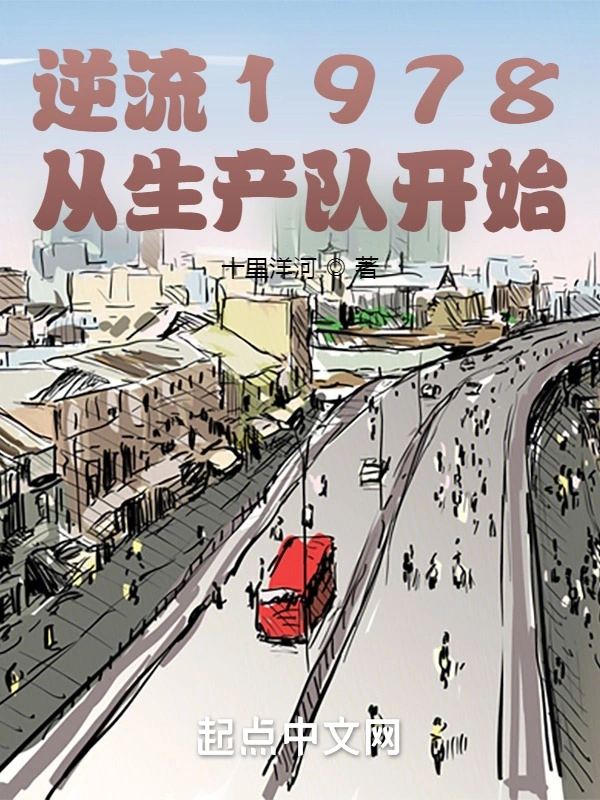
Countercurrent 1978 Starts with the Production Team
逆流1978从生产队开始
- Status
- Ongoing
- Length
- 1.1M Words
- Genre
- Urban
- Audience
- Male
- Subgenre
- Urban Life
- Updated
- 2y ago
- Source
- Qidian
Stats
0Monthly votes
11.1kRecommends
35.2kFans
486Chapters
Tags
Synopsis
Reader comments
In booklists 1




Readers also read
 Department of Abnormal Pathology
 Rebirth in 87, Starting from Selling Sesame Seed Cakes and Vegetables
 Evil Gourmet: This Person Has a Very High Food Quotient!
 China Entertainment: This Top-Notch Character Is Too Stable
 If You Are Already an Adventurer, Who Should Work Hard on Your Own?
 Rebirth of a Fishing Village: Starting from Hua Axiang in Jiehu Village
 Great Power Army Reclamation
 The Artist Begins in Prison
 Traveling at the Same Time: Great Love to the Heavens
 Rebirth 83: the Prodigal Son Returns
 Forty Years of Turbulent Life
 Era: Salted Fish Life Since Going to the Countryside
First of all, let me say that I just read it. The author must have not checked the information and just wrote it. In the first 78 years, there was no large-scale contract work. There was no village, and there was no village party secretary. There were only production groups, production captains, brigade leaders, township revolutionary committees, and county revolutionary committees.
There are so many bad things happening in just thirty chapters, don't you think it's a bit too much, author? This book must be eunuch
What kind of bullshit are you writing? You jumped so much in 1978. I think you have to wait until 1983 to go shooting.
The Holy Mother is here, and I don't obey you at all. If you don't unite a group of weird people, I don't know where you come from. You must lead them to get rich with your sense of responsibility. You are a time traveler. Do you have feelings for the villagers?
It was okay originally, but if you have to add Hong Kong to show off, it's basically useless.
Basically, they are all from Bendai. They should be around the brigades, villages, and villages. Once they go beyond, almost no one will read them.
Today's authors have no insights or information, and rely solely on their imagination. I don't know who will pay for such a book.
This book is quite good. Personally, I think the biggest highlight is that the protagonist's plan to plagiarize the book will turn out to be plagiarism. This is my favorite point. Many authors simply ignore this problem. Like many entertainment articles, books, songs, and movies, as long as they are released half a year before others appear, there is no plagiarism. It is really funny.
😅😅😅Those who say this book is good, what is so good about it? ? ? Were the gangsters in the town in 1978 no longer gangsters? ? ? Why can you get it done with just a few words from the village below? ? ? In 1978, you casually took out a thousand yuan, how did you get the money (note that the average monthly salary of employees nationwide in 1978 was 51.25)? ? ? How long will it take until the college entrance examination on March 11, 1978? You want to build a brick factory, you want to become a giant, you want to write novels, and you still want to show off and slap people in the face at every turn? Do you not need time to review for the college entrance examination? ? ? 😥😥There are too many poisonous points and too many unreasonable things. I can't stand it anymore.
I would like to give a few suggestions to those who write chronological articles. First, do not write anything that is not in line with the forefront of society and the times before putting it on the shelves. Second, don't write about trivial things at home. Third, the age amount should not be too exaggerated. Fourth, don't write about special powers beyond ordinary people. Author, take a look at how many of them you have
I thought it was about getting rich in the countryside, getting rich in the countryside, and alleviating poverty, but the result is that I can't leave by making money in Hong Kong... It seems boring. What I want to see is the development of my hometown, the distribution of money in the countryside, the improvement of the village's infrastructure, and everyone living in villas, instead of the protagonist making money here, living a luxurious life, and living in luxury. There are too many such novels, and after all, only a few people develop their hometown. Changing the plight of the countryside is the big picture. I think the author is also from a rural area, but he wants to escape from there when he is reborn.
Whether it's a thief, a legacy, a harem, or a stallion, it doesn't work now. The novel doesn't look at what you do. If you want to make money, it just asks you if you want to. If you think so, don't be ridiculous. If you've already been reborn and the heroine is still single, why should you be reborn?
It is necessary to write about so many beauties, but the formula is too deep and boring. The protagonist is wooden, does not understand the affairs of men and women, is slow, and is a time traveler. It is so exciting to write like this. There are so many beauties who pretend to be stupid and dare not push them down. It is better not to write it.
Reborn as an official? Fool? Reborn, you have made enough money and the official doesn't do anything for you?
What kind of antique stamps are they doing? I don't want to look at them. To put it bluntly, it's the water chapter. Who is still relying on antiques and stamps to survive?
The author has not experienced that era, and does not even know much about the 1980s and early 1990s. He has not asked an old man to find out about it. There are many things that do not conform to the characteristics of the era. Many of them are taken for granted, and there are many poisonous points. At that time, there were no village-level units, such as production teams, brigades, communes, districts, and counties. In the early 1990s, only after the districts were withdrawn and merged into townships were towns, villages, and brigades and communes abolished.
If it were 1978, we could first learn from Huaxi Village to accumulate collective capital. In the mid-to-late 1980s, we abandoned the West China model and learned from the Huawei model. In 1992, we gave up everything and started over. The company system is actually no different from the ancient aristocratic/literary-official system. They control public opinion/productivity and the means of production, hire labor for socialized mass production, and generate surplus value for use and distribution by the upper class. Aristocratic families are expansionistic, while scholar-bureaucrats are only conservative. During the Song Dynasty, the highly developed foreign trade did not promote overseas colonization. This is a classic case.
The author is an idealist, as long as he is happy when he writes
Just writing this indiscriminately, have you checked the information on the work point system in rural areas? Do more or less, it's the same, it's nonsense