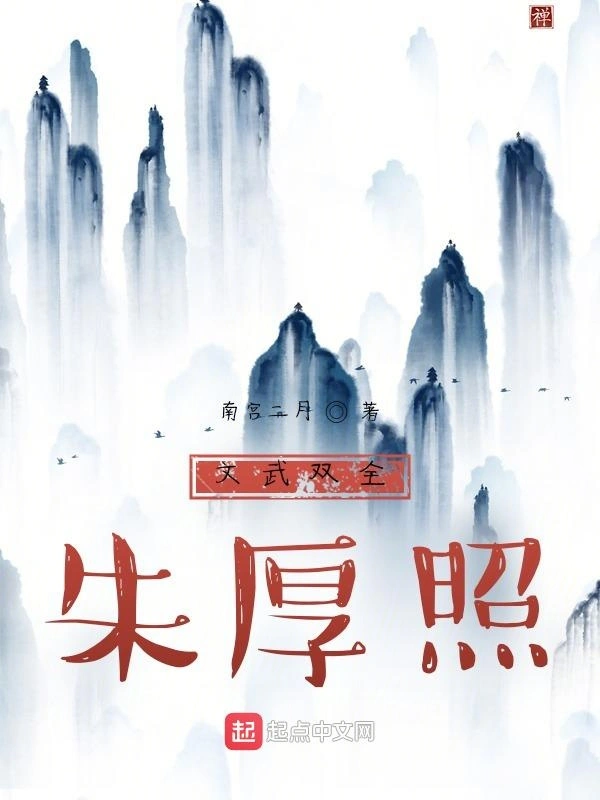
Zhu Houzhao, Both Civil and Military
文武双全朱厚照
- Status
- Ongoing
- Length
- 394k Words
- Genre
- Historical
- Audience
- Male
- Subgenre
- Song-Yuan-Ming Dynasties
- Updated
- 8mo ago
- Source
- Qidian
Stats
0Monthly votes
5.8kRecommends
10.4kFans
179Chapters
Tags
Synopsis
Reader comments
Readers also read
 Fu Ming 1627
 Red Mansion: Start Escaping and Farming from the Equipment Bar
 Northern Qi, Sage Khan
 After Lying in Bed for Three Years, He Was Forced to Help the Han Dynasty
 If You Are Already an Adventurer, Who Should Work Hard on Your Own?
 Taichang Daming
 What's Wrong with Me, Zhu Changluo, Being a Bit Shabby?
 The Artist Begins in Prison
 Traveling at the Same Time: Great Love to the Heavens
 Daming: Emperor Chenghua Is Here to Ascend the Throne First!
 Emperor Zhengde
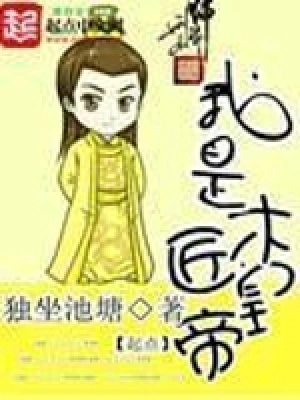 I Am the Carpenter Emperor
After Hongzhi, the military strength of the Ming army declined significantly compared to the Chenghua period. Although it has not yet reached the situation where the Beijing camp was completely rotten in the Jiajing period, it is not far behind. Zhengde in history was achieved by recruiting elite border troops to Beijing and organizing them into four foreign families and two official offices. At the same time, border generals like Jiang Bin were promoted to fight as new armies. But in doing so, although the military's combat power was temporarily consolidated, it did not completely solve the problem. It even caused dissatisfaction among civil servants I don't know how the author plans to reorganize armaments?
After the Ming Dynasty experienced the tolerant politics of Zhu Houzhao's father, the civil servants became more beautiful than the others. Zhu Houzhao might even have died among the civil servants. After all, in the war with millions of Mongolians, only a few people died in a few days. Do you believe it? Even if those few people died, Mongolia would not go south for decades.
The world maps in people's minds are generally drawn by Europeans. Few people know that we Chinese also drew a world map during the Ming Dynasty. The world map drawn by the Ming Dynasty was called the Complete Map of Kunyu and Ten Thousand Kingdoms. Western missionaries took this opportunity to present a map of all nations to Ming Shenzong, which attracted Ming Shenzong's attention to the matter of drawing a world map. The Ming Dynasty spent a lot of manpower, material and financial resources on this, using silk and other items to make a world map, which is not much different from the current world map. "Kunyu Wanguoquantu" is a world map jointly drawn by Matteo Ricci and Li Zhizao. It is the earliest painted world map in China. It is based on the map of the Western world at that time. It changed the prevailing pattern of placing Europe in the center of the map, and instead placed eastern Asia in the center of the world map. This move set a precedent for China to draw world maps. The Earth shown in "Kunyu Wanguoquantu" is a round ball. The small picture further illustrates the concept of the Earth being a star, completely subverting China's understanding. One is the concept of "Earth", which intuitively shows this spherical space to the Chinese people. Although Zhang Heng's "Notes on the Armillary Sphere" of the Eastern Han Dynasty stated that "the sky covers the earth, it is like a shell covering the yellow". After Zheng He's voyages to the West, there was also a record of "the theory of a round earth" in "History of the Ming Dynasty Astronomical Chronicles"
On Empress Dowager Zhang
Under the protection of Zhu Youtang, Queen Zhang was indeed arrogant and favored. Even the reward Zhu Youtang gave to Prince Zhu Houzhao's wet nurse was confiscated when she saw it. One time, Zhu Youtang deliberately joked with her, asking Xiao Zhu Hou to take a photo of her, and Xiao Zhu did it; and then asked Xiao Zhu to take a photo of his wet nurse, after all, she was a real person who got along day and night. Xiao Zhu couldn't bear it, and Queen Zhang was so angry that she kicked the wet nurse out of the palace... The follow-up to this joke: Xiao Zhu lost her wet nurse and burst into tears. Zhu Youtang and his wife were so anxious that they sent eunuchs four times in a row during a meal, and the wet nurse hurried back to the palace. The wet nurse acted arrogantly and said that this family was not easy to take care of and she would rather commit suicide. Queen Zhang was so frightened that she quickly sent back all the confiscated rewards. Zhu Youtang specially rewarded the wet nurse's husband and his family before inviting her back. Xiao Zhu is happy, and the whole family is happy. [When Wu Zong was the crown prince, the wet nurse of a certain family was in the palace. When Emperor Xiaozong came to visit his mother, most of the rewards he received were received by Empress Zhang without any thanks. The emperor's questions are answered with the truth. The next day, he gave wine and food to the emperor and empress. After all, I couldn't thank you because I held the prince in my arms. And because the prince was crying, the emperor and the empress squatted down to watch him. The emperor ordered the wet nurse not to sit up. In the future, the emperor said in a play that the prince struck the queen, and the prince struck him. The prince was ordered to attack the wet nurse, but the prince could not bear to attack her. Later, he was furious and scolded him. After returning home, her husband was surprised and said: "It is not easy to get the position of Baobao. What can you do if you are not afraid and get out of the crime?" The wet nurse said: "This is for you to gain a thousand gold, why would you rather be afraid of going out? I have not tasted the taste while living in the palace, so I bought meat in a hurry. I used salt and sauce to prepare food." Before the meal was finished, the envoy arrived to summon him. The prince has lost his wet nurse and cannot stop crying. The emperor and the empress are anxious to inform you. Just press on. The wet nurse was unable to do so and wanted to commit suicide. Later, he was frightened and returned all the grace given by the emperor. The emperor also gave generous gifts to his husband. After counting four times, the order was issued and the envoys looked at each other. When the prince saw it, he started again. How well the emperor Zhu Houzhao, Emperor Wuzong of the Ming Dynasty, did, there are different opinions in history, with mixed praise and criticism. Although he is wanton and fun-loving, he is not violent or cruel, he is grateful, respectful, and unjust. He is still worthy of the word "good person". The biggest regret is that he did not leave any blood to his parents, who also died young. When Zhu Houzhao was dying and seriously ill, he had never had a biological son. He originally hoped to choose a younger member of the clan to create an heir for himself. This is also the human nature of any emperor. However, after he fell into a coma and died of illness, during the dozens of days when the imperial power was handed over and the emperor was absent, it was his mother, the Empress Dowager Zhang, who could represent the imperial power. Empress Dowager Zhang had no political acumen. In the decades from Ming Xiaozong to Ming Wuzong, she only wanted to benefit her mother's family and her two younger brothers. The two uncles of Ming Wuzong, Zhang Yanling and Zhang Heling, have been taking advantage of power for personal gain and doing many unjust things for many years. Therefore, their relationship with Ming Wuzong is very cold. Zhu Youtang hosted a banquet in the palace and saw that his mother-in-law used silver tableware, so he rewarded her with a set of gold tableware. However, Empress Zhang was not satisfied and said to Zhu Youtang, "My father has not received the reward yet." It can be seen that Empress Zhang did not seem to realize that she and her family should be restrained in their words and deeds. This may be a sign that she has no intentions, but as a queen, this is not an advantage in any case. Once, Li Mengyang wrote a letter to expose the crimes of Empress Zhang's brother Zhang Heling: "Zhang Heling, the Marquis of Shouning, recruited scoundrels and exploited the thieves and the people, and was as powerful as a winged tiger." ("History of Ming Dynasty: Biography of Li Mengyang") Empress Zhang's mother, Jin, cried in front of Zhu Youtang, and Zhu Youtang had no choice but to imprison Li Mengyang in Jinyiwei and soon released him. Jin kept crying and wanted Zhu Youtang to punish Li Mengyang. Zhu Youtang ignored her, called Zhang Heling aside and severely reprimanded him. From then on, Zhang Heling's behavior restrained. Later, Li Mengyang met Zhang Heling on the street, walked up to him and knocked out two of his teeth, but Zhang Heling did not dare to care. Once, the eunuch Xiao Jing and the Minister of Justice Tu Xun dealt with the slaves of the Zhang Heling brothers who had occupied the people's fields. Queen Zhang was so angry that she cursed Xiao Jing. When Zhu Youtang saw this, she also scolded him. Later, he rewarded Xiao Jing and Tu Xun with fifty taels of silver each, explaining to them: "I don't want to make the queen sad." One day in the tenth year of Hongzhi, the Zhang Heling brothers attended a banquet in the inner court. When Zhu Youtang went to the toilet, he took off his hat and put it aside. Zhang Heling picked it up and put it on his head under the influence of wine. Moreover, Zhang Heling's younger brother Zhang Yanling raped the palace people after drinking. The eunuch He Wending was loyal and upright, so he couldn't help but get angry and held his hat in his hand. Dagua wanted to hammer them, and reported to Zhu Youtang: "The two Zhangs are disrespectful and no one will respect them." ("History of the Ming Dynasty: Biography of He Wending") Empress Zhang was very unhappy, and Zhu Youtang ordered He Wending to be imprisoned in the Jinyiwei Prison. Perhaps Zhu Youtang initially planned to lock He Wending for a few days before releasing him, just like Li Mengyang did last time. However, during the incident, Pang Pan, censor Wu Shan, Shangshu Zhou Jing, chief minister Li Kun, and Jinshi Wu Zongzhou successively wrote letters requesting the release of He Wending, which aroused Zhu Youtang's suspicion that his trusted eunuchs were colluding with court ministers, which he could not allow. Empress Zhang actually sent eunuch Li Guang to kill He Wending with a stick. In the eleventh year of Hongzhi, Li Guang was convicted. Zhu Youtang regretted He Wending's death and wrote a eulogy in his own hand. Therefore, the Zhang brothers wanted to take advantage of this change of throne and choose an emperor to gain "the merit of support" and gain promotion for themselves, which was easily exploited by Yang Tinghe As With the help of the Zhang brothers, Yang Tinghe, the most trusted civil servant of Emperor Wuzong of the Ming Dynasty, was able to persuade the Queen Mother Zhang not to give an heir to Emperor Wuzong of the Ming Dynasty, but to follow the ancestral precepts of the Emperor Ming Dynasty set by Zhu Yuanzhang to usher in the closest blood relationship to the Xingwang Zhu Houcong, who was the Jiajing Emperor of Ming Shizong. Thanks to Yang Tinghe's "Great Ceremony", the two uncles of the Zhang family who had been doing many unjust things for decades since the reign of Emperor Xiaozong of the Ming Dynasty were finally punished by the Ming Dynasty due to Emperor Jiajing's anger. Empress Dowager Zhang, who had been arrogant for half her life, ended up in a miserable later life. I wonder if she would regret at this moment that she had blocked Emperor Xiaozong of the Ming Dynasty from taking a concubine, and even felt jealous of her son's wet nurse? Of course, there is a ready-made example of Empress Qian of Emperor Yingzong of the Ming Dynasty being bullied by the Empress Dowager Zhou and her son. Later, Emperor Wanli's kindness to his aunt Empress Chen was only superficial, not one-tenth as good as that of his biological mother, Empress Dowager Li. In the feudal era, it was so miserable for a woman to have no children of her own. With Empress Zhang's emotional intelligence and the Zhang family's style, what difference can it make whether she gets along with the concubine emperor or the nephew emperor? Just sighing.
Comment section, do people nowadays have such low self-esteem? As long as you know a little bit about history, it doesn't mean you don't know anything. The only thing behind the Ming Dynasty was in firearms
In the twenty-eighth year of Hongwu, the amount of annual income was re-determined: Prince 10,000 shi, County Prince Two thousand stones, The general of Zhenguo, one thousand stones, The general of Fengguo, eight hundred stones, The general of Fengguo, six hundred stones, The lieutenant of Zhenguo, four hundred stones, The lieutenant of Fuguo, three hundred stones, The lieutenant of Fengguo, two hundred stones. In the entire Ming Dynasty, 83 people were named princes by Zhu Yuanzhang's descendants. Except for those who died young and could not determine their fiefdoms, a total of 50 princely residences were established across the country. There are countless people who have been awarded the titles of county prince to lieutenant of Fengguo. In the Ming Dynasty, among the 50 vassal princes, except for those who had no sons and were granted titles, or who had no titles due to crimes, they all continued until the demise of the Ming Dynasty. Over the past 200 years, a total of 289 princes and 11 kings of Jingjiang have been canonized. Among them, 8 died before becoming vassals, 10 were deposed due to crimes, and 24 of the last kings at the time of the Ming Dynasty were either killed by the rebels or ended up unknown, and failed to build tombs according to the regulations of the Ming Dynasty princes. There is also King Xingxian. Because his son Zhu Houcong succeeded him, the mausoleum was upgraded to an imperial mausoleum. The remaining 246 princes and 10 Jingjiang kings have their own tombs. Now only the 10 tombs of King Jingjiang in Guilin are relatively well preserved. Prince: The eldest son of the emperor is established as the prince. The emperor's sons are established as princes at the age of ten and have fiefs, so they are also called vassal princes. The prince's official name is king. When the princes and sons are ten years old, they will be named county kings; Generals of the country: the eldest son of the county king is the eldest son of the county prince; the eldest grandson is the eldest grandson; the princes and princes are the generals of the country; General of the auxiliary state: the eldest son of the general of the auxiliary state succeeds to the general of the auxiliary state, and his sons are generals of the auxiliary state; Lieutenant of Zhenguo; the eldest son of General Fengguo succeeded to the throne of General Fengguo, and all his sons became lieutenants of Zhenguo; He is the lieutenant of Fuguo; He is the lieutenant of Fengguo. The eldest son of the lieutenant of Fuguo succeeds to the position of lieutenant of Fuguo. All his sons are lieutenant of Fengguo All titles are hereditary and will always be different from those of the people of Qi. From the prince on down, no food and rent tax will be paid but the annual salary will be paid.
As a newbie, I tried my best to write this chapter today, but this is all I can write.
The important thing is military power, other things are just side effects. With military power, the protagonist can recruit Dahao, with military power, he can initiate major cases, and with military power, he can have imperial power.
The political struggle of the protagonist seems to be unsatisfactory, even though there are black technologies to support these old monsters. But in terms of political operation, it is estimated that it will still be tightly controlled. Even old monsters like Jiajing can't play with civil servants like Zhengde years. In the end, it was the big gift bill that recruited and split a bunch of stupid young people, and then the civil service group headed by Yang Tinghe was purged But at the moment, the big gift bill was made by those talented people. Regarding the problem, a little help might save him from wasting so much time like history). Gui E would not take the provincial examination until the year after next. Xia Yan's father died of illness in the first year of Zhengde, and he would only take the provincial examination five years later. As for Huo Tao, he had not even participated in the joint examination. It can be said that they basically cannot help you at this time.
In the Ming Dynasty, there was no institution with the official name "Imperial Kitchen". Generally speaking, those responsible for cooking for the emperor were mainly the Guanglu Temple mentioned in the early period. In the later period, it was basically the internal supervision department, called "Internal Kitchen". At the beginning, the presence of Guanglu Temple was still very high, because Guanglu Temple was not only responsible for cooking for the emperor alone, but he also had many other things to be busy with. For example, all kinds of banquets in the palace are handled by Guanglu Temple. (Whenever there is a Zhengdan, Holy Festival, Winter Solstice, or auspicious banquet, all the food, wine and wine must be provided by Guanglu Temple). Guanglu Temple is also responsible for the food and wine given to ministers after the sutra banquet and daily lecture. Moreover, Guanglu Temple is also responsible for organizing sacrifices, offering "blessings" and "blessing wine" at various sacrificial ceremonies, and "displaying sacrifices" to the tombs of the former emperors... In addition, on certain festivals, Guanglu Temple will also prepare different foods to give to the ministers: spring cakes are eaten at the beginning of spring, and spring cakes are eaten at the beginning of spring. Yuanxiao dumplings are eaten on the first day of the lunar month, dumplings are eaten on the 8th of April, rice dumplings are eaten on the Dragon Boat Festival in May, cakes are eaten on the Double Ninth Festival in September, and wax noodles are eaten on the 8th of the twelfth lunar month... Therefore, the food in Guanglu Temple, whether it is dedicated to the living or the dead, whether it is raw or cooked, has political significance. In addition, tribute items from various places, such as tea leaves, new bamboo shoots, dried fish, and dried meat, are also collected and processed by Guanglu Temple. So the functions of Guanglu Temple and the "Imperial Kitchen" do overlap, but they are not directly equivalent. In the early days, my cute emperor basically ate the food cooked by Guanglu Temple. Guanglu Temple is indeed a rich place. Please look at this table, which is an incomplete record of the meat consumed by Guanglu Temple every year. : The record in "Ming Huidian" is: Guanglu Temple sent 100,000 animals every year: 50,000 in the first half of the year, 50,000 in the second half, and went to Zhejiang and other chief ministers, and the two Zhili prefectures sent for relief. It can be seen how fat the job of Guanglu Temple is. I think the officials there must be fat people~ However, in the late Ming Dynasty, the emperor gradually did not like to eat at Guanglu Temple. Why? Because he tastes bad! Xie Zhaozhe said: "Nowadays, the food and drinks of the imperial officials have no delicacy or special taste; only fish and meat are cooked; the thickest wine is best when roasted." What do you mean? It means that the "imperial meal" prepared by Guanglu Temple for the emperor is nothing more than big fish and meat, which are then grilled, boiled and seasoned. Think about it, isn't this just canteen food? Don't believe it, let's take a look at the menu of the Chengcheng Banquet after the suburban sacrifice in the second year of Yongle: Shangzhuo: Five kinds of wine. There are five kinds of fruits. Five kinds of tea and food. Burn five kinds. Three kinds of soup. Eat the steamed buns twice. Horse meat rice. Five minutes of wine. Zhongzhuo: According to the four characteristics of wine. The fruits are all kinds. Three kinds of soup. Eat the steamed buns twice. Horse, pig and mutton rice. Five minutes of wine. Accompanying the general is like drinking wine. Pink soup. Double down on steamed buns and pork rice. One hour of wine. Look at these dishes, none of them look appetizing... To be honest, there are so many cooks in Guanglu Temple. At the most, there are more than 6,000 people, and at the least, there are more than 3,000 people. Among so many people, there is no one who can cook the dishes. The cooking is delicious, and I am impressed... (The number of kitchen servants in Guanglu Temple: in the 10th year of Xuande's reign, the quota was determined to be 5,000. Later it was increased to 6,884. In the eighth year of Jiajing, 5,644 people were found in the food industry. In the ninth year, the quota was approved at 4,000. In the 16th year, an additional 100 were added. Thirty-four years later , reduced to 3,600. In the first year of Longqing, the title was 3,400, and the quota will always be fixed) There is also an entry in "The Name of the Capital Conflicts": "There is a proverb in the capital: articles from the Hanlin Academy, swords and guns from the arsenal; tea soup from Guanglu Temple, and prescriptions from the imperial hospital. . The ridicule is not worthy of the name." It can be seen that the food of Guanglu Temple has become famous throughout the capital, so under the influence of various factors, the banquets originally prepared by Guanglu Temple for the officials who participated in the sutra banquet and daily lectures were also cancelled, and the banquets were directly converted into silver coins for the officials. Believe me, they must be because they dislike the food being too unpalatable... After that, even the converted silver taels became less and less, so some people lamented: "When I first became a scholar, Tateya couldn't repair it every year. After paying fifty or sixty gold, he is now the emperor's court master. He has just received thirty gold and has to work hard to make his own food. Sure enough, the old scholar is not as good as the young scholar!" So in the later period, the eunuch department usually took care of the emperor's meals. Let's take a look at the record in "Zi Zhong Zhi": The meals that the saints eat every day are handled by two or three people who are in charge of the seals, pens, and Dongchang. In recent years, it has been changed to this prison (Shangshan Prison), which also saves time. In the 13th year of his reign, the commander-in-chief of the Restore Ceremony, took charge of the factory, held the pen, and prepared meals in turn every month, still following the ancestral system. Do you think it's weird? In addition to the Shangshang Supervisor, there are actually people from the Si Li Supervisor and Dongchang who cook for the emperor? In fact, the eunuchs and eunuchs do not actually cook the food themselves, but the cooks under the eunuchs do it. These eunuchs hold great power but have no descendants. They have money and leisure, so how can they spend their time? Then you have to spend a lot of money on your appetite. Therefore, eunuchs are often the most pursuing food. As the saying goes, "When people are sitting together and eating, they will definitely get rice and eat it. They will eat together to be full, and eat the bones together... If there are vegetarians who practice good chanting of Buddha, they will also list fruits, drink tea and sit for a long time, or strive for excellence and victory. Most of them will not use baskets of food and gourds to drink." For this reason, the royal meals hosted by the eunuchs are often more in line with the emperor's wishes. So in many cases, these emperor's trusted eunuchs took care of the emperor's meals. During the Jiajing period, it was usually the ceremonial supervisors who were in charge of cooking. By the late Wanli period, there were no ceremonial supervisors, so the imperial meals for the Wanli Emperor were left to the eunuchs in charge of the Qianqing Palace. (The emperor's regular meals used to be served in turn by the ceremonial clerk. Later, there was no ceremonial clerk. Chang Yun, the steward of the Qianqing Palace, handled it alone. He used the story to detect the concubines and keep them simple, so that both China and foreign countries would be at peace.) Let's take a look at another piece of the imperial meal of the Wanli Emperor. Purchase order: Royal meal: one hundred and twenty-six pounds of pork; ten pounds of donkey meat; five geese; thirty-three chickens; sixty quails; ten pigeons; five pounds of bacon; fifty-five chickens; and chickens. Twenty kilograms; twenty-three kilograms of noodles; twenty kilograms of sesame oil; eight kilograms of white sugar; eight liang of brown sugar; eight kilograms of soy flour; three liters of sesame seeds; three liters of green beans; one kilogram of bamboo shoots; sixteen kilograms of walnuts; three kilograms and eight taels of green bamboo shoots; twenty ounces of gluten; Six ounces of tofu; two pounds of bean curd; 40 ounces of fungus; 8 ounces of mushrooms; 40 ounces of mushrooms; 12 jins of beans and vegetables; 4 ounces of aftertaste; 3 ounces of almonds; 1 ounce and 5 cents of Amomum villosum; 2 ounces of Sichuan peppercorns; 2 ounces of pepper; and 3 jins of soil alkali. Although it is just raw materials, judging from the richness, it is better than the cafeteria food of Guangroku Temple. In addition, there are also institutions such as the "Royal Wine Room" and the "Sweet Room" in the palace, which are also run by eunuchs. The green bamboo leaf wine brewed in the Royal Wine Room, pickled melons and tomatoes; and various sweets made in the sweet room such as silk nest tiger eye candy, cut waffles, and reduced stewing are all delicious. The place where royal meals are cooked is called "Shangshan Supervisor". His relationship with "Guanglu Temple" is that Guanglu Temple is responsible for purchasing and setting the menu, Shangshan Supervises the cooking, and there is another organization called Shangshi Bureau to serve the food, but they do not belong to the same system. The leader of Shangshan Supervisor is the palm eunuch, and the second in command is called Admiral Guanglu Eunuch. It can be seen that he has a close relationship with Guanglu Temple.
At this level, I was played to death in ancient times. Come on, I dare say that it would be just as bad for an ordinary person to suddenly become an emperor.
Are you considering going to the fantasy zone? Either I think you have the potential to be a great god, but you just don't have any history knowledge.
Just three chapters in July? ? ? , Is this preparing eunuchs?
The History of the Ming Dynasty and the History of the Qing Dynasty are the two most unreliable history books in the entire world history. One is heavily criticized and the other is heavily fanned. Internet novels are more reliable than these two pieces of garbage.
What the hell, the earliest concept of race came out in 1684, and the concept of racial superiority came out in 1853. It's still white and yellow, speechless
Well written. There are no flaws in reading it through.
It seems pretty good at the moment, but when the wings are ready, I'll kill these civil servants and turn them upside down. It's no fun to see the Ming Dynasty not killing civil servants!
Would the author consider letting the protagonist establish his first diplomatic department? Go to Southeast Asia (the Renaissance should have almost started in Italy, Great Britain, and France) to pick up some books? (Such as Galileo's astronomical telescope, Leonardo da Vinci's paintings, etc...)
Author, your update is not stable😭