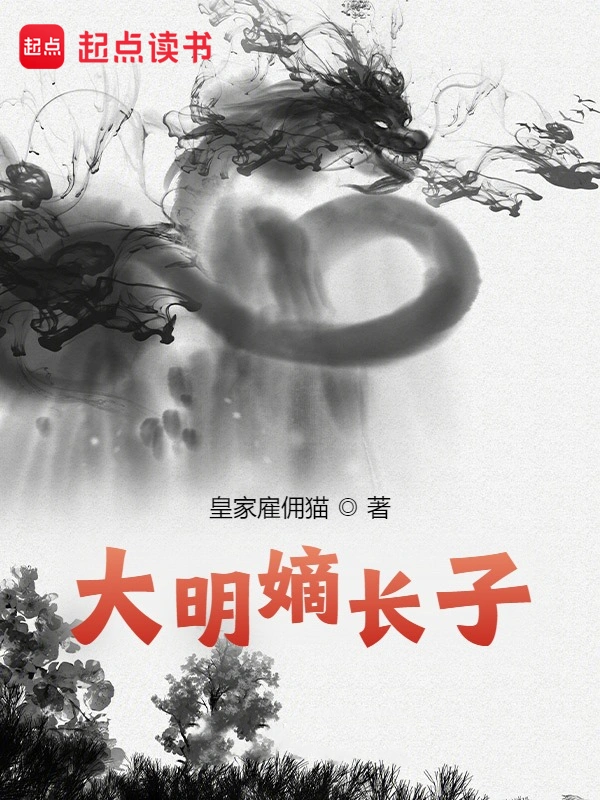
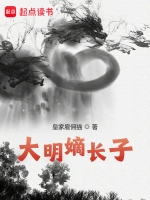
The Eldest Son of Ming Dynasty
大明嫡长子
- Status
- Completed
- Length
- 3.0M Words
- Genre
- Historical
- Audience
- Male
- Subgenre
- Song-Yuan-Ming Dynasties
- Updated
- 1y ago
- Source
- Qidian
Stats
Tags
Synopsis
Reader comments
In booklists 34
Explore more →


[Shennong Is Actually Myself]
🍀When will a good book come out? Ask the sky for wine. I don't know what year it is today. I want to ride the wind back home, but I am afraid that the more poisonous weeds will be cut off, and the book shortage will be overwhelming. When Shen Nong tasted hundreds of herbs, it seemed like he was in the human world. 🌙Turn around the Zhu Pavilion, look down at the Qihu, and the light will make you sleepless. There should be no hatred, so why are eunuchs so immortal? People have joys and sorrows, an
Good Books Are Worth Recalling
Recommend some more classic articles, and of course collect some high-quality seedlings, leaving book titles and recommendations. I read them one by one and add a book list when appropriate. If you pass by, please pay attention, thank you all
Focusing on Lesser-Known Historical Periods
This book list mainly recommends stories from lesser-known historical periods such as the Spring and Autumn Period and the Warring States Period, the Qin and Han Dynasties, the Jin and Southern and Northern Dynasties, the Five Dynasties and Ten Kingdoms, the turn of the Yuan and Ming dynasties, and foreign history. The single author will select the books with good writing skills and exciting stories to recommend to everyone. Books with novel stories and well-written stories will be highly recomm
Complete Book List
Specialize in completing this book
Ming Dynasty Historical Literature
If you do not accept the title of minister or pay tribute, the emperor will guard the gate of the country, and the king will die in the country. Just ten figures show the character of the Ming Dynasty. But at the same time, it also has a lot of ridiculous emperors. So how did the Ming Dynasty last more than 200 years? Let us feel and understand it through novels.
A Small Schoolbag with No Standards at All
I actually use this book list as a collection shelf. I collect the unfinished books and wait until they are fatter before killing them. Therefore, the book list has no standards for the collection of novels. I recommend not to look at the monthly collection rankings, but to look at the experience, updates and eunuch status. Anyway, the books in the book list are books that I have read. If you come across a book that you like in the book list, just read it. It doesn't matter anything else. Let's
(Please Pay Attention and Collect) Writing Is Paramount, Imagination Is Priceless
( ☝ ՞ਊ ՞ ☝) ( ☝ ՞ਊ ՞ ☝) Nowadays, these people write novels without even reading them. Every time they look for a book, they are drugged into not wanting it. 😖 This list mainly recommends novels that I like. Of course, it may not be to your taste, but I hope you will spray it lightly and slap it less. After all, every book I add is tried out from the sea of poison. When you see my update, it means that I have been swimming in the sea of poison for another day. If you like it, you can give me
Book List of the Twenty-Four Solar Terms
I have read the works and liked them very much. I hope that I can enjoy them together with others and analyze their doubts together. There will be no specific evaluations such as scores, because different people will have different conclusions. It is better to see for yourself than to listen to what others say. After reading the recommended books, I thought I might add them to the book list. If I didn't add them, it just doesn't fit my current taste. The current book list mainly includes history

I Am Not Very Knowledgeable and Only Love History. I Have Advanced History Cancer.
I think they are all good and worth recommending. If you don't like them, don't criticize them.
Some Feel Good Books
I have been reading for six years, so I consider myself to have broken away from the ranks of novices, and can be regarded as a middle-aged scholar. Share with everyone the books that you feel are good about We don't know what happened to the recent review. I added a new book, but it has not been reviewed. Then I saw that there was a problem with the introduction of the previously recommended book. Anyway, not many people read the book list. I will not write an introduction in the future. It is
Tree Planting Activity in Shuhuang (History)
The first item on the old bookworm's book list: high-quality ancient history books. Those who like mindless writing should not enter.

Well, an Old Bookworm's Bookshelf
Most of the books on the list are from my bookshelf Since most of my favorite old books have been read, I recommend this book to Young Miao PS: The evaluation is purely personal preference. If you don't like it, please don't comment QwQ. ✨Thank you all for your attention and appreciation🌷🌷🌷✨

My Book List
The books I have read are of various genres I can see them all, non-toxic or slightly toxic Rating: Excellent, Good, Average, Poor

Like 📚
There is no limit to the type of books, only those that suit your appetite. Now I'm obsessed with interstellar/weird/data stories, so most of my book lists are like this~ Try to write down your own thoughts after reading and share them with everyone!

Seedlings and Long Novels That Are so Good That They Will Be Rewarded Extra: Personal Recommendations
It can be guaranteed that every book is a high-quality product further selected from the bookshelf by a single author. Each book will have rewards other than subscription. The focus is on mature writing and less toxic plots. Of course, it would be better if you have interesting ideas.

Various Niche Articles I Have Read over the Years
Let me take stock of the niche treasure articles I have read over the years.
There Are Thousands of Worlds in the Book
Infinity, games, apocalypse, history, cultivation, rebirth, sanity, fandom, comedy. ……………… After five bricks were taken, it was removed from the shelves. I planned to write a lot of reviews before. But I feel that I am too lazy. The book is over ten years old, and I started reading it when Dou Po was around. In total, there are four to five hundred books, including unfinished ones. I put the best ones I've seen in it. I have removed many of the classics from the shelves, as the book list is not



Some Books That I Think Are Good, Those Who Are Short on Books Can Read Them
Although the previous books were good, they have been out for a long time. Now I delete them all and put them in the recently found books.

Niche but High-Quality, You Won't Lose Money by Trying It!
The advantages are obvious, the white jade has slight flaws, it will bring you a "new ship" experience! Officer, why not take a look?

Book Garden (Read Selection) Wonderful or Classic
Big waves and sand, some selected ones. No matter the writing style, plot, novelty or refreshment, there is always something to be said for it.
Interesting Article
Twenty years

The Book List of a 15-Year-Old Bookworm
I have been a bookworm for 15 years. I have mixed tastes in books that I am interested in. I read everything except female videos and horror. ⭐️⭐️⭐️⭐️⭐️Reviews
The Residence of Old Bookworms [Completed in 20 Years]
Rt, record the completed novels I have read in recent years, and also add some that are worth regurgitating over the years. Male Channel, novels completed after 2020
Some Historical Topics That I Think I Can Watch Endlessly
History
Readers also read
 Northern Qi, Sage Khan
 Red Mansion: Start Escaping and Farming from the Equipment Bar
 Fu Ming 1627
 After Lying in Bed for Three Years, He Was Forced to Help the Han Dynasty
 Siheyuan: Start by Picking up Attributes
 I Really Don't Do My Job Properly
 Long Wanshengshi
 Beastmaster: I Can See the Evolutionary Path
 Immortal Who Seizes the Body
 Huang Ming
 Northern Qi: My Father, Emperor Wenxuan
 Emperor of the Song Dynasty 1066
 Thirty Years of Reshaping Life
 Come Again in Your Prime
 The Turbulent Years of Rebirth
I originally wanted to read it, but it turned out that the officials in the article were all addressed by their first names and surnames. Is this a historical article? Personally I feel inappropriate. You continue, I will withdraw
Personal reflections
After reading it, I felt deeply. First of all, let's make a comprehensive evaluation. This book has some flaws. There are some logical illogicalities or redundant plots. There are also a few typos that have not been corrected. However, in general, this book can surpass most historical time travel online books currently on the market in terms of plot design, description of intrigues, characterization of characters, literary value achievements, writing skills and literary depth of thought. It's not mindless, every character is fleshed out and portrayed very well. Here are some of my feelings: 1. Controversial issues. Although the way many things are handled in the article is quite controversial, it is indeed a method and an idea of the author. For example, the issue of establishing a prince, for example, the handling of the eldest prince... I don't completely agree or approve of it, but the author's handling method may not be too problematic. 2. The ending is hard to wrap up. The ending is the most uncomfortable part for me. An emperor with such great achievements died at the age of 57, and no cause of death was mentioned. In the end, the chief minister of the cabinet was Yan Song, and a lot of princes' problems were not solved yet... 3. The sense of time fragmentation. It can be a span of several decades at a moment's notice, and we'll talk about what happened during this period after the jump. It's not impossible to write like this, but it seems very fragmented if it is repeated too many times. You can write it in several ways, such as briefly talking about what happened in which years, and which year it was in the blink of an eye... 4. The peak of power and intelligence, online. Villain? Sorry, there are almost no villains in this article! What I see is the various aspects of life. Most of them are for the sake of the country and the country, but they are exiled because they have different views... It is human nature to control the extent of their own selfish desires, and the arrangements are very reasonable. There are many battles of wits and courage on both sides, and many of the ways of dealing with them are very heartwarming and warm. 5. Sincere emotions and real situations. It fits the social background and character identity very well, without any sense of discomfort or violation. There is no system or weird things like aircraft and cannons. The ideas are also very integrated with ancient times and modern times. The most detailed thing is that with the passage of time and the growth of age, the thoughts and behaviors of the protagonist in the novel are getting closer and closer to those of the Ming Dynasty, but they never lose the shadow of modern people. This article is highly recommended and worth reading. The plot and plot alone are enough to be worthy of a monthly pass and subscription. Whether it's the protagonist Zhu Houzhao's inspirational, benevolent, considerate, and kind-hearted character, or his decisiveness, toughness, and step-by-step approach, they are all eye-catching. There are also many characters depicted, such as Mao Yuwen, Liu Jin, Li Dongyang, etc., All shining with their unique light.
Drug test post
I read the free chapter in one go The writing is quite good, except for the emperor's IQ, which is all online, and the description angle is also very, very good. I think the first climax is in chapter 25. The plot is interesting, not as boring as a serious novel, and not as exaggerated as "Xiaoge Lao" I hope the author can guarantee the quality, and the quantity is understandable. Your article I think the book is on par with Jie 2, very, very good Personally, I think the only shortcoming is the emperor. His IQ is not enough. It is understandable that he dotes on the prince, but he feels like a novice about politics and doesn't understand anything. I hope to improve it I will continue to read and I will add any questions in the subsequent plot.
A generation of saintly kings can pave the way for a greater future: Wang Gen and the Taizhou School
It coincides with the intersection of salt class reform and the role of libraries in civilian education, which reminds me of Wang Gen who carried forward Yangming's philosophy and had certain early enlightenment thoughts. Wang Gen was born in a Zaohu family. He was poor and did not go to school. He followed his father and elder brother to learn salt. Later, he followed his father as a salt merchant to Shandong. He (good at business, management, and financial management) handled things appropriately, and his family became prosperous. After self-study for more than ten years, he became a disciple of Xinxue, founded the Taizhou School, and taught and preached throughout his life. It advocates "the common people's daily needs are the way", which has the color of early enlightenment. There is no distinction between education and distinction. It attaches great importance to civilian education and inspires people's wisdom. In other aspects, he had certain ideas of opposing feudal autocracy and criticizing feudal Neo-Confucianism. He put forward the incompletely mature ideas of everyone's "righteousness", that is, equality, freedom, and individual liberation. He also advocated the idea of equalizing land and private ownership, and opposed blind obedience, etc. The Taizhou School promoted the thought of mind-based studies and opposed the restraint of human nature, and led the trend of ideological emancipation in the late Ming Dynasty. Its successors, He Xinyin, Li Zhi, Tang Xianzu, etc., All contributed to the ideological trends that changed with the development of society. They also paved the way for the Western Confucian school Xu Guangqi and others who emerged after the late Ming Dynasty lifted rigid thoughts and sprouted the practical academic trend. At the age of nineteen, Wang Gen followed his father to sell salt in Shandong and began to study on his own. At the age of thirty-eight, he became a disciple of Xinxue. In the article, in 1506, the first year of Zhengde, Wang Gen was already 23, and his talent for selling salt and doing business should have begun to show. It was also the time when he was thirsty for knowledge and truth, so he could hone himself in the salt policy reform. After Wang Yangming came to Fujian, he would study further, and then become a teaching researcher in branches of libraries and palaces in various places. This would lay the foundation in advance for expanding civilian education, loosening ideological shackles, and laying a great foreshadowing for the more distant future after a generation of holy kings! {"TopicId":"857654088484847616","TopicName":"Civilization Development Farming Article"}{"TopicId":"857653657633423360","TopicName":"Light and Wind Historical Group Portraits"}
Want to know why Hongxiu Reading has not been updated?
Since ancient times, revitalization has been a three-step process, first strengthening the country, then enriching the people, and then establishing schools. Because if the country is not strong, even though the people are rich, they will be nothing but fish. If the people are not rich, even though the schools are prosperous, they will not be able to continue. When the country is strong, meat-eaters will be honored; When farmers are rich, people who are clothed in cloth will return home from all over the world; When learning is flourishing, those with young hair will have great ambitions and strong aspirations. I am definitely not a carnivore, I am not a carnivore, I have a lot of beauty, but I don't add anything to it, I am not a young person, my studies are wonderful, but I have nothing to add, As for enriching farmers and reassuring the people, I couldn't help but burst into tears after reading Chapter 446. Fortunately, there is land for those who work in agriculture today!
I want to know why Hongxiu Reading doesn't continue posting?
Why do some people always repeatedly emphasize the so-called "civilian group" and "civilian group" when discussing the history of the Ming Dynasty, instead of using "landlord class" or other more precise names? In my opinion, this is essentially an extremely serious "sage-king tendency" among Ming Dynasty history enthusiasts. In short, the problem of the Ming Dynasty ultimately lies in the "civilian officials evading the emperor", which caused the wise and powerful emperor to die unexpectedly, which in fact caused the rapid decline of the Ming Dynasty in the middle and late period. The culmination of this kind of rhetoric is the "Tumubao Civilian Conspiracy Theory" and "Zhengde and Tianqi died of civilian murders". In recent years, this kind of speech has become more and more intense, and has successively formed a series of remarks such as "Jianwen collaborated with civilians to murder Hongwu", "Yongle died of civilian murder", "Renzong died of civilian murder", "Xuanzong died of civilian murder", "Hongzhi died of civilian murder", "Jiajing died of civilian murder", "Longqing died of civilian murder" and so on. This trend of thought developed into the circle of Song history, and there was an outrageous phenomenon that some people openly overturned the verdict of Song Huizong. When a phenomenon becomes extreme and diffuse, many of its problems will become apparent. In fact, if you take a closer look, you will understand that this is just a matter of first forming the understanding of "Holy Lord and Mingjun", and then incorporating them all one by one. In terms of specific argumentation logic, they cut the historical data wildly. The parts of the historical data that are conducive to my conclusion "cannot be changed by civil servants", and the parts of the historical data that are not conducive to my remarks are "the penmanship of the Spring and Autumn Period of civil servants has been tampered with." Therefore, under this logic, any debate is meaningless. Its logic is always closed loop, so we have no need to argue with civilian conspiracy theories. But it is very interesting to break out of their preset framework and analyze the logic behind this matter. Why do they emphasize that the monarchs of the Ming Dynasty were good and all the civil servants were bad? If we really oppose annexation from the perspective of the common people, then the emperors in all dynasties were representatives of the landlord class and an important promoter of land annexation. In the Ming Dynasty, the imperial estates reached 37,500 hectares during the Zhengde period. In the Qing Dynasty, the land enclosures for yard construction were even more terrifying. If we talk about destroying the imperial system, then whether the emperor is negligent or indiscriminate, it is also extremely harmful to the country. But in their context, the emperor, who was also a annexer of large households and a destroyer of people's livelihood, thought that his interests were consistent with those of the people at the bottom, and that the bad things were all civil servants' problems? In particular, the system of eunuchs and nobles, who are also extremely corrupt, has been largely whitewashed because of their greater reliance on imperial power, and they are considered to be the pillars of the country. What is this model of historical understanding of the Holy Lord and the Mingjun based on? The first is the understanding of "family and country as one" among the royal family. I find that many people actually cannot understand the difference between "the interests of the emperor" and "the interests of the country." It is taken for granted that the increase of imperial power means the increase of national power. A very typical example is the understanding of institutions such as "Shaofu" and "Huangzhuang". They feel that the more things in them, the better, and they do not care at all about the terrifying effects of the imperial power annexing resources. This innate belief that the emperor's interests represent the interests of the country and the interests of the people is very contagious, causing many people to ignore the fact that the emperor is the largest landlord and the largest spokesman for the landlord class. As a result, many people wrote, read, and read history and subconsciously sympathized with the emperor. In many interpretations, it seems as if the single-minded thieves suffered many unjust injustices, as if the emperor's life was not based on the exploitation of the people. Secondly, I think the white glove theory of corrupt officials is indispensable. I don't know if you have seen the distinction between clean and dirty at station b. Why is He Shen able to receive support from a large number of people? It's just because many people believe that Heshen amassed money for the emperor, and this theory believes that most corrupt officials are capable ministers, while most honest officials only talk. Therefore, the understanding emerged that capable ministers helped the emperor to do things, while wasteful and upright officials hindered the emperor from doing things. In fact, it further aggravated the paradigm of civil servants VS emperor. As for you saying that Heshen of the Qianlong Dynasty was the representative of the civil servants... Maybe they thought that only Ji Xiaolan (from movies and TV series) could be considered a civil servant. How can the Yandang and the Eunuch be civil servants?
(A brief discussion on the issue of the Academy) The author's choice of Prince Zhu Houzhao is indeed a node that can easily change the direction of the late Ming Dynasty.
There has always been a saying on the Internet: "The Ming Dynasty fell in Chongzhen, actually fell in Wanli, and first fell in Jiajing." Although there is a certain truth, it can be traced back according to various factors: Na Xianzong Wangzhuang Huangdian competed with the people for profit and accelerated land annexation; Xuan began to gradually let eunuchs interfere in the government affairs; Zhu Di spent the country's power on his five expeditions to Mobei and gave up the Hetao to feed tigers; Zhu Yuanzhang designed a relatively backward and crude national system from the beginning, allowing the imperial center to lose control of the national finances all year round. From this point of view, it can be said that the Ming Dynasty died in Hongwu. After all, affairs are always a process of destruction and rebirth. Such historical merits and demerits have their own comments. Let's just look at the nodes that changed the direction of history in the late Ming Dynasty. Prince Zhu Houzhao is indeed a good entry point, because you only need to work harder and sow seeds, leave an heir, and gently flap the butterfly wings, which can ostensibly make the history of the middle and late Ming Dynasty move in a completely different direction. But will this history really have a different ending? Perhaps without the arrogance of Jiajing, Wanli, Tianqi and Chongzhen, there would have been a rare period of ZTE rule in the middle and late Ming Dynasty. However, from the perspective of historical materialism, the limitations of the feudal dynasty itself have not been fundamentally changed. Land annexation has become more serious, military power continues to weaken, and the prosperity of folk handicrafts and commerce represented by the Jiangnan region The development spawned various parties from Zhejiang, Qi, Chu, Xuan and Kun to become active in the imperial court. They formed parties to compete for profits for their own interest groups. In addition, parties similar to the Donglin Party and the Eunuch Party fought against each other. The increasingly difficult financial pressure was overwhelmed by various natural disasters such as Xiaoglacier. This would inevitably lead to the collapse of a feudal dynasty. These are fundamental issues that need to be solved urgently by the protagonist, so let's start with the officials' views on the academy issue in these chapters. One of the main points of the officials' rebuttal is that they do not want the imperial examination system to change too much. The limitations of the productivity and backward administrative efficiency of the times have made the eight-part essay form of the imperial examinations stricter and stricter the threshold for admission, which can be alleviated. Then, the main task is to make subtle adjustments to the direction of questions and answers in line with their own governance philosophy through the protagonists for each subject. This is used as a temporary basis for becoming an official. After being admitted as an official, they will study system knowledge in various fields for three years, such as official administration, water conservancy and agriculture, economics and law, medicine and military literature, and even science and technology, etc., And then prescribe the right medicine according to their respective expertise or ideals. The long-term layout of education gradually cultivates a new official and political system. This will be supplemented by reforms that address current shortcomings to solve many problems. In addition, the education of princes should also be a top priority in the future. Jiajing, Tianqi and Chongzhen were not able to receive adequate prince education. In this way, even if the descendants of the reform ceased to govern, they would not be so exaggerated that they would either blindly balance and detach themselves from affairs, or neglect the government and quit the government, or be self-willed and dignified. 50 Bachelors. Of course, the most important thing is to pass on the people-oriented concept, but this depends on how the protagonist changes the Ming Dynasty step by step in a world where capitalism is budding, and embarks on a different road to resurgence and enlightenment.
{"TopicId":"803665280248184832","TopicName":"Internet Writing Hole Filling Festival Wishing Season"} I didn't expect that you, Gai, writing history is really like that. Go ahead, my father will organize a private event for you in December.
First of all, we should reform the hereditary system of honors and nobles, as well as the hereditary system of military and military guard posts. The prime minister must be from the state department, and the fierce generals must be sent to the military. The inland guard posts must be abolished and replaced by the county system. Lay off redundant staff. After inventorying the land, Yang Tinghe can actually be appointed as the governor of Shuntian Prefecture, Yang Shen can be his companion, and Wang Yangming's father is about to win the first prize and teach in the East Palace. In fact, in real history, Zhengde's mobilization of foreign troops into the capital was a bold military reform, but it was a pity that he died early.
Zhu Houzhao is not that bad, mainly because he is at odds with the civil service group. His death was unexplained because of the shadow of the civil servant clique, which was in charge of compiling history. During his reign, he also took action against the Baozong mess. No one can compare to him. If you really change to a time traveler, you will either have to compromise with the civil service group, or go to the extreme with the civil service group and waste national power. Of course, it is also possible to die within a few years in the morning.
Nothing has been done, or no results can be seen from the work. The protagonist seems to be stuck in a cage by the author, and the game is about political struggle. It is understandable in modern officialdom, but it is too petty to put it in the ancient emperor who was arbitrary and arbitrary. The protagonist's staged victory never pursues the victory, pulls, pulls, and silently chirps. Hey, of course, the author's writing style is good, and the logic of political struggle is also very strong. How can I put it, it is not suitable for historical writing. It is like covering up a city, not paying attention to people's livelihood and social facts, not paying attention to the development of productivity. It is endless fun to fight with ministers all day long. After writing hundreds of pieces, I look back and achieve nothing.
Nowadays, people's thoughts are placed on a Ming prince. After reading dozens of chapters, a prince who is firmly on the throne actually confronts his ministers in person. You can't resist. You are in a feudal society and an era when imperial power is highly concentrated. You are not standing in the plaintiff's seat.
I don't understand, the emperor is obviously outside the rules, why should he jump into the rules himself and let others defeat you with their rich experience? People have been playing this all their lives, and they are still a group of people. Unless you are really a genius and understand Confucianism clearly. Confucianism has lasted for thousands of years, and even Confucius and Mencius would not be able to understand it! And even if you figure it out, it's not difficult for a group of people to come up with a new set of rules. Isn't this a mental illness?
Why is there no love between men and women in a novel? There is only politics and fighting, and it feels less interesting if it is bloodless.
Let's put it this way, he is an emperor who was brainwashed by Confucianism, and then he became the leader of the ZTE. He was also afraid of his wife, and left his son with two stupid uncles, which caused his son to run into the leopard room and have no relationship with his mother. The son was unwilling to be used as a sign when he came to power, so he went against the civil servants. , Eunuch, he has a large number of adopted children, and he also likes the military. The army does not deal with the civil servants, so he just uses Jiang Bin. Then you know, eunuchs and factory guards, the army is uneducated, and the bad things they do are not sinister enough. It is not as good as the civil servants who have the means to kill people without blood.
He became addicted from the moment he saved the two little palace maids and stayed in the East Palace. Later, they even sat down to eat together, hahaha. The protagonist is the prince
I feel like a lot of people in the chapter reviews are very irritable, always trying to develop science and technology and kill all civil servants. The research and development of science and technology also needs scholars, right? If these scholars are appointed as officials, they can be regarded as civil servants, right? After killing them all, let the military attaches and eunuchs do research on technology or govern the country? Wouldn't this become militarism, and then a bunch of warlords would stage a Guards coup at every turn? Are you giving up eating because of choking?
With just a small share of 100, the author will get married and have a baby soon~
It's hard to say anything else, but I think these civil servants are right to worry about the military academy issue. This thing was very sensitive in the feudal dynasty. If graduation is not guaranteed to be assigned or given to an officer, then who will come? Or what will happen if someone really learns it after coming, but fails to pass the military attache exam? Such military academy students, even if they are only half-baked, will be terrible if they fall into rebellion, but If the distribution is guaranteed and officials are given, sooner or later the military academy will become a gilded place for the children of the powerful. After all, even if the civilian officials look down on the military attachés, the military attachés are still officials after all. Wouldn't a different company need these scholars as officials? And the noble clansmen who were supposed to be shareholders of the empire were chopped off and turned into worms in the empire. This is the biggest problem of the Eastern Empire. No one really stands on the same side as the emperor.
Wow, the author is really great. I didn't see the description of the sceneries and I had to settle down and carefully brew my emotions to read it in the afternoon. Every chapter is like a composition, it's great/
This book can be read, especially when there are not many good authors at the current starting point, but I just pinched my nose and read it. The author is good enough to write about a city, but many basic knowledge is missing when writing about history. The characters in it speak and do things in a weird and weird way, and the author's writing habits are also very strange. For example, he writes about driving a car. , Passing through a sea of flowers, very beautiful, the author wrote that he passed through a sea of flowers, very beautiful, driving a car, it is not easy to read, he writes about what the emperor is like, what the ministers are like, and his own behavior and habits, but the author always arranges to do things that are beyond his habits. I can't say 46 words, just like an intern who has not learned well in modeling 3D animation.
Just an emperor with common sense about the future
At the end, the perspective still cannot reach the poor people, and institutional reforms are also suppressed. They are very afraid of affecting their own power. The imperial power does not go to the countryside, they cannot directly understand the grassroots, and they cannot make a move to change the lives of the landlords. Sooner or later, they will still die. The protagonist is just a paper framer who wants to protect the imperial power. The most interesting thing about this book is the power struggle, and there are too few other things. The sense of historical mission brought by the identity of the time traveler has been exhausted by the power of the emperor's position. He did not abdicate until his death. The lower level only looked at the appearance and collected the harem (very Emperor Qianlong). In the end, he was just an emperor. The few words left to Lao Wu were of no use.
Do you have any book recommendations? Everyone has read this book, so they probably have similar hobbies, right?
I will start with the serialized novels "Guide to Traveling to the Northern Song Dynasty" and "Traveling to the South Without Clothes" which I am currently following, and I really can't stand the rest. There is also a book "Iron-Blooded Remaining Bright" which is full of details. It is the author of the late Ming Dynasty. It has more than 400 chapters at present. It is too slow to update. "Dawn of Civilization" is about the development of modern Northeast China. . The completed book "I" is okay. The three masterpieces of the late Ming Dynasty are not recommended if they are bad. "Father of the Han Dynasty" is also okay. "Shao Song" time travels into Wan Yan Gou. "Qin Li" is a must-read among Hei Fu's classics. "Floating Life in the Late Tang Dynasty" is also okay. There are a few others I forgot. I'll add it later. I really can't stand Zi Yu 2's novels. I could read one or two in the past, but I really can't stand the recent one.
I don't quite understand why the male protagonist likes Yang Tinghe. Regardless of Yang Tinghe's character and ability, he is destined to be different from the male protagonist. In history, Emperor Zhengde was also a disciple of Yang Tinghe. He trusted Yang Tinghe and made him the chief minister of the cabinet. As a result, Emperor Zhengde died. Regardless of whether Emperor Zhengde was reliable or not in history, he definitely didn't want to have an heir. Why couldn't he adopt a son if he didn't have a son? Is the old Zhu family short of someone to be the emperor's heir? Empress Dowager Zhang certainly didn't want to have her own heirs, and she had a say before and after Zhengde's death. But regardless of the process, the result was that both mother and son were extinct. If Yang Tinghe did not want Zhengde to be extinct, and these three people reached an agreement, Zhengde would not be extinct, so... Then let's look at the imperial edict, which was handwritten by a professional and read by the first few people in the political battle.
What a good luck
Add more updates
The history of the Ming Dynasty that we know is centered on the Zhu Dynasty. It writes a lot of dark history of the Ming Dynasty, which makes later readers feel that the Ming Dynasty was very corrupt and the emperor was ridiculous. There are very few records about ordinary people in the Ming Dynasty. Therefore, many people think that the gentry group represented by civil servants in the Ming Dynasty was selfish and cold-blooded. Later, I saw on the Internet that a foreigner from the same period recorded the real life of the people in the Ming Dynasty in his diary. The local parents and officials were very responsible. At least there were nursing homes in every county. A large part of the reason for the collapse of the Ming Dynasty was natural disasters and plagues. The Donglin Party was not as miserable as written in many novels, except for a few rats. For the illogical history of the Ming Dynasty, I feel that I can only refer to it. There are many contingencies in history, so don't always look at them with conspiracy theories.
Full order, can you add a few details?