


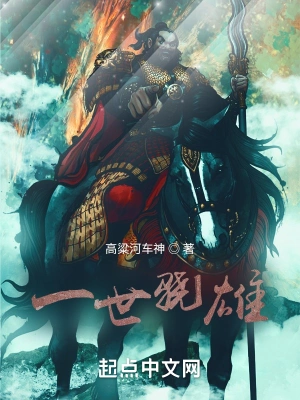
A Hero of His Time
一世骁雄
- Status
- Completed
- Length
- 1.1M Words
- Genre
- Historical
- Subgenre
- Alternate History
- Updated
- 2y ago
- Source
- Qidian
Stats
410Chapters
0Votes
18.9kRecs
86.5kFans
Tags
Synopsis
More by this author
In booklists 1
Readers also read
 A Guide to Building Civilization in a Primitive Tribe
 My Father Is Wen Tianxiang, and We Win the Battle of Yashan from the Start
 My Only Method: I Will Add More Points to Become Stronger at the End of Ming Dynasty
 Daming: Asking for the Throne at the Beginning, Lao Zhule Went Crazy
 A Record of a Mortal's Journey to Immortality: I Earn Immortality by Grinding Achievements for Rewards
 The Eternal Blade
 Tiger Guard
 Lord Evolution
 A Record of a Mortal's Journey to Immortality: Choosing Hextech in the Chaotic Star Sea
 The Bandit Slayer
 The Tang Dynasty in Warhammer: The Tianbao Dream Shattered, and the Fanzhen Rebelled
 Is the Son of Heaven Born to Rule?
 Back to the Past for a Better Life
 I Really Just Want to Earn a Little Credit for Helping the Emperor
 A Slave to Three Masters!
 Demon-Slaying Martial Saint: Starting as a Beggar
Reader comments 25
Google Translate
To be honest, there is no need for you, the author, to work so hard. Give yourself a little buffering time. There is no need to force yourself to update intensively for the fans. After all, we hope that quality beats quantity. This is my immature idea. Okay, I'm done. It's been a long time since this chapter was released. Are you done? After the break, please update as soon as possible! Even the donkeys in the production team dare not rest like this!
Briefly talk about your feelings about this book
This book stitches together many dynasties, characters, and events, but this is not a shortcoming of this book, but rather an advantage of this book. In general, the author sews a lot and well! The characters in this book are very bright. Many characters in the book have historical prototypes or have seen similar characters in other books. They have a sense of déjà vu, but it allows everyone to quickly establish a deep impression of these characters. For example, everyone knows that the prototype of Emperor Daojun is Jiajing, but the Emperor Daojun and Jiajing in this book are completely different types of people. Although he also took over the throne from his elder brother, practiced Taoism and ignored the government affairs, but he had extremely high control over the affairs of the court, and he was almost killed by the palace maid. However, the two people have completely different personalities. Jiajing himself is indifferent to family affection, and the king does not see the king, and the two dragons avoid each other, and the relationship with his son is very poor. The Daojun Emperor in this book values family affection, and treats his deceased brother and his only daughter as his own, doting on him even more than his own biological children. This can already be seen from the relationship between Emperor Daojun and his brother. The author is not limited to the so-called prototypes of these characters. These characters become more vivid as he writes them, rather than rigid templates. As the plot develops, I believe the characters in the book will become further and further away from the so-called prototypes. Besides, I can feel the energy in the book. The protagonist Fu Saburo, with his heroic spirit, is the soul of this book. He was born into a noble family and had been favored by the Jin Dynasty. The emperor treated him like his own nephew, he and the prince were like brothers, and he was treated like the orphan daughter of the late emperor. At the same time, the Jin Dynasty has not lost the hearts of the people. Even if all forces are ready to stir up trouble, it is impossible for a character like the protagonist to change dynasties. Does he want power? He is a hero and a hero, not a villain. Protecting his family and country and opening up new territories were the keynotes of his life. Such a person is there to turn the tide and help the building before it collapses. There are enough protagonists fighting for hegemony in the world, but there are too few heroic protagonists who are heroic and help the world. If Tadayoshi Saburo seeks to usurp the throne, he will be disloyal to the country and unjust to his friends. Is he still loyal to Saburo? What you see is that Sanlang is young and frivolous, wearing bright clothes and angry horses, trying to turn the tide and help the country.
Why does everyone want to let the male protagonist rebel on his own? It feels like he is now both the consort and the prince's companion, and his family has been loyal for generations. Why must he rebel just because the building is about to collapse? The more the country is in crisis, the more important it is to come out to help the country. The introduction also says that he wants to stabilize the country. His father also said that if there is a problem, he must help him. If he really becomes independent in the future, then the male protagonist will really be a villain without a father and a king. Anyway, I want to be Yue Fei more than Zhao Kuangyin. Even if I am in trouble in the end, I still want to be Yue Fei and serve the country loyally instead of Zhao Kuangyin.
I have always wanted to find a novel about a male protagonist who is a general, but in current historical novels, the male protagonist is either a civil servant making inventions, or he is a general but there are not many stories about the male protagonist using his strategy. This article really captures the kind of protagonist I have in mind. And at the starting point, there are few male protagonists who marry princesses normally, most of them are royal wastes. The male protagonist decides to help the princess become the emperor, and thus marries the empress. After watching this too many times, I feel a little tired of it, and it also feels like a loser. The most important thing is to help the princess become the emperor. I feel that the princess and the male protagonist have no strategy, especially the princess cannot express the feeling of the empress. At the same time, the supporting roles in this article are also very good. Although the male protagonist's father plays with the wind and moon, he is rare and reliable in his position. Like the prince, the Taojun and the emperor also showed their talents. Colleagues, this book does not show the civil servants as extremely useless like many books nowadays, like Li Xiang The country, this describes the talents of the civil servants. The most important thing in the court is stability. If the civil servants are all useless, then the military attache would have gotten up early, and Li Xiangguo also has stains. I feel that the author wrote that he tainted himself to protect himself, and even the tit-for-tat with the military attachés under his command was just for balance. King Yan also wrote about their threats. You must know that local and central power have always been an issue in ancient times. No leader wants to see a person with more power than himself. You must know that even if he is loyal to the emperor, what about his descendants and his subordinates? If his subordinates want to climb up, they may naturally force their superiors to move up. At that time, they may rebel even if they don't want to rebel. There is no right or wrong, only stance. At the same time, the male protagonist of this book is going to be a person who saves the court, and he wants to be Huo Qubing. This is also my favorite point. After all, if you want the male protagonist to be the emperor, it will basically not portray the male protagonist having a good relationship with the royal family, marrying a very favored princess, and it should also directly write that the emperor dies. If this is written with the male protagonist becoming the emperor later, then the novel will be too convoluted, too realistic, and not so clear-cut between love and hate, and it will not be like an online novel. After watching too many stories about the male protagonist establishing himself as king, I also want to see the male protagonist protect his family and the country. After all, is there no one in the dynasty that the male protagonist is willing to assist? There is a lot to write about in saving the court, defeating foreigners, boycotting religion, suppressing the Jiangnan nobles, and even if there is turmoil in the world, the male protagonist can stabilize it and expand its territory. And at present, Emperor Daojun is a wise emperor, and the prince is also a promising person. Although the court is in trouble, it will not collapse instantly. The real chaos will take decades, unless there is a huge natural disaster, coupled with the instigation of those people, and the male protagonist is extremely favored by the emperor, has a good relationship with the royal family, rebels and helps the court, the latter is obviously better. Although there are minor flaws in the writing of this book, it is an online text after all. If it is so correct, it would be like a biography. So far, this book is a pretty good alternate history piece for me.
I haven't read it, but I like to gain popularity for new novels. This introduction is the genre I am interested in. I hope it is more group portrait. When reading novels, all Fengshen novels are the wonderful work of a group of people, not the pretentiousness of one person.
Just complain about the comments made by some people in the comment area who said they hope the protagonist will not be the emperor. Are you kids? If you don't become emperor, do you want to wait to be liquidated? Waiting for something unwarranted? This is a feudal society. The protagonist will definitely become more and more successful as he progresses to the end. Do you think any emperor would be so kind? Which person with great achievements can die a good death? Very few. What wise man would keep such a person until the end? Unless it's the kind of person that a foolish king can't do anything to you, the more wise the king is when he is about to die, he will definitely try his best to make you die with him, leaving the whole family alone.
It would be absolutely fine if Qin I died twenty years later, or if the second generation was not a Confucian sect. The remnants of the Six Kingdoms, the aristocratic families, and hundreds of schools are not involved. Confucianism only accepts nobles. To be honest, Confucian culture is too servile.
When it comes to war, the poison becomes strong 😭 A hundred people kill ten thousand people
The remnants of the pseudo-Jin Dynasty! All dynasties with corrupt scholars in power are short-lived. Since ancient times, martial arts has been the first, and literature has been the second. Confucianism disrupts the law with literature, causing harm to the country and the people, and corrupting Confucian scholars. Aristocratic families, noble families, local wealthy families, gentry clans, evil gangs, and profiteer forces all cause harm.
Why does Wu Mingda dare to compete with the protagonist in the future when he has never fought in a big battle? And that prince, who has never been in the public eye since he was a child, does everyone in the Yanwang family think that he can rival the prince if he returns to Liaodong? Looking at it this way, the protagonist of the unparalleled commander, the prince who looks like a king, after so many years of war and maneuvering experience, will he have to have a 'Chu-Han War' with them in the end? The author seems to imply this in the article. Isn't it too deliberate? The ending is equivalent to the protagonist and the prince defeating all the mini-bosses before reaching level 95. The Wu siblings directly cheat and become the big boss at level 95, and then they have to rely on the protagonist to activate Wushuang to turn the tide. Is this reasonable?