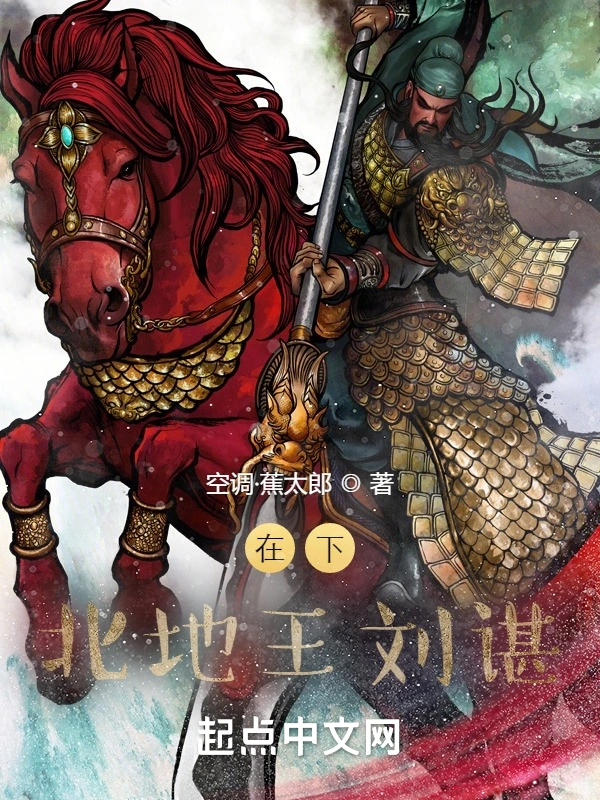
In Xiabei Prefecture Wang Liu Chen
在下北地王刘谌
- Status
- Ongoing
- Length
- 357k Words
- Genre
- Historical
- Audience
- Male
- Subgenre
- Qin-Han & Three Kingdoms
- Updated
- 3y ago
- Source
- Qidian
Stats
0Monthly votes
1.6kRecommends
3.3kFans
128Chapters
Tags
Synopsis
Reader comments
Readers also read
 Red Mansion: Start Escaping and Farming from the Equipment Bar
 Fu Ming 1627
 Northern Qi, Sage Khan
 After Lying in Bed for Three Years, He Was Forced to Help the Han Dynasty
 Ji Han
 Ji Hantianxia
 Ten Kingdoms Week
 Taichang Daming
 My Father, Liu Bei, Hopes That He Will Become a Dragon.
 The Age of Huangtian
 Three Kingdoms: Angrily Denounced the Theory of Hatred for the Country, Saying That Jiang Wei Was an Amateur
 Late Han Dynasty: Han Zuo Buqin
Hahaha, I was a passerby who accidentally saw it two days ago and read Jiang Wei fan fiction.
The mastermind behind the chaos in the court in the late Shu Han Dynasty was Liu Chan. But to be honest, Liu Chan was just trying to protect himself. He should not be a troublemaker or be ignored by powerful ministers or betrayed by the powerful Yizhou family. As the true king of the Han Dynasty who lost his country in 400 years. Liu Chan only received a posthumous title. Emperor Huai is even better than Liu Xie's Emperor Xian. Liu Chan can be said to be a genius who pretends to be confused.
Difficult, after Sima Zhao solved the three rebellions in Huainan, after all the loyal ministers of Cao Wei died, the Sima clan within Cao Wei was integrated. How can the small Shu land be compared with the Central Plains? With the power of Mount Tai to seize Shu land, if the Sima clan loses once or twice, it is nothing, but if the Shu Han loses once, it is completely
My little boy, Liu Zhan, will never surrender 😢
The only option at this moment is to fight to the death, and An Neng can surrender!
Comment on Jiang Wei
The general's ability is not low, unlike many marketing accounts who say he is loyal but lacks ability. Jiang Wei's field battles are absolutely master-level and his tactics are invincible. No one can beat Jiang Wei in the plains decisive battle, including Deng Ai, Zhong Hui, Shi Bao, Chen Qian, Lu Kang, and Ding Feng. However, Jiang Wei's strategy is relatively weak. Deng Ai guessed the route of the Northern Expedition correctly many times, but he couldn't beat Jiang Wei in the field because he was waiting for work, so he guessed correctly. We can only defend the city and let Jiang Wei run out of food and retreat. Jiang Wei's biggest shortcoming is that he gets carried away and easily drifts away when he has the upper hand. However, these flaws are actually insignificant, because the training, army command, command, prestige, loyalty, and fighting spirit of the general Jiang Wei are all unparalleled. The shortcomings are that he is too old, so he must conquer the Central Plains and return to the old capital while the general is still alive. There is not much time left for the protagonist.
This comment talks about infighting within the government and holding back aristocratic families. You don't even look at the population at that time. The population of Wei State was less than 5 million, which was more than the combined population of Wu and Shu. Most of the officials in the Wu and Shu Dynasty were from wealthy families. You can see that someone would give up their power and surrender.
Map of Nanzhong and Jiaozhou
It's the general trend. It's useless. You can't make any waves even if you are in the sea.
It's interesting. Most of the works on the Three Kingdoms theme are concentrated in the period of the heroes fighting for hegemony before the end of the Han Dynasty and before the Three Kingdoms. There are very few works after the establishment of the Three Kingdoms, let alone the end of the Three Kingdoms by Jiang Wei. I hope the author will do a good job.
In the later period of Ji Han, the domestic political situation was not good. The aristocratic family's capitulationism tendency was too high, which basically equaled the people's livelihood. Liu Zhan was not the prince, so it was unreasonable to deal with these issues. Whatever the prince thought, other ministers would not agree. Judging from Zhuge Zhan's battle losses against Deng Ai, the Yuan Cong faction did their best, but the army's combat effectiveness was not good. It would be better to use this year to develop gunpowder and cloth face armor. Clothes and gunpowder 3-1-1 are enough. The defensive power of cloth armor is slightly better than that of piercing armor, but it is one-third lighter. Japan has repeatedly described that it cannot cut through the armor of Ming army soldiers. In this way, although the iron smelting technology has not improved, the technology has still improved. The royal guards have at least a thousand people. With this invulnerable force blocking the mouth of the Youjiang River and blasting it with gunpowder, Deng Ai can win only if he is an immortal. The same is true for Zhong Hui. After defeating Wei, Liu Zhan was qualified to reform the Shu Han court and refresh the official system.
Can the author make a powerful figure emerge from the Cao Wei clan? Even a fictional one will do. When Sima Zhao conquered Shu Han, he could establish a foothold in Youzhou and Jizhou, so that they would be split, or in Huainan.
The reason why Deng Ai was able to sneak across Yinping and attack Chengdu was because Jiang Wei, the general of the Shu Han Dynasty, was blameless because he completely overturned Wei Yan's stubborn strategy, tactics and tactics, which led to the fall of Hanzhong and the wide opening of the Shu Han Dynasty. The defensive tactics pioneered by Wei Yan were completely abandoned by Jiang Wei, which exposed Chengdu to Deng Ai's military front. So some people sighed like this: "Unless Wei Yan dies, Shu Han will not perish!" The building will collapse, and it is difficult to support a single tree. Even if Wei Yan is still around, he may not be able to prevent the demise of the Shu Han, but it is an indisputable fact that he is not in sync with the strategic thinking of Zhuge Liang, Jiang Wei and even Ma Di. If we look closely at the historical materials of the Three Kingdoms, we will find that Deng Ai did not sneak into Yinping, but attacked all the way. Jiang Wei also knew about Deng Ai's move to Yinping. It can even be said that Jiang Wei gave Deng Ai a way to attack. According to the Records of the Three Kingdoms Volume 44, it was Jiang Wei and Liao Hua (General of the Right Chariot and Cavalry) who voluntarily abandoned Yinping, which opened the door for Deng Ai to surprise Chengdu: "Wei and Hua also abandoned Yinping and retreated. Deng Ai entered from Yinping via Jinggu Road and defeated Zhuge Zhan at Mianzhu. The later master asked Ai to surrender, and Ai Qian occupied Chengdu. Deng Ai's sneak crossing to Yinping was not as difficult as described in TV dramas and novels. If he only brought a group of exhausted soldiers who were half dead and crawled to the gate of Chengdu like beggars without even siege equipment, how could Chengdu surrender without a fight? When Deng Ai walked to Yinping, it could be said that he had to build roads across mountains and build bridges across rivers, and his marching speed was not very fast. Therefore, in the Battle of Mianzhu, he was able to kill Zhuge Zhan, the son of Zhuge Liang, Zhuge Shang, the grandson of Zhuge Liang, and Zhang Zun, the grandson of Zhang Fei. When Deng Ai and Zhuge and his son fought in Mianzhu, Jiang Wei was defeated by Zhong Hui in Tazhong. Zhao Yun's son, General Yamen, Zhao Guang, died in the battle to cover Jiang Wei's retreat. The Shu Han Army was defeated again and again because of Jiang Wei's blind command - like Ma Di, he always wanted to make some new tricks to prove that he was better than Wei Yan. It was under his blind command that he almost committed suicide, and just like Ma Di lost the Jieting, he lost Hanzhong, which Wei Yan had held on to for nine years without losing an inch of land. "Three Kingdoms·Volume 44·Biography of Jiang Wan, Fei Yi and Jiang Wei" records Wei Yan's strategies, tactics and achievements in guarding Hanzhong: "In the beginning, the First Lord stayed in Wei Yan to guard Hanzhong, and all the troops were encircled to defend against foreign enemies. If the enemy came to attack, they would not be able to enter. In the battle of Xingshi, Wang Ping defended Cao Shuang and all followed this system. " Wei Yan's idea is very simple and practical, that is, not seeking merit but seeking no faults, and strictly defending strategic locations. This is in line with the requirements of "Sun Tzu's Art of War": Even if Wei Yan only has 10,000 defenders, but he occupies favorable terrain and solid city defenses, and the enemy does not have more than 100,000 troops, there is nothing he can do. Wang Ping is a rough guy. He knows no more than ten words in his life, and he can't write any of them. However, his military literacy far exceeds that of many nerds who talk too much. He performed well in the Battle of Jieting, so he was gradually promoted to the former supervisor of the army and the general of Zhenbei. He commanded all the troops in Hanzhong, which was basically equivalent to taking over Wei Yan's baton. Wang Ping did not abandon his strategy of strict defense because Wei Yan was killed, so when Cao Shuang led an army of more than 100,000 to attack Hanzhong in the seventh year of Yanxi (AD 244), Wang Ping, who had only 30,000 defenders, did not panic. He resolutely refused to retreat. In the two cities of Han and Le, the suggestion was to lure the enemy to gather in depth and annihilate them: "Otherwise, go from Hanzhong to Fuchui, a thousand miles away. If the thieves get through, it will be a disaster." Wang Ping and Wei Yan thought of going together, that is, they must not give up strategic locations and let the enemy gain strategic support. Thirty thousand Shu troops withstood Cao Shuang's 100,000-strong army. Reinforcements continued to arrive, and General Fei Yi also rushed to help from Chengdu at starry night. Cao Shuang saw that he could not defeat Wang Ping, so he had to withdraw in despair. After Jiang Wan and Fei Yi passed away, Jiang Wei took charge of the military power of the Shu Han Dynasty. He immediately sharply criticized Wei Yan's strategy of holding on and completely denied it: "Wei's suggestion was that it was wrong to defend the surrounding areas. Although it was in line with the "Chongmen" of the Zhou Dynasty, It is righteous, but it is appropriate to defend against the enemy, but not to gain great benefits. If the enemy is heard, all the troops will gather in the valley, retreat to the two cities of Han and Le, so that the enemy cannot enter the area, and the enemy will be defended. " Jiang Wei's plan was actually adopted. In the seventh year of Yanxi, General Wang Ping's plan was based on wishful thinking: "On the day of trouble, let the troops advance together to wait for the enemy to retreat. The enemy cannot attack the pass, there are no scattered valleys in the fields, and the county (hanging) food in thousands of miles is naturally exhausted. On the day of retreat, the cities will be merged Go out and fight with the wandering army, this is the art of killing the enemy." Even people with no military knowledge know that Wei was strong and Shu was weak at that time, and it was a luck to be able to hold one-third of an acre, but Jiang Wei wanted to take a chance. He was not satisfied with holding Hanzhong, he also wanted to annihilate the invading enemies in one fell swoop. This was a typical example of not knowing oneself or the enemy, being arrogant and blindly confident. Facts have proved that Jiang Wei's attempt to lure the enemy deeper was to lure the wolf into the house. His foolish move of abandoning strategic positions led to the Shu army being defeated again and again. The Wei army marched straight in, and even the last stronghold he wanted to station troops was lost: "Wei was destroyed by Deng Ai, but he still lived in Yinping. Zhong Hui besieged the two cities of Han and Le, and sent the generals to attack the pass. Jiang Shu opened the city and surrendered, and Fu Qian died in a fight. . Will attack Lecheng, but cannot defeat it. Hearing that the pass was closed, he drove forward. " Jiang Wei always wanted to hunt the Wei army like elk, but he did not expect that two tigers were brought in. As a result, Jiang Wei lost sight of one thing and lost the other. He lost ground and troops one after another. He was tightly entangled by Zhong Hui in Jiange and could not stop Deng Ai from attacking Chengdu. The ingenious Jiang Wei turned into a hunchback and fell over - both ends could not touch the ground, and the Shu Han was destroyed. This was when Jiang Wei changed Wei Yan's strategy. At this time we have to ask a question: Jiang Wei is Zhuge Liang's most valued talent, why did he have to prove his superiority by denying Wei Yan? Looking forward from the fall of Hanzhong, we will find that the three most respected people in Zhuge Liang all want to fight against Wei Yan. Not to mention Jiang Wei and Yang Yi, even Ma Di, who lost the street pavilion, took the lead from Wei Yan. Feng Dayin also adopted tactics that were completely opposite to those of Wei Yan: "In the sixth year of Jianxing Dynasty, Liang sent his army to Qishan. There were veteran generals Wei Yan, Wu Yi and others. Commentators all said that it was appropriate to order him to be the vanguard, but Liang went against the crowd and led the masses to fight against Wei general Zhang He. The street pavilion was destroyed by He, and the soldiers were scattered. " If Zhuge Liang had listened to the opinions of the majority and asked Wei Yan, the former military adviser to conquer the west, to serve as the vanguard to defend the street pavilion, let alone Zhang He leading a partial division to attack, it would have been Cao Cao. Zhen (who was attracted by Zhao Yun's suspicious soldiers in Jigu at the time) personally led the main attack, and Wei Yan was able to hold on until Zhuge Liang's army arrived - Sima Yi was training his navy in Jingzhou to prepare to attack Sun Quan, and did not participate in the Battle of Qishan in the sixth year of Jianxing. Zhuge Liang came out of Qishan, abandoned his general Wei Yan and hired his apprentice Ma Di (Zhuge Liang regarded Ma Di as his son, and often stayed up all night talking about it), which led to the disastrous defeat of Jieting; Zhuge Liang's other apprentice Jiang Wei (according to the The true biography of Kong Ming) also completely abolished Wei Yan's strategy, which led to the fall of Tazhong and Yinping one after another. The descendants of Zhuge Liang, Zhang Fei and Zhao Yun died on the battlefield. Chengdu, which still had the strength to fight, surrendered in chaos without a fight. After reading the records in the history books, readers must have thought of one sentence: One emperor and one courtier! Wei Yan was a famous general that Liu Bei valued very highly. Zhuge Liang used him instead of crediting him. When Jiang Wei came to power, Wei Yan became a useless traitor. Even his effective defensive strategies were overturned. This was not just a matter of strategic vision and tactical level. Wei Yan's strategy of persistence has been proven to be feasible. Why did Ma Di and Jiang Wei do the opposite? This is a military issue as well as a political issue
However, if the thieves are not defeated, the royal industry will also perish. Without the Northern Expedition, there would be no foundation for building a country, and people's hearts would simply be scattered.
Come on, the King of the North is my Three Kingdoms.
Talents of the late Shu Han Dynasty Liao Hua, Jufu, Zhang Cao, Zhang Yi, Huo Yi, Liu Yin, Luo Xian, Fu Jian, Huang Chong, Zhuge Shang, Zhuge Zhan, Jiang Wei, can be regarded as a large number of talents.
The writing is extremely confusing, digging holes everywhere
Very well written! It's obvious that the author wants to write something rustic in his heart, so just write it if you want. Your writing itself is very old-fashioned. As long as the combat is good, what's the point of writing some rustling to embellish it to adjust it?
I think of a person who is at least a T1 level counselor. Zhou Buyi, let's see if you can get him.
Ask the author, should the male protagonist work or rebel and replace him with Adou?