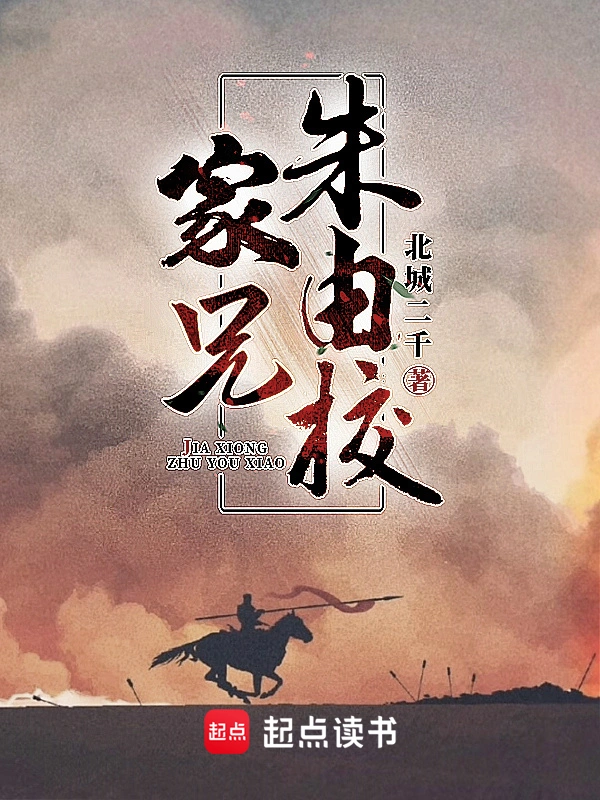
Brother Zhu Youxiao
家兄朱由校
- Status
- Completed
- Length
- 4.0M Words
- Genre
- Historical
- Audience
- Male
- Subgenre
- Song-Yuan-Ming Dynasties
- Updated
- 10mo ago
- Source
- Qidian
Stats
Tags
Synopsis
Reader comments
In booklists 37
Explore more →
The Green Hills Are Still There, and the Sunsets Are Red Several Times! History Book List
Five Thousand Years of China, Recommended High-Quality Historical Writings


I Like More Couples and See More Seedlings
Basically, they are books that can be read
Ming Dynasty Historical Literature
If you do not accept the title of minister or pay tribute, the emperor will guard the gate of the country, and the king will die in the country. Just ten figures show the character of the Ming Dynasty. But at the same time, it also has a lot of ridiculous emperors. So how did the Ming Dynasty last more than 200 years? Let us feel and understand it through novels.

Overcome Book Shortage
Some of the books I like are really good

Updating! Non-Toxic, Interesting and Refreshing Article!
1. The update that the single owner is following! 2. No major poisonous points! 3. Recommend related books based on the number of likes! 4. Interesting and refreshing article!
Seedlings 🌱 - Raise Books and Slaughter Them When You Have Time
If you are interested in seedlings, let them grow for a while.
A Good Book
Entertainment articles, Hong Kong comprehensive articles, historical war articles, Hogwarts fanfiction, 99 world literature

Excellent Historical Novels: Feel the Ocean of History and Appreciate the Ancient Scenery
Historical novels are generally time-travel novels, and there are all kinds of time-travel characters in historical novels. If someone travels back to a historical figure, he or she must strive to develop and change the course of history as a historical figure. There are also those who travel through time to small people, who must work hard to develop from the lower class into the upper class society, or make revolutions, inventions or copy poems. The following are some historical novels that I
Personal Food
Some of the ones I've seen are pretty good.
An Examination of the Emperors of the Ming Dynasty
Specially collects large plain texts that I have read and found quite good.
Recommendations for High-Quality Time Travel Novels (Ratings, Long Articles)
Mainly historical and Naruto stories, including a small amount of Bleach stories, NBA and other categories. They will be evaluated from the perspectives of writing fluency, character fullness, plot readability, and setting/logic, and subjective recommendation scores will be given. I only recommend the best products I think
🍡Schoolbag
It's hard to say what genre it is, but I'm just sharing some of my personal favorite books. It's very subjective. Don't criticize me. I'm just afraid of causing controversy by commenting on these books, so I just come here to talk nonsense.
Books Finished
Miss youth

Chen Peiguang's Book List
I like it
My Own Bookshelf
That's awesome
No Heroine/single Heroine, Novels You Like
It will indicate whether there is no female protagonist or single female protagonist, as well as the key points. "Late Ming" and "Golden Lord of the Ming Dynasty" were deleted, and they always said that banned words were not reviewed. However, neither of them strictly has a heroine. The Golden Lord of Ming Dynasty is good-looking and basically has no heroine. I like it very much. In the late Ming Dynasty, both male protagonists have found more than one, so don't look at it. I recommend "Invasion
Smiling at the World of Mortals ~ a Desert of Books
I've been a bookworm for ten years, I can't say how high my level is, but I have at least some appreciation ability. If this private book list is discovered and liked by you in the vast sea of books, it will be a blessing to me, and I hope it will be a blessing to you too!
Occurrence of Purple Pupils and White Eyes
After taking a look inside, I think it's pretty good.
Twenty-Four Bridges on a Moonlit Night, Where Can a Beautiful Woman Teach Me How to Play the Flute?
There are so many popular old books that I can't stop reading. If you like them, let's share them together!
Auxiliary Historical Literature (Civilians and Military Generals)
I have read all the texts in the book list and have basically ordered them all. I prefer to read stories about the relationship between the king and his ministers (not the love stories of female channels). It's a personal hobby. After looking through the starting point, there seems to be no similar independent recommendation, so I created a book list. The books here are all non-hegemony auxiliary novels. Until the end, neither the protagonist nor the descendants rebel. I also welcome book frie
Falling Leaves Know Autumn & the Autumn Wind Sweeps the Fallen Leaves🍂\'^'/🍂
Keep what you like and delete what you don't like. It's very simple. It doesn't belong to anyone. Remember to leave a message in the discussion area and share good articles together. Supporting genuine products starts from you and me;

Old Bones' Book List
A list of books that I find interesting

If the Mind Does Not Move, It Will Not Move Rashly. If It Does Not Move, It Will Not Hurt#&
I like the fighting scenes, and even more so the plot where the protagonist shows off his tricks, they are all unexpectedly exciting.
First Hill, Essential Book List
Brainstorming, Reasonability, Logic
Readers also read
 1914 Begins with the Rejection of the Schlieffen Plan
 Talker in the Song Dynasty
 In the Red Mansion: Escort Daiyu to Beijing at the Beginning
 Please Call Me Your Majesty the Tsar
 Never Walk Alone!
 I Really Don't Do My Job Properly
 Taichang Daming
 Daming: Have I Become Wanli's Portable Grandfather?
 I Am Drawing a Hot-Blooded Episode in the Zhiyu Episode!
 The Age of Huangtian
 Grand Military Division Alliance
 Da Liu Bandits
 Guiyi Is Not the Tang Dynasty
 Resurrection of the Myth: I Killed the Gods in Shanhaijing!
 Jingnan Strategy
 Everyone Is Responsible
Judging from these chapters, some friends have unrealistic fantasies about the rotten Confucians in the late Ming Dynasty. You must know that from Tianqi to Nanming, these losers have been fighting among themselves. If only they had chopped off a few heads earlier, Chongzhen would not have to hang himself on the crooked neck tree.
The writing is quite good, at least as far as I can read among historical texts. It is consistent with history and has its own story at the same time... The only slight drawback is that the collected data and historical facts should be collected, and the novel should not be written like a report.
If you don't like what I say personally, don't criticize it.
I like the book very much and the plot is relatively smooth. As a book lover, I would like to make some suggestions. First of all, the plot advances too slowly. A large amount of popular science and detailed data indeed make the text more rigorous. However, as online literature, characters and plot are the key to the text. Too much data will affect the tension of the plot. The plot cannot infect readers' emotions, which greatly affects reading and readers' stickiness. For example, there is no need to talk about the data of chickens, ducks and geese in detail every time. Talking about it once or twice is about the rigorous character of the characters. Talking too much about it feels a bit too much. Secondly, more words can be added to the character creation, and the reader's impression can be deepened through some details such as the characters' hobbies. At present, the characters in the plot mainly appear and act around the needs of the plot, and do not show a very attractive part of historical texts, that is, the impact of historical characters on the senses of contemporary people. It is best for the characters to be complex. The character of Tianqi's good brother in the article is quite good, but as an emperor, whether he is gloomy or domineering, etc., He should have more characteristics of the emperor's identity when shaping his political aspects. To be honest, it has the flavor of modern family love in urban writing, but it seems a bit thin in historical writing. Then there are too many writing methods in dialogue literature. The image, environment, habits and other sensory stimulation of ancient people are difficult to be reflected in dialogue. Appropriately reducing the proportion of dialogue and data, and increasing character description and environmental description can better allow readers to understand the emotional conflicts and plot contradictions that the author wants to express. Only with emotional fluctuations can people have the desire to urge manuscripts and catch up on reading. Even if it is a historical text, it can still make people feel the same and bring them to a spiritual climax. Finally, there are little readers' insights from reading historical texts. The most attractive thing about history is actually an ancient character. What the ancients and ancient things wanted was to seek change while maintaining stability, and to see new changes in people and things with the addition of new factors. We like to read about military and national affairs, and we also like to read about fighting for the promotion of ordinary people. Readers either want to be happy or want to be natural, but the tension of the plot is indeed caused by the conflicts in the plot. If the conflicts are written in a natural and not artificial way, no one will say it is trivial. If the characters are written in a prominent and reasonable way, the plot will not be forced by the author. Data is a very good thing, but too much data can make people's teeth ache. Data can drive the plot, but people who read online articles prefer the conflict between characters and plot. The creation of minor characters or supporting roles is actually more popular than data. I like the author's rigorous style very much, and I hope that some of my nonsense can bring some help to the author. Personal thoughts, don't comment if you don't like it. I hope this book will get better and better as it gets written.
I finished reading one chapter, it's a great book. The author has done a lot of homework on this period of history and has his own unique insights. It can be said that he has the elements to write a historical article. The characters in the article do not follow the fixed thinking set at the beginning, but change with the changes in the situation and environment. For example, the protagonist Zhu Youjian's attitude towards various aspects of the international situation in Ming Dynasty's officialdom. The author has indeed put great effort into this aspect. There are also conflicts in the article, whether in the court or on the battlefield, which are the sections that best reflect the author's writing skills. I personally feel that most of them are very exciting, and I have also seen many chapter reviews praising them, which gives a good impression. I don't read many historical texts, and this is the only one I can read. If you are new here, I recommend Pinyipin.
I really want to see the protagonist lead an army to fight with which European powers. I don't know which side is stronger. The author should update it soon. . .
I would like to tell new readers that this book is really worth reading, especially for readers who are tortured by all kinds of trivial stories, various plots such as the protagonist's body shaking, etc. Postscript 18 and 19 in the book, please note: this is a lesson for everyone in ⬅️. Just follow this as a clue to understand.
We must make the Ming Dynasty strong, let the sprouts of capitalism develop smoothly, and then broaden people's horizons, change the ancestral precepts, be brave in reform and expand outward, keep up with the pace of the times, and use the foundation of the Ming Dynasty to become a superpower sooner or later. As for what will happen next, this does not seem to be something the protagonist has to consider, no People can control the development trajectory of history, not even time travellers. He can only change everything now. Everything is basically a monopoly. The entire empire is powerful because of the existence of the protagonist. Sooner or later, the protagonist will have to go to other places and will die sooner or later. Isn't this a typical example of the death of people and the death of government criticized in the book? Fortunately, the sword of the Royal Horse Prison is now held by the protagonist, but no matter who it is handed over to, such as the next generation of emperors, he controls the Royal Horse Prison to do whatever he wants. Who knows what will happen to the Ming Dynasty. I hope that the reform will start after the Ming Dynasty is stabilized. At least there must be checks and balances. After the reform, the protagonist will go to America and then the finale
Why is the update so slow these days? One chapter a day, speed up the update 🤫!
It's too little and too short. I won't agree to it. Even if I agree, thousands of readers won't agree.
The protagonist does not ascend the throne. There is nothing wrong with this generation. When Zhu Youxiao has a child and the child grows up, it is time to wake up. There is a conflict between uncle and nephew, and there are also the descendants of the male protagonist. Will they still have a good relationship? Even if the male protagonist runs away and dies, let's not mention that his children will either be killed in the future, or he will return to the Ming Dynasty and become the main guest. Let's just say that the current ministers under the male protagonist are willing to do so? So it's better for Zhu Youxiao to die. It's the best thing to do if you're not in his position and not pursuing politics. You, a prince, have done so many things for the emperor. Even if the emperor doesn't mind at the moment, what about after he has a child, will the child want power when he grows up? The imperialists are not afraid of you? Okay, even if the male protagonist hands over power in the future and runs away, will your ministers be willing? Is your child willing? When two tigers fight, one of them will die. In the struggle for power, you will live and die. Under the biological desire, humanistic family ties are vulnerable, because this desire is not just for yourself, your children, your subordinates, your wife, coveting you... Not only do you have to take care of yourself, can you take care of the ambitions of all sentient beings? Sail against the current, if you don't advance, you will retreat. Being passive and ascending is not a lie. The protagonist is too naive, and there are certain paths that cannot be solved by washing hands in a golden basin. Washing hands in a golden basin is a fairy tale among martial arts fairy tales.
I am an old book friend who has been following this book since it was written. I feel that many of the problems pointed out in recent posts are there, but the flaws are not hidden. What attracted me to read this book and spend money to reward it for the first time was always the author's relative sophistication and rationality. I also rewarded because I hope more will appear. Such a work with data research has appeared, and the promised reward has been given out after writing 200 chapters. I hope the author will continue to work hard and maintain his own style. There is no need to listen to everything the readers say. The key is to stabilize his outline and writing logic
Various political parties and their representative forces during the Tianqi period in the late Ming Dynasty
I found that many book friends did not know much about the parties and representative interests in the late Ming Dynasty, so I wrote a special analysis. The first is the Donglin Party. Many people now think that the Donglin Party was a strong supporter of maritime trade in the late Ming Dynasty. However, the Donglin Party members come from all over the world, so the internal divisions are severe. For example, Yang Lian and others represented the poor peasants and rich peasants in the late Ming Dynasty. Gao Panlong, Hui Shiyang, Qian Qianyi and others represented the gentry class. Liu Yijing and others represented the squire and landlord class. In fact, there are many conflicts within the Donglin Party, and it is difficult to unify opinions when impeaching some people. For example, the struggle between Xiong Tingbi of the Chu Party and Wang Huazhen of the Donglin Party. Yang Lian and other Donglin Party members insisted on saving Xiong Tingbi of the Chu Party, while the rest of the Donglin Party wanted to protect Wang Huazhen. There were many such things, and the Donglin Party itself was a loose organization. In addition, the butt determines the head, because it represents the rich peasants and landlords, so the commercial tax has no interest dispute with them, and the only thing related to them is land tax. So the Donglin Party advocates light land tax, waste mine tax, simplifying and increasing commercial taxes (exempting checkpoints), and increasing commercial taxes, which specifically include fourteen types of taxes (tobacco, wine, tea, iron, deeds, and farming). Because the commercial tax cannot be paid to them, that's why they proposed to collect the commercial tax. ———— The second is the Zhejiang Party, led by Sun Ruyou, the leader of the Zhejiang Party, and assisted by Congzhe. The Zhejiang Party has a loose alliance with the Qi Party, Chu Party, Fujian Party, Kun Party, Xuan Party, and other parties. And Fang Congzhe was the teacher of Qi Party leader Qi Shijiao. The Zhejiang Party represents the gentry class and the merchant class, including maritime merchants. The Zhejiang Party's proposition is to abolish mining taxes, reduce commercial taxes, and reduce land taxes. To put it bluntly, land, salt, iron, wine, tea, deeds, and other taxes are all related to them. In fact, they were the most powerful party in resisting taxes in the late Ming Dynasty. During Shen Guan's reign, they reduced the Ming Dynasty's commercial tax from 30 to 1 to 50 to 1, and often evaded taxes. In order to make money, sometimes Cao grain and Cao silver shipped to the north were deliberately detained. The reasons will be written later in the book. —————— The third party is the Chu Party. The leader of the party is Ying Zhen, who mainly represents the small landlords and the big landlord class. They advocate light land tax and waste mine tax. To put it bluntly, they advocate whatever is relevant to their interests. No one wants the tax to fall on themselves. —————— The fourth Qi Party, headed by Qi Shijiao, mainly advocates light land tax, waste mine tax, light railway tax, and light salt quota. The classes represented are mainly salt merchants, maritime merchants, and landlords. ———————— The fifth clan is the second most criticized clan. The clan class actually represents only the feudal king himself. During the Wanli period, the imperial examination system for ordinary clan officials was gradually relaxed, but the clan's mud could not hold up the wall. The royal family of the Ming Dynasty paid a fixed salary of 1.5 Million taels regardless of the clan's population. Regardless of the number of clan members, the Ming Dynasty only gave 1.5 Million taels, and it began to default on payments during the Wanli period. As for the vassal kings, they mainly occupied the fields, such as the king of Shu, the king of Fu, the king of Chu, and the king of Zhou, who occupied most of the fields of the vassal state. —————— Of course, there is also the Kundang Party in Suzhou, which is also the main anti-tax force of the Jiangnan Party. In addition, there is the Xuan Party in Southern Zhili, which is now the party in Anhui and is also the main force in the tax resistance. In addition to these parties, there are also some small rural parties, such as the Sichuan Party in Sichuan, the Min Party in Fujian, the Qin Party in the Guanzhong area, and so on. Party strife in the late Ming Dynasty was actually dominated by Donglin and Zhejiang parties fighting each other most of the time Other parties acted as wallflowers to fan the flames, and the main clan members ate together and waited to die. The main reason for party struggle is clearly stated to be power. In fact, it means pushing the taxes on one's own head and the class behind one's back onto the other party.
Distribution map of drought in East Asia from the seventh year of Tianqi to the sixteenth year of Chongzhen
Distribution map of drought in East Asia from the 7th year of Apocalypse to the 16th year of Chongzhen An enlarged picture of the most severe period, which is known as far exceeding the Dingwu famine in the late Qing Dynasty
I finally understand. The author checked the information, and most of Bang's readers read online articles or marketing accounts.
This article is not bad because you read it carefully and talk about the advantages and disadvantages. The textual research of this article is very good. The protagonist has firm ideals and likes to use his brother's brainless methods to suppress others. He is quick to explode troops, expand schools quickly, develop weapons and equipment quickly, and farm quickly. . However, the political opponents are mentally retarded, and the narration uses the author's own interpretation of the language. The author attempts to rely on the narration to make readers understand that the stupid political opponents seem to have deep meaning and know how to fight in politics. The protagonist is set up as a wage earner for the emperor's brother. The sense of agency is very weak. He is only born for work. He has no emperor's name. He is more practical than the emperor. He can also maintain a harmonious family with brothers and sisters. The depth of the plot of the article is very superficial and the plot is uneventful. This article is identified as a textual research text on the history of farming. It can be eaten. If you can accept it, students who work hard for your brother can rest assured to read it. If the protagonist himself becomes the emperor, this article will be even better.
How can I put it this way? This book is really good, well-founded, and the plot is not naive. It also lays out data, summarizes, and arranges things. I was pleasantly surprised when I saw this at first, but now something is getting wrong. Each chapter contains a lot of inventory-type content, listing data, and writing numbers. It is a good thing to have this thing, but there is it in every chapter, and there are many in each chapter, so it is boring to read. Is that just me? 😵
As an ancient emperor's younger brother, if you touch the imperial power, you will not be able to escape death no matter what. What's more, you are a time traveler who can start the Industrial Revolution. When Zhu Youxiao dies and you become the emperor yourself, this book will be quite interesting, because no matter how you write, the readers are all modern people, so they will either rebel or meet Qin Shihuang, there is no other way, personal opinion
As I read it, I felt it was boring, and the protagonist didn't want to be an emperor. There was also an emperor, Zhu Youxiao, who not only survived, but also gave birth to a prince. It's a mess and looks terrible. It would have been nice if Zhu Youxiao had died directly before giving birth to the prince.
Forty-eight years of Wanli | Map of the current situation in East Asia in the first year of Taichang (1620)
Wuzang normally sent gifts and taxes to the Ming Dynasty and paid taxes normally until the third year of Chongzhen. Due to civil strife in Annan, Jiajing seized the opportunity and demoted it to (Annan Capital Envoy Division), which gave the Ming Dynasty a reason to intervene, but it was never used. The Korean monarch of the Li family is Li Hui. Because he was cheated by Song Yingchang when he was fighting against Japan and aiding Korea, he was resistant to the Ming Dynasty and got close to Nurhachi. He pursued a "neutral diplomacy" that did not betray the Ming Dynasty and did not anger the Jin Dynasty. However, he was opposed by the vast majority of ministers.
After reading Chapter 369, I was wondering why I haven't become the emperor yet. When I looked at the table of contents, I saw, my dear, this book is about pig's feet as an assistant. If you don't want to be lewd, if you don't want to be an emperor, you will go to your own fiefdom when the country is strong. Holy man, you have been reading for a long time and you just wrote this? Waste my subscription
I was very happy to read it. It is one of the most sophisticated and literate Ming Dynasty texts I have ever read. The author is also very patient when explaining questions. He is a perfect author. In order to support such a good author, as long as the author has updated 200 chapters, he will be rewarded with 30,000 starting coins. Although the money is not much, he is only a student after all, so he can only give a simple support to express his feelings.
Sweet potatoes have very high requirements for potash fertilizer. If they are planted in the ground without chemical fertilizers, no matter what crops are planted in the next two or three years, they will not grow well. It is okay to plant them in rotation in different places in the mountains. It is simply unrealistic to promote them to account for 10% of the country.
Looking at it from the front, it looks really good. Until Chapter 60, raising soldiers with high standards. That part of the story was really unbearable. Although the author is looking for evidence there. In the morning, I eat two pounds of pasta and two eggs, and at lunch and dinner, I eat one meat, three vegetarian, and one soup. Everyone is talking about a big span, but the author keeps insisting on posting data. Before setting a high standard, it depends on how you eat. How can you make seven or eight steamed buns in the morning and still be able to move? I'm drinking some water to hold myself up. Save what you can't finish and eat it later? Throw it away? Feed chickens and ducks? It is only correct to gradually increase the food intake as you practice. It's completely whimsical to modernize the army.
The author's description of Huang Taiji is too awesome. Two white flags can sweep across Mongolia, which is much better than the entire Ming Dynasty. According to Huang Taiji, two incomplete white flags can sweep across Mongolia. I can't imagine how the Jurchens lost. Author, your combat power span is too big. The Ming army has no expeditionary capability, but the Jurchens have two white flags? They have lost a large area of land and mines, where can they come from? Food and weapons? Made out of thin air? And war horses? Can this also appear out of thin air? It took Zhu Youxiao two years to save his fortune, hundreds of thousands of soldiers and horses, and tens of thousands of iron cannons before he was able to draw a tie with the Jurchens. He still had no ability to go out to the grassland, and Huang Taiji could defeat Mongolia just by saying a few words about the dog over there? The Jurchens were so strong that the Ming army simply stopped playing in the later period and surrendered directly. The two remnant flags are stronger than the entire Ming Dynasty. How do you call the Ming Dynasty?
An extremely childish and outrageous piece of writing
The strongest unit
I just couldn't bear it anymore. At the end of the Qing Dynasty, an unprecedented super invincible unit called the "Body Women" suddenly appeared. According to the author's description of this unit, I think these "Body Women" who drove tanks could remove the tracks and block the exhaust pipes. Why was it suddenly written so magically? Still writing several chapters in a row, I really can't stand it anymore. A group of women who had not experienced any training had frozen to death in batches a few days ago. They walked for half a month and were given weapons. They were able to withstand the hail of bullets at night, carry 2/3 of the battle damage, charge into the formation with a knife, and even break it 😅 Do you want to see if what you wrote is a myth or legend?
Can I ask you what to write next? Chapter 300 is already invincible, and there are no internal or external conflicts. How should I write it?
A bit too self-indulgent, you know everything 🙂, you can even make a pamphlet on peanut oil extraction
Didn't you say earlier that soldiers would be rotated to effectively stop the rebellion? We are all scholars, who would follow the prince to rebel? And the prince is so inferior, how come he has so many connections? He is impeached every now and then, and there are so many people following him?
Full Book The author is particularly bad at writing about battlefields. I don't know if it is to feed the protagonist with candy, but only focuses on describing his decision-making and logistical power. But in the real world, what you see on the battlefield is the strategy of the generals and the military spirit of the troops. You have nothing And so many famous generals and troops that have been passed down through the ages, really perform like ordinary troops? ? ? Look at the Qi Jiajun you described You should study more and improve, or you won't be able to order all of them under this mode.