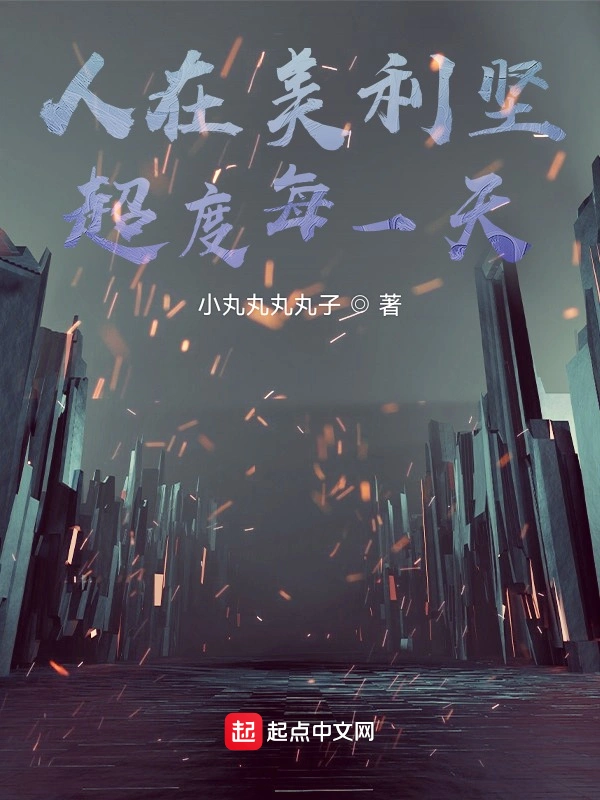
People in America Live Every Day to the Fullest
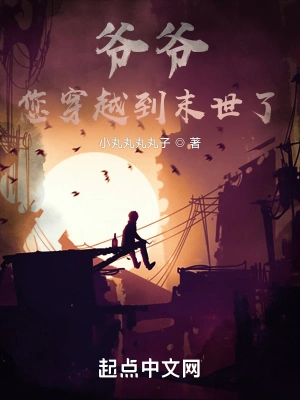
人在美利坚,超度每一天
- Status
- Completed
- Length
- 596k Words
- Genre
- Sci-Fi
- Audience
- Male
- Subgenre
- Time Travel
- Updated
- 3y ago
- Source
- Qidian
Stats
0Monthly votes
2.1kRecommends
4kFans
275Chapters
Tags
Synopsis
Reader comments
Readers also read
 Li Lin's Warhammer Journey
 Starting from the Foundation Phase and Launching the Moon Landing Plan
 I Use Grammar Games to Save the World
 Start Subverting the World from the Weapons Museum
 Never Walk Alone!
 Get Rid of Demons in the Film and Television World
 Taoist Priests Go to America
 Daming: Have I Become Wanli's Portable Grandfather?
 I Am Drawing a Hot-Blooded Episode in the Zhiyu Episode!
 America, Starting as a Trainee Police Officer
 US Police: I Have a Daily Intelligence System
 This American Policeman Cherishes His Life: the American TV Series Starts from Huangshi
 During Those Years When I Opened a Chinese Medicine Shop
 Grandpa, Have You Traveled to the End of the World?
No, it's too poisonous. Go to the school to remove spirits, regardless of the reward, just go to the school directly after answering the phone call. Speechless...
What's even more disgusting is that they don't mention any era background, they just say that in Meilijia, there is Kyushu country, Japan also has Kyushu, what the hell is Slijia? I was also drunk when such a character popped up.
. . After watching two films, they ignored China, and, what can I say, they were also belittled in various ways?
Chapter 3 is out, how did the author write it? 😒😒It's useless
If you can't stand it, would you dare to give 100 yuan to someone who can deal with ghosts without fear of being cursed with a grudge?
The subject matter is good, but the writing style is really not that good.
No, brother, we agreed to be saved by the Celestial Master, but in the end, all the removal of spirits depends on Mang, and none of the equipment and skills have anything to do with the Celestial Master, and I don't understand the point of taking in the spirits.
This novel has no meaning other than being disgusting.
The protagonist and the system are both weak enough to watch.
It's just a Chinese fantasy novel with a Western cover. The dialogues described in the article are too dramatic.
I'm really disgusted after reading three chapters, so I must give my opinion: *%your*%#'s^*# (beep————). The opinions are over and will never be seen again.
How did this kind of novel come out?
Faint You see chapter five. I ran away after seeing the third chapter 😢
The subject matter is good, but the writing is terrible. Especially the description of communication with female comic characters is like a live broadcast of dog licking. I don't know if the author himself is like this. Probably 80%.
Tired, the protagonist is really useless. It's depressing to read. Even reading cool articles is depressing. It's better not to read it.
I quit after reading Chapter 5.
You can still watch it when you are stupid and drunk, now you have seven bottles of beer
After taking a look at the catalog and introduction, I thought he would develop slowly, but I didn't expect that there was a lot left unwritten in the introduction, and suddenly Scarlett appeared. Not to mention that you wrote a permanent female character so quickly, what's the matter with the nosebleed behind you, and you find that the woman can't walk?
It was disgusting to read. This can only be used to describe it
It's so poisonous that it's hard to persuade the damn ghost with good words.
If you can survive the incident at school at the beginning, keep reading. I think you can also eat it. If you continue reading, please keep reading. If you haven't read it yet, think carefully about whether you want to eat it.
I wanted to give up when I saw the idea of school, but I wanted to know whether the protagonist's payment depends entirely on the employer. After reading chapter 15, I couldn't figure it out. The subject matter is quite good, but I can't write the Celestial Master!
Damn it, Feng Shui is playing in the United States. This is the weirdest novel I've ever read, come on
I can't stand it anymore. I just want to know, in the police scene at the beginning, does the protagonist take revenge?
You have an old American background and every one of your words sounds more like Chinese than the second uncle's dog next door to me.
Nurhaci and Zhu Yijun of the same era: two figures, one rise and fall Greedy Cat History 2020-4-1 20:12 · First-level high school history teacher The rise and fall of history has its own laws, and it is not that one or a few figures can influence the historical pattern. But we often say that times make heroes. In the process of historical development, there are always some people who can follow the trend of historical development and become heroes of the times. Others, on the other hand, went against the trend of history and became the sinners of history, bearing the infamy of history. During the dynasty change process from the Ming Dynasty to the Qing Dynasty, there were such people. They either followed the trend of the times and promoted the development of history; or due to their own corruption and stupidity, they led to the demise of the dynasty, leaving endless sighs to future generations. 1. Ming Shenzong Zhu Yijun This was the thirteenth emperor of the Ming Dynasty (reigned from 1572 to 1620). He was the longest emperor in the entire Ming Dynasty, reigning for 48 years. In the first ten years, with the assistance of Zhang Juzheng, the first assistant, a series of reforms were carried out. In the Ming Dynasty at that time, the situation of land annexation was already quite serious. For example, Xu Jie, a bachelor, and his family owned 240,000 acres of land. About half of the taxable land in the country is occupied by large landowners who refuse to pay taxes, seriously affecting national revenue. Noble landowners frantically plundered land, feudal exploitation further intensified, and the peasants who rented government land lived a miserable life. There are songs such as "Collect seven bushels of official land from an acre, send six bushels to the imperial state first, keep only one bushel for marriage, worry about people coming to live happily" and "It is not strange to chase rent for the fields, sell the official fields to the people, and the rich will get the fields and the people will pay the rent, and the old rents will incur new debts every year." It is common for farmers to lose their property and tax deposits, and live in rich houses and households with grains, and the situation is miserable. There are also more and more types of corvee, and large-scale corvee collection is very serious. Social conflicts are becoming increasingly serious, and uprisings continue in various places. After the mid-Ming Dynasty, the government's financial crisis gradually worsened. According to statistics from the Ministry of Accounts in the first year of Longqing (1567), there were only 1.3 Million taels of silver in Taicang, while 1.35 Million taels of silver were due for official and military salaries, 2.36 Million for border wages, and 1.82 Million for annual reissues. The total expenditure of the three items was 5.53 Million taels of silver. With the cash available at the time, it was only enough for 3 months of expenses. The grain stored in the Beijing warehouse is only enough to support the officers and soldiers in Beijing for more than two years. The financial constraints of the Ming Dynasty reached a terrible level. Zhang Juzheng in the film and television drama Zhang Juzheng pointed out that there were five major disadvantages at that time: "The clan was arrogant, the officials were arrogant, the officials were following the rules, the border equipment was not repaired, and the finances were scarce." Zhang Juzheng carried out comprehensive reforms in response to the above-mentioned problems. Including the examination method, one whip method, etc. The Ming Dynasty government's fiscal revenue has increased significantly, and the social economy has been restored and developed. The national treasury has accumulated as much as six to seven million taels of silver, and its food reserves have reached more than 13 million shi, which is enough for ten years. But after Zhang Juzheng's death, Ming Shenzong quickly liquidated Zhang Juzheng. His home was ransacked and a group of officials who had been close to Zhang Juzheng were dismissed. Some important reform measures were also abolished, and the Ming Dynasty began to decline. The country began to tip over into recession. After taking power, this man lacked the ability to make decisions. He often failed to come up with opinions that could convince the ministers on major national affairs, and around him, many ministers formed cliques for personal gain, while others remonstrated with ministers for the sake of reputation. This made Ming Shenzong tireless. He simply did not see the ministers, did not go to court, did not do anything, and even did not fill any official vacancies, which led to the gradual decline of the Ming Dynasty. The most typical example is the "national dispute". This issue involved the entire court situation in the middle and later periods of Ming Shenzong, and had a far-reaching impact. The whole story is as follows: The eldest son of Ming Shenzong, Zhu Changluo, was born by chance between him and the palace queen. Ming Shenzong did not like Zhu Changluo because he was born to a palace maid. The most beloved concubine of Ming Shenzong was Concubine Zheng. In the tenth year of Wanli (1582), she was granted the title Shufei, and the following year she was promoted to Defei. The reason why Concubine Zheng won Wanli's favor was not just because of her beauty, but also because of her intelligence, alertness, proficiency in poetry and other rare talents among others. In the fourteenth year of Wanli (1586), Zheng gave birth to a son, Zhu Changxun, for Ming Shenzong. Ming Shenzong was overjoyed and intended to be granted the title of imperial concubine, which was in sharp contrast to his cold attitude towards Concubine Gong. One of the two sons of Ming Shenzong was accidentally born to a palace maid. It was equivalent to a coincidence that he did secretly. It was a very disgraceful thing, and he was very repelled by it in his heart. And the other one was born to his favorite concubine. Of course he liked his younger son more. However, according to the Ming Dynasty's throne succession system, the eldest son must inherit the throne. This resulted in a long-term confrontation between Ming Shenzong and his ministers. Ming Shenzong did not make his eldest son Zhu Changluo the prince at all, and even did not hire a teacher for him to study when he reached his age. But he loved Zhu Changxun very much. This caused doubts among the ministers. Afraid that he would break the rules passed down by his ancestors, he made Zhu Changxun the prince. The two sides have been arguing over this issue for a long time. The ministers of the imperial court were divided into different parties. The long-term fighting and strife over each other's performance on this issue gradually exhausted the national power of the Ming Dynasty. 2. Aixinjueluo Nurhachi, Taizu of the Qing Dynasty While the Ming Dynasty was experiencing political corruption and national power declining, the Jianzhou Jurchens in the Northeast were gradually rising. Nurhachi played a key role in the rise of the Jurchens in Jianzhou. The person guarding Liaodong at that time was Li Chengliang, the commander-in-chief. In a war, the Ming army killed Nurhachi's grandfather and father. When the bad news came, the 25-year-old Nurhachi originally thought of taking revenge on his father, but he was alone, how could he fight against the "Emperor of Heaven" of the Ming Dynasty who had millions of soldiers. With no choice but to do so, Nurhachi blamed Nikan Wailan, the lord of Tulun City, the left guard of Jianzhou, for instigating the Ming soldiers to kill his father and ancestors, and asked the Ming ministers to carry him out. Unexpectedly, this request angered the arrogant and domineering Ming Dynasty border generals. He was regarded as unreasonable and refused. He also announced that he would build a fort on the deck and make Nikan Wailan the "Lord of Manchuria". As a result, Nikan Wailan's prestige greatly increased. , "So the people of the country believed in it and returned to Nikanwailan." Even his relatives "swore an oath to God" and wanted to kill Nurhachi in order to return him. Nikanwailan took the opportunity to force Nurhaci to "come to Nikanwailan", as if he regarded himself as the king of Jianzhou. . Nurhachi and his younger brother Shuerhaqi were among the defeated troops. They were let go by Li Chengliang's wife because of their extraordinary appearance. On his way back, Nurhachi met E Yidu and others who supported him. He used the thirteen armors left by his ancestors and father to raise troops and began the war to unify the Jurchen tribes in Jianzhou. Nurhachi was very brave and good at fighting, so under his leadership, the city of Toulon was quickly captured. Nikan Wailan knew that he could not resist, so he ran away in embarrassment. Nurhaci, who captured the city of Toulon, while continuing to pursue Nikanwailan, also took this opportunity to capture some of the weaker Jurchen tribes, further expanding his own strength. After wiping out the power group in Nikan Wailan, Nurhachi's reputation among various Jurchen tribes also greatly increased. Nurhaci, who had his revenge, did not give up on the cause of unifying the Jurchen people. Under Nurhaci's leadership, all the Jurchen tribes in the Jianzhou area at that time had been recovered by Nurhachi, and the Jianzhou area was unified. On April 13, 1618, Nurhachi took an oath to "defeat heaven" in Shengjing, read out the seven hatreds he had with the Ming Dynasty, and at the same time led 20,000 infantry and cavalry to attack the Ming Dynasty. Most of the forts east of Fushun City were captured by the Hou Jin army. After the Jin army attacked Fushun and Qinghe, they planned to attack Shenyang and Liaoyang. However, due to lack of strength, their flanks were threatened by Ye He's tribe. At the same time, they found out that the Ming Dynasty had decided to reinforce Liaodong, so they took the initiative to retreat in September. The most important battle between Nurhachi and the Ming Dynasty was the Battle of Sarhu. The Ming army suffered a disastrous defeat in this war, but Houjin Nurhachi began to rise as a result, and he eventually became the gravedigger of the Ming Dynasty. At that time, the Ming Dynasty army was divided into four groups, trying to attack together and attack Hetuala. Yang Hao took charge of Shenyang and commanded the overall situation. Among the planned four routes, the east route is led by Liaoyang Governor Liu Wei, who leads 10,000 Ming troops and 10,000 Korean reinforcements out of Kuandian; the south route is led by Liaodong General Li Rubai, who leads 25,000 troops, and leaves Qinghe out of Crow Pass; the west route is Du Song, the commander-in-chief of Shanhaiguan, led 30,000 people from Shenyang out of Fushun Pass and entered the Suzi River Valley; the commander-in-chief of Kaiyuan, Ma Lin, led more than 20,000 Ming and Ye He troops to the north and left Sanchakou (now south of Kaiyuan, Liaodong) from Kaiyuan. Four armies of troops, with the western route as the main force, all approached Hetuala. This was originally a very clever plan, but unfortunately it was discovered by Nurhaci before the Ming army was dispatched. After Nurhaci learned about the military deployment of the Ming army's four-pronged attack, he did not divide his troops to attack them. Instead, he adopted the combat strategy of "I will only go one way", concentrating superior forces to defeat them one by one. So Nurhaci personally led 60,000 eight-banner soldiers to meet the menacing Ming army. Nurhachi believed that Du Song's army was the main force of the Ming army. As long as Du Song was defeated, the rest of the troops would not be in danger. Therefore, he only sent 500 people to defend the vanguard of Liu Wei's army attacking from Kuandian, and concentrated the main force to fight against Du Song. He sent Dabeile Daishan to lead the troops of the two banners to reinforce Jilin Cliff and intercept Junjun, making it impossible for the two Junjun tribes to assist each other. He personally led the Eight Banners troops to rush to Sarhu and attack the main force of Juniper's army in Sarhu. The Ming army's chariot array fired huge cannons, bombs exploded, and blood and flesh flew everywhere. Houjin's armored cavalry charged hard and, amidst shouts, attacked the Ming army's Sarhu camp. The cavalry concentrated a little, attacked desperately, and finally broke through the battle line, galloping horizontally and vertically. After a fierce battle, the Ming army in Sarhu was defeated and suffered heavy casualties. From this, one rises and one falls. History is so interesting. When you look back, it's like watching a movie. You can see their spiritual temperament freshly. The final outcome can be known from the event. But the people in the game were unaware of it. When Nurhaci led the Jurchens to rise, Ming Shenzong Zhu Yijun was leading his dynasty on the road to destruction.
Hu Yancong Officials in the Later Zhou Dynasty of China Hu Yancong, a figure in the Later Zhou Dynasty, the father of Hu Yanzan, was an official who commanded envoys in Mabudu, Zizhou. [1] In storytelling and opera, it is called Huyan Shouting. Real name Hu Yancong Era Later Zhou Son Hu Yanzan Quick Navigation Literary image Family members Development history Grandson Huyan Bixing Huyan must change Huyan must seek Huyan must show Romance Huyan family tree First generation Taibao Hu Yanyan (former Zhao Mingchen general), Hu Yanmo (former Zhao Mingchen Zhendong general) Second generation Huyanmo's son: Fuck Shanhou Huyanshouting (Huyancong, Huyanfeng, Huyanting, the commander of Mabudu in Zizhou in the later Zhou Dynasty), Huyanfengying (Huyanlanyu, female) (in the storytelling opera "Going down to the east of the river", "Hedong Assassin", "Beheading Huyanshouting", "Battle with the White Dragon", "White Dragon Pass", "Dragon Tiger Fight", "Down to the East" and "Frontier Fortress Poems" Huyanzan's father and aunt) The third generation The sons of Huyanshouting: Huyanzan, the patron king of the Iron Whip King, Huyanyun (Huyan Xiuying, female) (Huyanzan's sister in the storytelling opera "White Dragon Pass", "Dragon and Tiger Fight", "Down to the East" and "Border Fortress Poems"), Hu Yanrong (female) (in the storytelling opera "True") The sister of Hu Yanzan in "Fake Eight Kings") Fourth generation The sons of Iron Whip King's backer king Huyanzan: Backer King Jingshan King Double King Huyan Pixian (from "Generals of the Yang Family" and "Generals of the Hu Family", also known as Huyan Demo, Hupi Xian, Huyanxian), Huyan Pida (Hu Bida, Hu Yanda, Hu Yan Pi Pi) The fifth generation The sons of Huyan Pixian, the patron king and the king of Jingshan, the king of Pingbei: Zhongxiaohou Huyanshouyong (Huyanshouyong), Zhongyonghou Huyanshouxin (from "Hujiajiang") The sixth generation (1) The sons of Zhongxiaohou Huyanshouyong, the king of Pingbei: Huyanqing, the Zhongxiao king, Huyanshouyong, the Zhongdian king Yanping, Huyandeng, Huyanhuan, Huyanzhao (brothers of Huyanqing in "The Yang Family's Divine Spear"), Huyankai, Huyanguang, Huyanshou, Huyanwei (sons of Huyanqing in the later Song Ciyunzuoguoquanzhuan), Huyan Bitao (female), Huyanmeixian (female), Huyan Ruizhu (female), Huyan Cailuan (female) ( 2) Sons of Zhongyong King Zhongyong Marquis Huyan Shouxin: Benevolent King Huyanming, Huyanliang, Huyanbao, Huyanlong, Dingjianghou Huyanzhao Seventh Generation (1) Sons of Zhongyong King Huyanqing: Huyan Yunlong (the eldest son of Huyanqing in "Cao Family General"), Zhenjing Tiger Huyan Yunfei, Huyan Yunwei (2) Sons of Dingjiang Marquis Hu Yanzhao: Golden Hammer general Hu Yan Yun Ling Eighth generation Zhenjing tiger Hu Yan Yunfei's sons: King Zhongxiao's double hammer general Hu Yanbao and Hu Yanjue Ninth generation Zhongxiao King's double hammer general Hu Yanbao's son: Huyan Feilong ("Yang Jinbao goes down the mountain") Tenth generation (1) Huyan Feilong's son Sons: Huyan Qipeng ("The Rape of Yang Mantang") [12], Hu Yanzhuo ("Water Margin" does not mention which generation it is) The eleventh generation Huyanzhuo's sons: Hu Yanyu, Huyan Yuying (female) The wives of the Hu family The list and seniority ranking of the Huyan family in novels, storytelling, drums, and operas about the generals of the Hu family. First generation (1) Huyanyan's wife: Liu Suhong (2) Huyanmo's wife: Shen Xinyu Second generation (1) Huyanshouting's wife: Shi Lanying (Luo Lanying, Liu Lanying, Luo Lanying) (2) Others: Huyan Fengying Third generation (1) The wife of Huyanzan, the backer of the Double Whip King: Ma Xiuying, one of the five daughters of Laoyin, Anlehou Ma Xiuying (Ma Taijun Jin-headed Ma family) (2) Others: Hu Yanyun, Hu Yanrong The fourth generation (1) Huyan Pixian's wife: Yang Yanqiong, the patron king of Jingshan and the two kings: Yang Yanqiong (2) Others: Huyan Chijin (female, from the TV series "Yang" The military orders of the generals are like mountains") The fifth generation (1) The wives of Zhongxiao Hou Huyan Shouyong: Wang Jinlian, Cui Yurong, Tie Yemei, Zhao Fengnu, Pingxi Hou Xiao Saihong, Ma Huarui (Princess Huahua) (2) The wives of Zhongyong Hou Huyan and Shouxin: Qi Meimei, Qi Yue'e, Xiao Yujing The Sixth Generation (1) The wives of Zhongyong Hou Huyanqing: Lu Fengying, Zhu Sujuan, Liu Dingjin, Liang Shengjin, Bao Saijin, Zhang Jinding, Hua Ruilian, Liu Yingyan, Cui Sister Tao, Miao Fengying, Tong Fengying (2) Wife of the town hall king Hu Yanping: Deng Yuhong (3) Hu Yanshou's wife: Fairy Mountain Golden Dragon (4) Wife of Renyi King Hu Yanming: Liu Yuping, Tie Jin'e (5) Hu Yanbao's wife: Fairy Mountain Yingfeng (6) Hu Yan Dragon's wife: Zhao Wenji (7) Dingjiang Hou Huyanzhao's wife: Nong Saihua (8) Others: Huyan Bitao, Huyan Meixian, Huyan Ruizhu, Huyan Cailuan The seventh generation Huyan Yunfei's wife: Wei Jinhong The eighth generation Hu Yanzhuo's wife: Xue Jingru The Ninth Generation Hu Yan Yuying Literary Image In storytelling and opera, Hu Yancong is called Hu Yanshou Ting, and it goes to Hedong (also known as "Dragon and Tiger Fight" and "Beheading Hu Yanshou Ting") in traditional Pu Opera and Qin Opera. During the reign of Emperor Taizu of the Song Dynasty, Bailong rebelled in Hedong, and Zhao Kuangyin led the expedition in person, with Ouyang Fang in command and Hu Yanshouting's brother and sister as the vanguard. Ouyang Fang had an affair with Bai Long and arranged to rob the Song camp. Huyan brother and sister defeated Bailong, but Ouyang falsely accused him of ineffectiveness in the battle, and beheaded Shouting in an attempt to usurp him. Huyan Lanyu was looking for her brother everywhere, and happened to meet Zhao Kuangyin patrolling the camp. He was accidentally injured by Zhao Kuangyin's Panlong Stick and died. Hu Yan's wife and son Hu Yanzan were raised in the mountains. When Zan grew up, he went down the mountain to "drive" Zhao to seek revenge. After Zhao explained the situation, he "escorted" him to Hedong and killed Ouyang Fang together. The details of this play can be found in the first chapter of "The Romance of the Generals of the Yang Family in the Northern Song Dynasty". [2] Reference materials [1] "History of the Song Dynasty Volume 279 Biographies 38" Fu Cong was the commander of Ma Budu in Zizhou in Zhou Dynasty. [2] Introduction to traditional classic plays of Qin Opera. Xi'an News Network [cited date 2019-10-16]
Stay Claws, get a gift package from the world of American TV series ←A:→ ←B:→"The Immortal Forensic Series" and "The Book of Boba Fett" ←C: →"Wreckage Series" ←D:→ ←E:→ ←F:→"Copy Series" ←G:→ "The Man in the High Castle" ←H:→"The Man in the High Castle", "The Underworld", "Hannah", "Black Sails", "The Blacklist", "The Man in the High Castle", "The Peacemaker" ←I:→ ←J:→"The Memory Detective", "Jack Ryan", "Crossworld", "What If...?" ←K:→ ←L:→"The Falcon and the Winter Soldier", "Loki", "La Brea", "Arrow Series" ←M:→"The Mandalorian Series", "Doom Patrol Series" ←N:→"Supergirl Series" ←O:→ ←P:→ ←Q:→"Under the Dome Series" ←R:→ ←S:→"Upload" "The Flash Series" "Agents of S. H. I. E. L. D." "Sniper" "Warehouse 13 Series" ←T:→"Sweet Home" Park" Korean drama produced by Netflix, "The Gifted Series" and "The Librarian Series" ←U:→ ←V:→ ←W:→"Resident Alien", "Wanda and Vision", "Inaction", "IZombie Series" ←X:→"Westworld Series" The Walking Dead Series" "Psychic Forensic" ←Y:→"Eagle Eye" ←Z:→"Warrior Series" "The Legend of Jupiter" [Note: Many authors nowadays write about Zhutian film and television, but the actual number of film viewings is really unflattering and seriously lacking]
Very poisonous
He was poisoned to death in the first chapter, and there was no one left.
Why is there so much hostility in the book review section? Can't you give me some suggestions? However, the author still needs to work harder, his writing skills really need to be improved. I hope the author will not be affected by the viciousness of the book reviews, and just practice writing, and finish telling the story regardless of the number of words.