


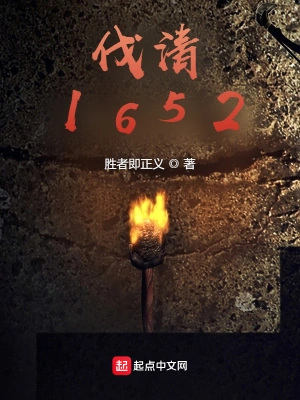
Pacifying the Qing, 1652
伐清1652
- Status
- Completed
- Length
- 918k Words
- Genre
- Historical
- Subgenre
- Song-Yuan-Ming Dynasties
- Updated
- 3y ago
- Source
- Qidian
Stats
282Chapters
0Votes
4.8kRecs
21.9kFans
Tags
Synopsis
More by this author
In booklists 1
Readers also read
 My Father Is Wen Tianxiang, and We Win the Battle of Yashan from the Start
 A Guide to Building Civilization in a Primitive Tribe
 My Only Method: I Will Add More Points to Become Stronger at the End of Ming Dynasty
 Daming: Asking for the Throne at the Beginning, Lao Zhule Went Crazy
 Resist the Qing: Starting at Yipianshi!
 The Age of the Yellow Sky
 Sun and Moon: Yongli 1656
 Every Man Has a Duty
 Overthrow the Ming!
 The Taiping Heavenly Kingdom, 1854
 Northern Qi: My Father Is Emperor Wenxuan
 The Prosperous Longwan Era
 The Ming Zheng, 1652
 A Strategy to Revive the Ming at the End of the Dynasty
Reader comments 39
Google Translate
Li Dingguo and Liu Wenxiu had no problem obeying Sun Kewang, but the problem was that they only accounted for half of Nanming's power. Let's not talk about the distant situation, let's talk about the most practical problem at hand. Li Dingguo is going to Guangdong to fight Shang Kexi and Geng Jimao. He doesn't have a single Cantonese under his command. How can he get any advantage by running into enemy-occupied territory with his eyes darkened? So, he had to use Wang Xing as the pioneer. With Wang Xing and his many natives from western Guangdong leading the way, Li Dingguo could have a smooth road. Everywhere he went, there were guides explaining the terrain to him, and local gentry like Li Xianglu responded. Some provided food, clothing, and medicinal materials, some provided civil servants, some provided craftsmen and doctors, and some even offered boats and red barbarian cannons. The battle against Guangdong requires water warfare, but Li Dingguo's direct troops and horses have average water warfare capabilities, so he must win the support of Chen Qice. Chen Qice will help Li Dingguo transport supplies by sea and cut off the welcome reinforcements, so that Li Dingguo can advance. There are many toasts in the border area between Guangdong and Guangxi. As a migrant, how does Li Dingguo deal with them? Therefore, he had to win over Deng Yao. With this local snake coming forward, chieftains from the Yao and Zhuang ethnic groups, and even Vietnamese pirates, would take advantage of Li Dingguo. There are also Hao Shangjiu who is in Chaozhou anyway, the Hainan rebel army Peng Xingu, etc. These are the forces that must be united in order to regain Guangdong. However, can they be united under the banner of Sun Kewang? Obviously it is impossible. Who among these people knows who Sun Kewang is. Although they don't necessarily like the Ming Dynasty court very much. For example, Wang Xing, who was a bandit, publicly stated that he hated the court many times even after being recruited. But after all, they have been subjects of the Ming Dynasty since they were young. As long as the court does not persecute them, they can still accept being the subjects of the Ming Dynasty. And this Sun Kewang, who appeared out of nowhere, could not directly establish trust with them and became the banner of the leader's resistance to the Qing Dynasty. If there is no Qing army and the situation is Sun Kewang and Zhu Youlang competing for the world, then most of these people will choose Sun Kewang according to the normal thinking of a peasant uprising leader or warlord. But now that resisting the Qing Dynasty is the top priority, there is no time for Sun Keyang to establish his own legitimacy. He must choose a court that can unite most of the anti-Qing troops as quickly as possible. One of the important reasons why the Western Army was able to pacify Yunnan so quickly was that it borrowed Mu Tianbo's banner. Only countering the rebellion and not rebelling against the Ming Dynasty will help us quickly win over the Ming Dynasty officials and chieftains in Yunnan. After leaving Yunnan, they also incorporated many of the original Ming army troops. Zhang Xianbi was indeed a fool, but people like Ma Jinzhong, Ma Bao, Cao Zhijian, Hu Yiqing, Zhao Yinxuan, and Pi Xiong were still doing serious work. If Emperor Yongli is directly eliminated, how can we unite these people? Looking at the wider scope of the country, there are Zheng Chenggong, the Kuidong Thirteen Family, Lu Wang Zhu Yihai and others. Without the banner of Emperor Yongli, Sun Kewang can still maintain unity with them if he becomes emperor himself? If Sun Kewang succeeds, other anti-Qing forces will most likely establish a separate court. Zheng Chenggong once established Huai Wang Zhu Changqing to supervise the country. After learning that Emperor Yongli came to the throne, he abolished the Huai Supervisory Government. Then the Huai King "died in the same year", but Zheng Chenggong also had other vassals in his hands. King Zhu Yihai of Lu had been resisting at sea for many years, and he already had prestige. When Emperor Yongli was around, he would not compete for the throne, but if something happened to Yongli, he would not be unable to be the emperor. Wang Xing was a supporter of Tang Wang Zhu Yuzhao, the younger brother of Emperors Longwu and Shaowu. Zhu Yuzhao had always taken care of him, but Wang Xing always followed the Yongli banner to maintain unity with other anti-Qing forces. If Emperor Yongli is gone, Wang Xing will never obey Sun Kewang. It is very likely that he will unite with the other Ming armies of Guangdong and Guangxi to establish the Tang kings as kings again. If it really turns out to be like this, we won't be far away from death without the Qing army coming to fight. No matter how bad Emperor Yongli is, at least no one except Sun Kewang wants to deny his legitimacy, and no one openly rebels against him, which can guarantee the minimum unity. If the country already has this kind of virtue, it will be over if there is internal strife.
Sun Kewang dare not say that he can become a peerless hero who can help the world and rebuild China like Taizu of Ming Dynasty, but it seems that it is very possible to become a world hero like Liu Yu and Chen Baxian. His evaluation in the history books should have been, "The ruler of the country started from a gang of thieves, and he used his ability to obey orders to flog the world in order to collect the magic weapon. He can also be called a traitor for a while." Internally, the soil was destroyed, the mulberry fields were plowed, and the rents and taxes were reduced. Although the soldiers fought hard, the people were happy to lose. In the two centuries, Russia became hegemonic. "In the words of some imperial and Han-style historians, I am afraid it can be even higher." However, since the Wanli period, the only person who has continued the spirit of China's strangers is Sun Guozhuer. . It is a great injustice to blame the later Qin Dynasty for not destroying the Central Plains and deposing him without his achievements. The desolation of the Central Plains in the snow was only heard by the ancestors, and they knew that they could achieve great results. " However, it will never be far away. After six years of the Northern Expedition, Sun Kewang's life was like a free fall. His brothers fought against each other, internal and external alienation, and everyone betrayed relatives. He fell rapidly from a generational hero to a traitor, which ultimately brought an almost devastating impact politically to the cause of resisting the Qing Dynasty. In short, Sun Kewang gradually went to the opposite side of his previous success under the influence of various factors. First of all, the relationship within the leadership of Daxi, especially the relationship between Sun and Li, broke down. This was due to the instigation of discord by the officials and gentry of the old Ming Dynasty (Yongli's special envoy sent to Li Dingguo after Li Dingguo's victory in Guilin played a very important role in causing Sun and Li to turn against each other), and Sun Kewang's military exploits and prestige were difficult to convince the public. The reason why he tried to forcibly suppress Li and Liu, although the reason why he summoned Li Dingguo's army was not necessarily to get rid of him (this matter is very complicated, let's not go into it), but after the war, all the reasons for the failure of the Northern Expedition were blamed on Li Dingguo, which ultimately led to the irreparable relationship between the two and the complete loss of an extremely excellent general and an experienced army. For Liu Wenxiu, the defeat of Baoning was first used to completely deprive him of his military power. This also resulted in the lack of a staff member in the subsequent Battle of Fork Road. Liu had to be resurrected later, but the trust between the two was gone. Secondly, his relationship with the officials and gentry of the old Ming Dynasty also completely deteriorated, especially after welcoming Yongli to Anlong. In fact, this emperor, recognized by all the powerful forces in the world, if used properly, should have played a powerful role and brought huge political benefits to Onishi. However, due to reasons such as the turmoil of King Qin (although this was mostly the Yongli court's own fault) and superstitious proverbs such as "two dragons never meet", he was neither willing to give Yongli nominal respect, nor wanted to completely take over Guiyang's complete control. As a result, Yongli himself He had a happy-go-lucky character (he was used to being a puppet for a long time), but he constantly contacted various forces and issued edicts in order to survive. Sun Kewang's cronies and traitors in Anlong could not completely isolate China and foreign countries, and they had no power to resist Li Dingguo's army. As a result, he was extremely passive politically. In the end, he lost the trust of his capable generals, and he could neither seize power by establishing meritorious service and prestige like Liu Yu; his relationship with the nominal court deteriorated and he could not fully control it, making it difficult for him to follow the formal path of surrender like Cao Mang. Path; the final choice is to rely on low-level political tactics, such as creating auspiciousness, mobilizing cronies to persuade people to advance, and even generously rewarding subordinates to seize power. At this point, the legitimacy and prestige of the sovereign's rights can be said to be based only on inertia. Not only that, because his subsequent work focused on how to usurp power, he actually neglected the cause of restoring Ming Dynasty, and many troops were short of food and clothing. At this time, after repeated defeats and battles in Guangdong, the two famous heroes Li Dingguo led his troops to greet them, and one can imagine the support of the people. However, even so, he still has some die-hard cronies, and there is no chance of political comeback. Yongli and others are not willing to fight another civil war when the Qing army is surrounded by powerful enemies. They still hope to maintain harmony even for the time being. To this end, they have made many moves to repair relations. However, Sun Kewang brazenly provoked a civil war, and it was enough to start a civil war. Even the flying dragon riding on the face could be killed... It is true that, as Gu Cheng said, the civil war did not cause extremely serious military consequences due to the rapid collapse of Sun's army, but its political impact was extremely bad. Sun Kewang launched a civil war and fled, clearly conveying to the Qing court the signal of internal instability and political chaos in the Ming Dynasty. Under this situation, Hong Chengchou, who had lost confidence, regained his energy and watched the situation in Hanzhong. Wu Sangui, who had refused to attack Sichuan several times, also advocated sending troops. The Ming Dynasty won the siege from the main force of the Qing army with basically no time to breathe. Not only that, in terms of domestic affairs, since Sun Kewang had been in charge of the central government for a long time, his old troops were still spread throughout the Yongli regime. It was unrealistic to expect Li Dingguo to straighten out the situation in the short term. Faced with Sun Kewang's recruitment and surrender by the Qing court, it was also foreseeable that his actions were inappropriate. Although Sun Kewang himself did not go to the battlefield, he sent some of his close associates to serve as guides in the army. In the subsequent war, the Qing army almost easily bypassed many natural dangers of the Ming army's defenses. It is difficult to say that this was not related. At this point, it can be said that Sun Kewang has completely betrayed his historical merits and destroyed the career he once started. As a hero, you can be despicable and dishonest, but a hero still has his own bottom line. During the Jin'an Rebellion, facing Lu Xun's 100,000-strong army, Liu Yu only had more than 5,000 men. The generals advised him to avoid his advantage. However, Liu Yu's subsequent words fully explained what a hero should be like. "Although there are few soldiers today, they are enough to fight. If they defeat Ji, the ministers and lords will die together. If misfortune is inevitable, I will defend the country with my death. My body will be laid out at the gate of the temple. This is why I have dedicated my life to the country and cannot wander far away in the grass to survive." If you don't succeed, you will be benevolent! So in the end, Liu Yu became Emperor Wu of Song Dynasty. And Sun Kewang, who said, "Li Dingguo has humiliated his orphan so much that he has to surrender to the Qing army to avenge his eternal revenge." The final historical image he left behind was a "righteous king" who betrayed his former self, betrayed the cause of restoring the Ming Dynasty, and was dismissed by the Qing court as a "righteous king", a traitor, a national thief and a clown, although he could have become another Emperor Wu of the Song Dynasty.
Sun Guozhu is a person with perfect internal affairs ability and poor political and military ability. It is most suitable to be the chief minister of the cabinet. Many peasant army leaders have not learned the essence of Zhu Yuanzhang's slow proclaiming of the king. It is easy to say but difficult to do. Li Zicheng and Zhang Xianzhong directly established and proclaimed themselves emperor as soon as they had a piece of territory in their hands. When Sun Guozhu held Yungui, he wanted to replace Zhu Ming. Chen Youliang and Fang Guozhen also proclaimed themselves emperor directly in the same place. Hong Xiuquan immediately sealed the kings and started fighting among themselves as soon as he captured Nanjing. If the internal integration is not integrated well, how can it be accomplished? When did Zhu Yuanzhang sink Xiao Mingwang? At that time, the South was basically unified. When did you become emperor? After most of the north was captured! Sun Guozhu chose to go to war with Li Dingguo when the fight with the Manchus was at its fiercest. He had no vision whatsoever, either politically or militarily. Even his general Bai Wenxuan was not of the same mind as him, let alone his two brothers Liu Wenxiu and Li Dingguo. The most rare thing in the world is to understand your own position and do the right thing at the right time. The final outcome of the king was also very tragic. After losing his use value, he was shot to death by the Manchus as prey. It was so sad!
In fact, I have to say that it is a bit baffling that the protagonist has to find a red-haired craftsman to make a musket. Firearms were not only widespread in the late Ming Dynasty, but they were definitely not a rare item. Landlords and wealthy people made various kinds of firearms to guard their homes and homes. There was no shortage of craftsmen who made firecrackers across the country. To make two broken matchlock guns, I had to invite a group of red-haired soldiers to slap their noses and faces. They even took off their pants and farted. It was very difficult for him to make iron in Portugal, and the cannon-casting craftsmen hired various Chinese technicians. First of all, your protagonist has gone to high school; secondly, you are not a Spanish-French party. You coax the emperor to sell foreign cannons and get invoices and get kickbacks. Why are you trying to convert exports into domestic sales... I really want to cheat and make iron directly in the blast furnace, and then add a hydraulic blower and a converter to make steel. Making guns and cannons, grinding iron with clay and grinding sand with molds does not depend on your mood. With this thing, steel production capacity directly surpasses the times. It's enough for you to fly the Eight Banners of the Qing Dynasty in the South China eight times, gather all kinds of red hair and hoods from South Asia on the ground, and slap them all in the face.
Regardless of whether Nanming, Canming, or later the San Francisco, they were all destroyed by internal fighting. Doesn't Nanming have a chance to make a comeback? Some. Isn't there any Can Ming? Maybe it really didn't, but it was still possible to survive, but it still died quickly. Isn't it because of the many internal factions? The Western Army was fighting internally and splitting along the Western Ming Dynasty. It would be a ghost if it could make a comeback. There was also the San Francisco Rebellion, which was said to be the Three Kingdoms, but it was not just the Three Kingdoms who rebelled. But in the end they still fought on their own, and even fought against each other. Geng Jingzhong attacked Nanjing, Zheng Jing attacked Fujian, and finally Geng Jingzhong was attacked from both sides and was annihilated by the Qing court. Zheng Jing was unable to hold Fujian alone and retreated to Taiwan. Wu Sangui sent troops to destroy Sun Yanling. The Shang family in Guangdong was annihilated at both ends. Wang Fuchen's lone army was annihilated. After Wu Sangui's death, the Yunnan warlords and the foreign warlords fought against each other. Wu Shifan was even put under house arrest by the Yunnan side. Even Wu Sangui could not bring him back when he was entrusted with death. After he ascended the throne, only one of the foreign ministers came back to see the second emperor of Wu Zhou...
I laughed out loud when I saw the author saying that Li Dingguo broke with Sun Kewang because he was loyal to the Ming Dynasty; the eldest brother and his brothers followed his father, Lao Zhang, in rebelling, burning, killing, and looting. How could he be loyal to the Ming Dynasty? You said that Li Dingguo offered Yongli to Yongli because he was dissatisfied with Sun Kewang, which is more reliable than any other loyalty!
The Ming Dynasty really sucked. Why could the Qing Dynasty win? Because the Qing Dynasty had its own fundamentals, and the Qing Dynasty's fundamentals were established not long ago. Therefore, it is more competitive if you want to defeat the Qing Dynasty. Only the basic disk can be rebuilt. The gentry class is no longer good. Those who want to rise rely on warriors. Look at how many heroes the warriors in the late Tang Dynasty made vomit blood. Zhu Wen only needs one dozen hours and two Zhu. Others were crazy in support. All three towns were destroyed. Just dissatisfied. Unless you, Zhu Wen, can guarantee the interests of the local warriors. Not completely dominant. If Wufu was like this in the late Ming Dynasty. The Qing Dynasty couldn't get in even after 100 years of fighting. Of course the consequences are too great. You can refer to why Zhu Liang and Li Cunxu didn't
Long ReviewAn anticipated historical masterpiece
Let me write down my thoughts From the protagonist selection and narration description, this is a typical realistic novel for non-novices, not the kind of fast-food historical stallion novel. This was the biggest surprise after I clicked in. Judging from the text and plot in the book, the author has obviously paid great attention to historical details, and the shadow of novels such as "Shao Song" can be seen in certain links. Of course, I don't mean to blame the author. The author cleverly played a trick in giving away the golden belt. Through the golden belt and frank treatment, he first created an atmosphere of harmony and unity, adding expectations for the next union. Then he described the changes in everyone's minds after the protagonist left, and put the past The suspicion and cracks merged again, suddenly getting rid of Xiaobai's character facial features, making the whole person come alive, becoming a real hero with flesh and blood, and through inner changes and interactions with others, a group of supporting characters were established, and the truth was handled extremely skillfully. It can be said that this book is very exciting here. After reading through, the biggest surprise for me in the whole book is "growth". The author describes the changes of the protagonist in a vivid way. In fact, he wants to highlight the growth of the protagonist, including the interaction with the supporting characters, and highlight the characteristic of "change". Especially considering that the author's protagonist is not from the system and has no corresponding political experience. How he can truly transform from an ordinary person to a qualified supreme ruler in the future, how to balance the interests of various classes and groups in feudal society and create a proactive and iron-clad empire is undoubtedly the part that makes people look forward to it. It has been more than ten years since I started reading novels under the banyan tree. All novels, no matter what the subject matter, as long as they can make readers feel growth and expectation, and if they can write this well, the upper limit of the novel will not be too low. Of course, there are also shortcomings, that is, some of the historical introductions are a bit cumbersome. This does not mean that they should not be introduced, but some introductions are placed in the middle of the text, interrupting the entire coherent storyline, and turning the original 8-point description into an almost passing 6-point description. It has to be said that it is a pity. However, considering that this is not an academic paper, and that it must take into account the feelings of both novice readers and experienced readers, this is inevitable for current historical articles, and the author cannot be entirely blamed. I've been rambling for a long time, but in the end I just hope that the author will write better and better, come on! I hope Five Million Words will end again {"TopicId":"575911170507276288","TopicName":"New Book Recommendations"}{"TopicId":"733022068203061248","TopicName":"Historical Masterpieces"}
If the human heart is not dead, who has no thoughts of Han? The public's initiative is extraordinary, and he advocates it for the world. The world is eager to take the lead and look forward to the public's arrival day and night! "
This book is quite good. I saw someone write in the comment section that the main character is 50 years old, and I felt that I was too old to read it. Later, I saw this book recommended several times, so I clicked in and took a look. I found that the main character was only in his thirties or forties, and he was of a suitable age. The writing was also very enjoyable, and the writing style was very good. I decided to give it a try, so cheers for the author!